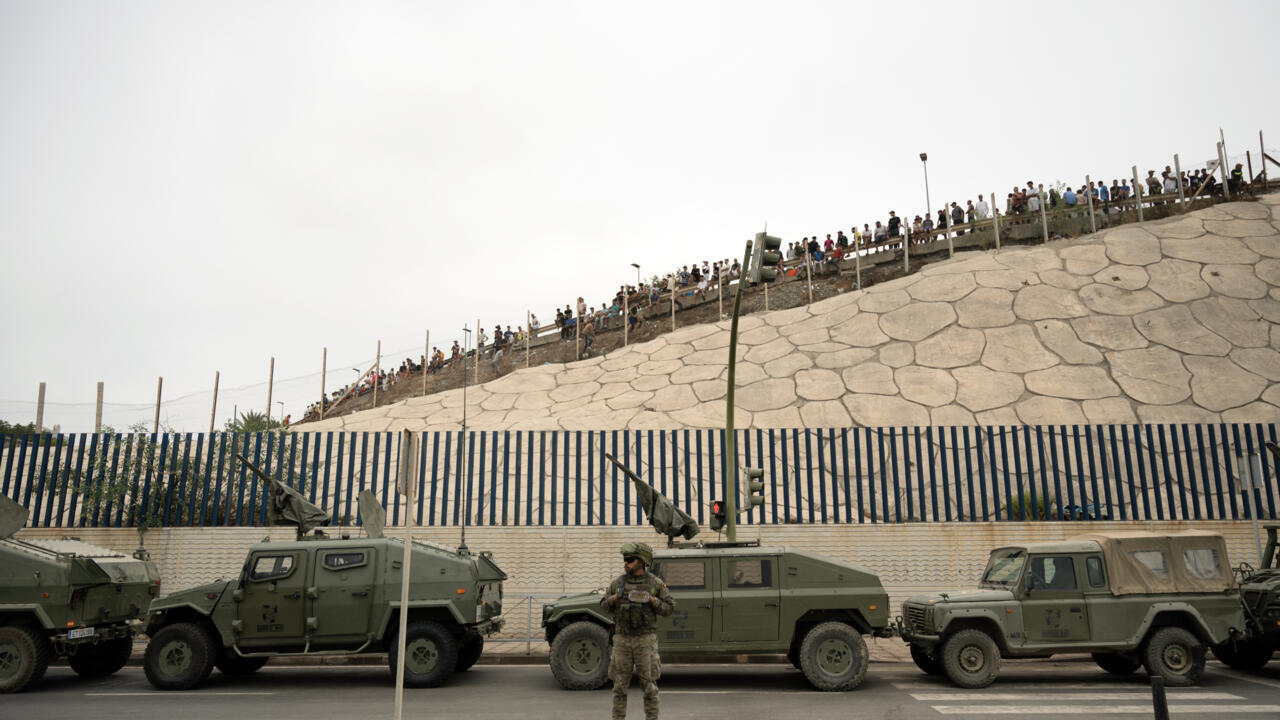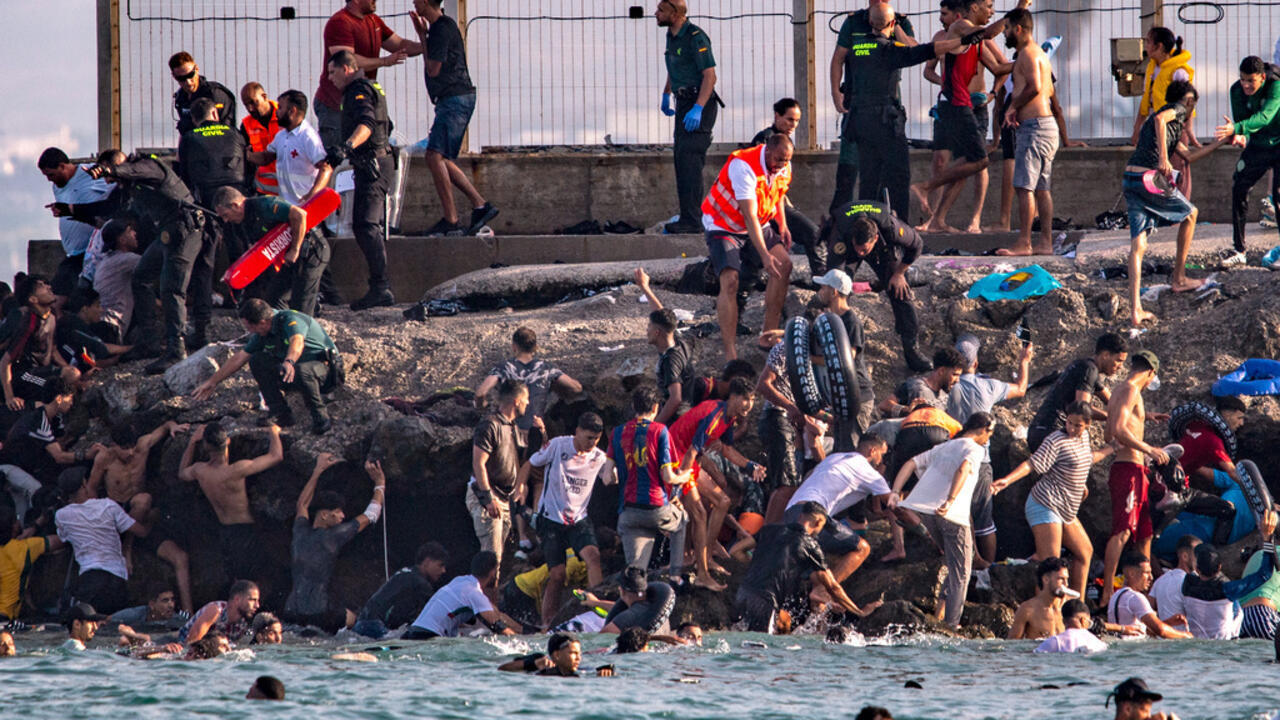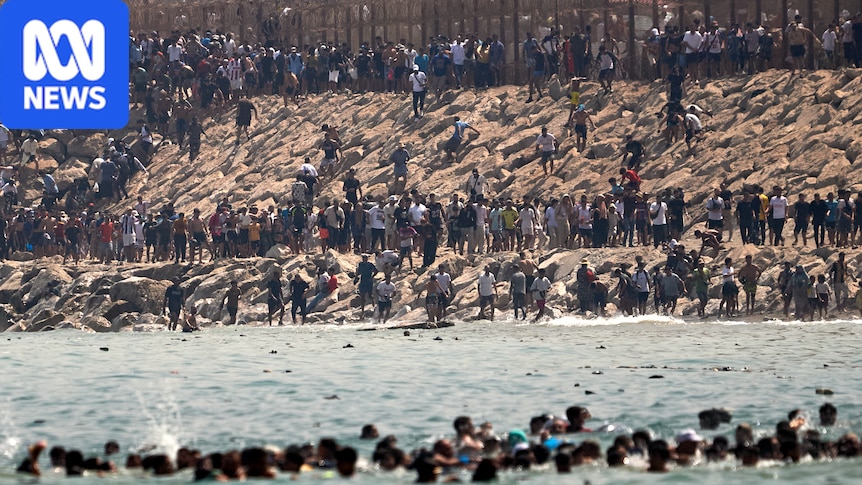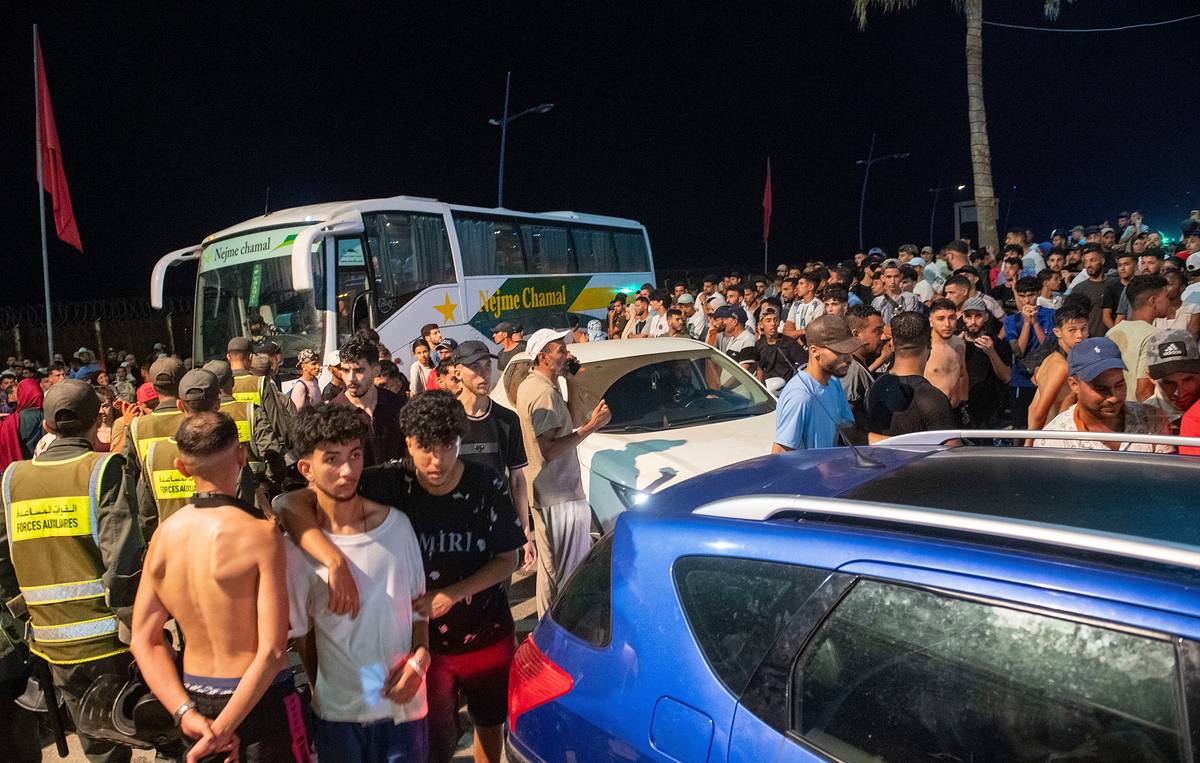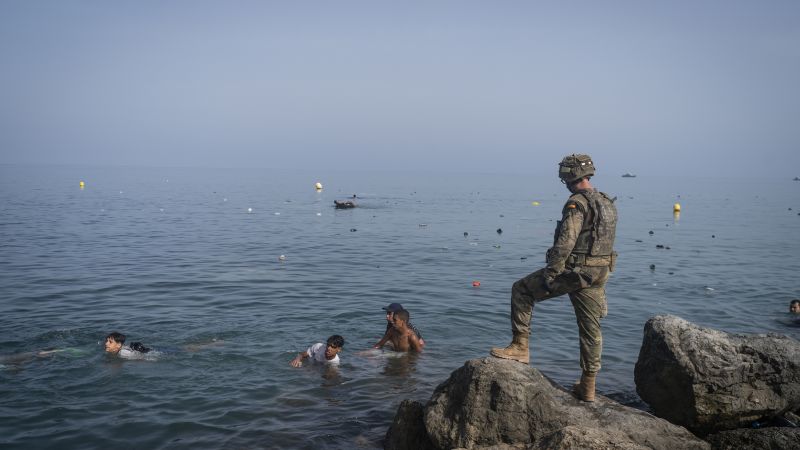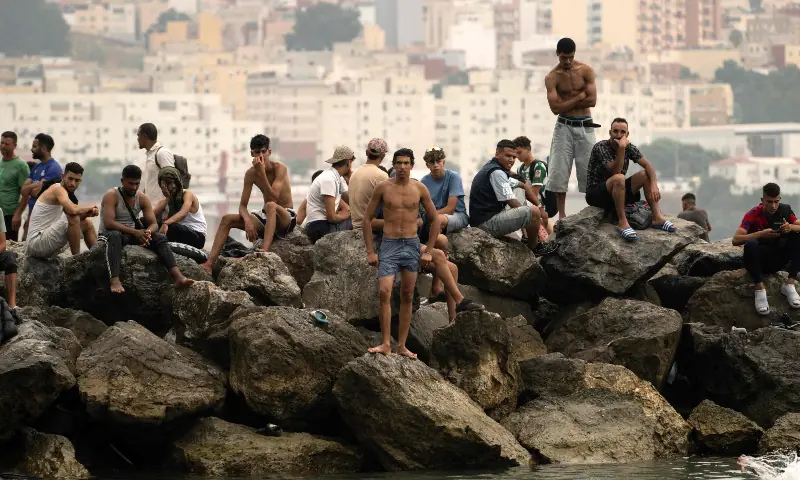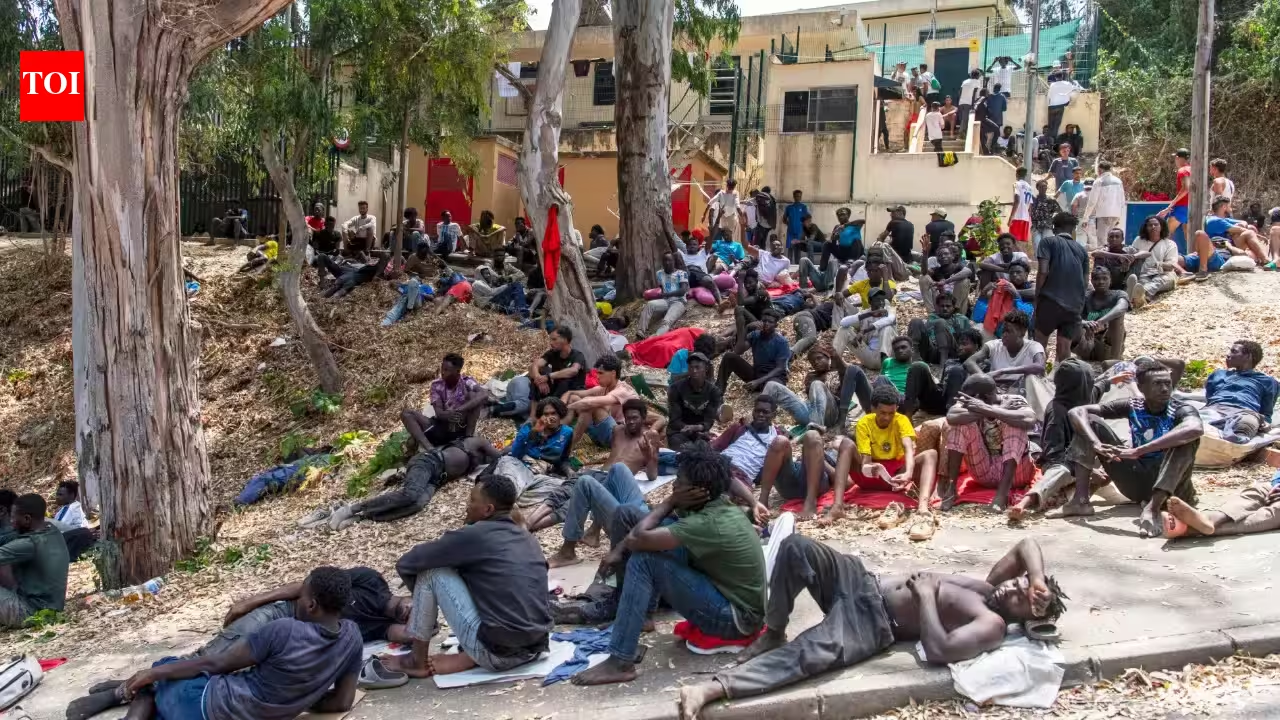
Migrants rest outside the Temporary Center for Immigrants (CETI) after crossing from Morocco into Ceuta (AP Photo/Antonio Sempere)Spain said tens of thousands of migrants had entered Ceuta over the past two days, which has triggered a humanitarian crisis that spanned beyond just migrants. The enclave’s businesses shut down, bread supplies dwindled, public festivities were cancelled, and security forces from both countries were deployed as Europe debated how to respond to one of the largest migration movements ever recorded in Ceuta.The uncertainty has pushed thousands of migrants to return; locals are retreating indoors amid fear and shortages, and authorities are scrambling to restore order. Even the neighbouring European countries are reacting with alarm.As tens of thousands crossed into the North African enclave by land and sea, the crisis quickly evolved from a border emergency into a story of desperation, disruption and political fallout.'I don’t even know why I came'For many migrants, the journey that began with hope ended in hunger, exhaustion and disappointment.Several hundred people were seen returning to Morocco through border posts and gaps in the fence after failing to find food or shelter in Ceuta.“Honestly, I don’t even know why I came, and now I’m going back,” a young Moroccan man from Tangier told Reuters. “I haven’t eaten since lunch yesterday, even though I brought some money with me ... What we’re doing is neither good nor enjoyable.”Another migrant, Ayman, a 20-year-old hairdresser from the port city of Larache, said he had spent five hours swimming to reach the enclave.“There was no food inside Ceuta, and we were kicked out badly by the (Spanish) army,” he said.Many had expected opportunities in Ceuta, but instead encountered overcrowding, shortages and a lack of necessities, prompting thousands to abandon the attempt and head back to Morocco.'We are running short of bread'The sudden arrival of thousands of migrants transformed daily life in Ceuta almost overnight.Shops remained shuttered across Calle Real, the city’s main commercial artery, while pharmacies and a handful of establishments were among the few businesses that stayed open.“We are running short of bread. There was no fresh bread today because the bakeries are closed,” Miguel Angel Campana, a municipal street cleaner, told AFP.Campana said residents feared migrants might enter homes in search of water and other essentials.“People are afraid they will force their way into homes asking for water and other things. We need to watch our balconies,” he said.Residents reported migrants stopping cars to ask for food, money or mobile phones to contact their families.Crisis spills into everyday livesMohammed, a local taxi driver and Ceuta resident, said many migrants had underestimated the conditions they would find inside the enclave.“They thought they already knew what they were going to find here, and they have come up against reality,” he told AFP. “Some of them told me they were returning because they had no food.”He said the crisis had exposed the fragility of life in Ceuta itself.“There is nothing here. Those of us who are from here are struggling to make a living. We’re struggling.”Mohammed added that he and his neighbours had stayed awake until the early hours to protect against possible thefts.“I have nieces who are scared,” he said.'It was like during the pandemic'For many residents, the emotional toll of the crisis was as significant as the economic disruption.Yolanda Moreno, 56, said fear had kept people indoors as uncertainty spread through the city.“It was like during the pandemic, the feeling that it was better to stay at home than go outside,” she said.The regional government cancelled Ceuta’s annual patron saint festivities, which were due to begin on Saturday, and amusement rides at the fairground remained covered in protective plastic sheets, symbolising a city that had abruptly come to a standstill.Spanish authorities struggle to regain controlSpanish authorities moved rapidly to regain control of the enclave.Prime Minister Pedro Sánchez travelled to Ceuta on Friday and described the mass crossing as “a violation of Spain’s territorial sovereignty”, saying the government was accelerating the repatriation of migrants who had entered illegally with Morocco’s cooperation.Spain’s interior ministry said around 50,000 people had crossed the border since Thursday morning and estimated that tens of thousands had already returned. Local officials said the total number of crossings could have reached 60,000.Police directed migrants toward the border, sometimes threatening them with batons, while military vehicles lined sections of the frontier as authorities sought to prevent further crossings.Border security understaffedThe crisis also exposed shortcomings in border management.In a post on X, Spain’s Guardia Civil police association AUGC said there had been too few officers deployed to monitor the border fence during the surge, leaving security forces unable to stop the mass crossing.Moroccan police used batons, tear gas and water cannons to disperse crowds gathered near the border, while burned-out vehicles testified to clashes that accompanied the influx.Officials also reported dozens of deaths during the crossings, with migrants drowning or being crushed while attempting to scale the breakwater and border barriers.Italy suspends Schengen area with SpainThe humanitarian emergency quickly became a European political issue.France announced tighter checks along its border with Spain, while Italy threatened extraordinary measures, including the suspension of Schengen arrangements with Spain.Italian Prime Minister Giorgia Meloni said her government was prepared “to intervene with extraordinary measures to defend the borders and the safety of citizens, including the suspension of the Schengen Area with Spain”.Italian foreign minister Antonio Tajani argued that Spain’s recent migration amnesty had “encouraged human trafficking”, prompting Madrid to summon the Italian ambassador in protest.As migrants returned hungry and disillusioned, residents remained anxious, and governments debated borders and sovereignty, Ceuta’s crisis revealed how a sudden movement of people can ripple through every layer of society, from those risking their lives at sea to the neighbours watching from their balconies, the officials struggling to restore order, and the nations arguing over the future of migration in Europe.
'No food inside Cueta': How Spain’s migrant surge spiralled into big humanitarian crisis
Spain said tens of thousands of migrants had entered Ceuta over the past two days, which has triggered a humanitarian crisis that spanned beyond just migrants. The enclave’s businesses shut down, bread supplies dwindled, public festivities were cancelled, and security forces from both countries were deployed as Europe debated how to respond to one of the largest migration movements ever recorded in Ceuta.
970 words~4 min read