view more
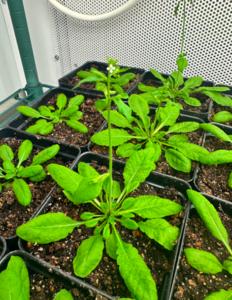
New York University researchers have pinpointed the molecular players responsible for plants “feeling full” once they’ve taken up enough nitrogen—a finding that could help scientists to develop plants that absorb more nitrogen from the soil and allow farmers to reduce environmentally and economically costly fertilizer application.
“By identifying gene regulators that are sensitive to different levels and types of nitrogen, we uncovered a regulatory factor controlling nitrogen use and a key to improving nitrogen uptake and assimilation into organic nitrogen in plants,” said Gloria Coruzzi, the Carroll and Milton Petrie Professor in NYU’s Department of Biology and Center for Genomics and Systems Biology and the co-senior author of the study, which appears in the journal The Plant Cell.
Over the past few decades, the use of nitrogen fertilizers has greatly boosted global crop yields. However, plants only absorb around 50 percent of applied fertilizers. A substantial amount leeches into the water supply, which can damage aquatic life and promote harmful algal blooms. The remaining unused nitrogen in the soil contributes to rises in the potent greenhouse gas nitrous oxide, which is 273 times more effective at trapping heat compared to carbon dioxide over a 100-year period.