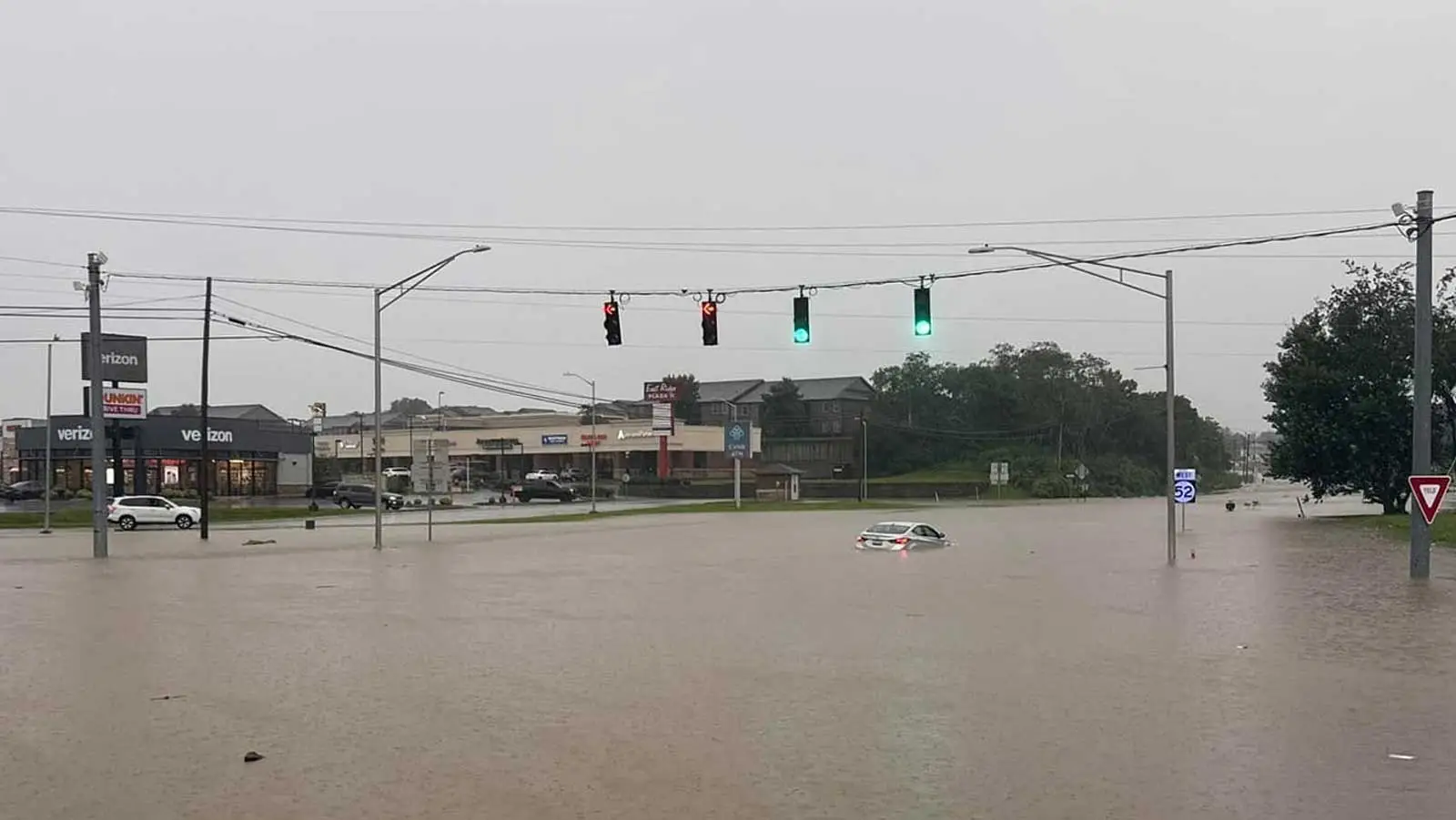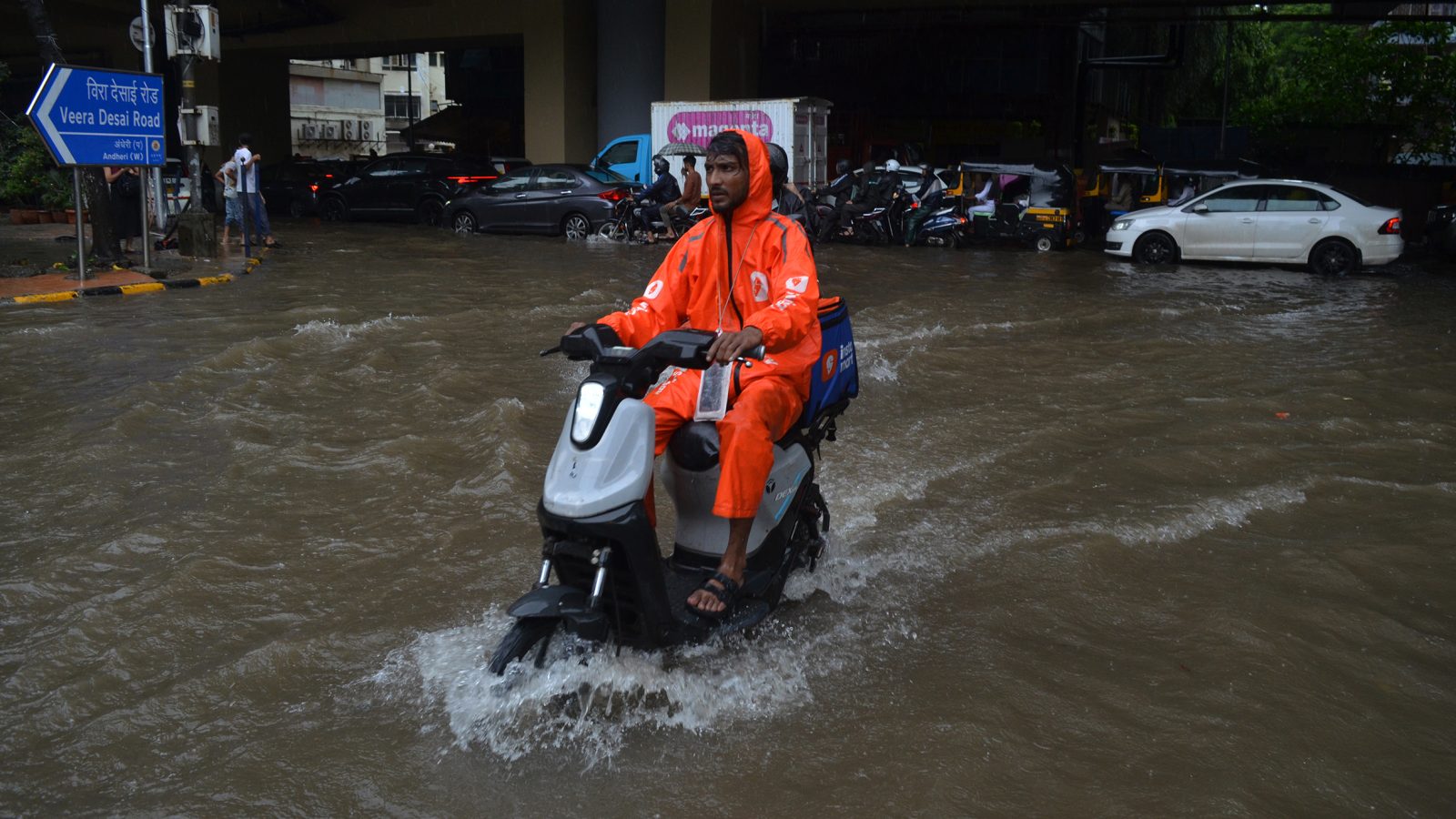
As July monsoon rains flood the Mumbai streets around my home, quick-commerce platforms are using advanced weather algorithms to capture surging customer demand. While tech companies capitalize on the storms, the workers navigating knee-deep water are forced to choose between their safety and their livelihood.
2026 marks the first year that the India Meteorological Department has incorporated AI in weather forecasting, but delivery platforms have been feeding their algorithms weather-related data for longer. Zomato, for instance, relies on crowd-sourced data from Weather Union, which it launched in 2024, and on driver partners logging conditions in real-time. “As soon as we’re alerted of unsafe conditions in any zone or store, we immediately alert delivery partners for their safety,” a spokesperson for Eternal, Zomato’s parent company, told Rest of World.
“Platforms do typically issue weather warnings and safety advisories, but the decision to work ultimately rests with workers themselves,” Prakriti Dasgupta, assistant professor of human resources management at Ireland’s Maynooth University, told Rest of World. “Economic pressures and incentive structures often compel them to continue working under conditions that may jeopardize their health, safety, and well-being.”