Debates about international order usually begin with the same question: who will lead next? Will the United States recover its authority? Will China mature into a responsible provider of public goods? Will some concert of major powers manage the transition?
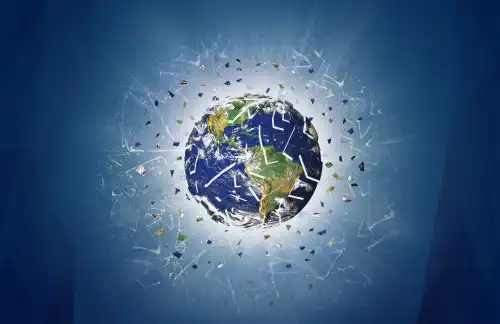
The question is familiar and increasingly misleading. The defining condition of this century is not a clean transfer of hegemony from one state to another. It is the erosion of the possibility that any single state, or compact group of great powers, can supply order for everyone else.
We live in a G-minus world. The term does not simply mean that leadership is absent, as in a G-zero world. It means that every plausible steering group is missing something essential. Military reach, manufacturing capacity, financial credibility, technological innovation, demographic weight, regulatory authority, and political legitimacy are distributed across different actors. The United States remains pre-eminent in several domains, but it depends on production networks it does not control. China is central to global manufacturing and trade, but lacks the alliance structure and financial trust to underwrite a universal order. The European Union can set standards, but cannot by itself secure the system it regulates. India, Brazil, Indonesia, Saudi Arabia, and other consequential powers cannot be treated as rule-takers, yet they do not form a coherent governing coalition.