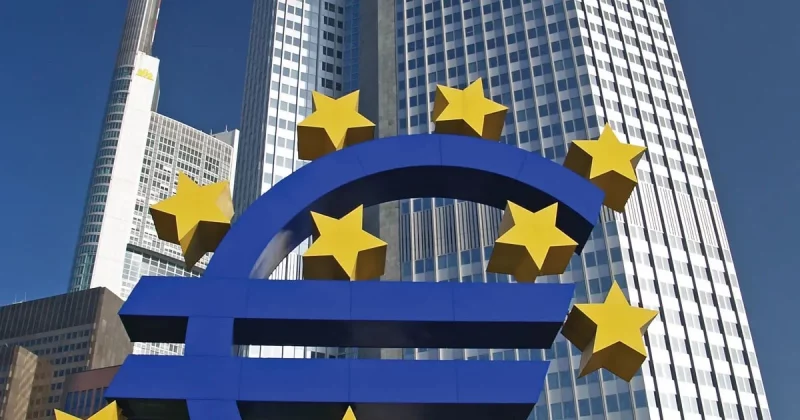
Oil prices don’t care about your inflation target. The European Central Bank is learning that lesson the hard way as conflict in the Middle East sends energy costs spiraling and drags the euro area back into uncomfortable territory for price stability.
Brent crude has surged from roughly $70 per barrel before the conflict began to a peak of $118, a move that pushed euro area CPI to 3.2% in May 2026. That’s well above the ECB’s 2% target, and it forced the central bank to raise its deposit rate to 2.25% in June, its first hike since 2023.
What triggered the spike
Coordinated Israel-US strikes on Iran beginning February 28, 2026 set the whole chain in motion. Oil prices jumped past $90 almost immediately, then continued climbing as markets priced in the possibility of supply disruptions through the Strait of Hormuz.
What’s interesting is the ECB’s own characterization of the price action. In a late July 2026 analysis, the central bank described the oil price response as “surprisingly restrained.” That phrase, applied to a scenario where crude nearly doubled, tells you everything about how worried policymakers are about what could still happen.