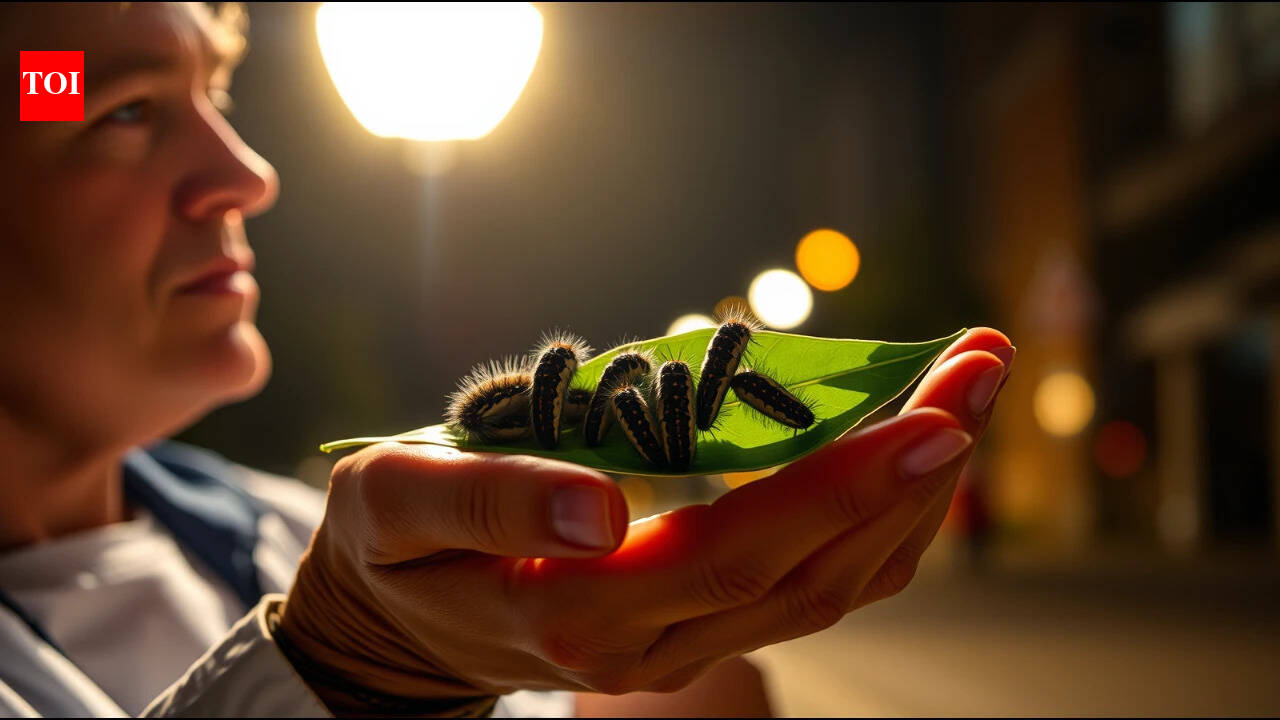
Over three summers, a doctoral researcher named Douglas Boyes spent more than 400 hours crouched beside English roadside hedges after dark, tapping branches with a stick and counting how many moth caterpillars fell onto a canvas tray below.
Boyes, who split his time between Newcastle University and the UK Centre for Ecology and Hydrology, expected artificial street lighting to reduce caterpillar numbers by something like 10 per cent.
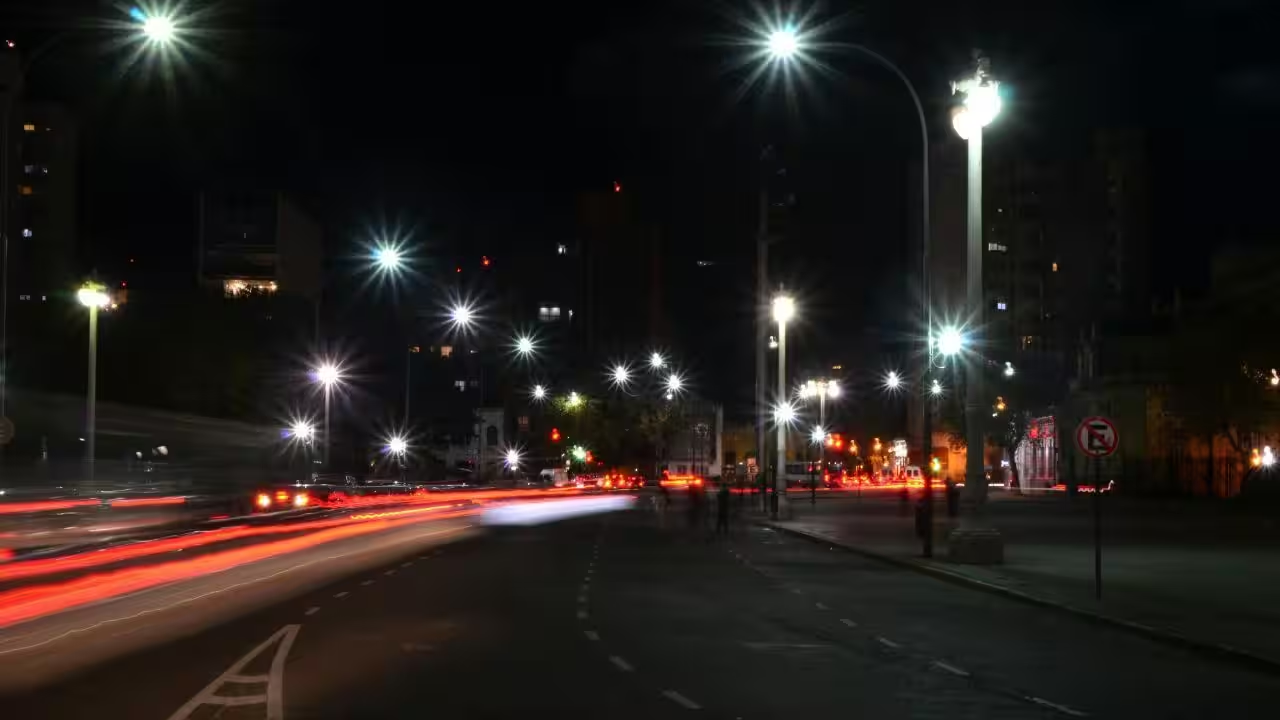
What he actually found was far more severe, and it revealed something specific about which type of streetlight was doing the most damage.How scientists discovered streetlights were linked to fewer caterpillarsThe research compared 26 pairs of roadside sites across Oxfordshire, Buckinghamshire and Berkshire, matching a lit stretch of hedgerow or grass margin against a similar unlit stretch nearby.
According to thestudy published in Science Advances, caterpillar numbers in lit hedgerows came in 47 per cent lower than in unlit hedgerows, while lit grass margins showed a 33 per cent reduction compared to their unlit counterparts.The fieldwork was designed specifically to avoid a common bias in insect lighting research.
Rather than counting adult moths drawn toward light traps, which only shows where moths flew on a given night, Boyes counted caterpillars directly on the plants where they had been feeding for weeks, since caterpillars cannot fly away from unfavourable conditions.