Academia
When a country crosses the World Bank’s threshold from low- to middle-income status, it is deemed too rich to qualify for aid, even though it is not yet rich enough to cover its health costs.
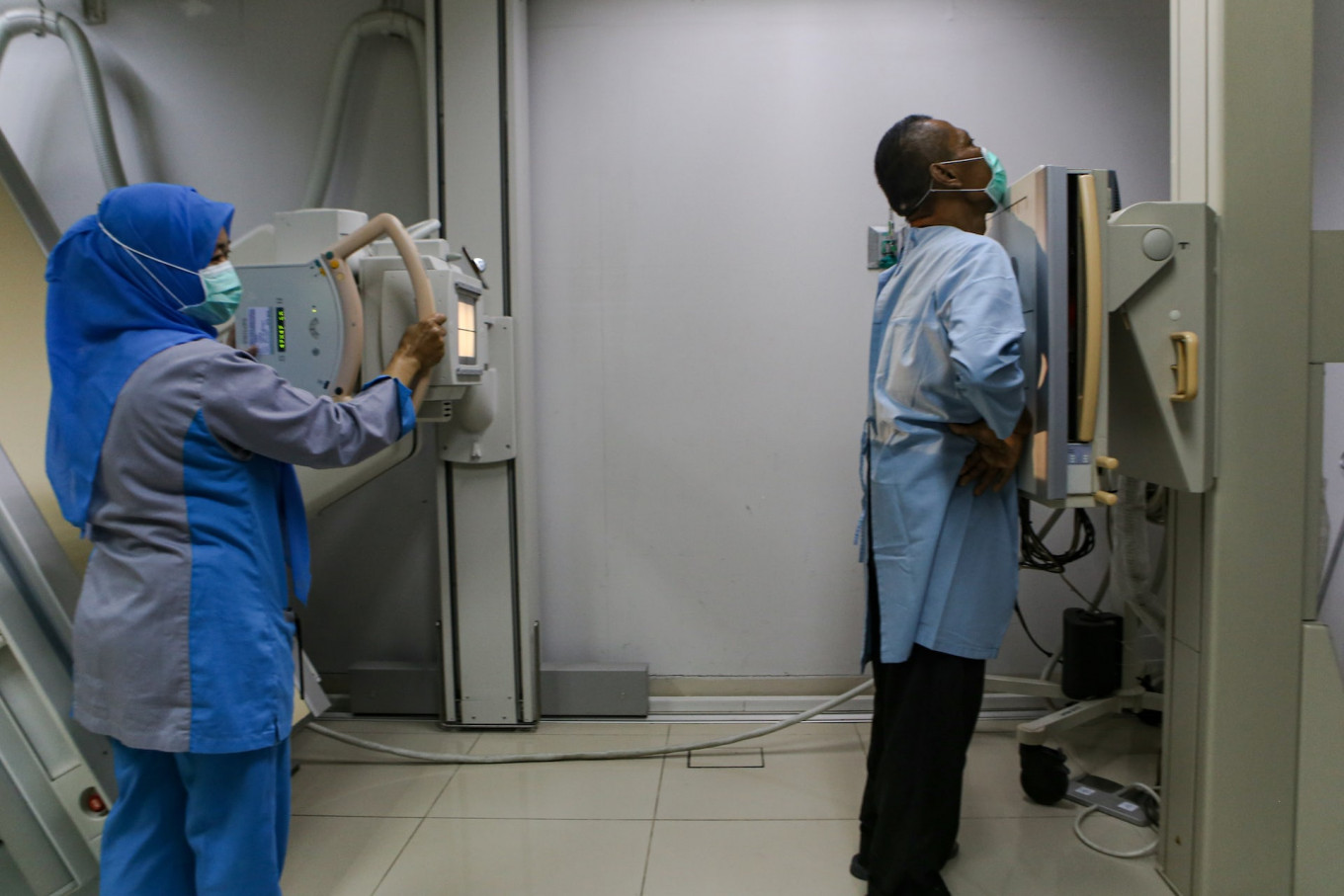
A health worker conducts a chest X-ray scanning at Tangerang City General Hospital, Banten, on March 21, 2023. Antara/Fauzan (Antara/Fauzan)
In the lexicon of development, few words sound as reassuring as “graduation,” which suggests progress past critical milestones and an escape from dependency. In global health, however, graduation increasingly creates a trap. When a country crosses the World Bank’s threshold from low- to middle-income status, it is deemed too rich to qualify for aid, even though it is not yet rich enough to cover its health costs.The implications of reaching this milestone (which is based on gross national income per capita) are therefore profound. Achieving middle-income status means that concessional loans will increasingly have to be replaced by market-rate borrowing, and that grants will shrink or disappear as global health programs wind down.
But pathogens do not recognize income thresholds, and the resources available to health systems do not necessarily grow smoothly with GDP. In many countries, disease burdens remain stubbornly high long after aid eligibility has expired. If there is any lag in the growth of the government’s fiscal capacity, the result will be a widening gap between health needs and health financing. Neither markets nor donors are well equipped to fill it.