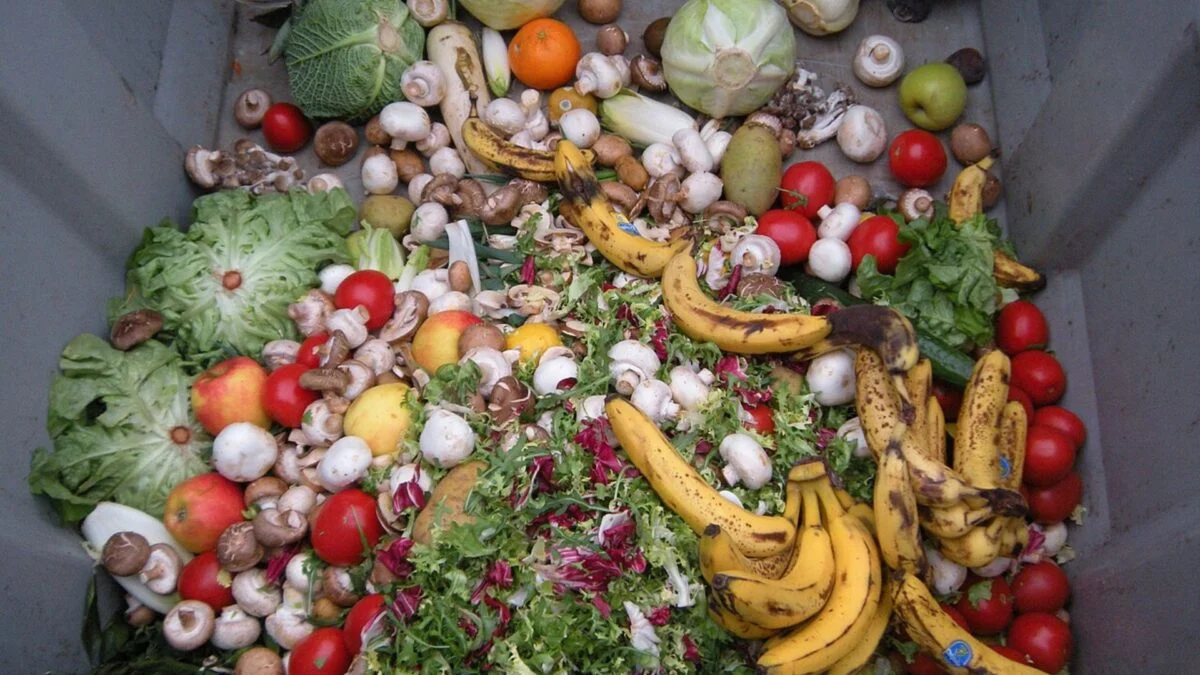
Between 30% and 40% of the U.S. food supply goes uneaten, according to the Environmental Protection Agency. Most of this organic waste ends up in landfills, where it rots and emits planet-warming gases. New research shows that implementing nationwide food recycling would have enormous climate benefits, but it would come with a troubling tradeoff. In a study published July 23 in the journal Nature Food, researchers at the University of Vermont found that using food-derived compost and digestates (the nutrient-rich material left over after bacteria break down organic waste) could dump 20,000 tons of plastic onto agricultural soils each year. That is, if we don’t change the way we package our food. “If you don’t intentionally intervene and have a plan for how you’re going to minimize plastic in your recovered soil amendments, there will probably be plastic there based on just how pervasive it is in our food system right now,” lead author Kate Porterfield, a postdoctoral researcher at UVM’s Gund Institute for Environment, said in a statement. “It’s literally everywhere.”
The complexities of cutting food waste The EPA has set a goal to cut U.S. food waste in half—down to about 160 pounds (74 kilograms) per capita—by 2030. The country is nowhere close. A 2025 analysis based on data from 2022 found that, even when taking reduction measures into account, the U.S. still generates roughly 328 pounds (149 kilograms) of food waste per person annually. That’s equivalent to the 2016 baseline.