Story audio is generated using AI
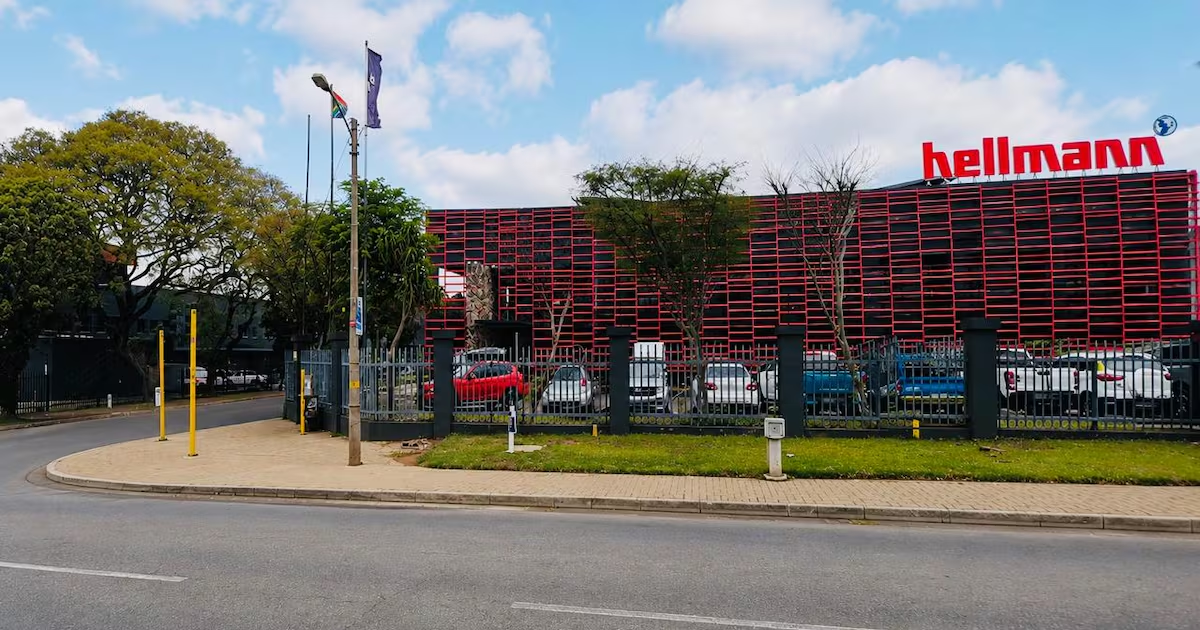
Unlisted property group Inospace has acquired the Hellman Building in Isando for R43m, expanding its Johannesburg industrial property portfolio as it shifts investment towards the city, where it says assets offer better value than those in Cape Town. The group, which owns and operates last-mile logistics parks across Johannesburg and Cape Town, said the acquisition takes its portfolio in the Kempton Park logistics node to five properties.The acquisition is the latest in a series of Johannesburg purchases this year, following deals in Wadeville, Germiston and Wynberg, as the group redirects capital from Cape Town after disposing of selected industrial assets there.“We are finding much greater value in Johannesburg assets. The Cape Town market is not a yield play at the moment and feels a little too frothy. We believe Johannesburg will turn the corner, hopefully after the municipal elections, and that there is still material value to be unlocked there,” said founder and CEO Rael Levitt.The building, at 48 Electron Avenue, sits adjacent to the group’s Electron Exchange park, which it acquired in 2021, and fronts the R24 highway, one of the main freight routes linking Johannesburg to OR Tambo International Airport.The property comprises 9,518m² of land with 8,322m² of gross lettable area, including an A-grade warehouse, executive offices and a 12m eaves height. Existing tenant Hellman will remain in occupation while Inospace integrates the property into its neighbouring logistics park and converts part of the site into microwarehousing.“We have real confidence in the OR Tambo node. The Hellman Building gives us direct visibility onto the R24 and sits alongside one of our strongest-performing parks. It allows us to consolidate our footprint around the airport and build on the growth we are already seeing in the portfolio,” Levitt said.Since its founding in 2017, the group has grown its portfolio to 52 properties valued at R3.2bn, focusing on multi-let industrial parks and last-mile logistics hubs that cater primarily to small businesses. Its strategy has centred on repositioning traditional warehouses into flexible industrial spaces, enabling smaller tenants to access infrastructure and operational efficiencies typically associated with larger corporate occupiers without committing to conventional single-tenant premises.Business Day