Story audio is generated using AI
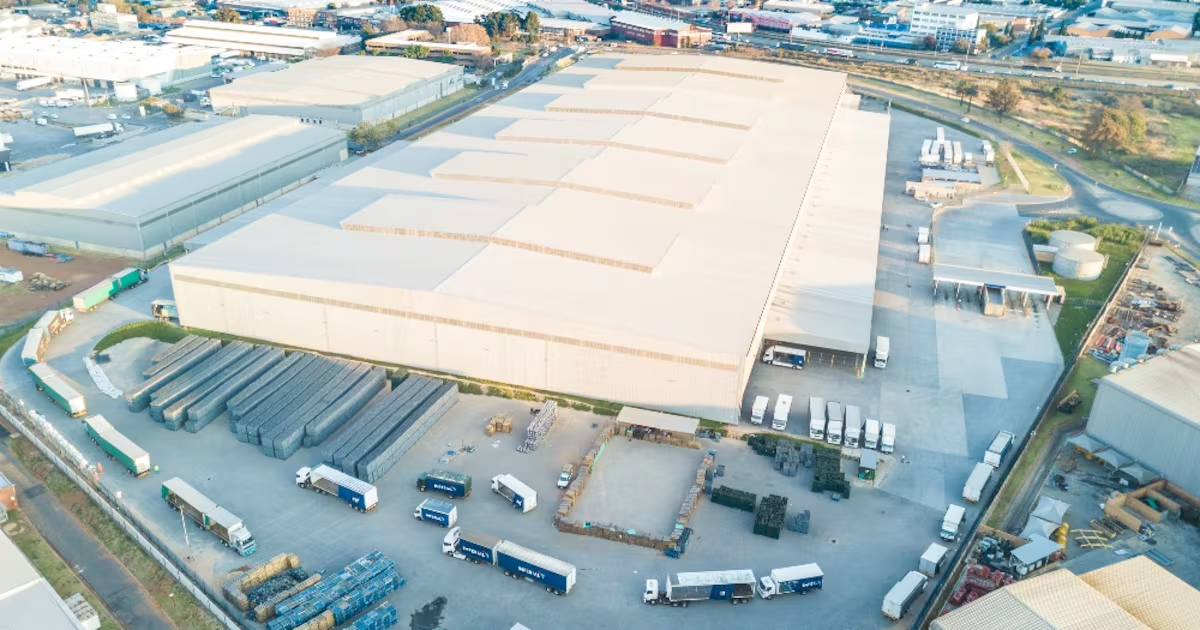
The Cape Metropole’s industrial property market has entered a new phase, with developers increasingly constructing warehouses without secured tenants as soaring rentals and persistent shortages of industrial space boost confidence in the sector, according to property services firm Cushman & Wakefield | Broll.Analysis by the company shows that rentals at A-grade industrial parks have risen by as much as 58% since the second quarter of 2021. Some properties that rented for about R60/m² five years ago are now achieving R90/m²-R95/m². Premium logistics warehouses are commanding net rentals of R105/m²-R115/m².“The risk appetite has shifted. For many years, developers typically secured tenants before committing to industrial developments, and few were willing to build without a lease in place,” said Shane Howe, head of industrial broking for the Western Cape at Cushman & Wakefield | Broll.Developers are now increasingly willing to commit capital before securing tenants because they were confident the market would absorb new space, he said.Demand for warehousing and logistics facilities has been supported by changes in supply chains and the expansion of e-commerce since the Covid-19 pandemic. Moreover, years of limited development have left many established industrial nodes short of modern space, driving rental growth.“This isn’t simply a case of more buildings going up. The real shift is that developers are backing the underlying fundamentals of the market and its ability to absorb new space,” Howe said.Speculative developments of various sizes are being built, from units of about 500m² to facilities of around 5,000m², with flexible designs that can accommodate different occupiers. This isn’t simply a case of more buildings going up. The real shift is that developers are backing the underlying fundamentals of the market and its ability to absorb new space— Shane Howe, head of industrial broking for the Western Cape at Cushman & Wakefield | Broll.However, the supply of well-located industrial land remains constrained, limiting development opportunities, while high acquisition and redevelopment costs continue to make many brownfield projects uneconomical, Howe said.Investor demand has also strengthened, with prime industrial assets trading at yields of 8%-9%, underpinned by rental growth and strong tenant demand.“There is a substantial amount happening across the Cape industrial market, but the opportunities are not all the same. Location, timing, unit configuration, specification and flexibility all need to be considered,” Howe said.Business Day