Story audio is generated using AI
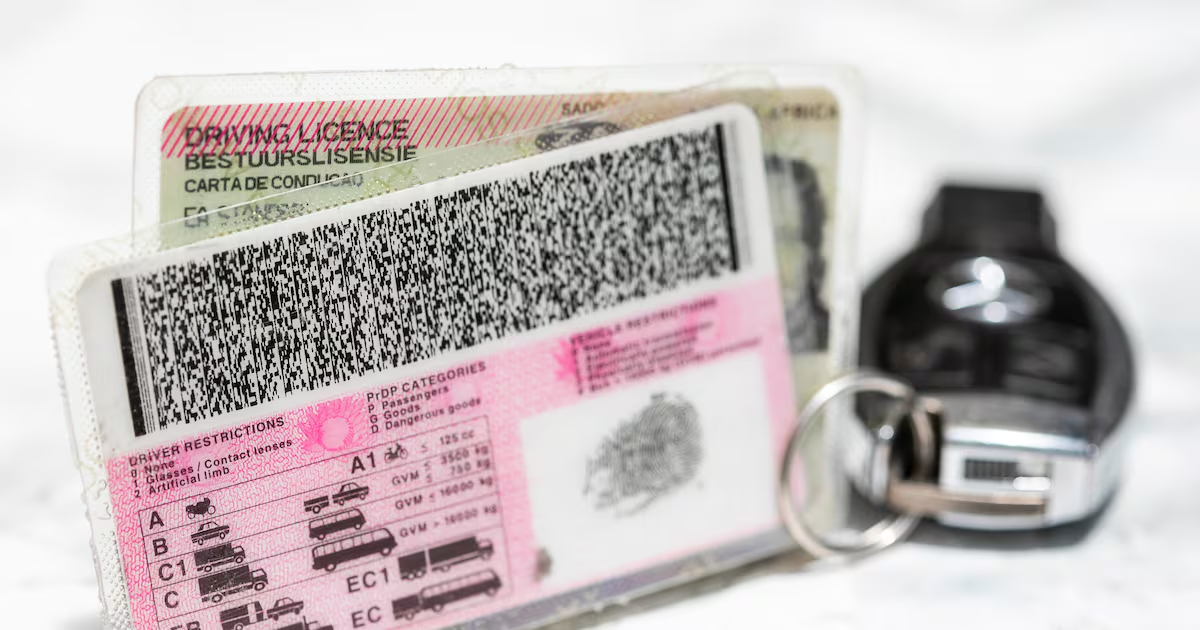
Motoring StaffThe Organisation Undoing Tax Abuse (Outa) has welcomed the cabinet’s approval of a 10-year validity period for driving licence cards for light motor vehicles, describing the move as a long-overdue reform that will reduce the administrative burden on motorists.The decision applies to driving licence codes A, A1, B and EB. Heavy commercial and public transport vehicle licences will continue to be renewed every two or five years, while professional driving permits will remain subject to two-year renewal periods.The decision was announced by minister in the presidency Khumbudzo Ntshavheni at a post-cabinet media briefing.“The change aligns with international best practice, enhances administrative efficiency, reduces the frequency of renewals for motorists and eases service demand pressures in the licensing system,” said Ntshavheni.The change must be implemented through legislative amendments and before taking effect. “Motorists must therefore continue to renew expired driving licence cards until the new law takes effect,” she said.“This decision is almost six years overdue, but it is a victory for motorists and for common sense. The government has finally accepted that forcing motorists through an inefficient renewal system every five years wastes time and money without making our roads safer,” said Outa CEO Wayne Duvenage.The organisation said it first called for the extension of the licence card validity period in September 2020, when Covid-19 restrictions disrupted licensing services and contributed to a backlog of expired driving licence cards. The organisation argued that the five-year renewal cycle placed unnecessary pressure on a licensing system already affected by inefficiency, corruption and poor service delivery.To support its proposal, Outa researched driving licence validity periods in 35 countries across six regions, finding an average validity period of 8.5 years, with renewal intervals ranging from three to 20 years. It also surveyed 3,685 motorists in 2021, with respondents citing problems including ineffective online booking systems, long queues, poor staff attitudes and instances of alleged bribery.The government took far too long to act, despite having the evidence and the power to address this unnecessary administrative burden. We are nevertheless pleased that it has arrived at the right decision— Wayne Duvenage, Outa CEO The organisation presented its findings to then transport minister Fikile Mbalula in March 2022 and said it continued to advocate for reform as licence renewal backlogs and card-printing failures persisted.“The government took far too long to act, despite having the evidence and the power to address this unnecessary administrative burden. We are nevertheless pleased that it has arrived at the right decision,” said Duvenage.The organisation also said its international research had found no evidence linking longer validity periods for ordinary driving licence cards with higher road fatality rates, arguing that road safety depended on effective law enforcement, responsible drivers, roadworthy vehicles and safer roads rather than the frequency with which licence cards were renewed.The organisation noted that the cabinet’s approval did not mean the 10-year validity period would take effect immediately. Amendments to the relevant legislation first have to be published, and motorists are required to continue renewing expiring driving licence cards under the current rules until the changes officially come into force.The department of transport has been asked to clarify when the new validity period will be implemented and whether it will apply only to newly issued driving licence cards or also to those already in circulation.The organisation also urged the department to publish an implementation timetable and explain the transitional arrangements to avoid confusion among motorists.TimesLIVE