America faces overlapping crises in the Middle East and Latin America, most of its own making. The January 2026 capture of Nicholas Maduro and the cycle of negotiation and escalation with Tehran both follow the same pattern: tactical events dominate the headlines while the harder questions go unasked. What is America’s objective, and do its actions actually produce that outcome?In Antifragile: Things That Gain from Disorder, Nassim Nicholas Taleb described systems that grow stronger under stress rather than succumbing to it. That distinction exposes a weakness in American strategy, not in the regimes it targets. Washington rarely states what victory looks like, and it leaves untouched the institutions that keep the regime in power.The failure is not that these regimes are invincible. It is that Washington cannot tell the difference between what can be replaced and what cannot. Militaries can be destroyed. Economies can be crippled. Leaders can be captured or killed. The infrastructure that regenerates all three survives because it displays the antifragile traits Taleb described.
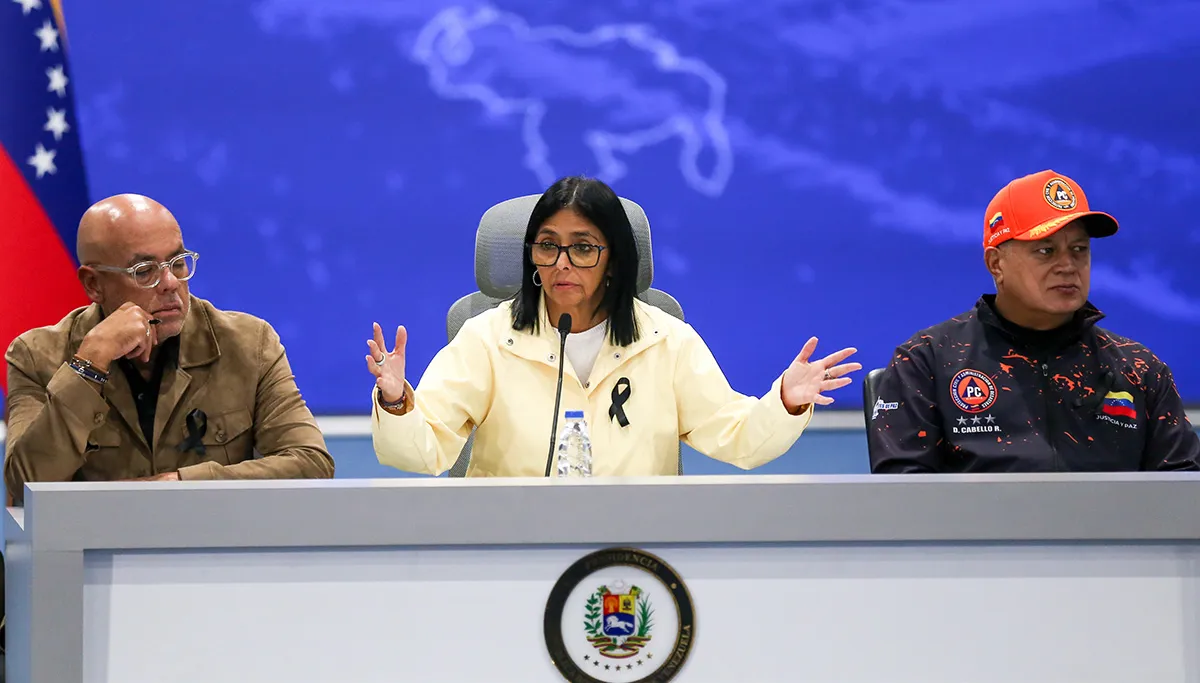
Pressure that destroys assets while leaving the regenerative infrastructure intact produces tactical wins without strategic victory. Wars are won only when they produce a durable political outcome, and that is the problem.TRUMP AND PUTIN ARE LEARNING PARALLEL LESSONS ABOUT THE REALITIES OF MODERN WARFAREPressure is a tool, not a strategy. Strategy names the political objective, defines what must change to reach it, and states how success will be recognized. Washington has rarely done the first two. It has almost never done the third.Consider Iran. Is the objective to prevent a nuclear weapon, protect shipping through the Strait of Hormuz, compel better behavior, contain the regime, negotiate an accommodation, or replace it altogether? Each demands a different strategy and definition of success.The United States and Israel have inflicted serious damage. Iran’s nuclear facilities were struck, its military degraded, and much of its senior leadership eliminated. Yet within weeks, new leadership had assumed control, military operations resumed, and negotiations picked back up as if nothing had happened. The losses were real; institutional continuity remained intact.Satellite imagery obtained by CNN and the Institute for Science and International Security shows Iran already rebuilding the underground Taleghan 2 facility at Parchin, one of the sites destroyed in February. By early July, bomb-penetration holes had been excavated further and reinforced with concrete and rebar for what analysts call a permanent, hardened cap. Tehran is not simply rebuilding. It is adapting.The military cycle has followed the same pattern. Iran’s Revolutionary Guard navy struck the container ship M/V GFS Galaxy and declared the Strait of Hormuz closed until American “interference” ended. The United States answered with a third round of CENTCOM strikes within the week and reinstated the naval blockade suspended after June’s memorandum of understanding, a policy Washington says costs Iran roughly $435 million a day. Defense Secretary Pete Hegseth summarized the response directly: Iran made a poor choice, now it pays.The costs are real, but the question is whether the pain advances a defined political objective. If the goal is only to punish Iran, the policy may be working; if it is lasting political change, the evidence is far less convincing.THOMAS JEFFERSON SAW THROUGH IRAN’S PLAYBOOK 240 YEARS AGOIran’s economy is under severe strain. Inflation has devastated purchasing power, food prices keep rising, and nationwide protests reflect deep public frustration. Yet hardship alone rarely dismantles entrenched authoritarian systems.Executive Vice President Delcy Rodriguez (C) speaks alongside Minister of Interior, Justice and Peace Diosdado Cabello (R) and President of Venezuela’s National Assembly Jorge Rodriguez (L) during a press conference in Caracas, Venezuela, on July 02, 2026. Venezuelan officials addressed the two earthquakes that recently struck the country. (Photo by Julio Urribarri/Anadolu via Getty Images)