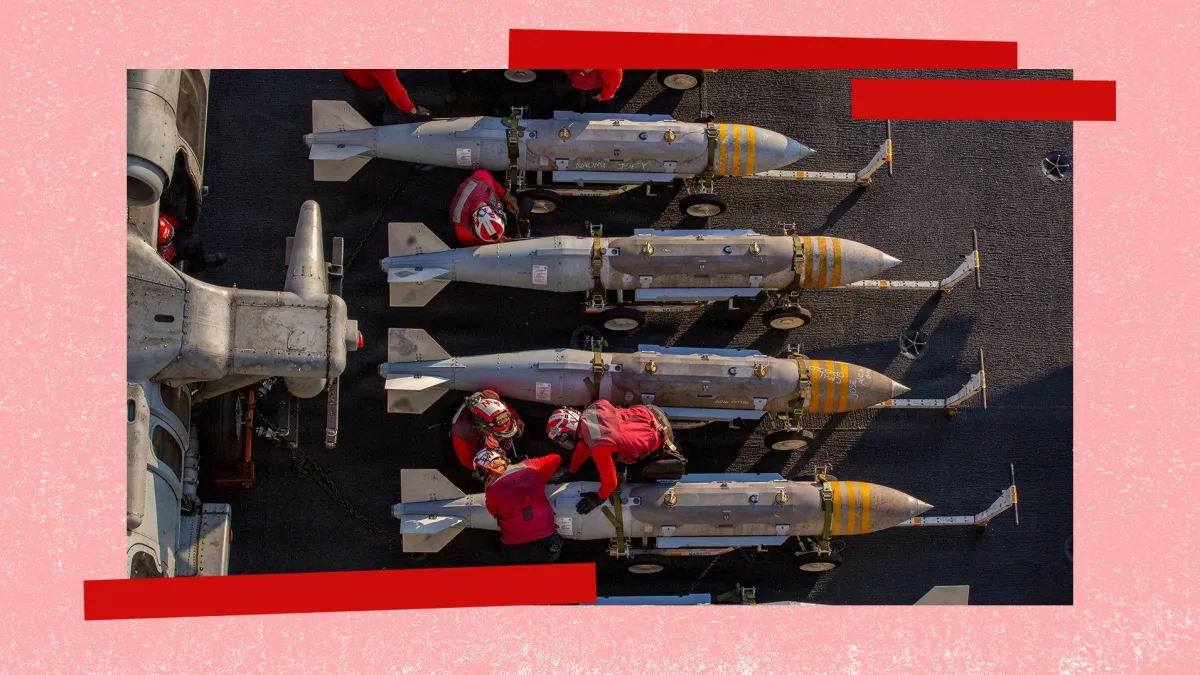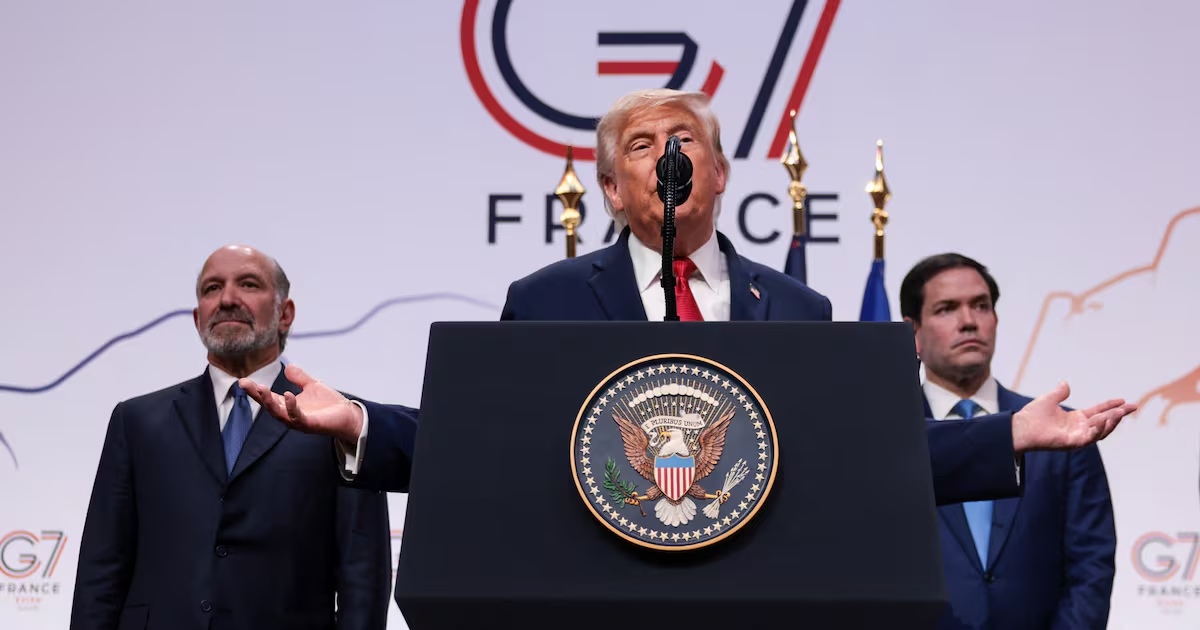
Sometimes it is impossible to see beyond Donald Trump’s self-dramatisation, his intellectually clumsy speeches and the vacuous encomia he thrives on. But something somewhat coherent and consistent is under way.Here’s a useful reminder: the US has presented itself as an idea and its place in the world as a mission, not as a country. Since 1945 it has beamed its variant of free market capitalism and minimalist government across the world. It has done so by various means of coercion and consent through international institutions, mainly the World Bank and IMF; subtly and surreptitiously through the Peace Corps or the National Endowment for Democracy; and more overtly with violence. Since 1945 Washington has focused on undermining and then destroying alternatives to American capitalism. We should not confuse commerce, trade and exchange with capitalism. Those predate capitalism by many centuries. While the Monroe Doctrine explains Washington’s 19th-century conduct in the western hemisphere, its post-World War 2 global mission violated the internal sovereignty of countries in Africa and Asia.External sovereignty essentially means that all states deserve legal recognition. Internal sovereignty is the right to govern people, and no external actor or agent should interfere. Based on the evidence, the US has not cared much about the internal sovereignty of independent states. Let’s run through some of the examples, starting with the bêtes noires (and anxieties) of the middle class. In 1953 the US dropped about 635,000 tonnes of explosives, including 32,557 tonnes of napalm, on military and civilian infrastructure in North Korea, intentionally destroying the Toksan Dam, which flooded the countryside and destroyed rice supplies, in the hope of starving the people into submission. General Curtis LeMay, who directed the bombing, acknowledged that “we went over there and fought the war and eventually burnt down every town in North Korea”. (Place that beside Trump’s threat to destroy Iranian civilisation). Also in 1953, the US was instrumental in toppling democratically elected Mohammad Mossadegh and installing and propping up one of the most brutal dictatorships in Iran. The reign of Mohammad Reza Pahlavi scarred that society for a generation. The Shah’s rule was “allowed” by the West because Iran’s natural resources were open to exploitation. The current Islamic government, illiberal in the lexicon of Western orthodoxy, has prevented that, and the US has punished the Iranians with more than four decades of sanctions. The Cubans, too, have refused to submit after almost seven decades of sanctions. That may change in the coming weeks as the US tightens the noose around that country’s public services. Iran and Cuba (and Venezuela, for that matter) made the fatal error of refusing to surrender their internal sovereignty and govern according to the whims and caprices of Washington. The process of discrediting, destabilising and eventually destroying gained pace after the US “burnt down every town in North Korea”. Many US interventions are well known, but let’s run through some of them again to support the claim made at the top of this column: the Guatemala interference; the Bay of Pigs Invasion; the blockade of Cuba; the Vietnam War; the Indonesian genocide; funding of the Mujahideen/Taliban in Afghanistan; the first Gulf War; the toppling of Saddam Hussein and Muammar Gaddafi; kidnapping Nicholas Maduro in Venezuela; the current war on the people of Iran; and the continued strangulation of Cuba. I am currently a guest in Southeast Asia and have for decades been reminded that in 1964-73 the US military led 580,000 bombing missions, dropping 2-million tonnes of bombs on the Laotian people. All of the interventions above were responses to domestic sovereignty claims by independent countries that prioritised the development of natural resources for the public good — and not for the profit-generating machinery of the West.Washington’s interventions were rarely about democracy. Washington supported dictators and illiberal regimes in Indonesia, Iraq and Afghanistan, and propped up dictators in South Korea and fascists in Portugal and Greece. The discontinuous mind may ignore these historical parallels and continuities. The observer may, alternatively, believe that tens of thousands of deaths are “worth it”, as Madeleine Albright once said about the estimated 500,000 Iraqi children who died due to US sanctions. All things considered, it is not all Trump. He is merely a blip on the historical arc of America. Or, in somewhat Nietzschean terms, Trump is less significant than the mission of the American epoch. • Lagardien, an external examiner at the Nelson Mandela School of Public Governance, has worked in the office of the chief economist of the World Bank as well as the secretariat of the National Planning Commission.Business Day
ISMAIL LAGARDIEN | Trump isn’t the problem — American power is
From toppling democracies to bombing civilians, US foreign policy has consistently prioritised regime change over respect for internal sovereignty
759 words~3 min read