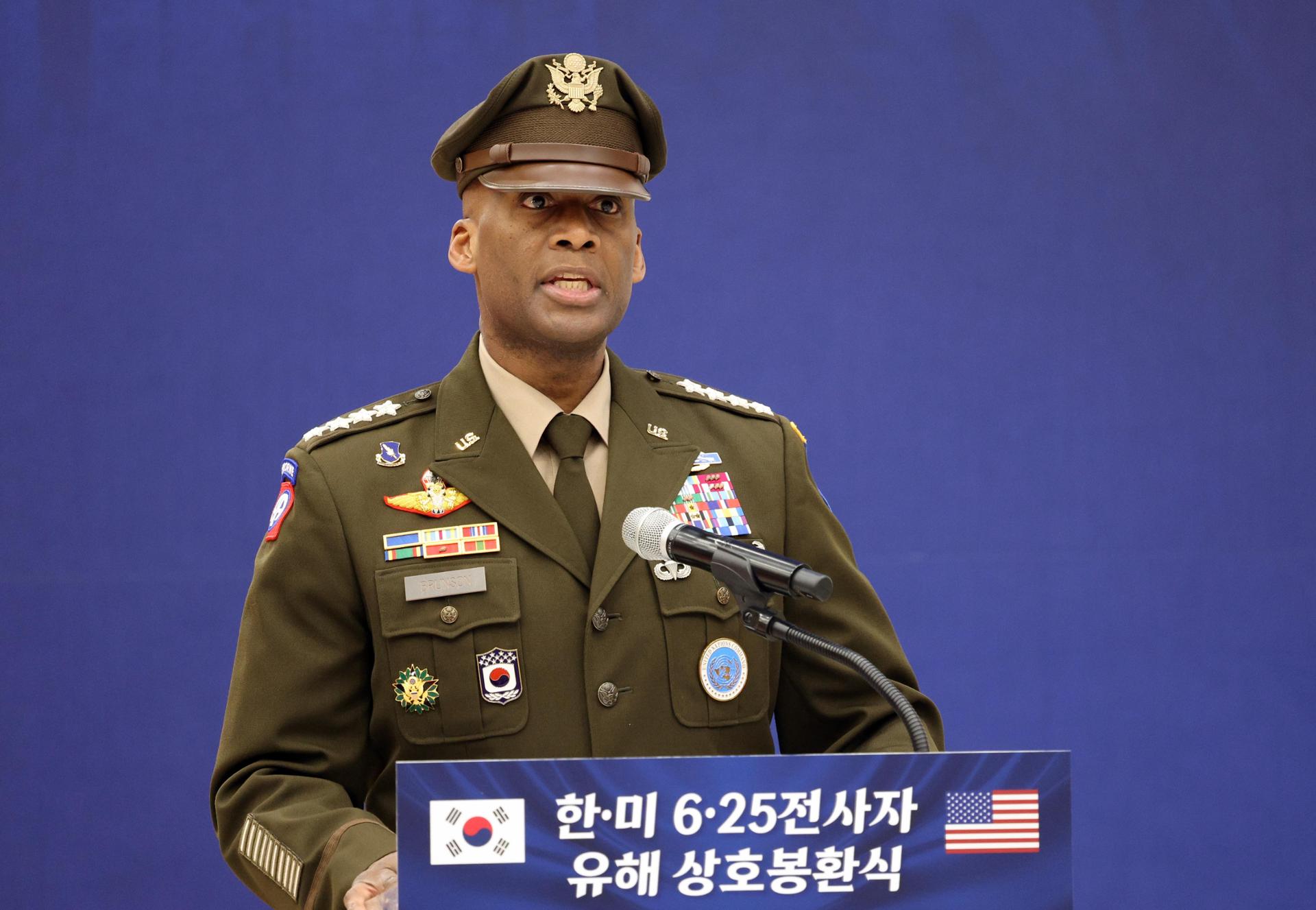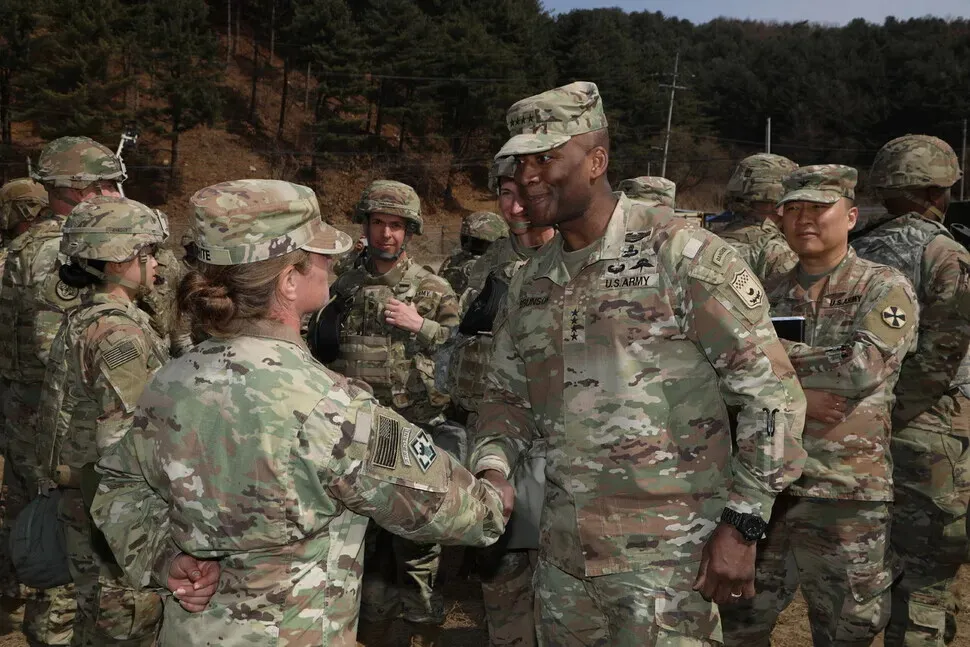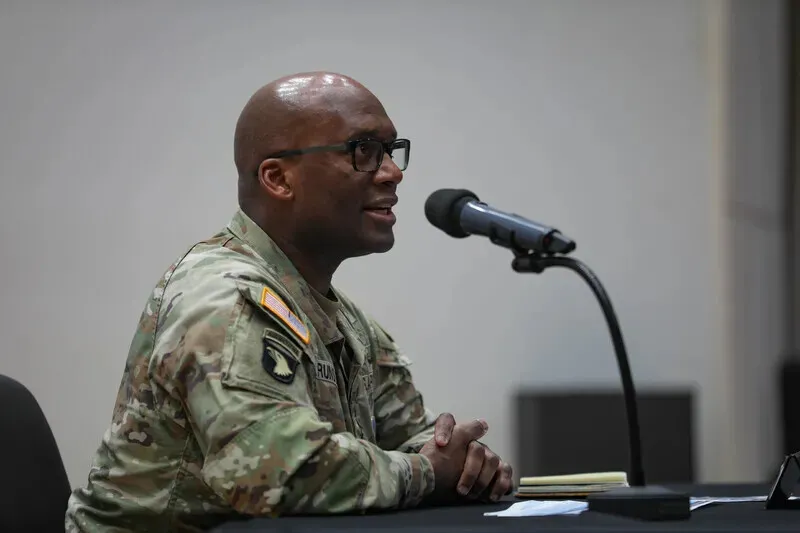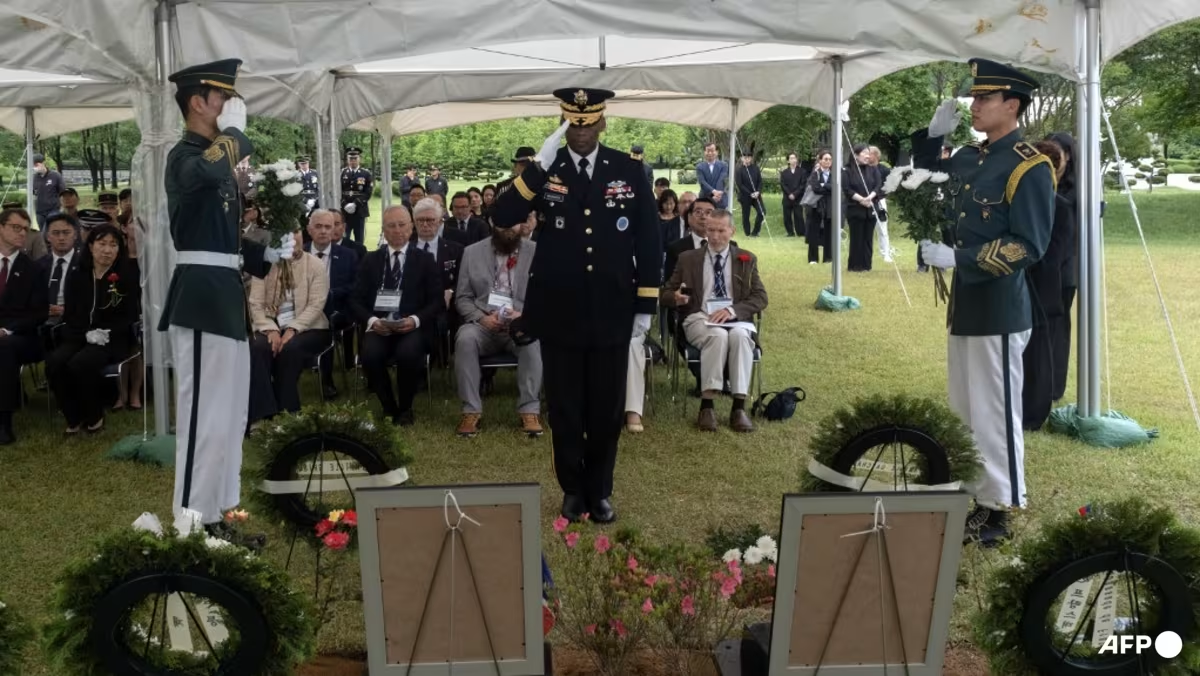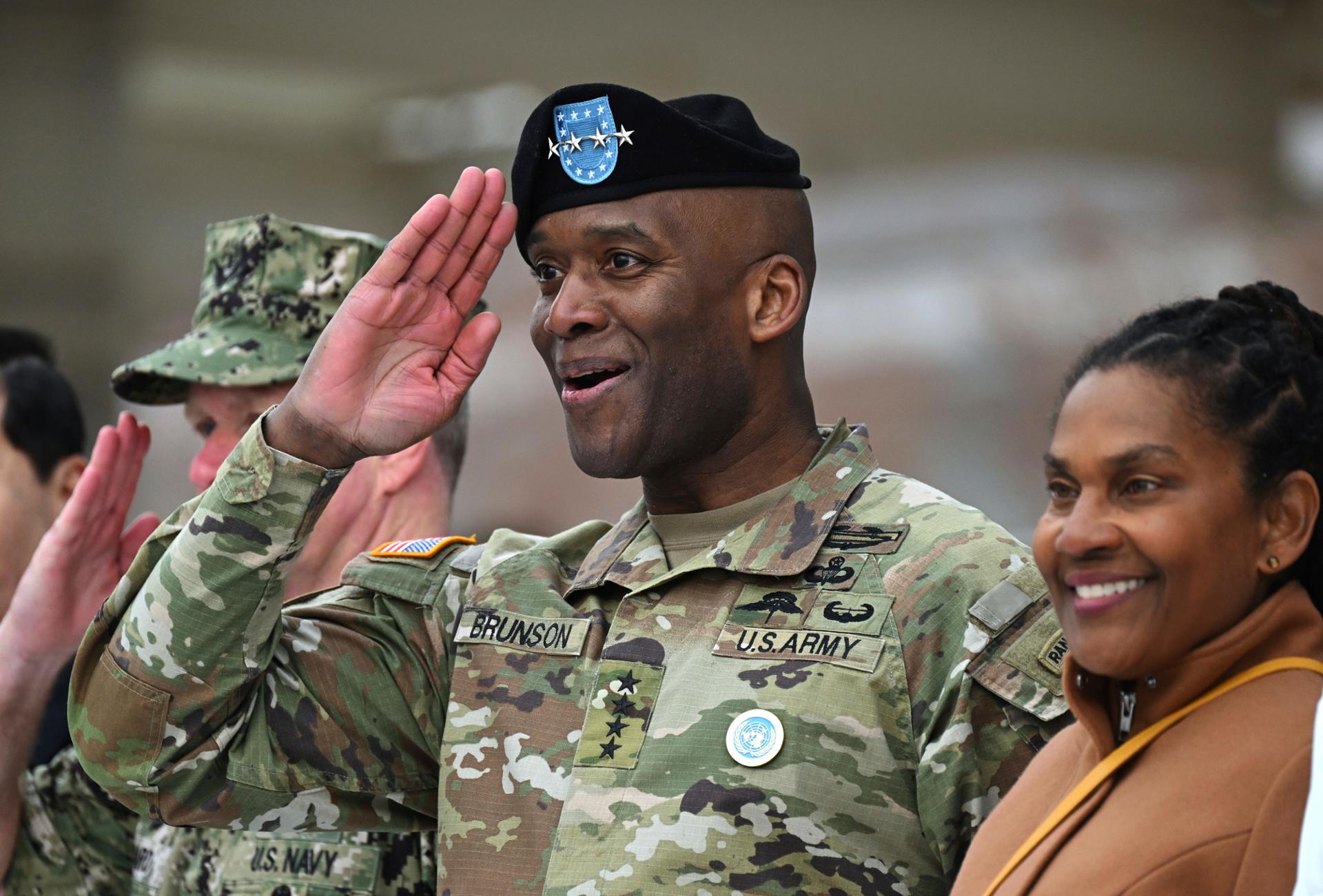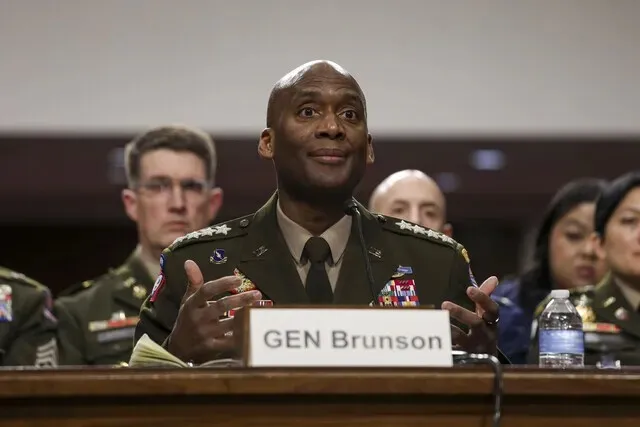
Brunson’s expected term comes amid uncertainty over next assignment Gen. Xavier Brunson, commander of United States Forces Korea, the South Korea-US Combined Forces Command and the United Nations Command, testifies before the Senate Armed Services Committee in Washington on April 21. (USFK) Gen. Xavier Brunson, the most senior US military officer in South Korea, is expected to remain commander of United States Forces Korea only into 2027, multiple sources said Thursday.The timing is notable, as any leadership transition would come while Seoul and Washington are confronting major questions ranging from the transfer of wartime operational control to the future role and force posture of US troops on the Korean Peninsula.Potential candidates to take over from Brunson remain unclear, while uncertainty also remains over whether Brunson would receive another assignment after the USFK top post.USFK declined to comment when asked about Brunson's future assignment.According to the sources, Brunson had been considered for the US Army chief of staff post following the departure of Gen. Randy George in April, but the position is now widely expected to go to Gen. Christopher LaNeve, the US Army vice chief of staff who has since served as acting chief.“Brunson recently traveled to the United States for a visit to the Army’s transformation command, but I understand the trip was also aimed at exploring his next assignment,” a military official in Seoul familiar with the matter said, speaking on condition of anonymity.The official was referring to a June trip during which Brunson visited the US Army Transformation and Training Command in Austin, Texas, on June 23.At the time, USFK said the purpose of the visit was to examine modernization efforts, including software development and military connectivity. Further details of the itinerary were not disclosed.Brunson assumed command of USFK, the South Korea-US Combined Forces Command and the United Nations Command on Dec. 20, 2024, serving in the post for about 19 months. Recent USFK commanders have generally served for roughly 2 1/2 to 3 1/2 years.LaNeve, meanwhile, has yet to be formally nominated by the White House for the US Army’s top post. LaNeve has been widely identified in US media as the leading candidate for the position, with The Wall Street Journal reporting in May that he was poised to be nominated.As a lieutenant general, LaNeve previously commanded the Eighth Army, the main US Army component in South Korea, and served as chief of staff of the South Korea-US Combined Forces Command.LaNeve has held a four-star rank for less time than Brunson.Brunson was promoted to general when he assumed the command in December 2024, while LaNeve received his fourth star in February this year.USFK as a final postingMost recent USFK commanders have retired after completing their tours in South Korea.Brunson’s immediate predecessor, Paul LaCamera, served from July 2021 to December 2024, a tenure of some three years and five months. Robert Abrams served from November 2018 to July 2021, or about two years and eight months, while Vincent Brooks served from April 2016 to November 2018, or roughly two years and six months.Curtis Scaparrotti served from October 2013 to April 2016, also about two years and six months. James Thurman served from July 2011 to October 2013, or about two years and three months, while Walter Sharp served from June 2008 to July 2011, a little over three years.Five of Brunson’s six immediate predecessors retired after leaving the post. Scaparrotti was the exception, moving in 2016 to lead the US European Command and serve as NATO’s supreme allied commander in Europe.Brunson took command amid growing uncertainty over the future of the South Korea-US alliance in US President Donald Trump’s impending second administration.Seoul’s push to accelerate the transfer of wartime operational control and Washington’s growing emphasis on the strategic flexibility of US forces have fueled concerns that the US could reduce troop levels or expand USFK’s missions beyond deterring North Korea.Brunson has sought to shift attention away from troop numbers and toward the capabilities available to the combined force, emphasizing the need to strengthen its ability to operate across land, air, sea, space and cyberspace.“The conversation ought not be about numbers. It ought to be about capabilities,” he said at a press briefing at Camp Humphreys in Pyeongtaek, Gyeonggi Province, in August 2025.
[Exclusive] USFK commander likely to serve only to 2027
Gen. Xavier Brunson, the most senior US military officer in South Korea, is expected to remain commander of United States Forces Korea only into 2027, multiple
707 words~3 min read