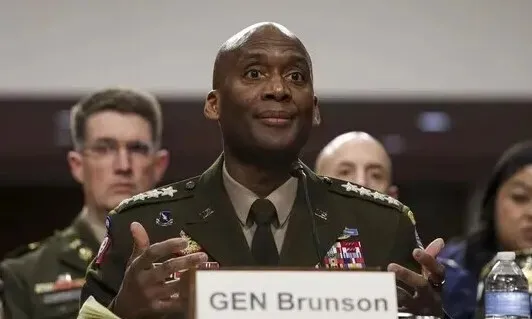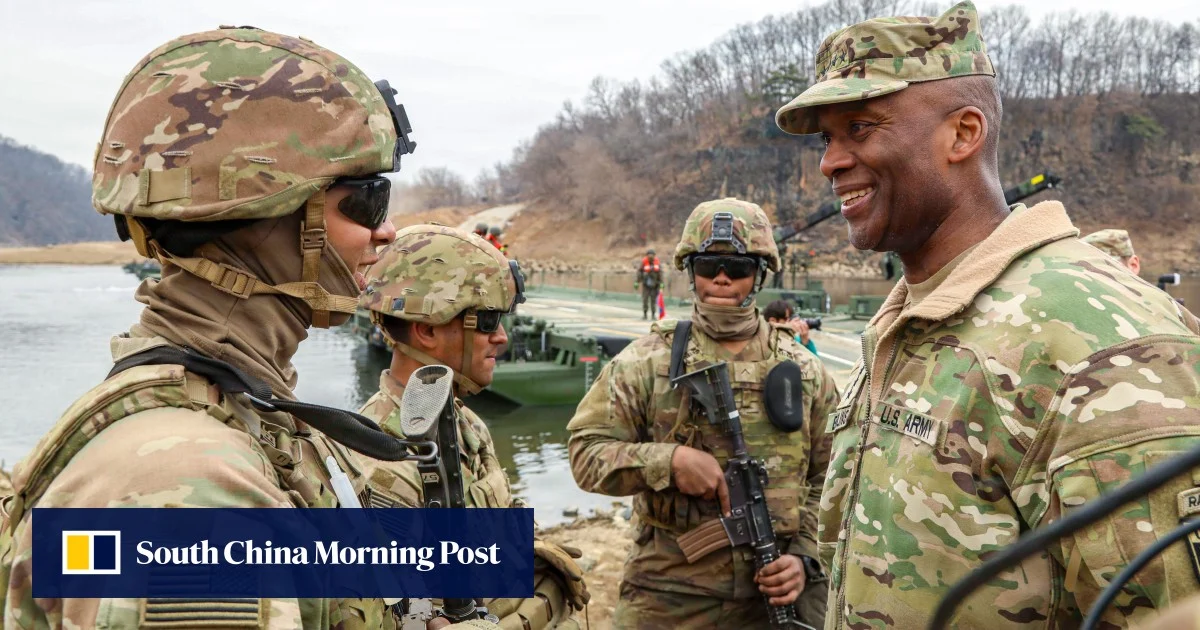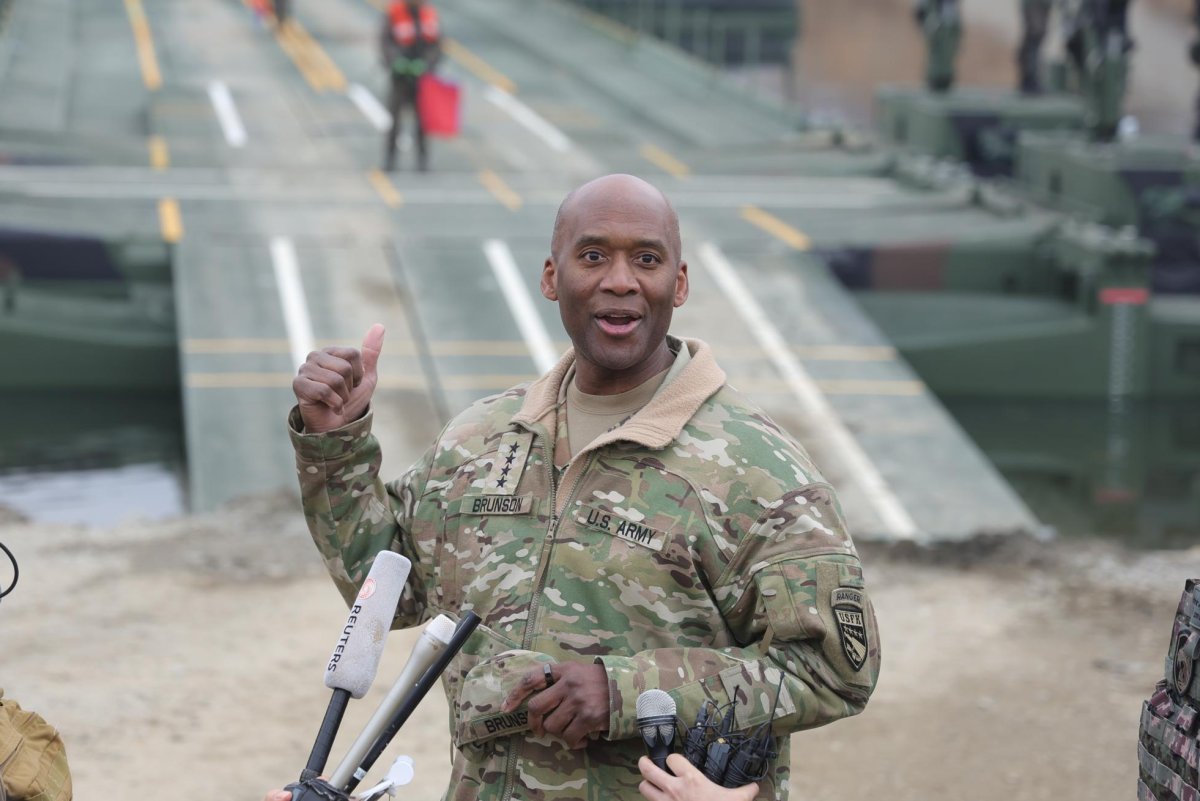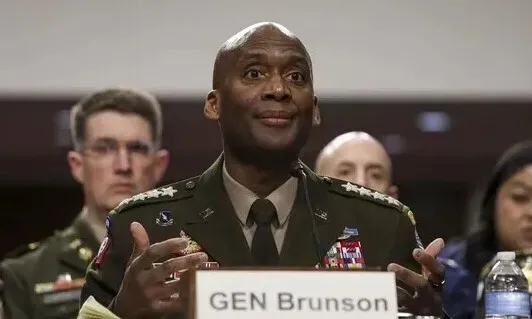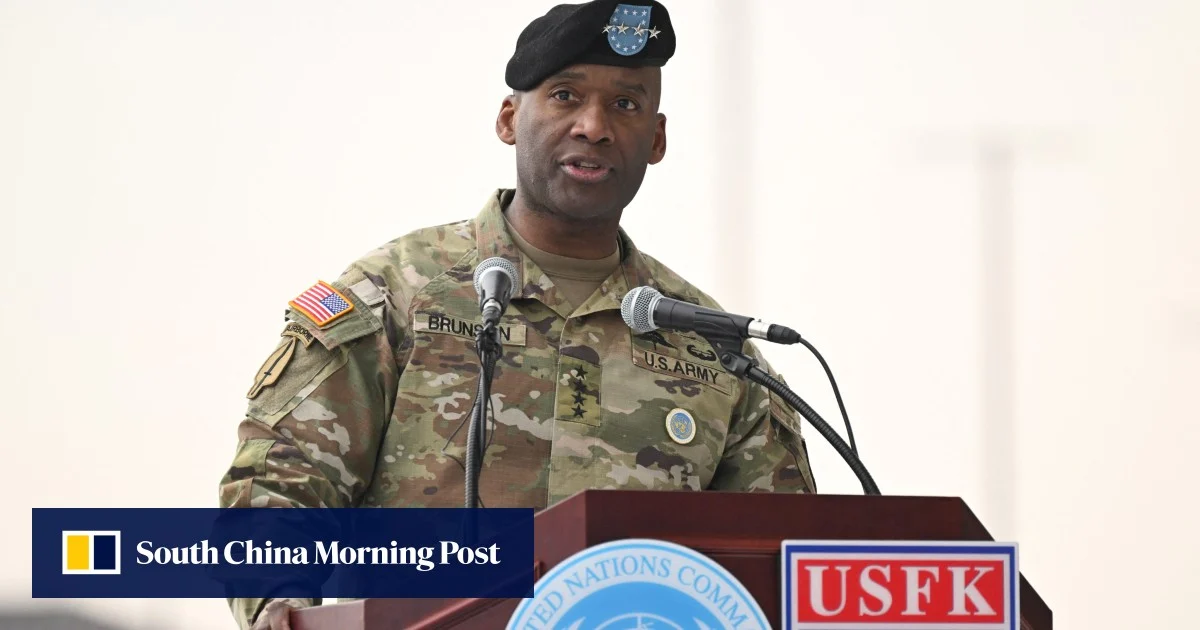
Gen. Xavier Brunson, the commander of US Forces Korea, speaks to reporters during a press conference at Camp Humphreys in Pyeongtaek, on Aug. 8, 2025. (courtesy of USFK)
Gen. Xavier T. Brunson, the commander of US Forces Korea, said that from the Chinese perspective, Korea might look like a “dagger” pointed straight at them.Put another way, the USFK commander — the same person who would exercise operational control (OPCON) over the ROK-US Combined Forces Command in a putative war on the Korean Peninsula — described military forces stationed in Korea as dangerous weapons capable of harming China.It’s baffling why Brunson insists on repeatedly provoking China and embarrassing US allies so soon after the leaders of US and China agreed to establish a “constructive relationship of strategic stability.”As Korean President Lee Jae Myung emphasized on Tuesday, Korea has no choice but to “move forward with a seamless OPCON transfer” as quickly as possible to “promote the healthy development of the ROK-US alliance.”In the May 22 episode of a podcast produced by the US Army War College, Brunson said that “when [the Chinese] look out from the east coast of China, what they see is, there’s Korea, the dagger in the heart of Asia.”Brunson went on: “There’s Japan again, sort of that shield that’s sort of a backstop, if you will, for [. . .] [China’s] ambitions beyond that into the South China Sea.”In effect, Brunson was assigning the US’ two major allies their respective roles in the containment of China.The USFK commander has previously used provocative expressions to describe the “geopolitical role” that he thinks USFK and/or Korea should assume. He has noted that USFK is the only US force within 400-600 kilometers of Beijing and “inside the first island chain” and that Korea is like a “fixed aircraft carrier floating in the water between Japan and mainland China.”When his “dagger” comment is tied to his previous remarks, it’s evident that Brunson expects Korea to play an offensive role capable of striking the Chinese heartland, and Japan to play a defensive role supporting Korea while denying the Chinese Navy access to the Pacific Ocean.As if to illustrate such views, Brunson commented last August that he would like F-35 fighters with stealth capabilities and a multi-domain task force (MDTF) capable of wrecking China’s anti-access/area denial (A2/AD) network to be assigned to USFK. These comments suggest that Brunson means to treat Korea as a forward base equipped with military options for launching direct strikes against China.Viewed dispassionately, the USFK commander’s remarks can be regarded as reaffirming the US’ position, expressed in the 2025 National Security Strategy, that Japan and Korea should build “the capabilities [. . .] necessary to deter adversaries and protect the First Island Chain.”But we encourage Bruson to reflect upon whether it’s appropriate for him, as a soldier, to express that policy through such terms as “dagger” and “shield.”Please direct questions or comments to [english@hani.co.kr]