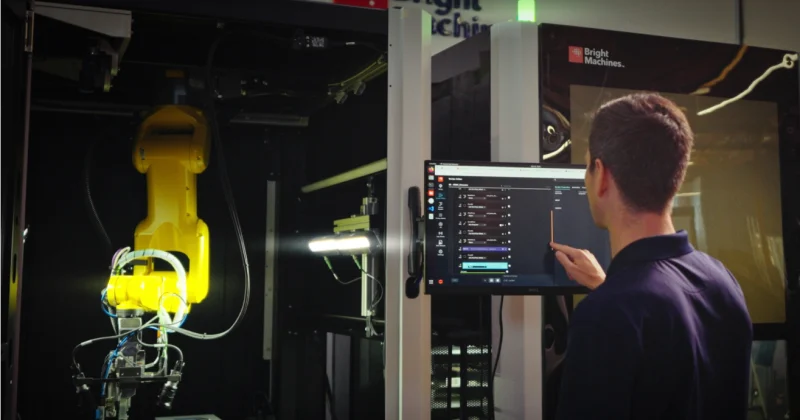
Building the AI future turns out to be a surprisingly manual process. For all the talk of autonomous systems and intelligent agents, somebody still has to physically bolt together the servers that run them. Bright Machines thinks it has a better way to handle that awkward reality.
The San Francisco-based manufacturer just launched the Hybrid BRC, short for Bright Robotic Cell, an expansion of its Bright Factory platform. The system lets human operators step inside a sensor-monitored robotic cell to perform assembly tasks while maintaining a continuous digital record of every step in the production process.
Why manufacturing quality matters for the AI arms race
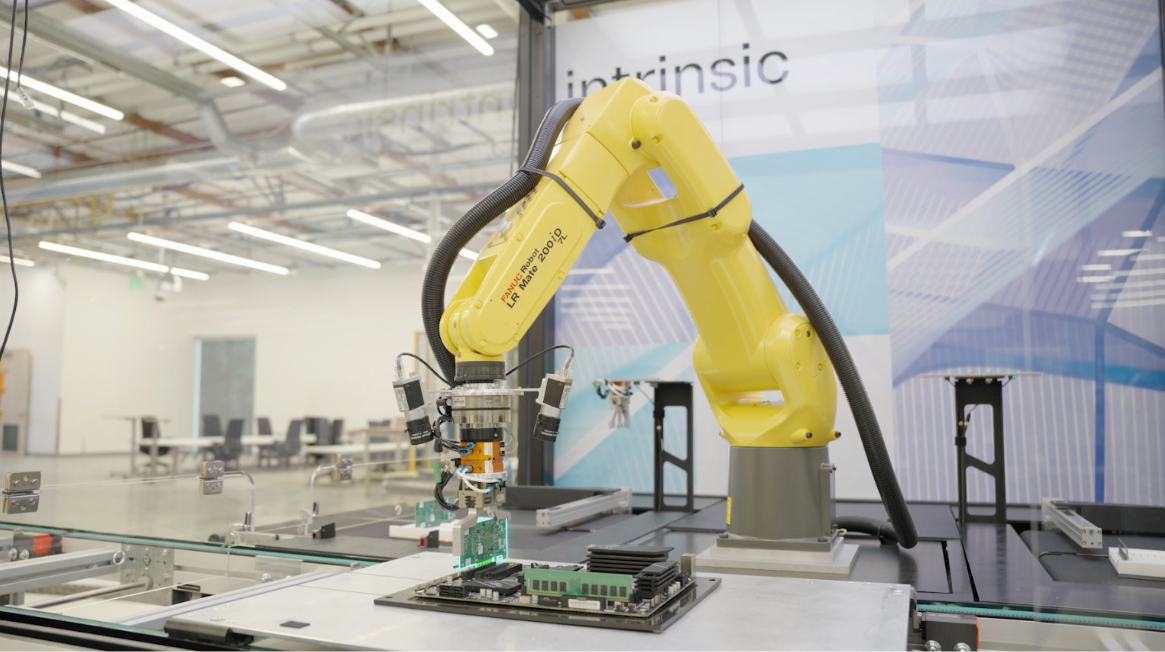
Bright Machines’ previous robotic cell deployments have demonstrated the ability to process up to 50 servers per hour with a 98% first-pass yield. Those are impressive numbers for hardware manufacturing, where even small defect rates compound into massive costs at scale.
The Hybrid BRC tackles a specific pain point. Some assembly steps still require human dexterity, whether it’s routing a tricky cable or seating a component that doesn’t lend itself to robotic manipulation. The problem is that the moment a human touches the line, you typically lose the granular data trail that automated systems maintain. Bright Machines’ solution keeps sensor monitoring active even during manual steps, preserving traceability from the first screw to the shipping label.