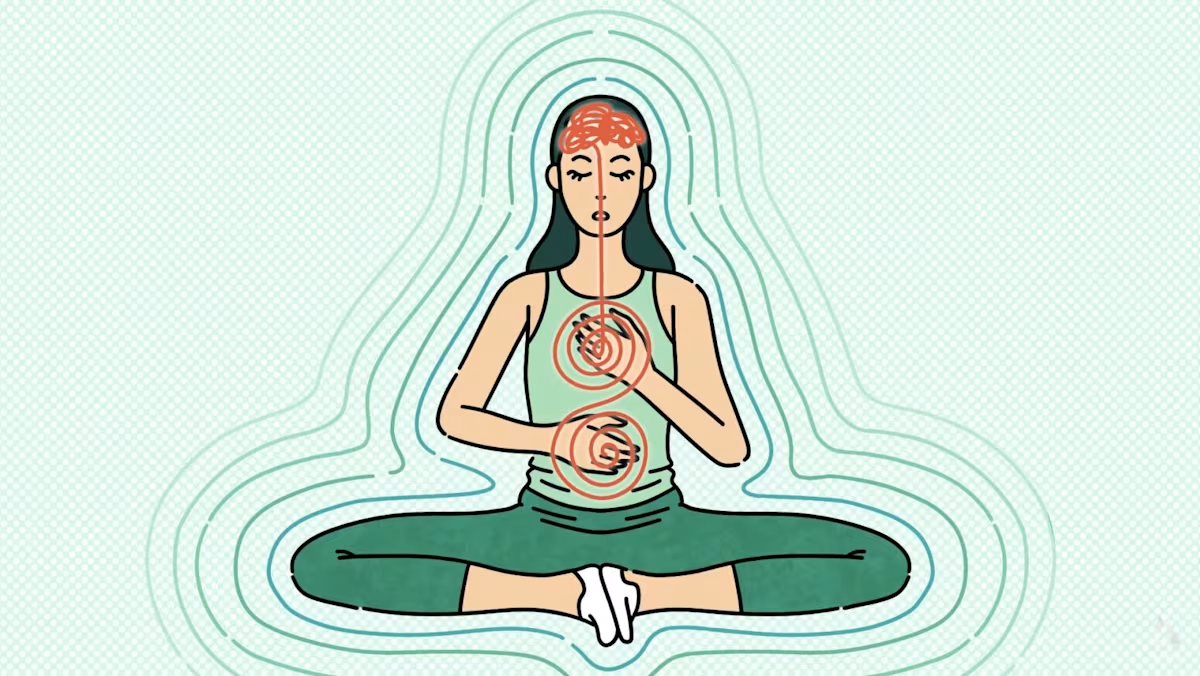
The conscious mind may know that the danger is over. It may recognise that the event happened years ago or know that it wasn’t our fault (Photo: iStock)
Trauma is an invisible wound that’s triggered by a distressing experience, and it can affect the nervous system and the body, says clinical hypnotherapist Kinneri Parekh. She says that understanding this mind-body connection can help explain why emotional wounds can affect people long after the original event has passed.
“The word 'trauma' comes from the Greek word 'trauma', meaning 'wound'." We often think of a wound as something we can see on the body, but psychological trauma is an invisible wound,” she explains.
Kinneri cites physician and trauma expert Gabor Maté, who described trauma as “what happens inside you as a result of what happens to you.”
She further cites psychiatrist and trauma researcher Bessel van der Kolk, who stated that trauma occurs when an experience overwhelms a person’s ability to cope. In such moments, the brain and nervous system shift into survival mode, triggering the body’s fight, flight or freeze response to protect and to keep us alive. Heart rate increases, breathing changes, muscles tense and stress hormones such as adrenaline and cortisol are released to help the body respond to danger.