Researchers uncover patterns in how sleeping minds recombine memories, people, and places
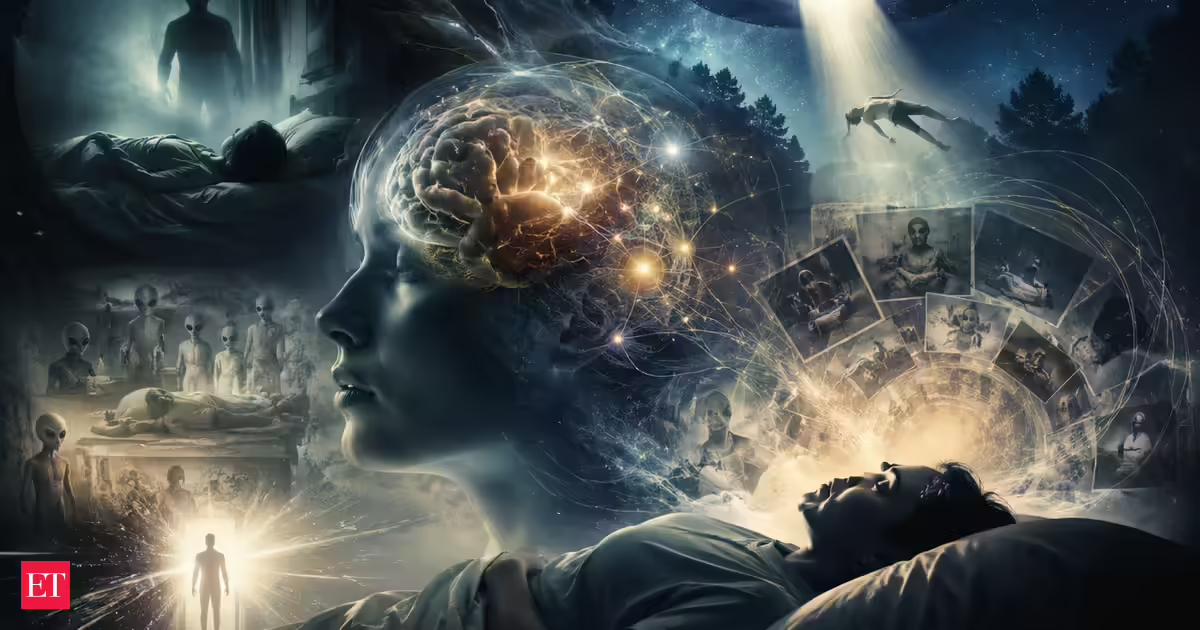
Your brain apparently spends the night remixing reality rather than simply replaying it, according to researchers armed with AI and more than 3,700 accounts of dreams and waking life.Researchers at Italy's IMT School for Advanced Studies Lucca used natural language processing (NLP) to analyze more than 3,700 reports of dreams and waking experiences from 287 adults and found dreams are neither random mental noise nor faithful replays of the day's events. Instead, the sleeping brain appears to recycle memories, emotions, familiar places, and imagined possibilities into entirely new scenarios.Published in Communications Psychology, the study combined two weeks of dream and daily experience diaries with data on participants' personalities, sleep quality, cognitive abilities, and psychological traits. Researchers used NLP to compare the semantic structure of the waking and dream reports.
Everyday settings such as workplaces, hospitals, and classrooms were combined with unrelated places, shifting viewpoints, or unfamiliar surroundings, while different parts of a person's life could merge into a single scene. The findings suggest dreams do not replay reality so much as rebuild it from familiar parts.