Academia
Behind every discounted ride is a hidden algorithmic fee, leaving Indonesia’s gig workers stripped of basic earnings while regulations turn a blind eye.
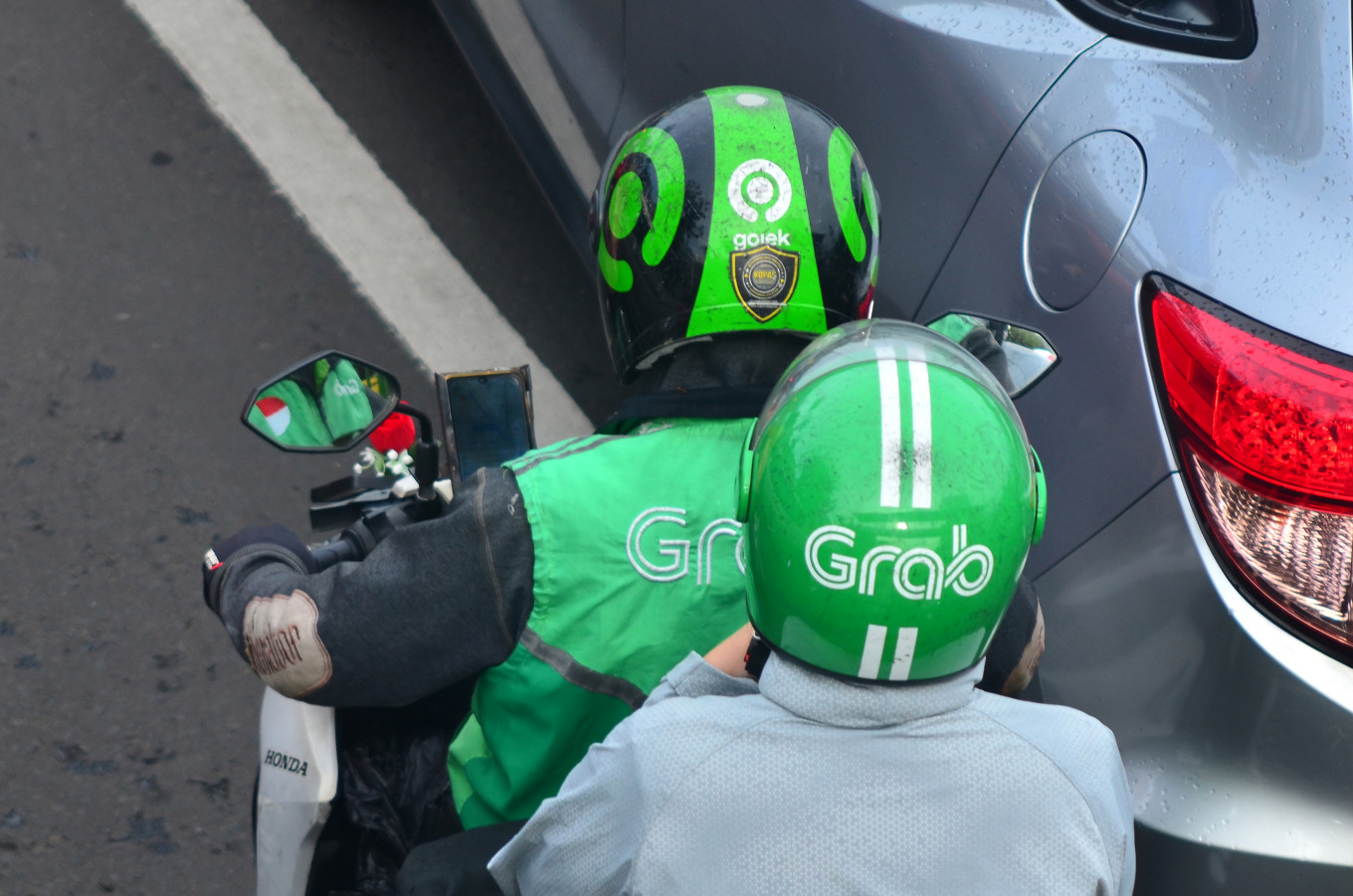
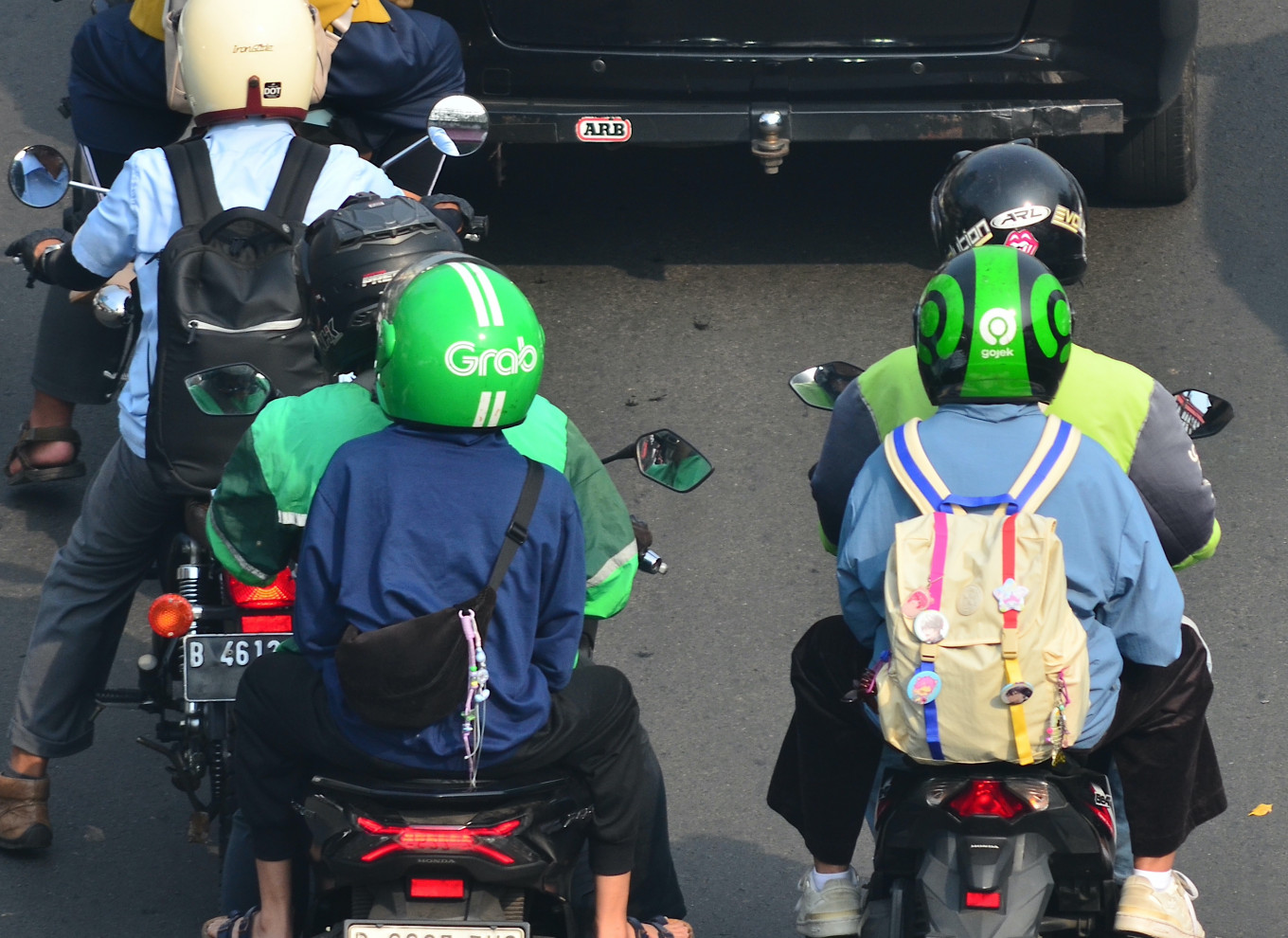
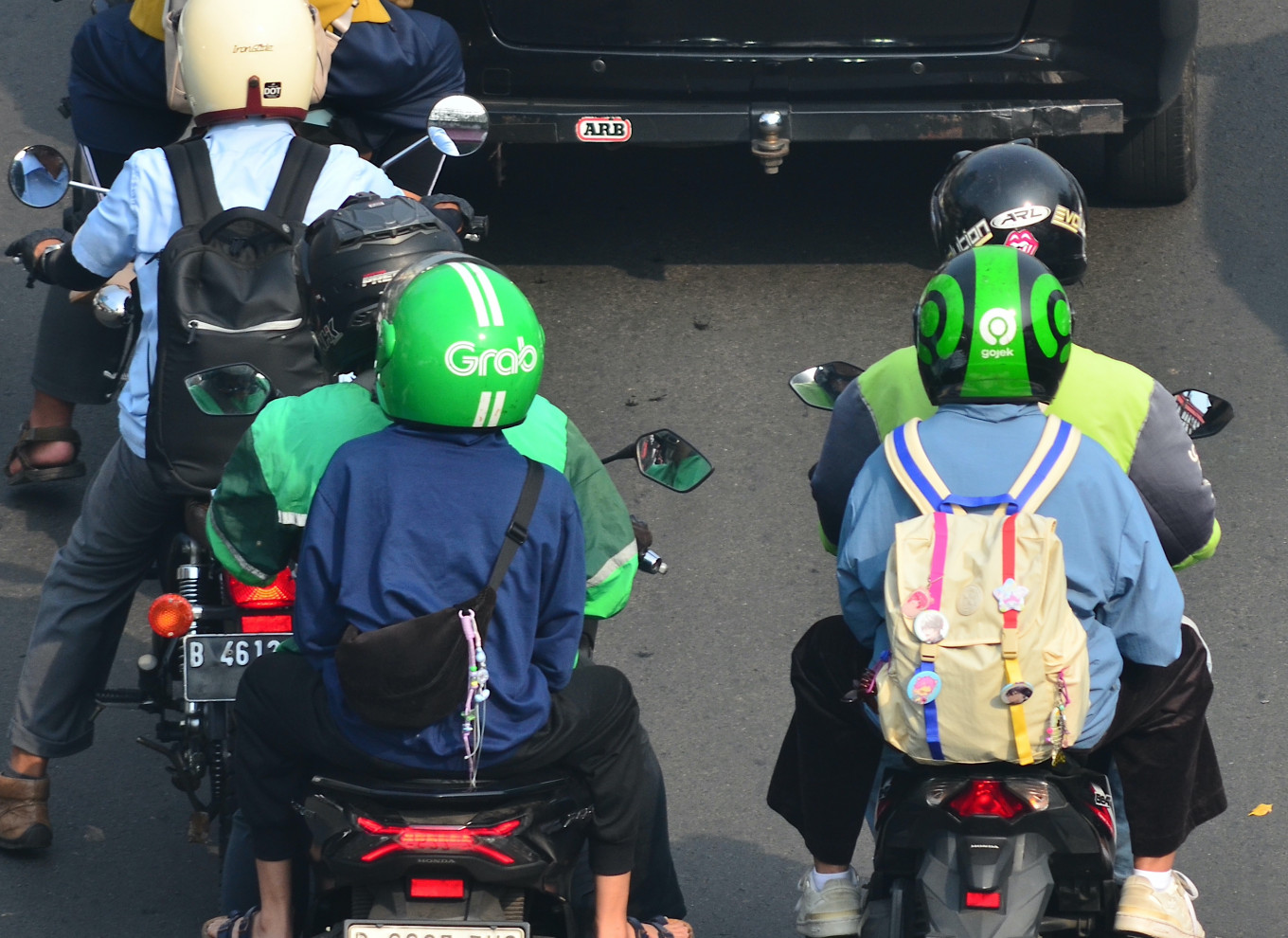
The logos of ride-hailing service providers Gojek and Grab are seen on helmets worn by two passengers using online motorcycle taxi services in the Kampung Melayu Besar area of South Jakarta on June 24, 2026. (JP/Iqro RInaldi)
President Prabowo Subianto probably did not anticipate that his administration's landmark gig economy policy would be circumvented so swiftly by tech platforms. The government established a maximum application commission cap of 8 percent to protect ride-hailing and delivery workers.Yet, for millions of ojol (online motorcycle taxi), taksol (online car taxi) and cargo delivery drivers, platforms continue to siphon earnings through hidden cost components layered behind the application screen. As a result, effective deductions frequently swell to 34 percent, reducing the prospect of a living wage to a distant prospect.
Consider a typical transaction: a passenger pays a fare of Rp 19,500 (US$1.08). Before those funds reach the driver's digital wallet, the platform deducts Rp 5,500 upfront, comprising a Rp 4,500 application service fee and a Rp 1,000 travel insurance fee. The platform then takes its official 8 percent commission from the remaining balance. In the end, the driver receives just Rp 12,880.