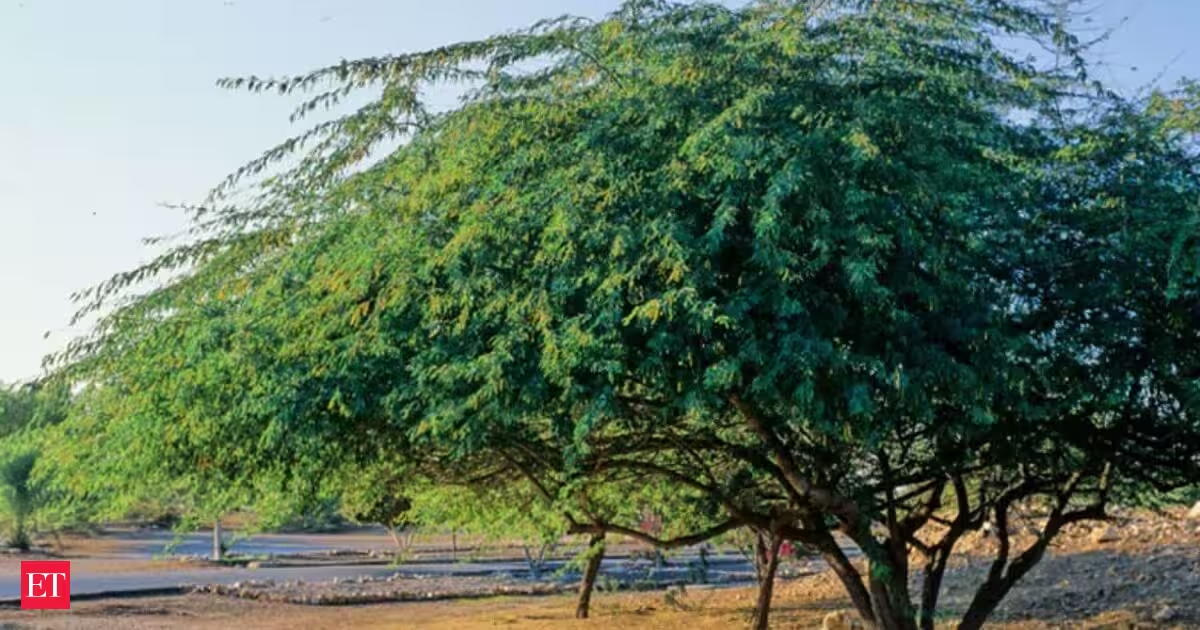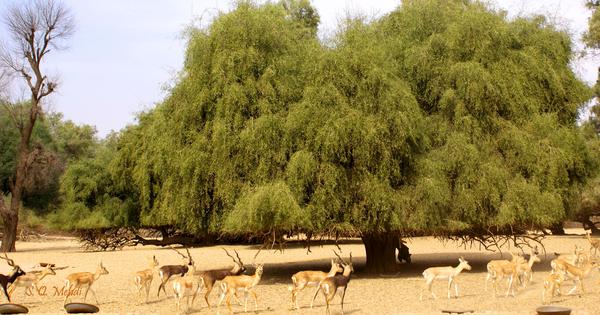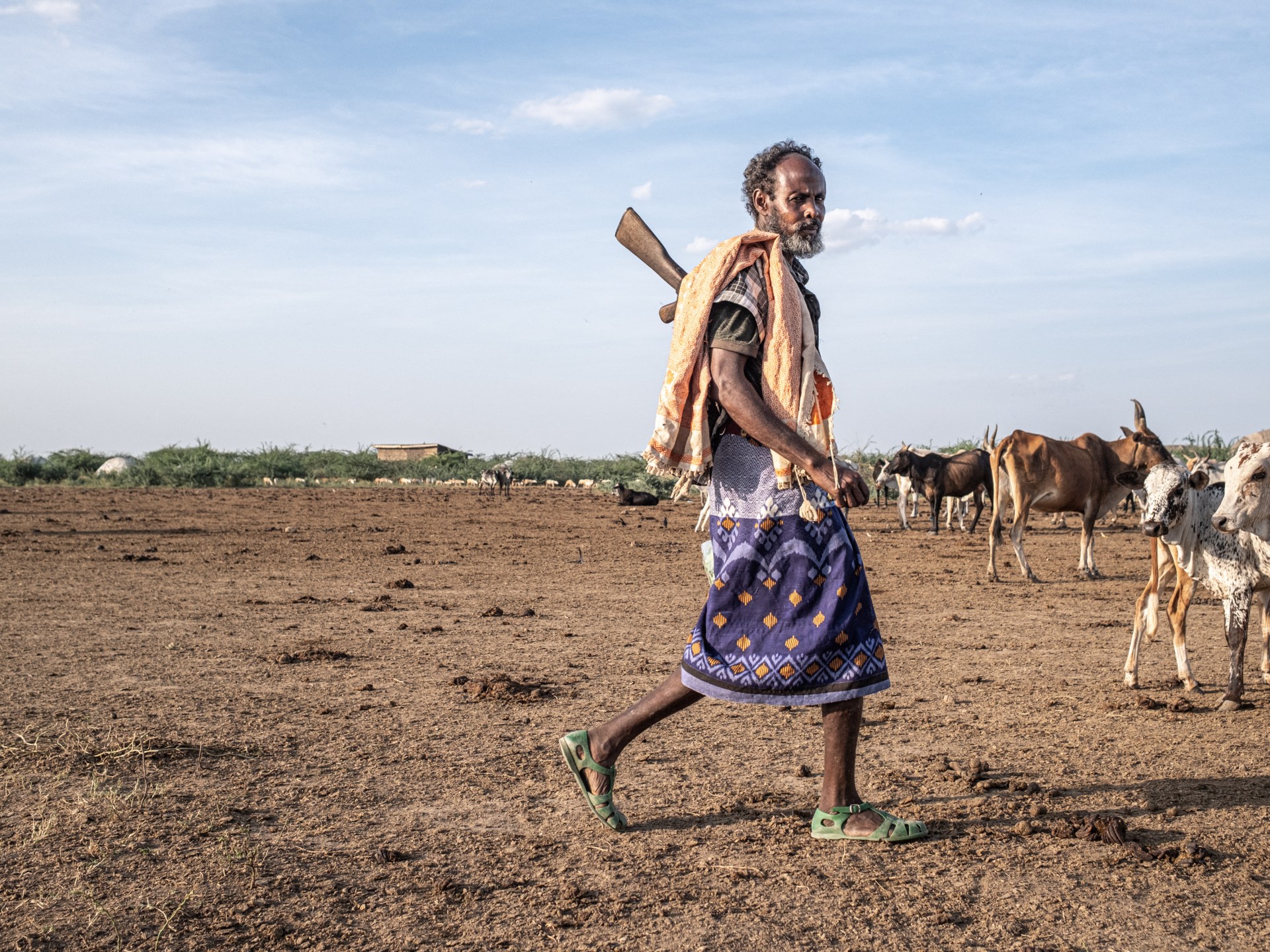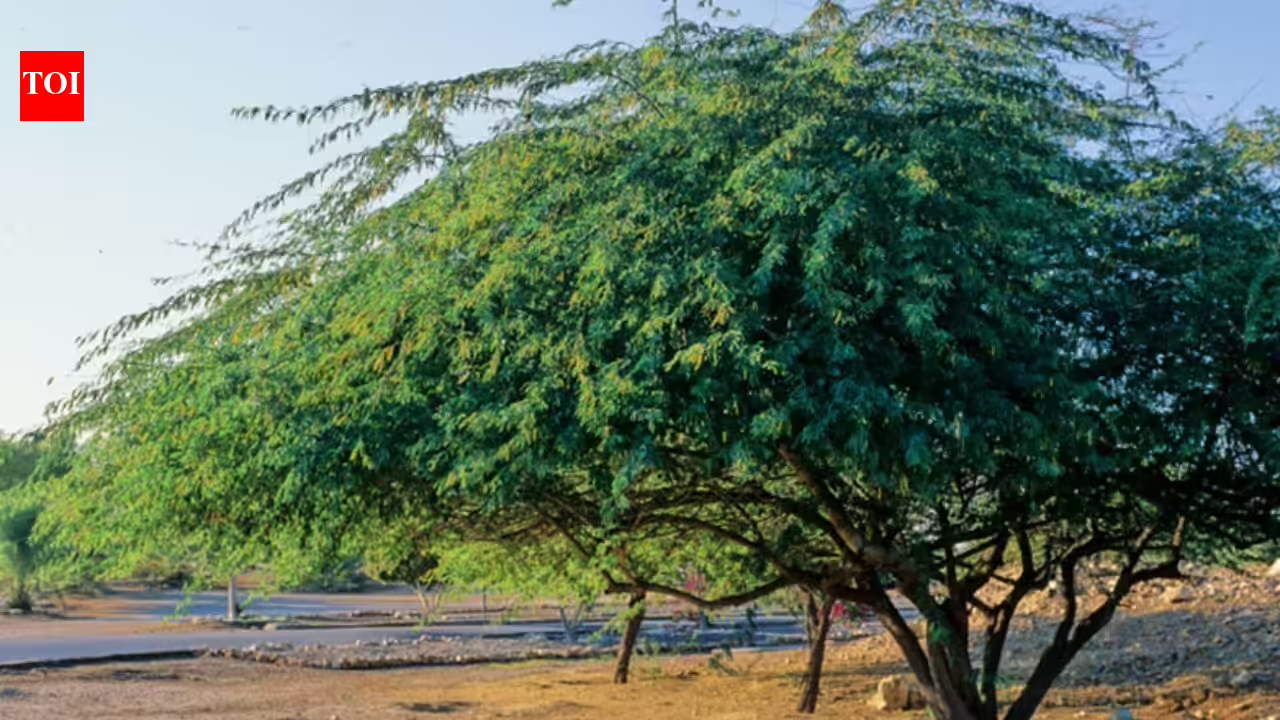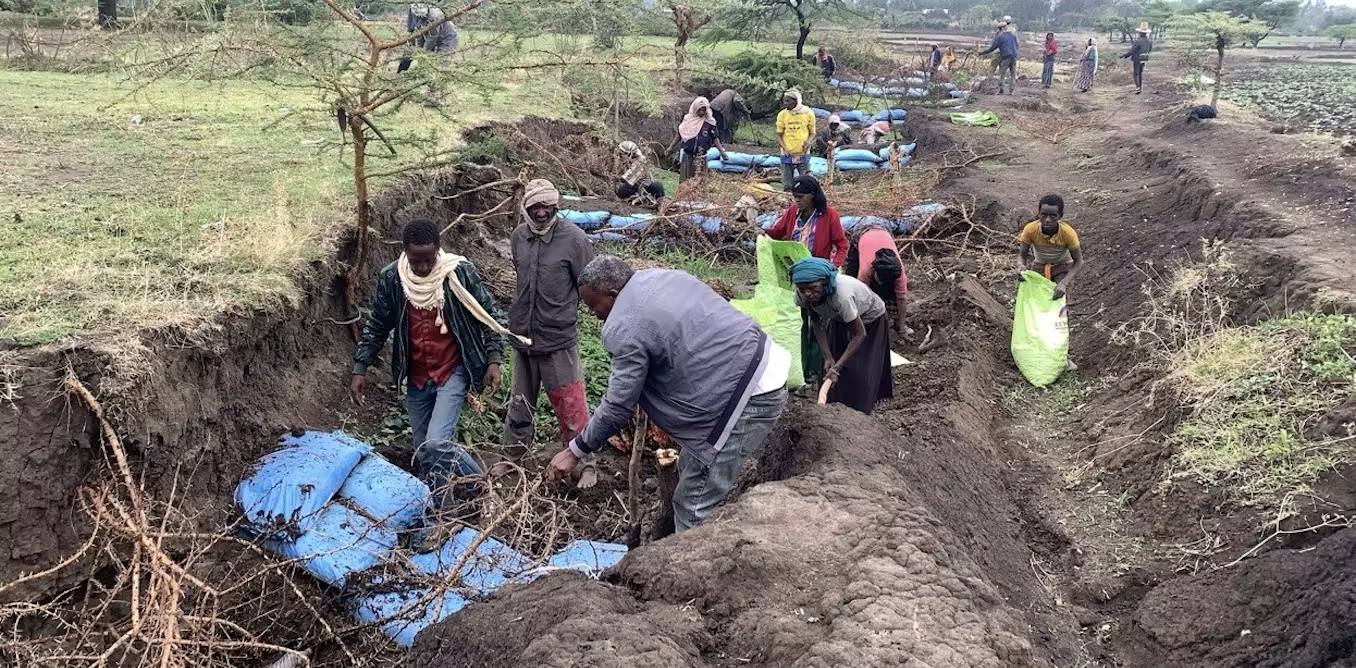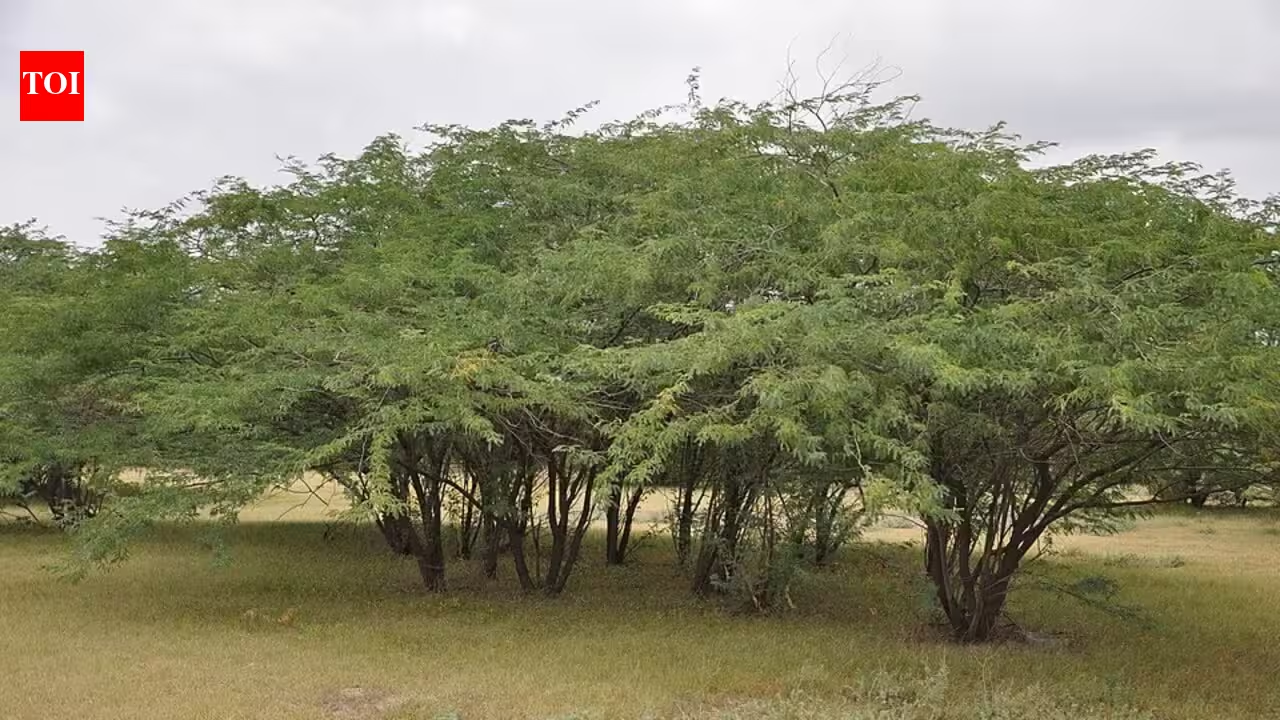
Prosopis juliflora. Velavadar National Park. Image Credits: Wikimedia Commons.A hardy tree that once promised to green some of Ethiopia's driest landscapes has become one of the country's most costly environmental challenges. Introduced decades ago to stabilise soils, provide firewood and slow the spread of desertification, Prosopis juliflora has expanded far beyond the areas where it was originally planted. According to research published in Scientific Reports, the estimated water used by these invasive stands could irrigate enough cotton and sugarcane to generate around US$790 million in annual net agricultural benefits if redirected, highlighting the scale of the opportunity cost rather than an actual financial loss.From solution to invasive speciesProsopis juliflora originates from certain parts of Central and South America, but has since been introduced to numerous areas worldwide that have dry and semi-dry climates due to its drought resistance and capability to thrive in poor soil conditions. At first glance, the species appeared to be a practical choice. The tree thrived where few others could and needed little maintenance. Its prolific seed production, combined with dispersal by animals, caused it to spread far beyond the initial introduction areas.As the tree expanded, it formed dense, thorny thickets that restricted the movement of people and livestock while replacing native grasses and shrubs that pastoral communities depend on for grazing. Studies reviewed in Environmental and Sustainability Indicators also found that the invasion has reduced the productivity of rangelands, altered ecosystem structure and biodiversity, and affected rural livelihoods. In addition, livestock that consume large quantities of Prosopis pods can develop health problems, while the dense vegetation may provide shelter for crop-raiding animals, creating further challenges for farming communities.Hidden demand for scarce waterAlthough Prosopis juliflora was valued for its drought tolerance, surviving in dry climates does not mean it requires little water. Once established, dense stands can tap groundwater through deep root systems while also making efficient use of rainfall, allowing the trees to continue growing where many native plants cannot.According to a study published in Scientific Reports, Prosopis juliflora stands in Ethiopia's Afar Region consume an estimated 3.1 to 3.3 billion cubic metres of water each year. Using satellite observations, field measurements and hydrological modelling, the researchers estimated that if an equivalent volume of water were instead used for irrigated agriculture, it could irrigate about 460,000 hectares of cotton, generating an estimated annual net benefit of approximately US$320 million per growing season, or about 330,000 hectares of sugarcane, with an estimated annual net benefit of approximately US$470 million per growing season. These figures illustrate the potential opportunity cost associated with the water consumed by the invasive trees rather than representing measured economic losses.Apart from its effect on water resources, the spread of Prosopis has led to the loss of productive rangelands that pastoralists rely on for their livelihood. The thick bushes have taken over native vegetation, leaving little grazing land for livestock. Where there has been an expansion of irrigation schemes, the invasive species can compete with crops for space and water resources.In 2003, Ethiopia utilised Prosopis juliflora for greening arid areas; today, spiny thickets consume enough water to irrigate cotton and sugarcane farms worth 790 million USD annually. Image Credits: Wikimedia Commons.Managing an invasion that is difficult to reverseRemoving Prosopis juliflora has been difficult in Ethiopia and elsewhere. Cutting down adult plants can trigger rapid sprouting from the roots and stump if proper measures are not followed. The seeds can remain viable for years, and the pods are spread when livestock eat them and disperse the seeds elsewhere. As a result, complete eradication of Prosopis juliflora is considered difficult in large invaded areas. Some communities have sought to use the harvested wood for charcoal and other wood products. While such practices may help reduce the cost of harvesting, the experts argue that commercialisation alone is not enough to solve the problem of invasion unless there are other management practices to limit regeneration. Ethiopia's experience offers a lesson for environmental restoration efforts. Introducing species with good intentions can have negative consequences if their ecological behaviour in a new environment is not well understood.For Ethiopia, Prosopis juliflora serves as a reminder that restoring degraded landscapes requires careful planning and an understanding of how introduced species may interact with local ecosystems over time. According to research published in CABI Agriculture and Bioscience, successful management of Prosopis in East Africa depends not only on removing the invasive tree but also on restoring cleared land and encouraging local communities to adopt sustainable land management practices.
Introduced to Ethiopia decades ago to green drylands, Prosopis juliflora now forms thorny thickets whose water use carries an estimated $790 million agricultural opportunity cost
A hardy tree that once promised to green some of Ethiopia's driest landscapes has become one of the country's most costly environmental challenges. Introduced decades ago to stabilise soils, provide firewood and slow the spread of desertification, Prosopis juliflora has expanded far beyond the areas where it was originally planted.
746 words~3 min read