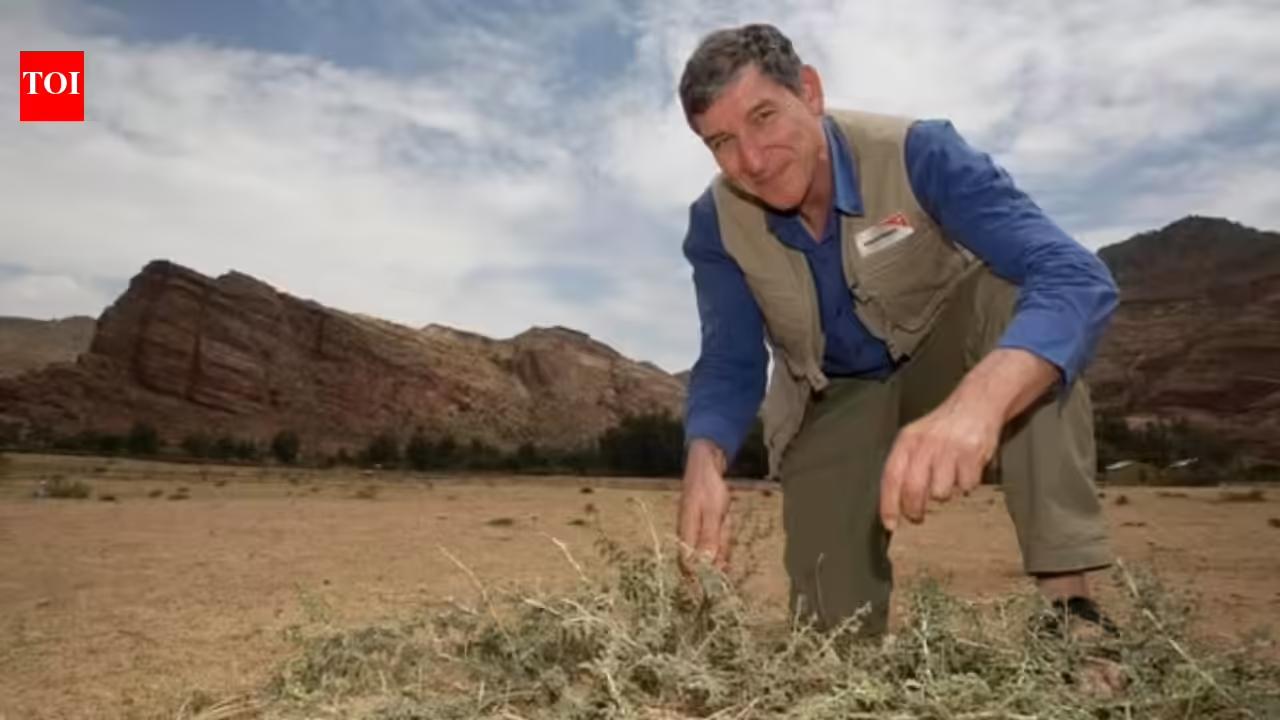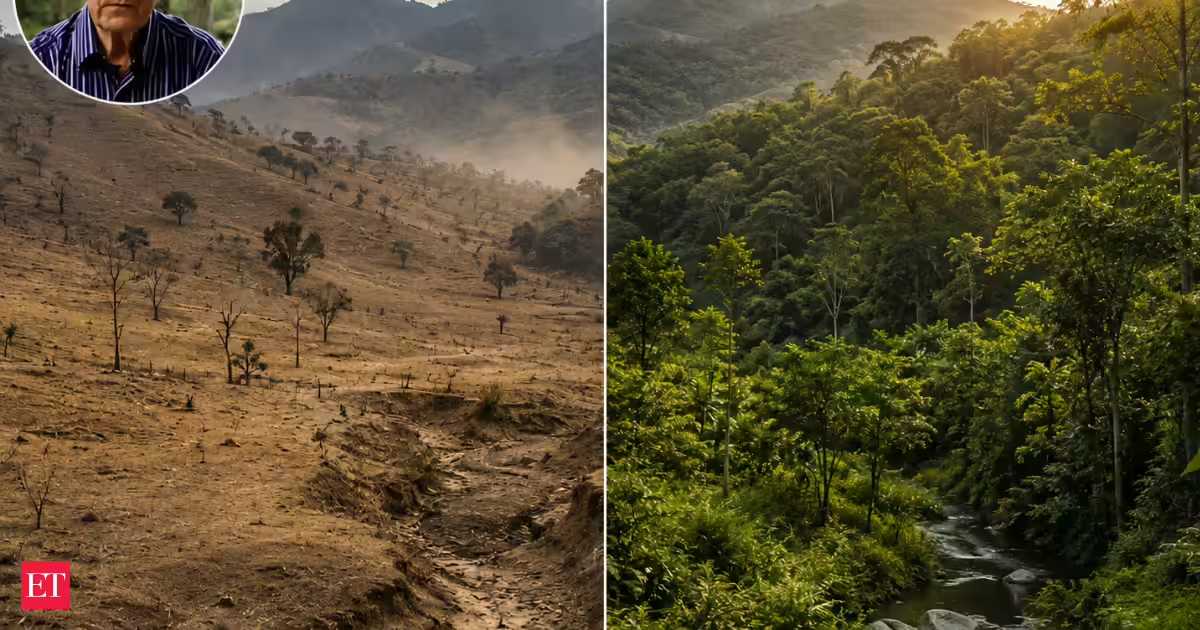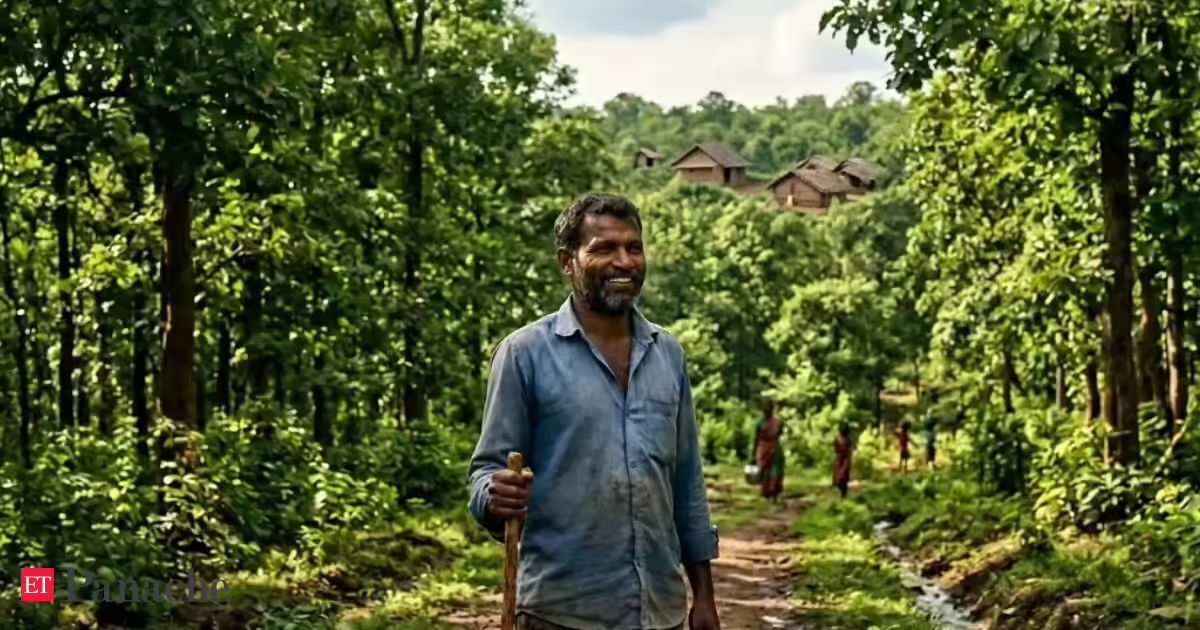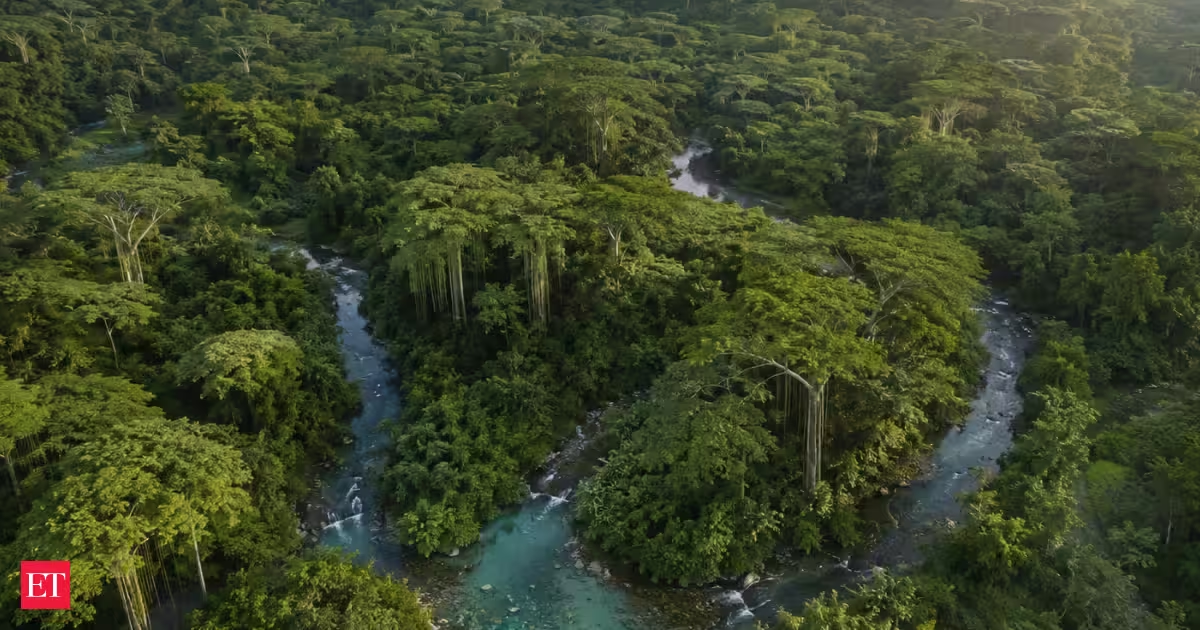
In 1996, a farmer named Sadiman looked at the dry, cracked hills near his village in Central Java, Indonesia, and made a decision most of his neighbors thought was pointless. He started planting banyan and ficus saplings on land stripped bare by fires set to clear it for farming. In a Reuters report in March 2021, after 24 years of this work, Sadiman had planted roughly 11,000 trees across 250 hectares (about 617 acres), and springs had started forming in places that had been dry for years. Water now reaches homes and irrigates farms in several villages that once struggled through droughts.Sadiman's story offers a concrete example of how one person can affect local water conditions. It took one farmer with a shovel, a lot of patience, and a working theory about how tree roots and groundwater interact.Why banyan trees, specificallyThe choice of banyan and ficus trees by Sadiman was not accidental. Both trees have extensive root systems that go deep into the ground, and this characteristic is important for water. The roots create channels in the soil that let rainwater soak in instead of running off the surface.This is not just one farmer's personal theory. The link between tree cover and groundwater is well documented in forestry science. The U.S. Forest Service's Eastern Region watershed forestry program explains that sustainably managed forests store water on the landscape and enhance groundwater recharge. It notes that roughly 180 million people in the U.S. rely on forests for their drinking water. In Java, the same basic mechanism is at work: more root systems in the ground generally mean more water staying in the ground.Sadiman, once mocked as the village outcast, stands in the forest he built one sapling at a time on Gendol Hill, Wonogiri. Image Credit: Mr Scientific/ FacebookA 2024 peer-reviewed study adds more detail on a broader scale. The journal Water published a study, “Interactions Between Forest Cover and Watershed Hydrology: A Conceptual Meta-Analysis,” on forest cover and watershed hydrology that found afforestation with native tree species in tropical regions tends to improve water availability and groundwater recharge more effectively than fast-growing commercial plantations. That detail matters here because banyan and ficus trees are native to Java, not fast-growing species planted for timber or profit. Sadiman's choice of trees was practical. It lines up with what watershed researchers have since documented.The years nobody believed himSadiman remained the village outcast for some time before all of that water came. It is said that some villagers thought the spirits were in banyan trees and wanted them away from their houses. Many stories, including the one from Reuters, tell us how he swapped his goats for saplings so that the project could continue. Many onlookers saw this more as charity than conservation.That long period of work is often left out of shorter accounts of stories like this one. Sadiman was not watching springs appear in year two or year five. Groundwater recovery takes time, since tree roots need years to mature, spread, and meaningfully change how water moves through soil. He kept planting anyway, paying for part of the work by selling cloves and jackfruit from a small nursery he ran on the side.A mature banyan tree shows the deep, extensive root systems that help rainwater infiltrate the soil and support groundwater recharge over time. Image Credit: Wikimedia CommonsWhy this matters beyond one village in JavaDrought and groundwater depletion are not just a Central Java problem. According to the National Institutes of Health's PMC database on drought risk prevention in Indonesia, reforestation around water sources is identified as one of the long-term strategies communities can use to address declining irrigation water and environmental degradation near water supplies. That is a fair scientific description of what Sadiman had been doing for decades.The story also resonates beyond Central Java. Communities in America encounter the same conflict of land development, water shortages, and the long and unspectacular process of watershed restoration. Sadiman’s hills show how groundwater restoration can happen without expensive machinery or a large budget, given time and sustained planting.The takeawayBy the time the Reuters report came out in 2021, Sadiman was already 69, and people who used to call him insane could now look at his hill and say that it was because of his hill that they had clean water in their houses. Nobody is an individual hero capable of solving the water problems of an entire region on their own, and reforestation is just one of many methods used to tackle drought and groundwater depletion. But one thing Sadiman’s hills suggest is that reforestation for watershed restoration can be measured and, in some settings, replicated.
In 1996, an Indonesian farmer began planting banyan trees across barren hills, and 11,000 trees later, springs returned across 250 hectares
Discover how an Indonesian farmer's tireless efforts in planting banyan trees transformed barren hills into lush green areas, restored groundwater, and brought clean water to communities in Central Java. Learn about the impact of tree planting on water availability and its significance in combating drought and groundwater depletion.
773 words~4 min read