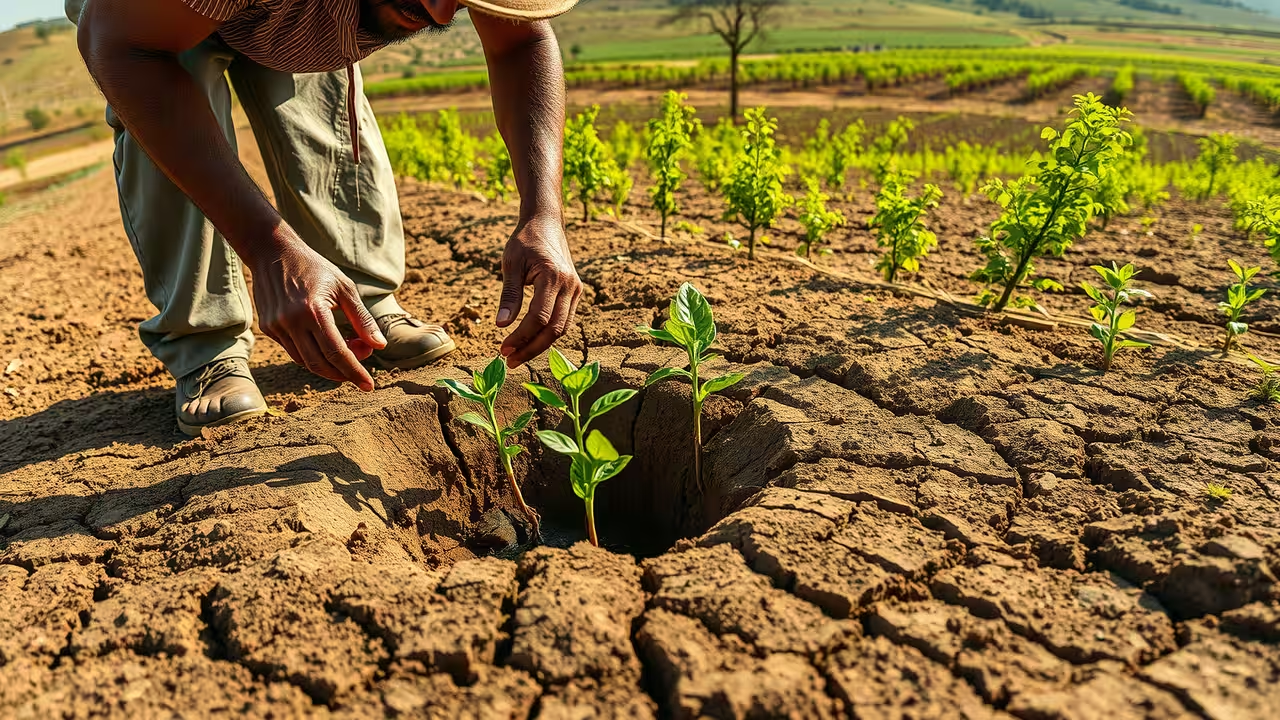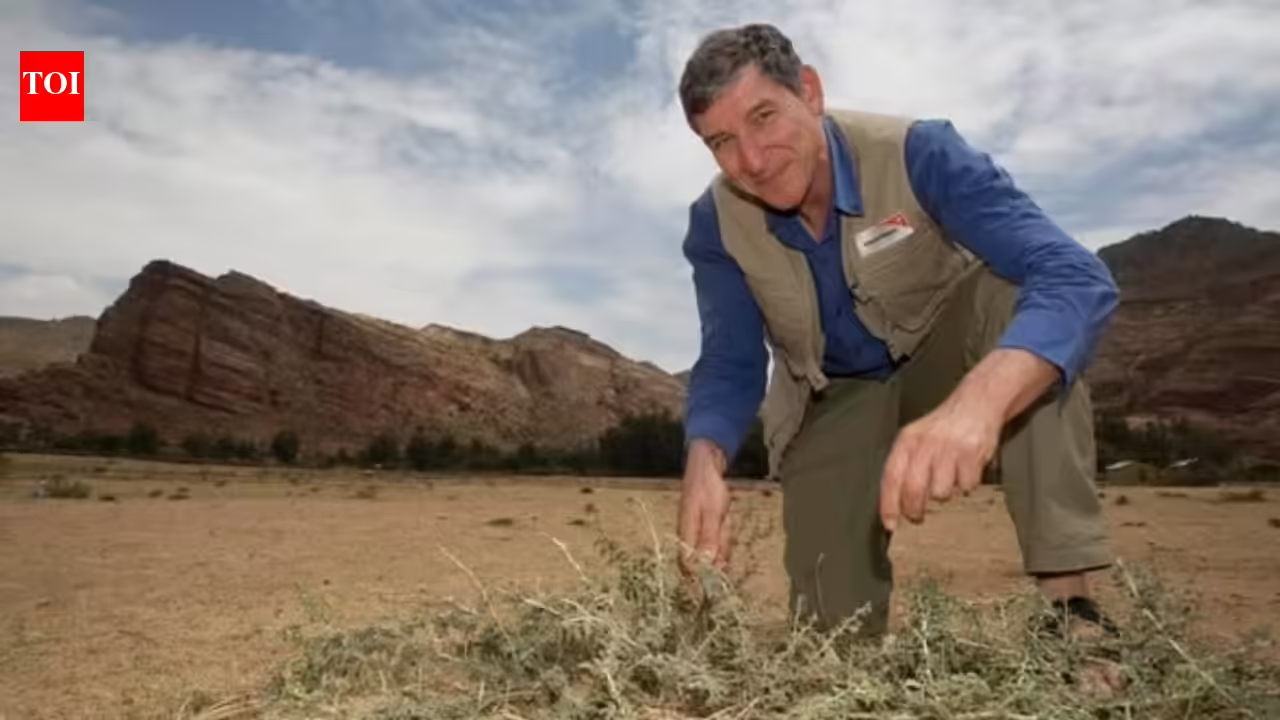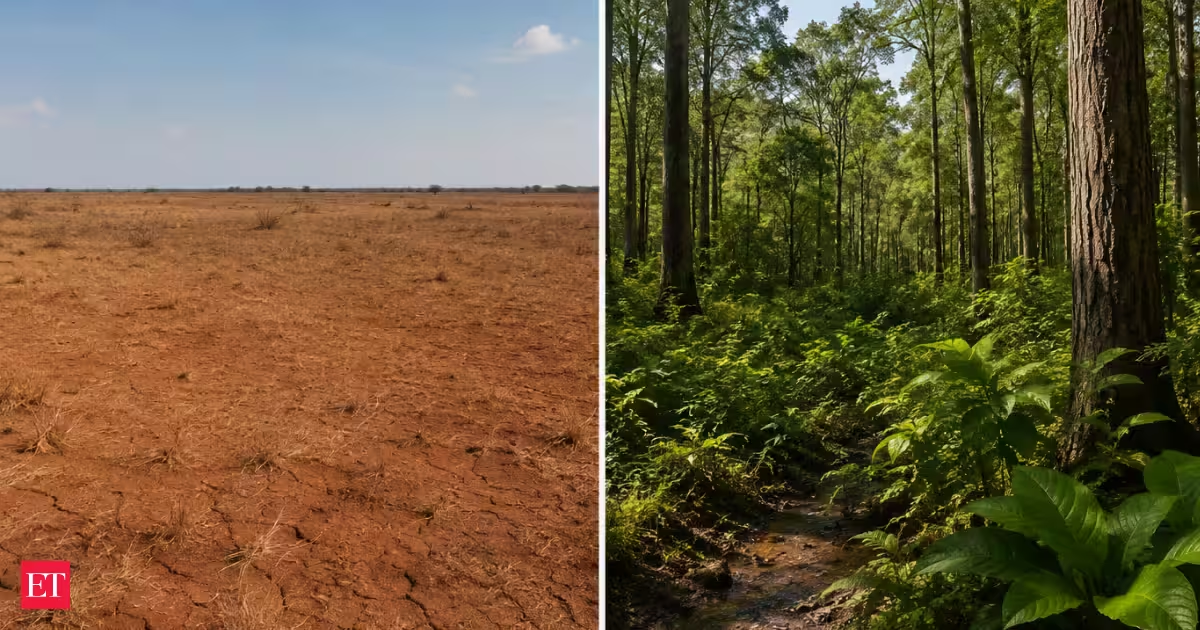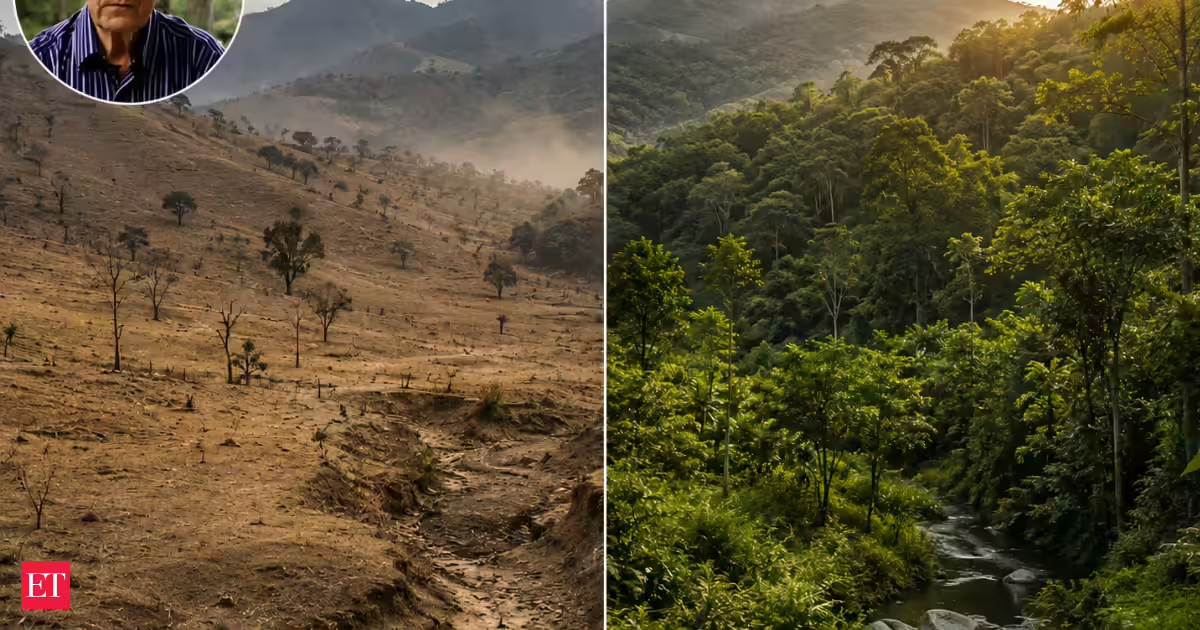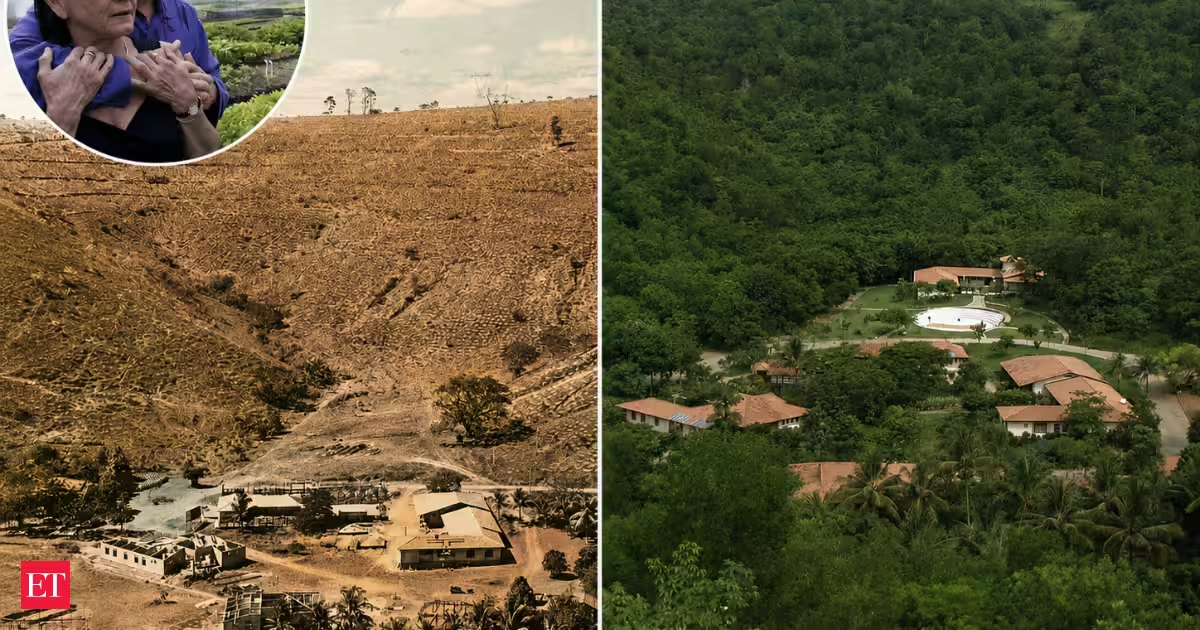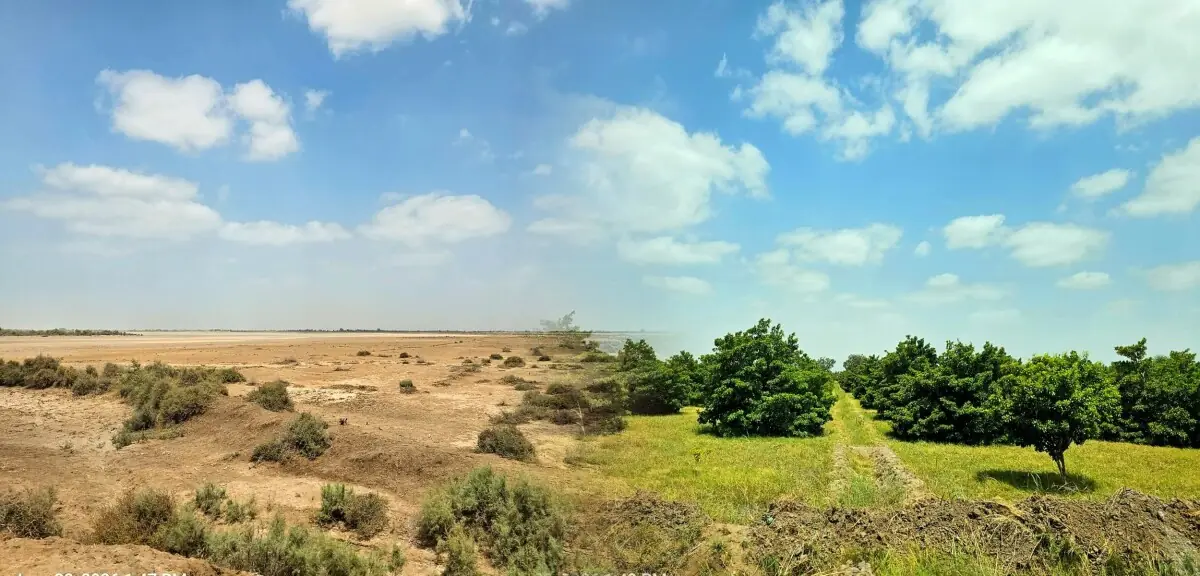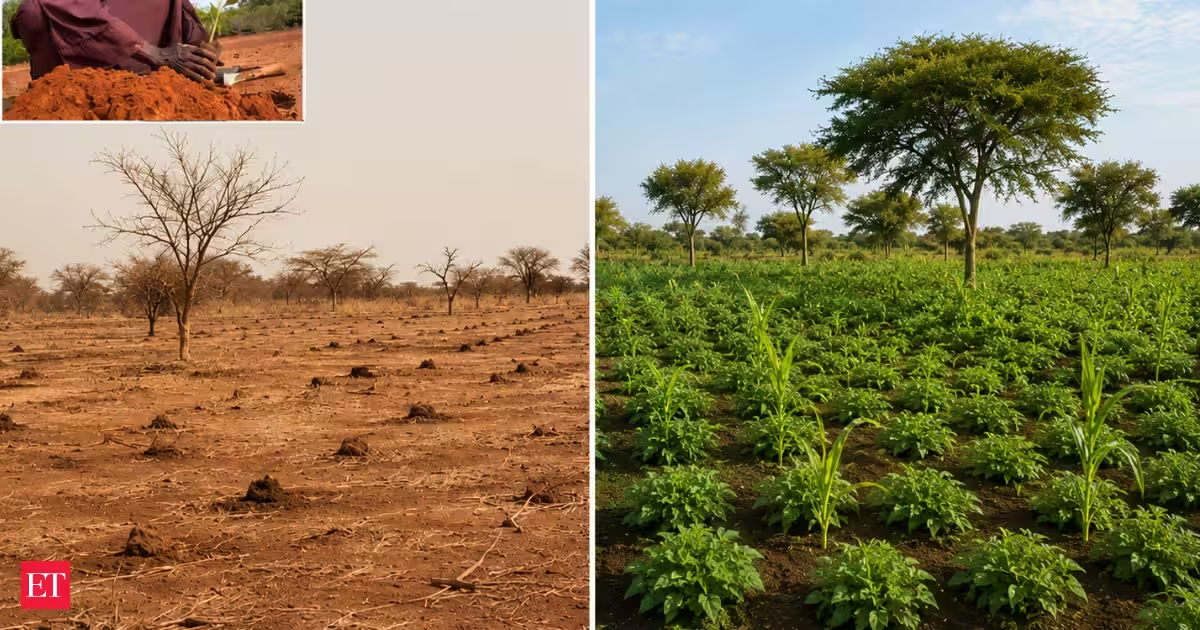
If you've spent any time on climate TikTok, you probably know the feeling: the earth is warming, and it feels like there’s nothing one person can do. Yacouba Sawadogo, a farmer in northern Burkina Faso, never received that memo. He had a hoe, compost, and an old technique that most of his neighbors had abandoned. Beginning around 1980, he spent the next four decades turning a dead, cracked plateau into a forest of nearly 40 hectares with more than 60 species of trees and bushes.In the peer-reviewed study, ‘Soil and Water Conservation in Burkina Faso, West Africa,’ published in the journal Sustainability, the low-tech farming method Sawadogo revived has been documented across Burkina Faso to increase crop yields by more than 100% on restored land, even in years of poor rainfall. That’s the scientific backbone of this story, and it’s worth understanding why the stubbornness of one farmer became a case that scientists are still studying today.When the rain stopped comingThe Sahel region of West Africa experienced severe droughts in the early 1980s. The crops died, wells dried up, and people died of starvation. Most families did what was sensible; they moved to the cities to find work. Sawadogo did the opposite. He left his job at the market stall and returned to his home village in the province of Yatenga to restore fertility to a land so barren it had been left fallow.The man who turned barren earth into a 40-hectare forest, one zaï pit at a time. Image Credits: @liberationagriculture/InstagramA "madman" with a shovel and a planSawadogo’s weapon of choice was the zaï, an ancestral West African method of digging small pits in hardened, sunbaked soil. He modified it: he dug pits bigger and deeper than tradition allowed, and filled them with muck and organic compost before planting trees with his millet, sorghum, and corn. His neighbors were skeptical. They called him a madman for breaking with tradition. At one point, someone burned down his young forest. But he kept digging anyway.The math behind the miracleThe pits work, and the data backs that up. A study published in Frontiers in Sustainable Food Systems found that farmers in Burkina Faso who practiced the zaï system increased their sorghum yields from around 319-642 kilograms per hectare on untreated land to 975-1,600 kilograms per hectare on land with zaï pits, nearly tripling what a farmer could grow on the same soil.In the study, the researchers ran a four-season field experiment in Kabati, Kitui County, using a randomized complete block design with eight treatments replicated three times, and sampled soils at 0–15 cm depth before and after the trial. They found statistically significant gains in soil properties, including total organic carbon under zai with cattle manure, and concluded that the system’s benefits depended on pairing the pits with nutrient inputs rather than using them alone.Forty hectares, sixty species, and wells that stopped running dryWhen Sawadogo finished, his land was no longer just farmland; it was a functioning forest ecosystem teeming with birds, wild bees and dozens of plant species on land that no one wanted to farm decades before. The pits did one other thing no one had anticipated. Rainwater was collected, which seeped down into the ground, recharging local groundwater. Right Livelihood, the Swedish foundation that honored Sawadogo’s work, says that in some villages the water table in wells rose from 5 to 17 meters and towns that had spent eight months a year without a steady supply of drinking water now had it all year-round.View of Burkina Faso, captured from the International Space Station during Expedition 29. Image Credits: Wikimedia CommonsFrom one field to two countriesSawadogo did not keep his methods a secret. In 1984 he began holding twice-yearly "zaï market days" where farmers exchanged seeds and techniques, eventually attracting representatives from more than a hundred villages. In 1989 a group of farmers from the Tahoua region of Niger came to visit his land. The following year a drought hit, and only those farmers who had adopted zaï managed a real harvest. The technique then spread over the border. Since then, tens of thousands of hectares of degraded land have been restored in Burkina Faso and Niger using techniques he pioneered.His story finally made it out to the world. A 2010 documentary about him, “The Man Who Stopped the Desert,” won several awards. In 2013, he was appointed as one of the first Global Dryland Champions by the UN Convention to Combat Desertification. He received the 2018 Right Livelihood Award, known as the “Alternative Nobel Prize,” and a 2020 Champions of the Earth award from the UN Environment Program. He passed away on December 3, 2023, at the age of about 77.Why this story matters to you, wherever you liveIt is tempting to put it in the 'inspiring, but far away' category. But the logic is not at all exotic. It is what US proponents of regenerative agriculture are talking about right now: working with the soil rather than against it, using compost rather than synthetic inputs, small, cheap interventions that compound over years. Sawadogo did it decades before social media, with no funding and plenty of skepticism from people who thought he was wasting his time.The takeaway"I don't want to eat today and leave future generations with nothing to eat," Sawadogo once said. "The work I do is to create the seeds for wealth, not only for Burkina Faso but for many other countries." He never got a lab, a grant, or a government program. He just had a shovel, a good deal of patience, and about forty years to prove he was right.
Burkina Faso’s desert was swallowing his land, so one farmer dug thousands of pits and grew a 40-hectare forest
Discover how Yacouba Sawadogo, a farmer in Burkina Faso, revitalized barren land into a vibrant 40-hectare forest using innovative farming techniques. Learn about the zaï method and its impact on agriculture and local ecosystems.
935 words~4 min read