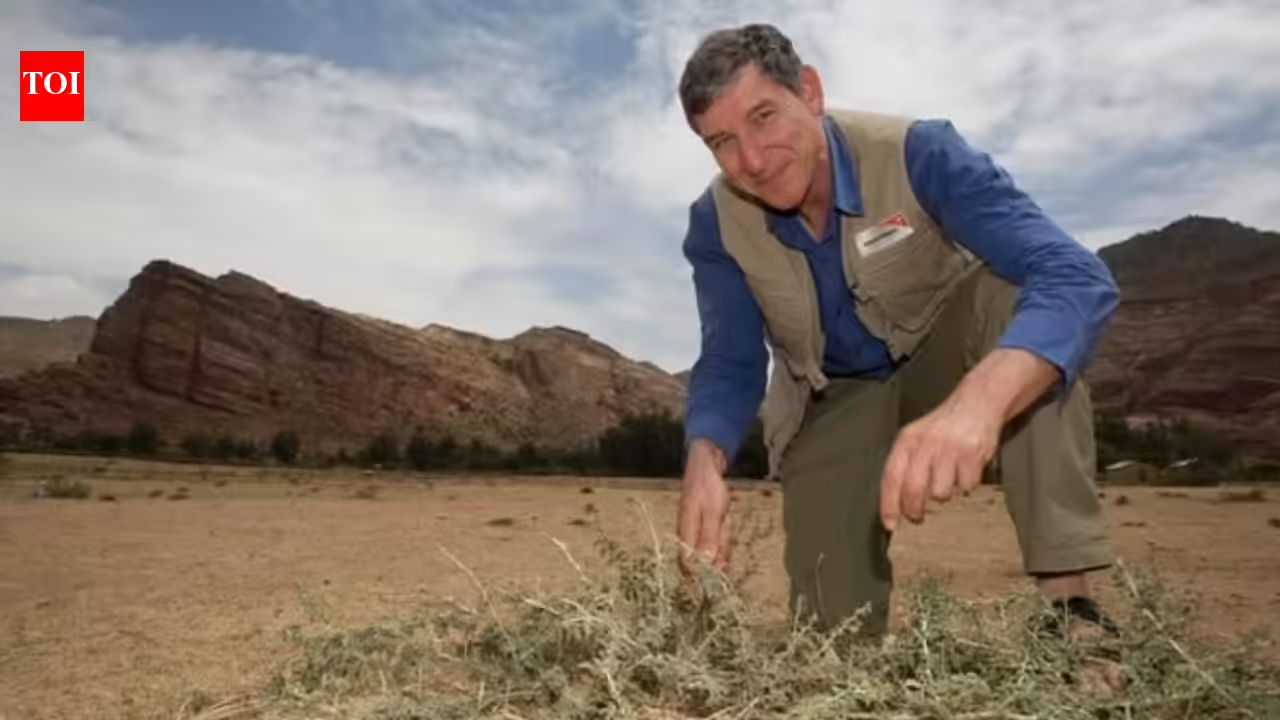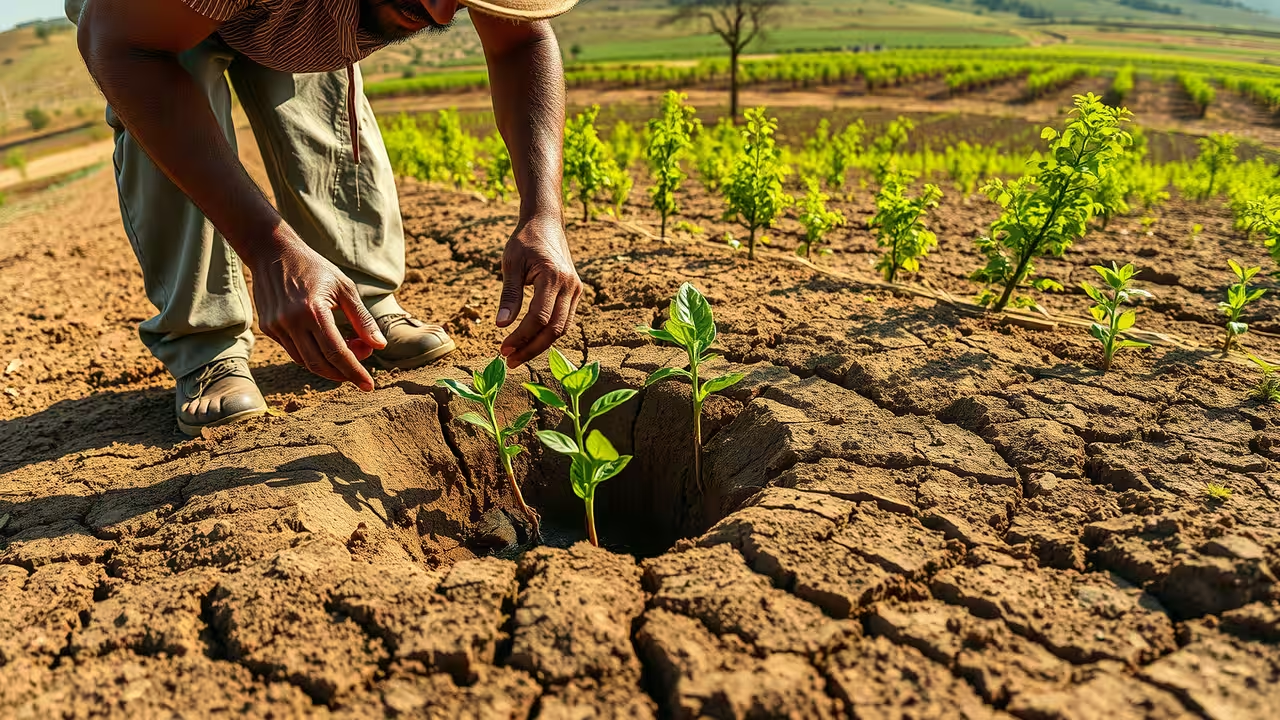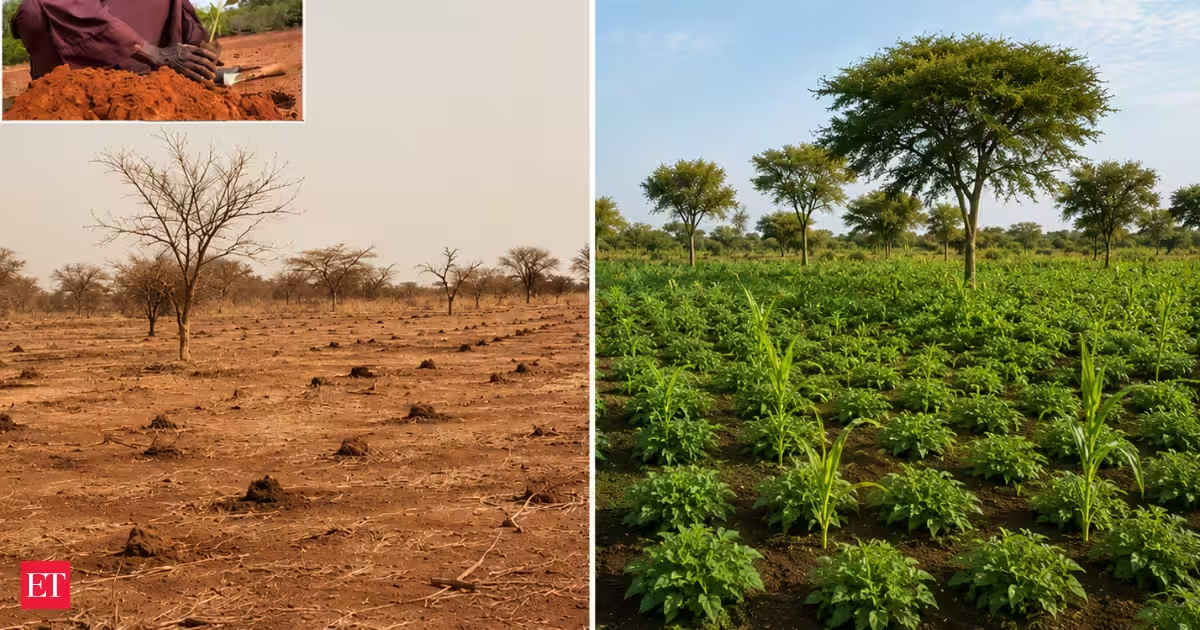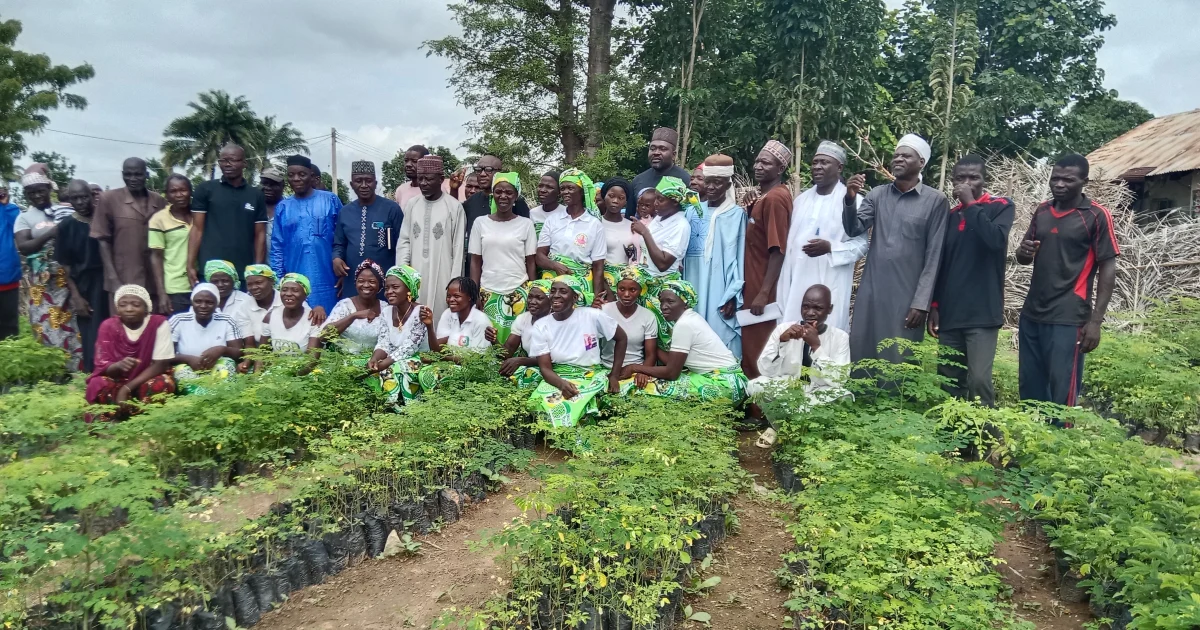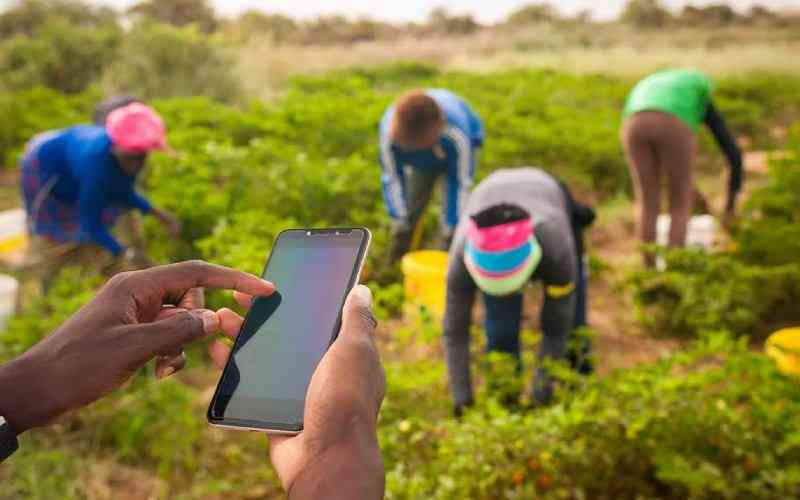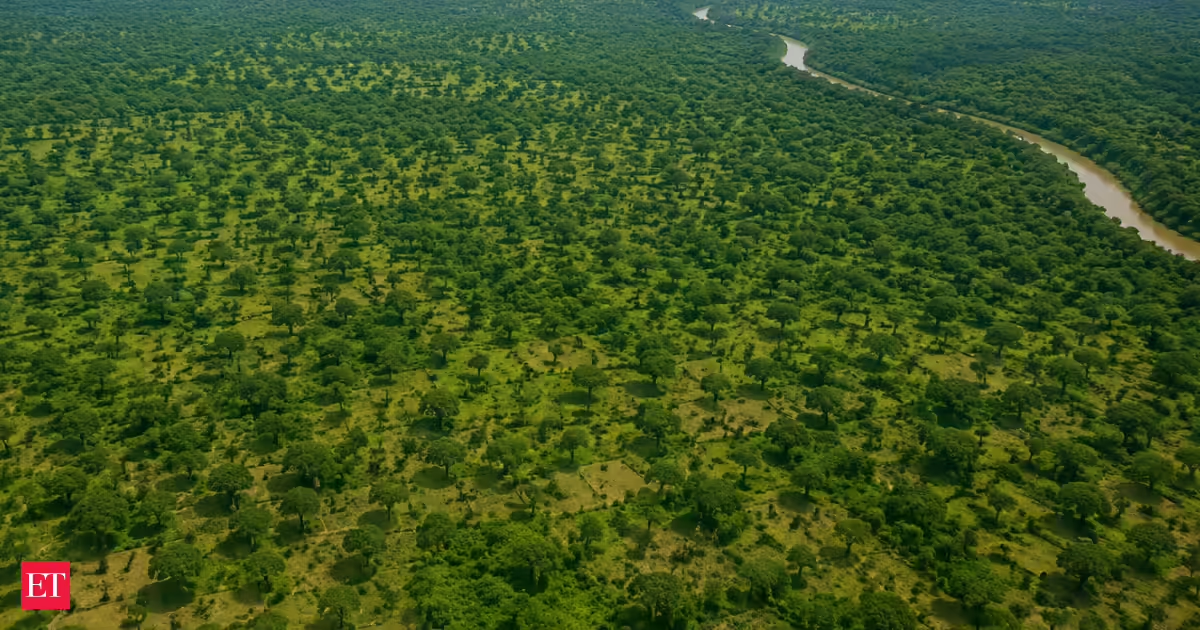
What if the fastest way to regrow a forest wasn't to plant a single tree? In Niger, one of the world's poorest countries, sitting just south of the Sahara Desert, farmers stumbled onto exactly that. An area the size of West Virginia went from bare ground back to woodland, and nobody planted it.According to a National Geographic report, farmers across southern Niger quietly regrew an estimated 200 million trees over roughly five million hectares (about 12 million acres) between the 1980s and today. Nobody planted them, and the farmers were not paid to do it. They simply stopped uprooting the tree stumps already living underground and let nature take over.For American readers watching wildfires, droughts, and mega tree-planting pledges dominate headlines back home, Niger's story lands differently. It suggests the fix for degraded land might already be buried in the soil, waiting.Why Niger lost its trees in the first placeIt was not always this way in Niger. For decades, there were locust beans, acacia, and winter thorns that provided shade for the crops while maintaining moisture in the soil. However, this situation changed in the 1900s when French colonial administrators encouraged farmers to adopt peanut production through tillage with straight furrows, a process that could not accommodate any trees. Years of drought and the need for fuel wood finished the job. By the 1980s, the landscape was largely treeless.Government reforestation attempts in the 1970s tried to fix this by planting new trees. It mostly failed. Fewer than 20 percent of the 60 million seedlings planted survived, largely because young trees couldn't reach groundwater dozens of feet underground before they died of thirst.Trees in Niger. Image Credit: Wikimedia CommonsWhat is farmer-managed natural regeneration (FMNR)The shift began almost by accident. In 1983, a group of Nigerien men returned late from seasonal work abroad and missed the window to clear tree stumps from their fields before planting season. They let the stumps be. What grew back surprised them: crops planted near the regrowing trees did noticeably better.Around the same time, an Australian agronomist named Tony Rinaudo, who had spent years failing to get new tree seedlings to survive in the region, noticed a stump sprouting a fresh stem on its own. That observation reframed the problem. Instead of planting trees from scratch, farmers could simply prune and protect the root systems already alive underground, what researchers now call an "underground forest."This method has a name: farmer-managed natural regeneration, or FMNR. Published research backs up what farmers observed firsthand. According to U.S. Geological Survey researchers Chris Reij, Gray Tappan, and Melinda Smale, farmer-led regeneration across roughly five million hectares of southern Niger cut wind erosion, boosted crop and firewood yields, and added income opportunities for households, all without government funding or land eviction.How regrowing trees boosted crop yieldsThe mechanics are almost boringly simple. Fallen leaves decompose and add nitrogen to the soil. Tree canopies cut wind speed at ground level, so topsoil and young seedlings don't get scoured away. Roots can help access deeper moisture that may benefit neighboring crops. Farmers interviewed for the original reporting described millet harvests doubling, even multiplying fivefold on some family plots.Tony Rinaudo was born in the northern Victorian town of Wangaratta and raised in nearby Myrtleford. Image Credit: World Vision Malawi/FacebookThe USGS, tracking the same farms from 2005 through 2013, found the regreening held steady over time and even expanded on nearly a quarter of the plots surveyed, evidence that this wasn't a short-term fluke.Why this matters for climate restoration in the USTree-planting initiatives have struggled in many places, not only in Africa. Trees can die because of lack of care, unsuitable species, or funding that runs out after planting. The lesson from Niger is that pruning existing vegetation can be an inexpensive and durable approach in some degraded landscapes.This knowledge is being shared. Farmers from Senegal, Burkina Faso, and Mali have begun using the same method, and scientists have observed similar cases of natural regeneration occurring in Malawi without any funding from government or NGO agencies.For readers who are used to hearing that fixing the world takes huge sums of money and cutting-edge technology, Niger's trees offer a silent but powerful reminder that restoration can also be about stepping aside and allowing the Earth to do its job.
In the 1980s, Niger regrew 200 million trees across five million hectares without planting them: farmers revived the "underground forest" beneath their fields
Discover how farmers in Niger revived 200 million trees across five million hectares by embracing natural regeneration instead of traditional tree planting. Learn about the success of farmer-managed natural regeneration (FMNR) and its implications for global climate restoration.
711 words~3 min read