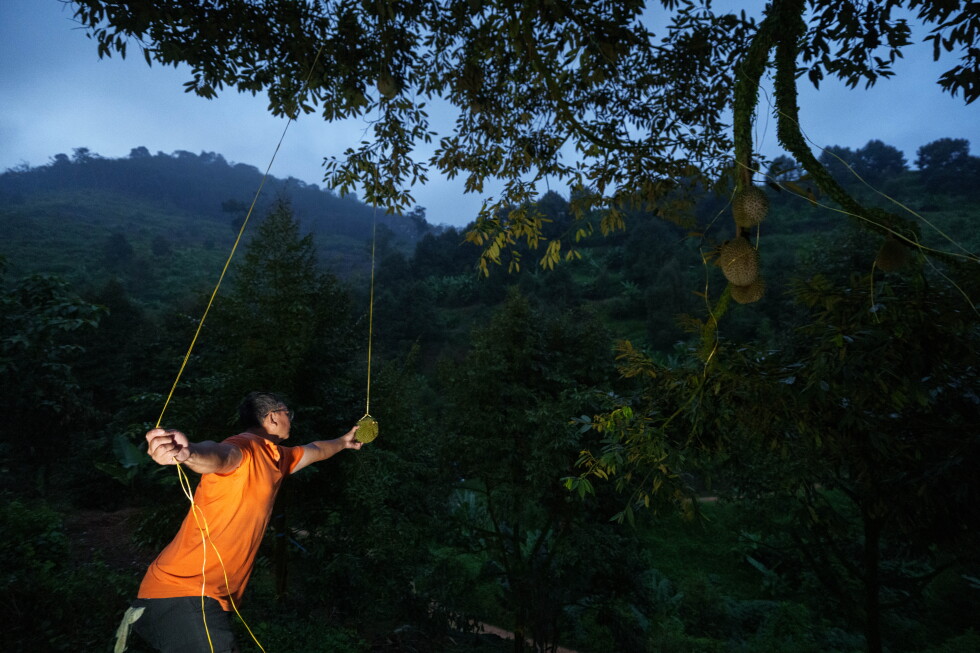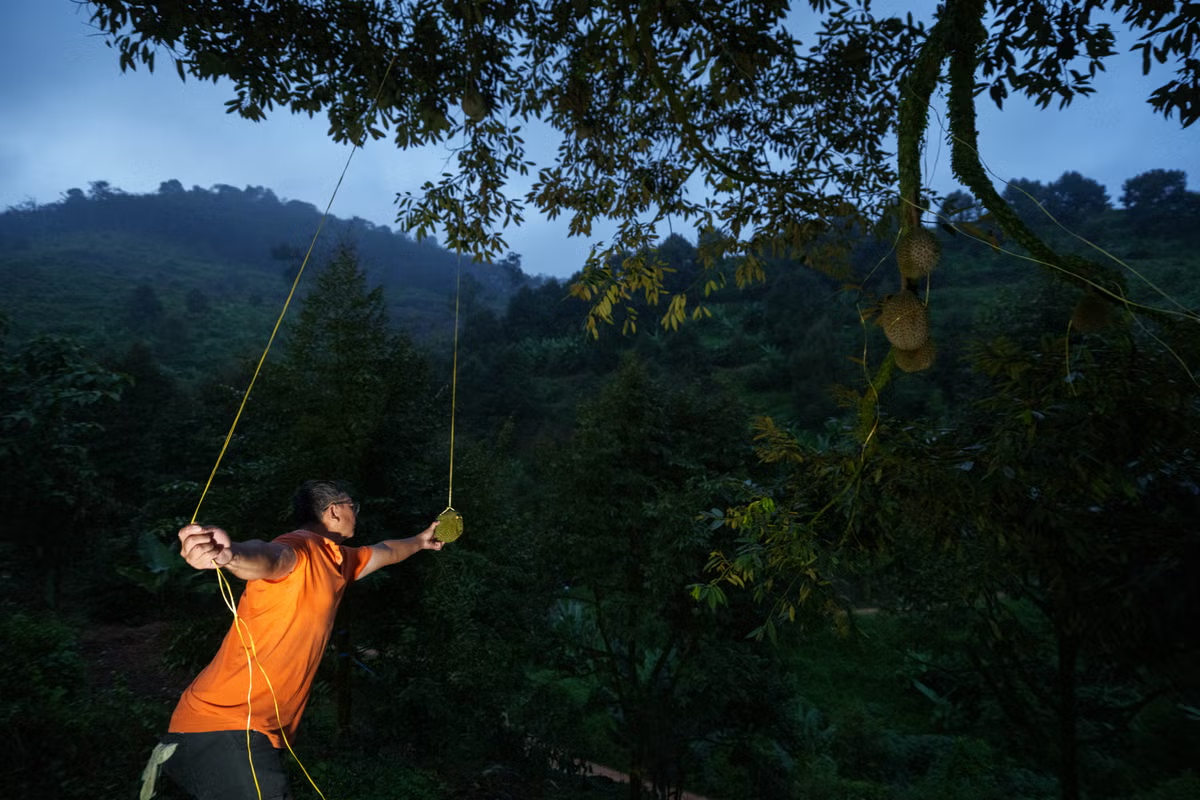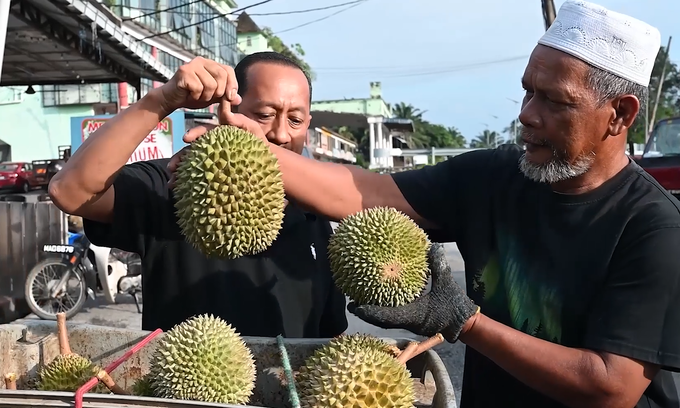
In a quiet village in central Java, farmers report that their durian fruit trees have failed to bear fruit amid local anxieties over climate change and other environmental shifts.Every year farmers around Plana village plant a type of durian known as the Kromo, named after a returning Islamic pilgrim whose durian trees produced unusually large fruit, which people here prize for its heightened flavor profile.Peer-reviewed research and official comment by Indonesia’s state meteorology agency, the BMKG, shows fruit growers in Java may face declining yields in the future amid increasingly erratic weather.
BANYUMAS, Indonesia — The first two months of the year would ordinarily see Ganjar Budi Setiaji hurrying around Plana village’s durian orchard, here in the hilly Javanese district of Banyumas. But on the last Tuesday of January, the 53-year-old father instead appeared restless.
“In 2024, I harvested 3,500 durians from 300 trees,” Ganjar told Mongabay Indonesia, a little ruefully. “I’ve had only 500 this year.”
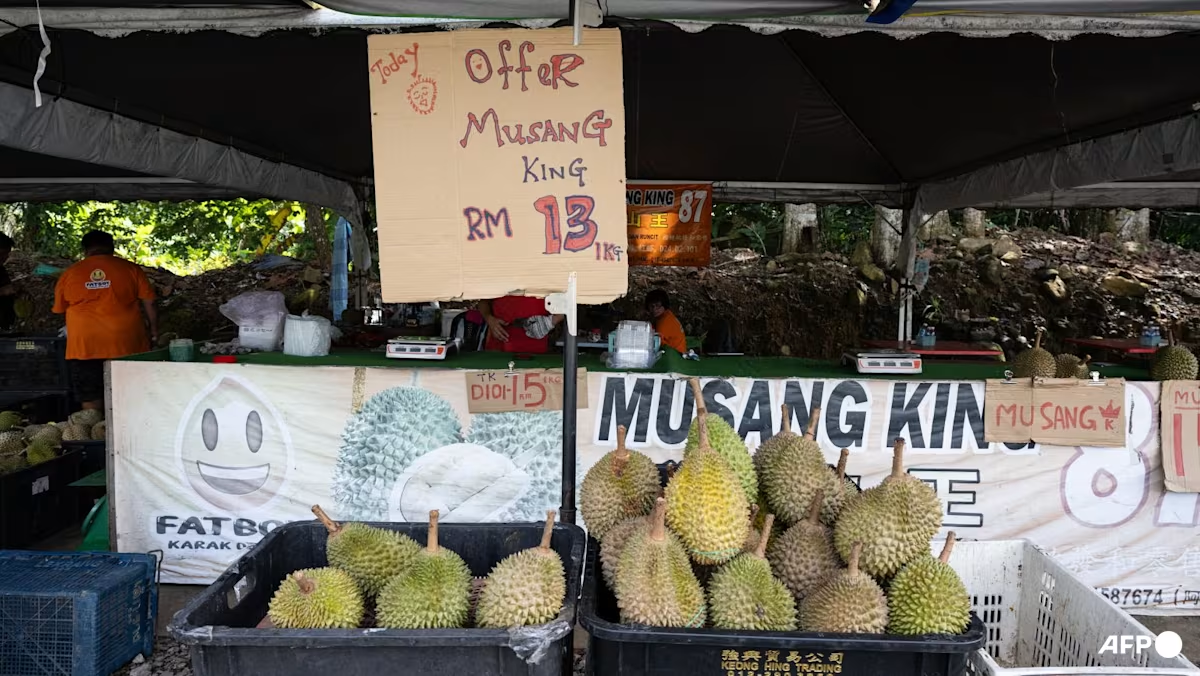
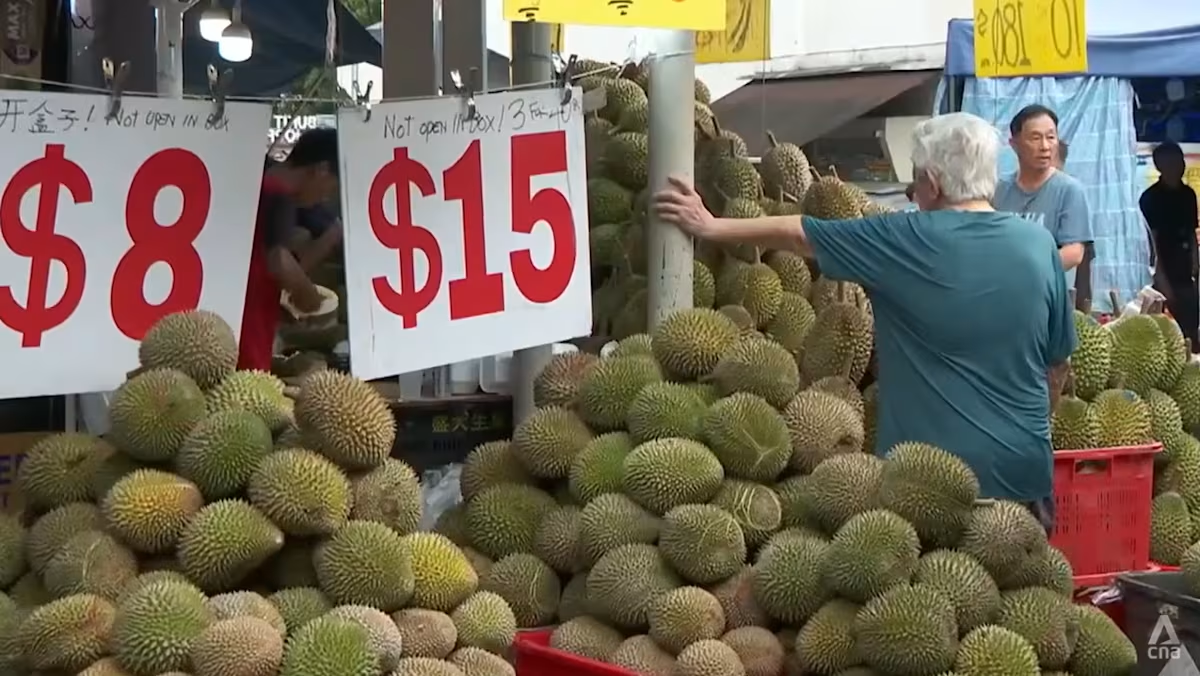
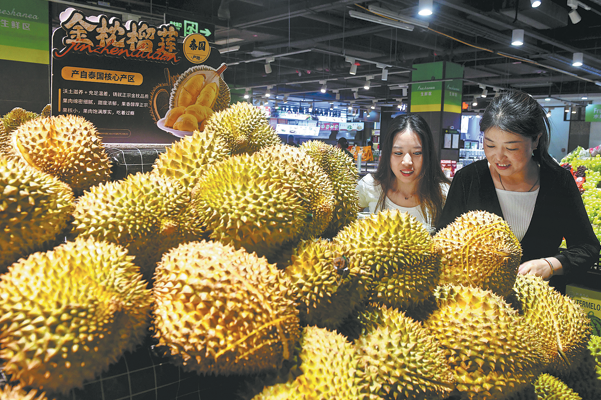
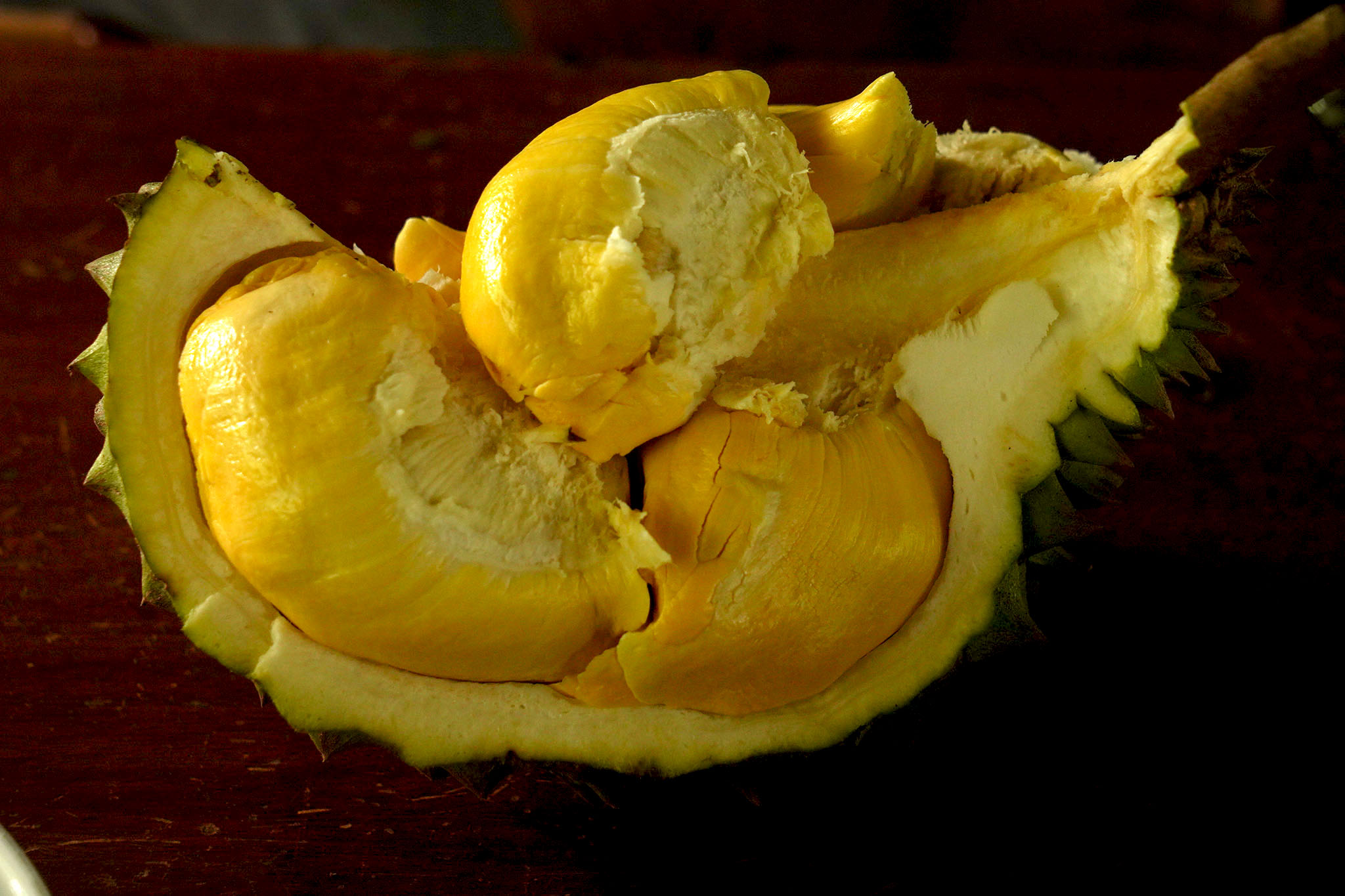
The durian fruit farmed by Ganjar is a mainstay in much of Southeast Asia, where its unusual texture and intense flavor profile splits opinion.
Last year, Indonesia’s food minister rushed out trade data showing the archipelago’s superior production volume after Malaysia announced the durian as the kingdom’s national fruit, the latest bout of cultural fencing between the neighbors.