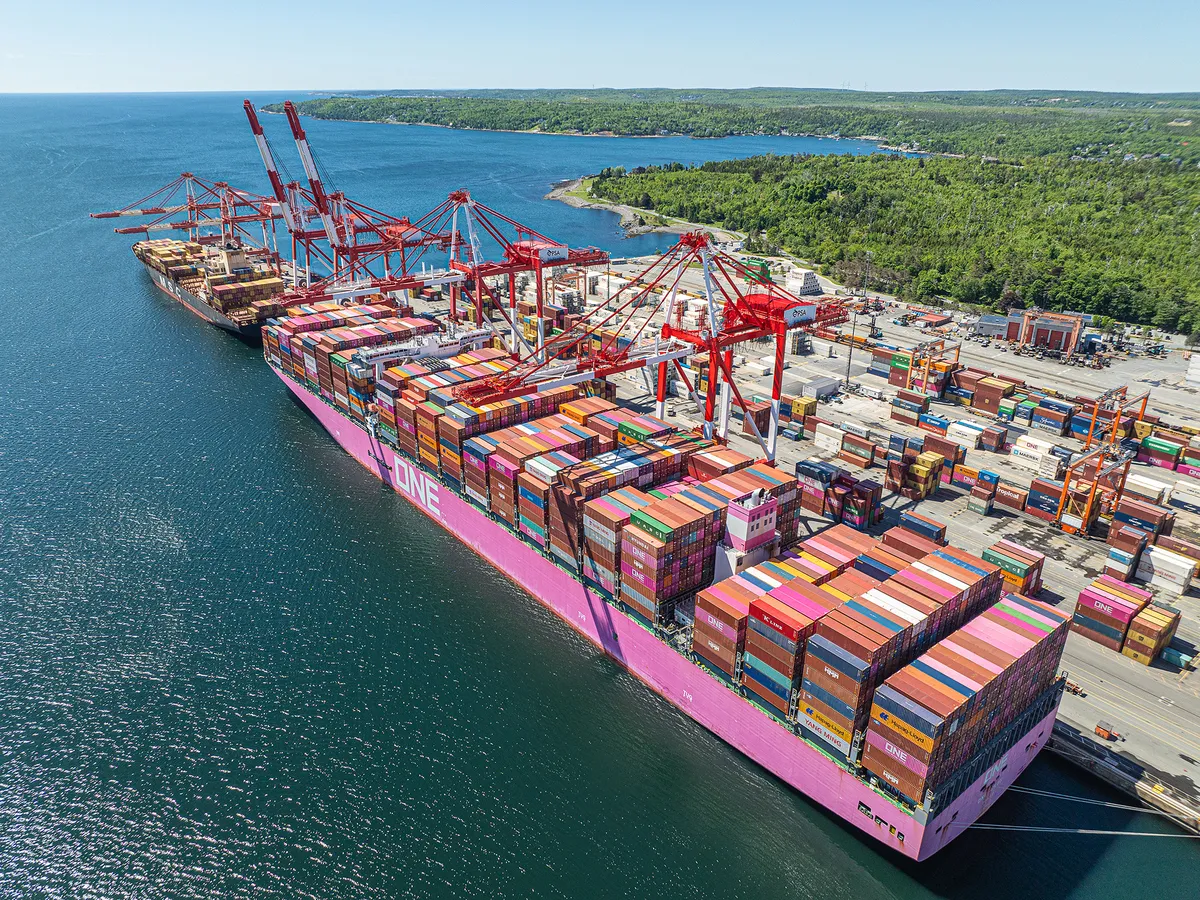
Skip to Content News Archives Economy Energy Oil & Gas Renewables Electric Vehicles Mining Commodities Agriculture Real Estate Mortgages Mortgage Rates Finance Banking Insurance Fintech Cryptocurrency Work Wealth Smart Money Wealth Management Investor Personal Finance Family Finance Retirement Taxes High Net Worth FP Comment Executive Women Puzzmo Newsletters Financial Times Business Essentials More Innovation Information Technology FP500 Podcasts Small Business Lives Told Tails Told Shopping Financial Post Store Obituaries Place a Notice Advertising Advertising With Us Advertising Solutions Postmedia Ad Manager Sponsorship Requests Classifieds Place a Classifieds ad Working Profile Settings My Subscriptions Saved Articles My Offers Newsletters Customer Service FAQ News Economy Energy Mining Real Estate Finance Work Wealth Investor FP Comment Executive Women Puzzmo Newsletters Financial Times Business Essentials HomeFP CommentOpinion: We can’t diversify our trade with uncompetitive ports The World Bank ranks ports by processing time and performance. Our biggest ports are hundreds of places from the top. We need to do betterLast updated 53 minutes ago You can save this article by registering for free here. Or sign-in if you have an account.The world’s leading ports are investing, automating and modernizing. If Canada fails to do the same, we risk falling even further behind in the global race for trade and investment. Photo by Handout/PSA HalifaxCanadians have long viewed their country as a trading nation. With a small domestic market and abundant natural resources, Canada’s economic health relies on its capacity to move goods through international markets. When goods do move efficiently across borders, Canadians benefit through greater investment and higher wages.Subscribe now to read the latest news in your city and across Canada.Exclusive articles from Barbara Shecter, Joe O'Connor, Gabriel Friedman, and others.Daily content from Financial Times, the world's leading global business publication.Unlimited online access to read articles from Financial Post, National Post and 15 news sites across Canada with one account.National Post ePaper, an electronic replica of the print edition to view on any device, share and comment on.Daily puzzles, including the New York Times Crossword.Subscribe now to read the latest news in your city and across Canada.Exclusive articles from Barbara Shecter, Joe O'Connor, Gabriel Friedman and others.Daily content from Financial Times, the world's leading global business publication.Unlimited online access to read articles from Financial Post, National Post and 15 news sites across Canada with one account.National Post ePaper, an electronic replica of the print edition to view on any device, share and comment on.Daily puzzles, including the New York Times Crossword.Create an account or sign in to continue with your reading experience.Access articles from across Canada with one account.Share your thoughts and join the conversation in the comments.Enjoy additional articles per month.Get email updates from your favourite authors.Create an account or sign in to continue with your reading experience.Access articles from across Canada with one accountShare your thoughts and join the conversation in the commentsEnjoy additional articles per monthGet email updates from your favourite authorsSign In or Create an AccountorAmid growing trade tensions with the United States, Ottawa is looking to diversify our exports and reduce our reliance on a single market. But that effort is frustrated by Canada’s inefficient ports, which, despite their importance, have fallen behind their international counterparts, undermining Canadian competitiveness.This should be of grave concern to governments, producers and consumers alike. Close to $400 million of goods pass through the port of Montreal daily, and over $800 million leave the port of Vancouver. When these ports get bogged down, the consequences ripple across the economy.Get the latest headlines, breaking news and columns.By signing up you consent to receive the above newsletter from Postmedia Network Inc.A welcome email is on its way. If you don't see it, please check your junk folder.The next issue of Top Stories will soon be in your inbox.We encountered an issue signing you up. Please try againThe World Bank ranks 405 ports of all sizes around the world, based on how efficiently they handle cargos and ships. This includes the time ships spend in port and overall operational performance. Among Canadian ports, in 2024 only Halifax made the top 100. Canada’s largest trade gateways performed far worse: Montreal ranked 344th, Vancouver 389th. Prince Rupert, a critical gateway to Asian markets, also ranked near the bottom, at 362nd.Such low rankings should be setting off alarm bells. Our claim to being a trading nation is unconvincing when we tolerate ports that rank among the least efficient in the industrialized world.Port productivity matters. It directly affects shipping costs, delivery times and the reliability of supply chains. At the Port of Vancouver, containers reportedly sat in terminals for four to seven days during peak congestion periods in 2025. When containers remain stuck at port, importers and exporters face higher storage costs, which are ultimately reflected in higher prices for consumers.Why are we lagging behind? While many of the world’s leading ports have modernized and embraced automation, Canada’s have failed to keep up. Singapore’s Tuas Port, the world’s first fully automated port, ranked 29th globally and handled 40.9 million containers a year. Canada, meanwhile, remains stuck in recurring labour disputes and political hesitation over the issue of modernization.Over the past several years, ports in Montreal, Vancouver and Halifax have experienced strikes, lockouts and other disruptions. In 2023, labour disputes at the ports of Vancouver and Montreal affected more than $1.2 billion worth of goods daily. Logistics companies value reliability. Instead, Canadian ports have been providing uncertainty. If we don’t change course, investment will continue to shift elsewhere.Policy-makers regularly speak about the need to diversify trade and strengthen Canada’s economic resilience. Yet, instead of encouraging greater flexibility, Ottawa is moving in the opposite direction. Bill C-58, which came into force in 2025, prohibits federally regulated employers from using replacement workers during legal strikes or lockouts. Business groups warned that this legislation could worsen Canada’s already weak productivity performance and damage the country’s international reputation as a reliable trading partner.The government went ahead despite their advice. As a result, federal policy is no longer neutral as to how port disruptions play out. Given unions’ increased power, there is now a greater likelihood that negotiations will result in longer and more costly interruptions to trade flows.The government cannot credibly claim to support supply chain resilience and economic competitiveness while adopting policies that risk prolonging disruptions at ports and discouraging modernization. Automation is not our enemy; economic stagnation is. If Canadian ports continue to fall behind, supply chains will be less efficient, less investment will come to Canada and economic opportunities here will dwindle. Protecting today’s inefficiencies undermines tomorrow’s prosperity.At a time of weak productivity growth and high trade uncertainty, improving the efficiency and reliability of critical infrastructure is an economic necessity. The world’s leading ports are investing, automating and modernizing. If we fail to do the same, we risk falling even further behind in the global race for trade and investment.Gabriel Giguère is a senior policy analyst at the MEI, a think-tank with offices in Montreal, Ottawa and Calgary. Join the Conversation This website uses cookies to personalize your content (including ads), and allows us to analyze our traffic. Read more about cookies here. By continuing to use our site, you agree to our Terms of Use and Privacy Policy.
Opinion: We can’t diversify our trade with uncompetitive ports
The World Bank ranks ports by processing time and performance. Our biggest ports are hundreds of places from the top. Find out more here
1,197 words~5 min read