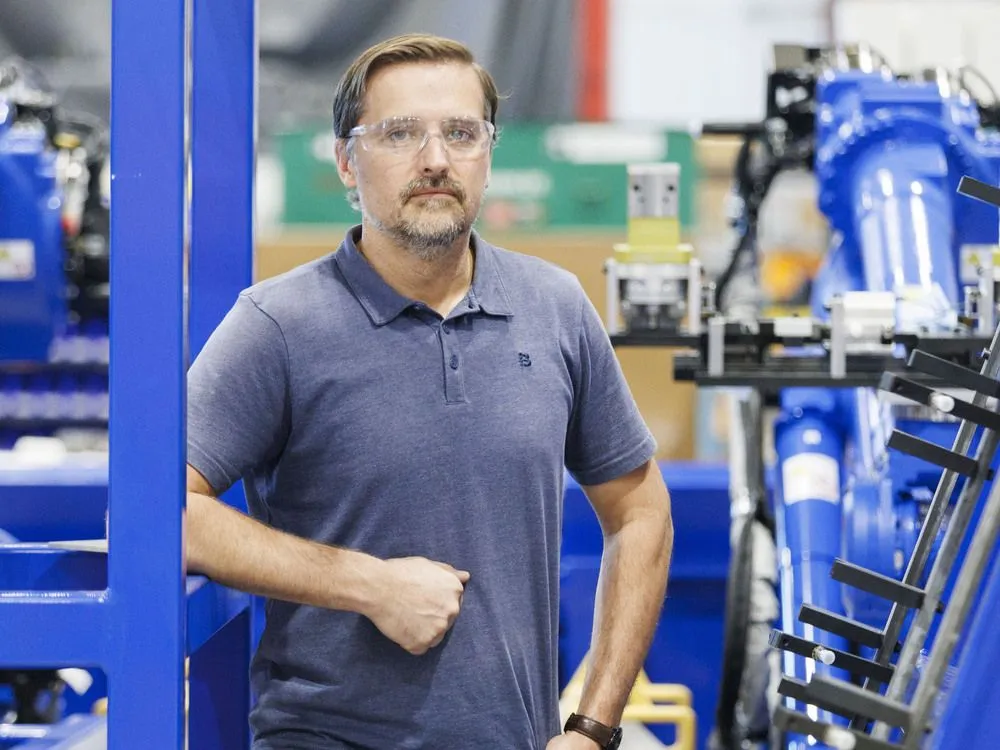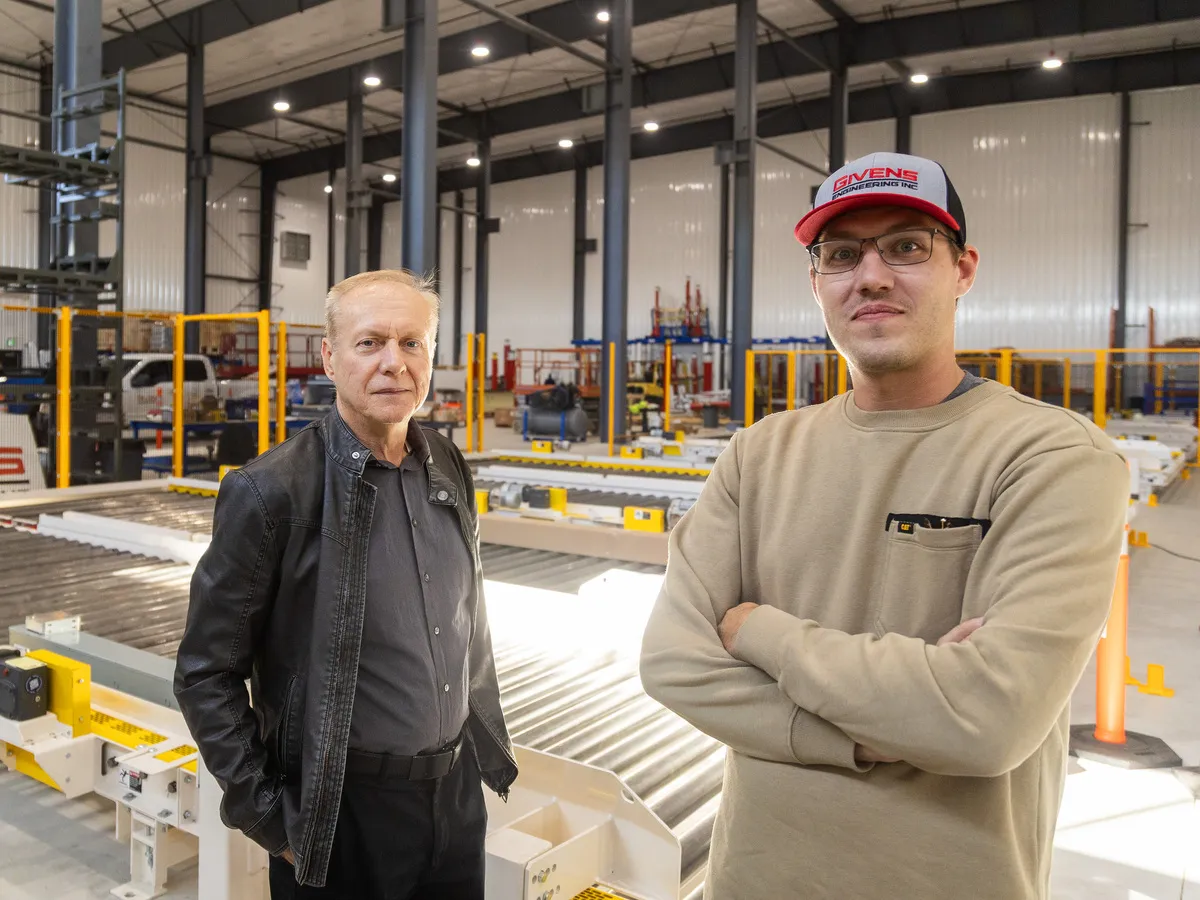
Skip to Content News Archives Economy Energy Oil & Gas Renewables Electric Vehicles Mining Commodities Agriculture Real Estate Mortgages Mortgage Rates Finance Banking Insurance Fintech Cryptocurrency Work Wealth Smart Money Wealth Management Investor Personal Finance Family Finance Retirement Taxes High Net Worth FP Comment Executive Women Puzzmo Newsletters Financial Times Business Essentials More Innovation Information Technology FP500 Podcasts Small Business Lives Told Tails Told Shopping Financial Post Store Obituaries Place a Notice Advertising Advertising With Us Advertising Solutions Postmedia Ad Manager Sponsorship Requests Classifieds Place a Classifieds ad Working Profile Settings My Subscriptions Saved Articles My Offers Newsletters Customer Service FAQ News Economy Energy Mining Real Estate Finance Work Wealth Investor FP Comment Executive Women Puzzmo Newsletters Financial Times Business Essentials HomeNewsEconomyLondon firms among manufacturers eyeing U.S. investment as tariffs biteA KPMG survey suggests tariffs are reshaping where Canadian manufacturers plan to investLast updated 26 minutes ago You can save this article by registering for free here. Or sign-in if you have an account.Ray Givens and his son Cameron, stand in their brand spanking new building just off Huron and the Veterans Memorial Parkway in London, Ont. Behind them are parts of a large contract for Texas Toyota with conveyor lines, Ray says it is the second biggest project in the companies history. Ray Givens says the past three years have been boom years for their company, leading to the bigger factory, whose height and size will allow the firm to compete on bigger heavier projects. Photograph taken on Tuesday October 28, 2025. Photo by Mike Hensen/The London Free Press/Postmedia NetworkDespite the economic chaos the trade war between Canada and the United States has created for the country’s manufacturing sector, Ray Givens says his business is busier than ever.Subscribe now to read the latest news in your city and across Canada.Exclusive articles from Barbara Shecter, Joe O'Connor, Gabriel Friedman, and others.Daily content from Financial Times, the world's leading global business publication.Unlimited online access to read articles from Financial Post, National Post and 15 news sites across Canada with one account.National Post ePaper, an electronic replica of the print edition to view on any device, share and comment on.Daily puzzles, including the New York Times Crossword.Subscribe now to read the latest news in your city and across Canada.Exclusive articles from Barbara Shecter, Joe O'Connor, Gabriel Friedman and others.Daily content from Financial Times, the world's leading global business publication.Unlimited online access to read articles from Financial Post, National Post and 15 news sites across Canada with one account.National Post ePaper, an electronic replica of the print edition to view on any device, share and comment on.Daily puzzles, including the New York Times Crossword.Create an account or sign in to continue with your reading experience.Access articles from across Canada with one account.Share your thoughts and join the conversation in the comments.Enjoy additional articles per month.Get email updates from your favourite authors.Create an account or sign in to continue with your reading experience.Access articles from across Canada with one accountShare your thoughts and join the conversation in the commentsEnjoy additional articles per monthGet email updates from your favourite authorsSign In or Create an Accountor“Both our North American shops are going flat out,” said the owner of Givens Engineering Inc., which makes material-handling equipment such as cranes and grippers capable of lifting and moving pieces and equipment weighing up to 100,000 pounds. The company has operations in London, Perrysburg, Ohio, and Netphen, Germany.“We do pay tariffs going into the U.S., but so far it hasn’t really affected us that much.”SUBSCRIBER EXCLUSIVE: FP West: Energy Insider brings you behind the oilpatch’s closed doors with exclusive insights from insiders every Wednesday morning.By signing up you consent to receive the above newsletter from Postmedia Network Inc.A welcome email is on its way. If you don't see it, please check your junk folder.The next issue of FP West: Energy Insider will soon be in your inbox.We encountered an issue signing you up. Please try againThough the levies imposed by the U.S. haven’t significantly slowed the company’s growth – Givens said it has posted year-over-year growth of about 20 per cent for the past five years – they have changed his calculations about where future investment is likely to go.“Right now, we’re looking seriously at doubling our floor space in Ohio,” he said. “Our U.S. shop is increasing the number of projects that they’re handling . . . so we plan to expand into the U.S. as much as we can, as fast as we can, as hard as we can, without limits.”More than four in 10 manufacturers are considering or have already moved some production south of the border, according to a new survey by KPMG Canada.Among those still considering investing in the U.S., about 77 per cent expect to do so within the next two years, according to the survey of 275 Canadian manufacturing companies conducted in May.“This isn’t a wholesale exit from Canada,” Ali Jaffery, KPMG’s chief economist, said in a statement. “It’s a strategic rebalancing of capital to where they can earn a higher return.”Among the companies that have already made the move is concrete mixer maker London Machinery Inc., which announced in February it was shifting some jobs to a new plant in Iowa.But the trade uncertainty has prompted businesses to pause new investment, even if they are not considering a move.About 57 per cent of Canadian businesses have paused, scaled back or scrapped investments altogether, KPMG said.“Deciding to make any big investment is tough right now because of (CUSMA),” said Ben Whitney, president of London-based Armo Tool Ltd., referring to the Canada-U.S.-Mexico Agreement, which entered a 10-year period of annual reviews on July 1. Ben Whitney, president of London-based Armo Tool Ltd. (Mike Hensen/The London Free Press)“We’re pretty committed to our footprint here . . . and I’m still optimistic that we’re going to get a (CUSMA) deal that’s going to be almost back to status quo, maybe not for every single industry, but for most, so I’m taking a wait-and-see approach. I wouldn’t say that we’re close to making a big jump like that.”Whitney’s company makes equipment and precision tools for manufacturers in the automotive, defence, and food and beverage sectors, among others.But not all businesses may have the luxury of waiting much longer, particularly those in sectors such as steel and aluminum that have been hit by targeted U.S. tariffs.Mike Kilby, president of Dajcor Aluminum Ltd. in Chatham, said many of his clients last year were willing to wait because they didn’t want “to upset their whole supply chain just to accommodate a six-month blip,” but many are now asking him to move production to the company’s plant in Kentucky.“The market is eroding in Canada and it’s moving to the U.S.,” he said. “There’s no doubt that all of our capital investment will be going to the U.S. in the short term. I hate to say it, but the tariffs are working. They are having their desired effect.”The company’s Canadian workforce has already shrunk by 50 employees to about 215, Kilby said, but the future looks much brighter for its U.S. facility.“Your hand is forced,” he said. “I happen to be in a good spot, having two facilities, and it’s easier to move customers, but I don’t want to see further erosion in our Canadian market. Our Chatham location is the mother plant, but it’s getting to the point where the U.S. plant will be bigger than the Canadian plant.”The tariff situation has also been compounded by what Kilby calls Ottawa’s unwillingness to impose import quotas on aluminum coming from other countries, a protection that was awarded to the steel sector.“That metal that’s being diverted away from the United States now is coming here, and it’s undercutting our domestic industry,” he said. “What we currently need is a barrier to keep these low-cost countries from dumping (aluminum) into our market, and that will help us at least shore up the domestic market.” Join the Conversation This website uses cookies to personalize your content (including ads), and allows us to analyze our traffic. Read more about cookies here. By continuing to use our site, you agree to our Terms of Use and Privacy Policy.
London firms among manufacturers eyeing U.S. investment as tariffs bite
A KPMG survey suggests tariffs are reshaping where Canadian manufacturers plan to invest.
1,361 words~6 min read