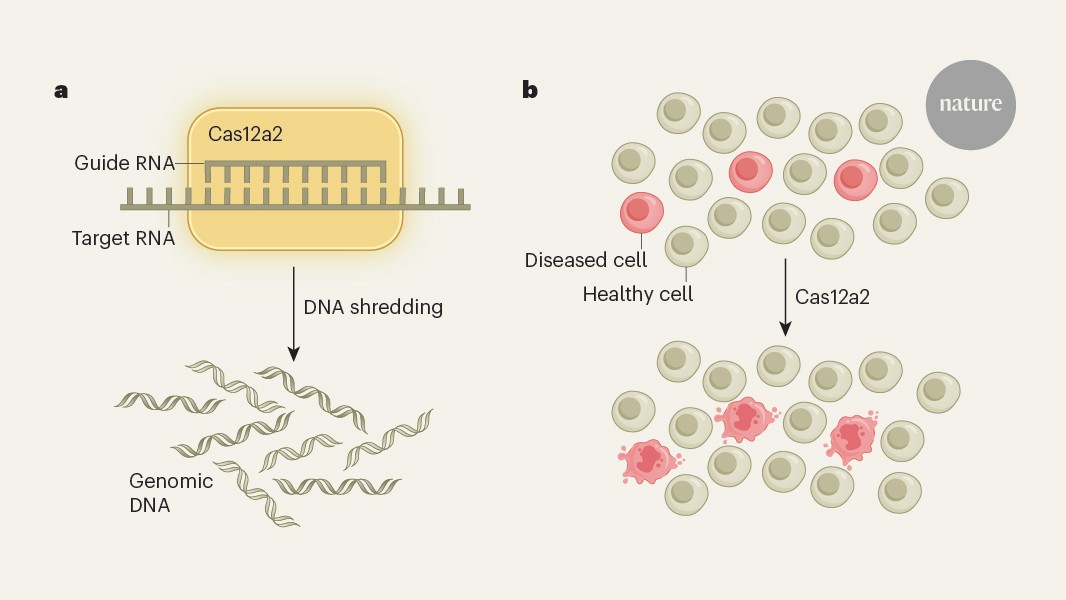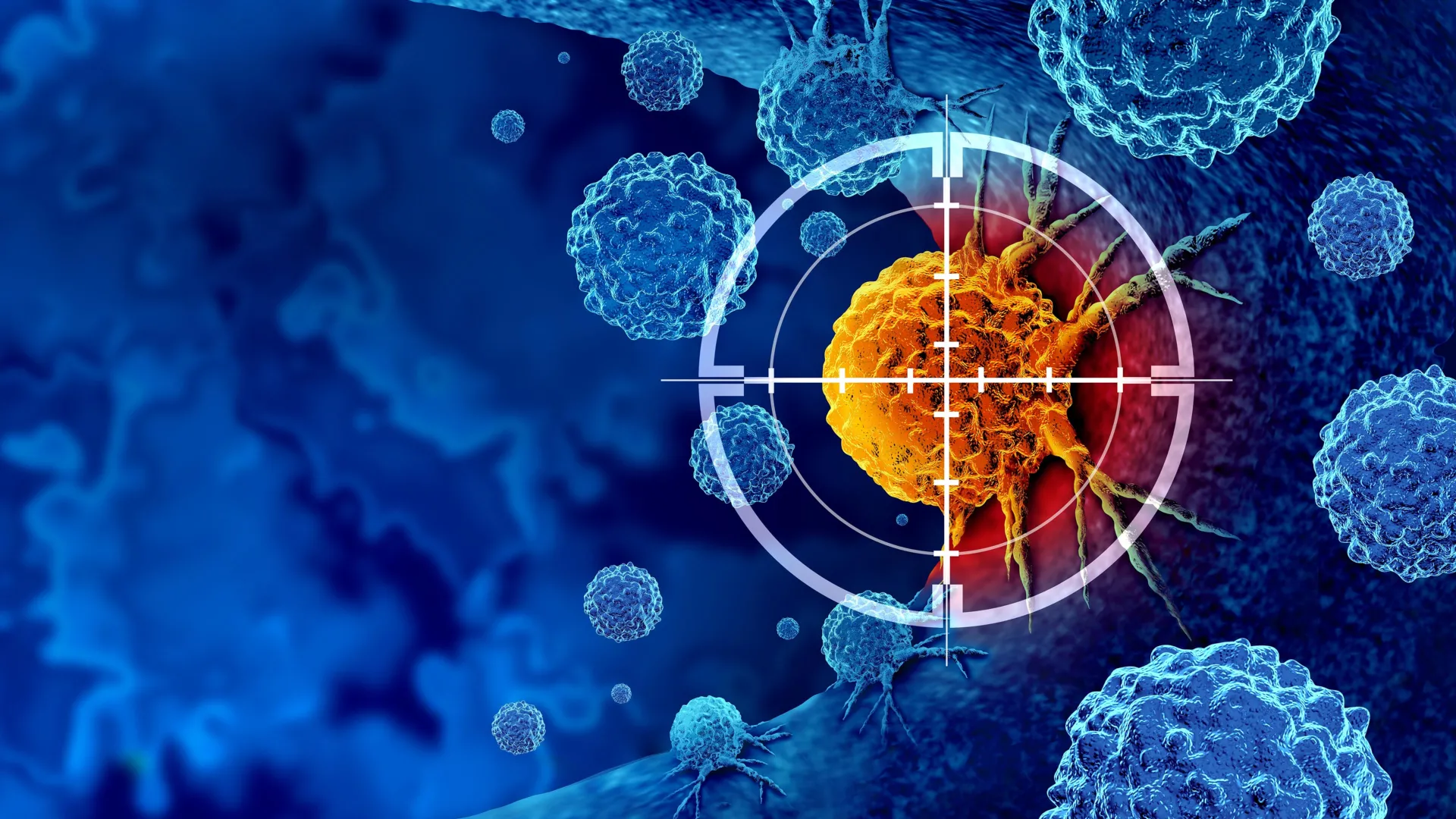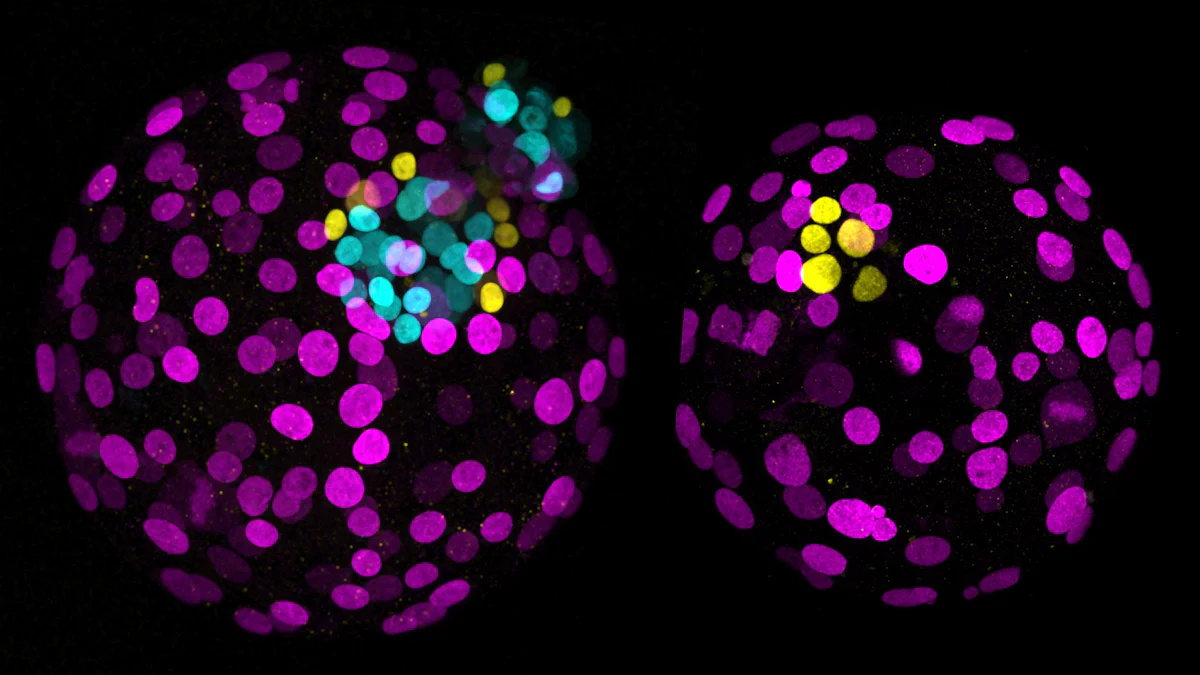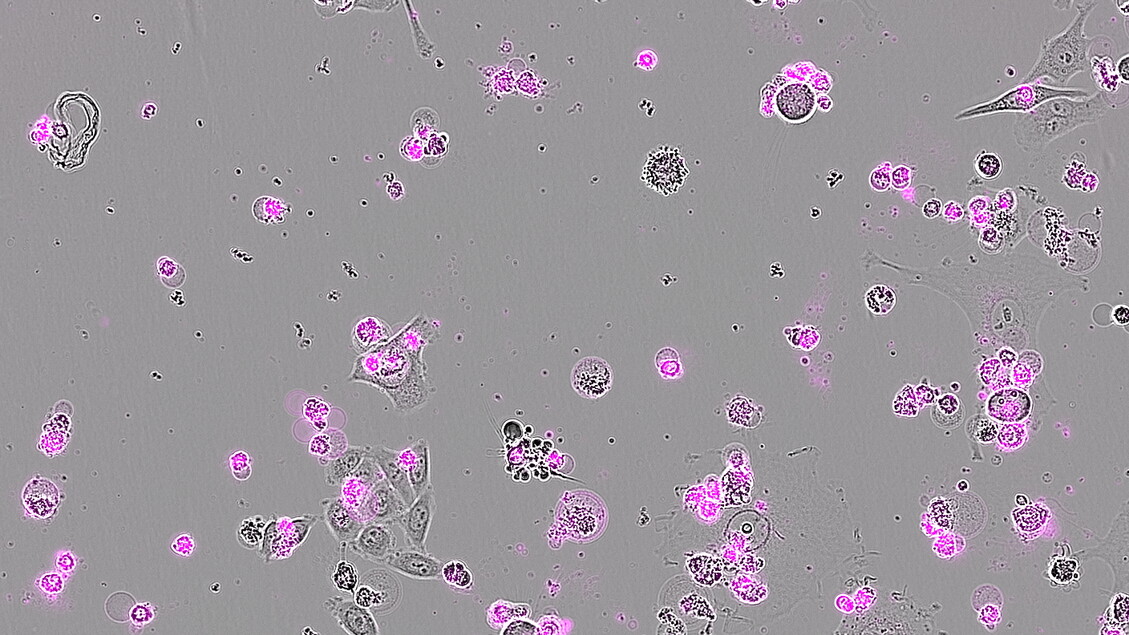
Researchers have found a powerful new CRISPR-based technology capable of selectively destroying diseased human cells by recognizing specific RNA molecules, a breakthrough that could eventually pave the way for highly targeted treatments for cancer, viral infections, and other diseases while leaving healthy cells unharmed.The discovery was published on May 6 in the journal Nature, under the title "RNA-triggered cell killing with CRISPR–Cas12a2" by Paul Scholz, Jared Thompson, Kadin T. Crosby and colleagues. It centers on CRISPR-Cas12a2, a recently discovered member of the CRISPR family that functions differently from the well-known CRISPR-Cas9 gene-editing system.The international study, led by scientists from the University of Utah, Utah State University, Akribion Therapeutics, the Helmholtz Institute for RNA-based Infection Research, and the University of Würzburg in Germany, demonstrates for the first time that Cas12a2 can selectively eliminate human and yeast cells based on the RNA they express.According to the researchers, the technology enables programmable and sequence-specific cell elimination, expanding the CRISPR toolbox beyond gene editing into the selective destruction of unwanted cells.A long-standing challenge in medicineOne of the biggest challenges in treating diseases such as cancer is destroying harmful cells without damaging healthy tissue surrounding them. "This is a holy grail of medicine and other sciences," said Utah State University biochemist Ryan Jackson, as quoted by the university.Jackson, alongside Utah State doctoral candidate Kadin Crosby and an international team of researchers, described the breakthrough in the journal Nature. The research was supported by the National Institutes of Health and the R. Gaurth Hansen Family.How Cas12a2 differs from CRISPR-Cas9Unlike the widely used CRISPR-Cas9 system, which locates matching DNA sequences using a guide RNA before cutting the DNA, Cas12a2 recognizes complementary RNA instead. Once Cas12a2 detects its target RNA, it activates an aggressive response that indiscriminately shreds double-stranded DNA throughout the targeted cell.According to the Nature paper, this widespread DNA damage triggers cell-cycle arrest followed primarily by apoptosis, or programmed cell death. Importantly, researchers found that cells lacking the target RNA remained unaffected, demonstrating the system's ability to distinguish diseased cells from healthy ones.Researchers successfully targeted cancer mutations and HPVTo demonstrate the technology's potential, the team tested Cas12a2 against several biologically important targets.According to the study, researchers successfully eliminated:Human cells infected with high-risk human papillomavirus (HPV).Cells that failed to undergo successful CRISPR gene editing.Cells carrying a common cancer-causing mutation in the KRAS gene.The researchers reported that Cas12a2 could recognize a broad range of RNA targets and even distinguish single-nucleotide differences, offering a level of precision that existing technologies often struggle to achieve.The study also found no observed off-target activation, meaning cells lacking the targeted RNA were spared during laboratory experiments.Why scientists believe this is differentCurrent CRISPR approaches designed to eliminate unwanted cells have important limitations. The researchers explain that Cas9 relies on highly repetitive DNA regions and cannot directly respond to gene expression, while Cas13 often has limited effectiveness when its activity depends on RNA expression.By comparison, the authors write that Cas12a2 offers several advantages. "By contrast, Cas12a2 can enact potent cell killing only in the presence of a recognized transcript, can achieve single-nucleotide resolution specificity, and can be triggered by poorly expressed transcripts." These capabilities, they say, make Cas12a2 a unique addition to the CRISPR toolkit.Still early-stage researchDespite the promising findings, the researchers emphasize that Cas12a2 remains an experimental technology. The work was performed primarily in yeast and cultured human cell lines, not in patients, and substantial research will be required before any clinical applications become possible.Future studies will focus on improving delivery methods, increasing targeting flexibility, reducing any potential off-target activation, and understanding how different cell types respond to Cas12a2-induced DNA damage.The researchers also plan to investigate how the immune system reacts when targeted cells are destroyed, which could have implications for future cancer immunotherapies.As the authors conclude, the discovery significantly expands the possibilities for programmable cell elimination. "Overall, with further investigation and development, Cas12a2 is poised to expand the CRISPR toolbox to incorporate programmable cell elimination in eukaryotic cells, opening a broad application space spanning the life sciences."
Scientists develop new CRISPR tool that can program cancer cells to self-destruct
Scientists developed a new CRISPR technology that targets specific RNA molecules. This breakthrough allows for the selective destruction of diseased human cells. The Cas12a2 system differs from Cas9 by targeting RNA instead of DNA. Researchers successfully eliminated cancer cells and HPV-infected cells in laboratory tests.
664 words~3 min read