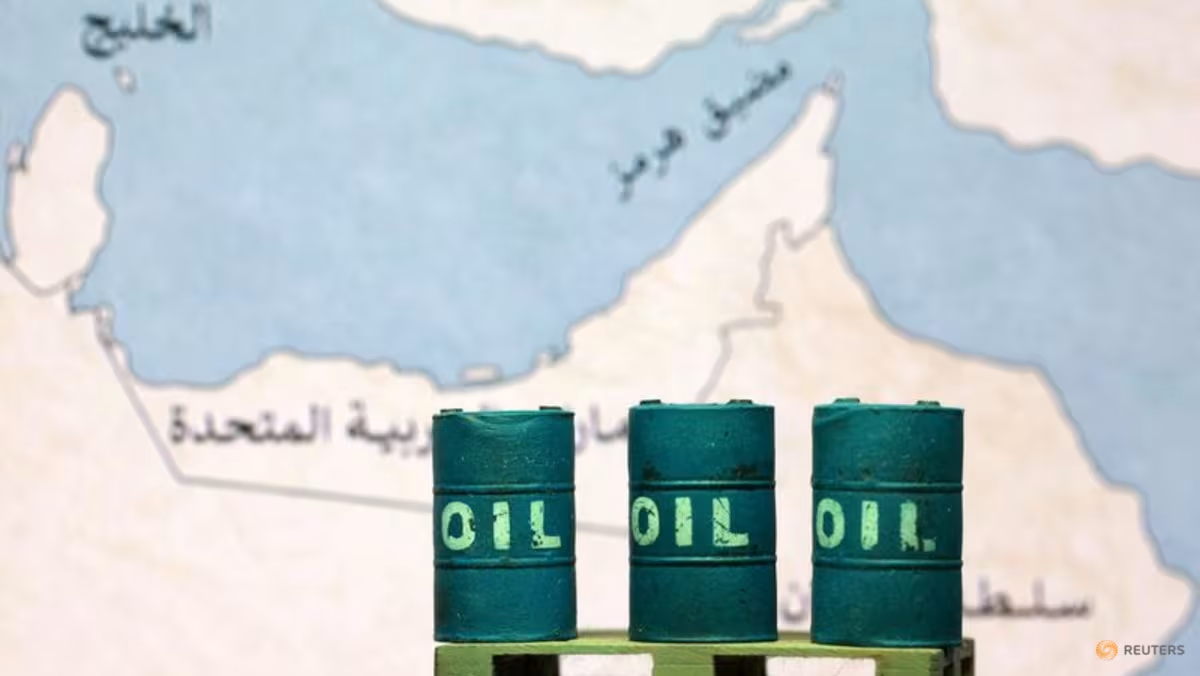
July 28 : Oil prices extended declines on Tuesday, down by over $1 per barrel amid hopes for a resolution in the U.S.-Iran war which significantly disrupted global energy flows.Brent crude futures were down $1.47, or 1.66 per cent, at $86.89 by 0326 GMT, their lowest since July 20. U.S. West Texas Intermediate crude was at $81.16 a barrel, down $1.45, or 1.76 per cent, also the lowest level since July 20.Both contracts slid around 8 per cent in the prior session after the U.S. abruptly suspended a campaign of air strikes against Iran over the weekend.U.S. President Donald Trump said on Monday the United States was having "good talks" with Iran and that there was a chance of a resolution. However, he said U.S. strikes would resume if negotiations failed while Iran issued similar comments about retaliation.
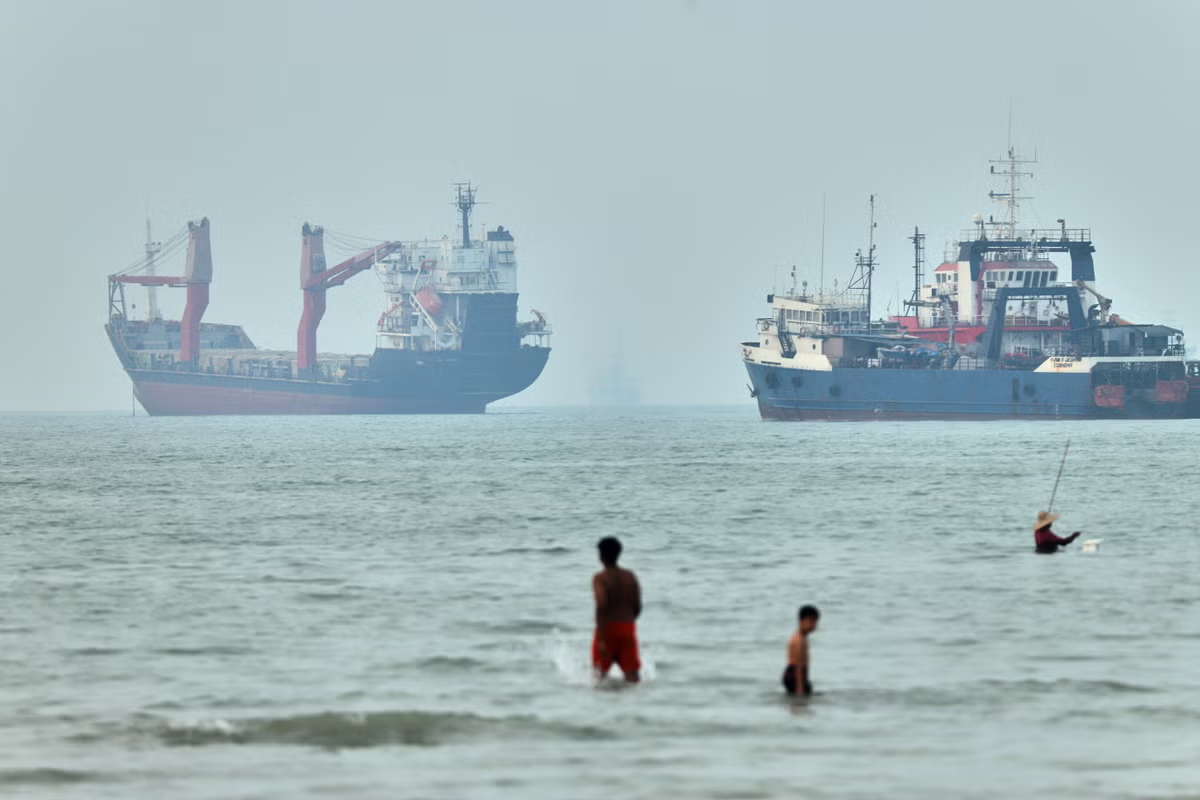
"For now, the relief that an off-ramp has been found has taken the heat out of prices and eased concerns around Houthi attacks on Saudi infrastructure. However, the situation remains highly fluid," IG analyst Tony Sycamore said in a client note.Afrah al-Zouba, the foreign minister-designate of Yemen's internationally recognised Saudi-backed government, said Yemen-based Houthi fighters aimed to replicate Iran's control of shipping through the Strait of Hormuz at Bab el-Mandeb."Whether the Houthis have the military capacity to enforce a comprehensive blockade is questionable, especially given that the Saudis will attack them relentlessly. Still, there is no doubt that traffic has dropped off significantly in the Red Sea and the Strait of Hormuz," Marex analyst Edward Meir said."A key reason prices are not even higher than they are right now is the demand destruction that is taking place, especially in Asia," Meir said.Also weighing down oil prices was news that the Caspian Pipeline Consortium's Black Sea terminal on the Russian coast has resumed oil loadings, after a one-week stoppage following Ukrainian drone attacks.Still, analysts warned that the risks to supply disruptions spreading to the Red Sea remain elevated after Saudi Arabia said it shot down drones aimed at petroleum targets, including in Riyadh. It said they had been launched from Iraq by Iran-backed armed groups, and it reserved the right to respond.Separately, Iran's Houthi allies in Yemen said they had targeted the East-West Pipeline carrying oil to Saudi Arabia's main Red Sea port of Yanbu in retaliation for Saudi drone incursions.Barclays analysts said in a note on Monday "flows through the strait remain subdued". They said, in the week ended July 24, crude oil and refined product net exports through the strait averaged 2.9 million barrels a day compared with 5.9 million in the previous week.Elsewhere, U.S. crude oil stockpiles likely fell last week alongside gasoline, while distillate stocks likely rose, a preliminary Reuters poll showed on Monday.