Between biosignatures and technosignatures lie noosignatures, and some scientists think they could help us find alien life someday.
(Image credit: Tony Rowell/Getty Images)
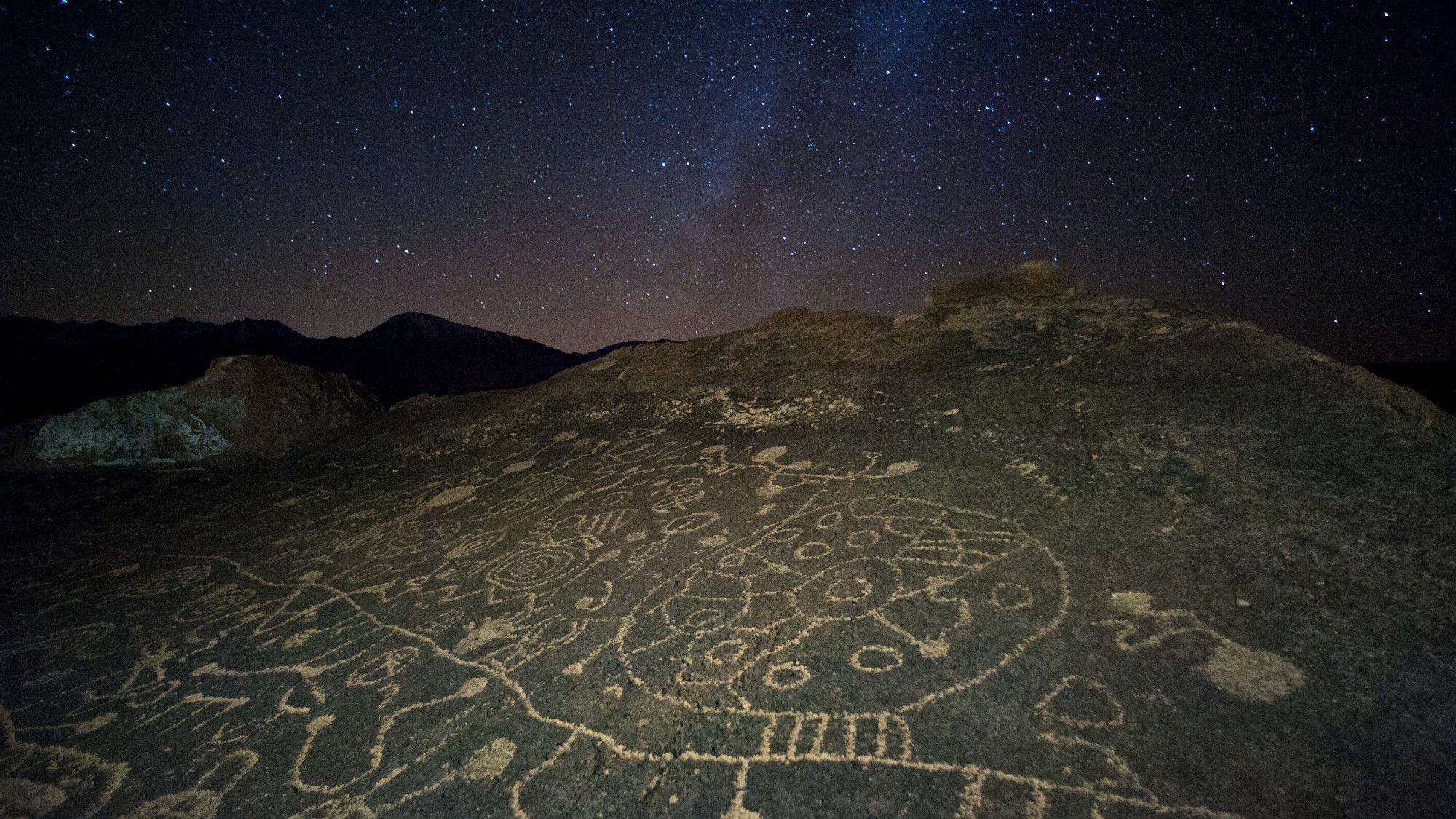
The search for alien life has tended to focus on looking for either signs of extraterrestrial technology or evidence of biological processes on other worlds. But new and ongoing research suggests that scientists should start considering signs of intelligence that are not necessarily technological, but which are sufficiently complex as to be evidence of a conscious mind at work.Biosignatures are possible signs of biology on other planets, whereas technosignatures are clues to the presence of advanced technology that might be detectable across light-years. What, though, of everything that comes between these two extremes? How do we detect life that is more complex than simple microbes and which displays intelligence that is not highly technological?This is where the field of noosemiotics comes in, says Julia DeMarines, an American astrobiologist who has been involved in both biosignature and technosignature research. "We want to figure out if we can detect signatures of intelligence that occur before the invention of radio communication," DeMarines told Space.com. "We're looking at the ways that mind can be imprinted on matter."Noosemiotics is derived from the Ancient Greek concept of 'nous', which refers to the theory of mind. In the 1920s the Soviet biochemist Vladimir and the French Jesuit priest Pierre Teilhard de Chardin developed the idea of the noosphere as being the sphere of human reason or thought encapsulating the Earth.More recently, Adam Frank, David Grinspoon and Sara Imari Walker applied the noosphere to SETI by considering the collective intelligence of all the beings on a planet acting as a kind of combined planetary scale intelligence.Therefore, according to DeMarines, a noosignature would be a sign of a noosphere, of conscious minds at work."Bread doesn't just pop out of a molecular cloud"Technology is, of course, a major imprint of mind on matter, and DeMarines acknowledges that just as technosignatures can be biosignatures since they can originate from biological entities, they can also be noosignatures — for instance, gases such as nitrogen released into the atmosphere by agricultural practices. But noosignatures can be something other than biosignatures and technosignatures, too.Which is where DeMarines’ work comes in. She had been working for a company who were looking to apply the concept of Assembly Theory, which is a chemistry theory originated by Sara Walker and Glasgow-based chemist Lee Cronin, to online data and artificial intelligence to search for thresholds that denote complex signatures of intelligence.Assembly Theory describes the minimum number of steps required to assemble something. In chemistry it is the steps taken to assemble, for example, important biomolecules, or to facilitate evolutionary processes. The number of steps taken is referred to as the Assembly Index. As part of her work on this, as a thought exercise, DeMarines was given the task of applying assembly theory to 'bread as a technosignature'."I know how that sounds," she laughed. "I get weird looks when I tell people about it!"