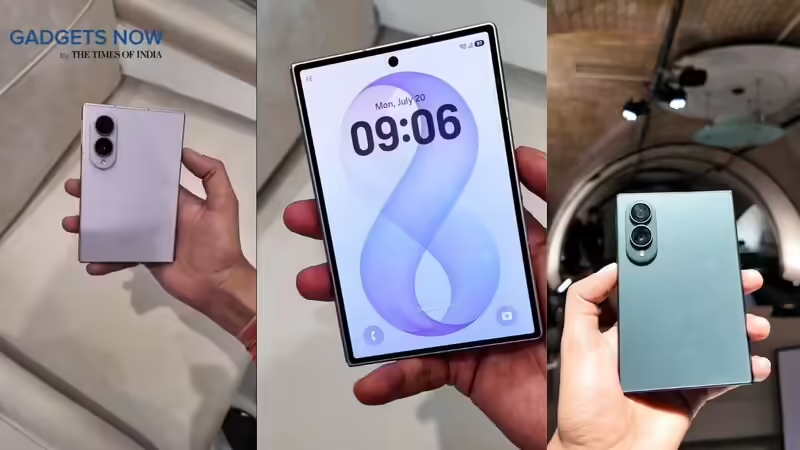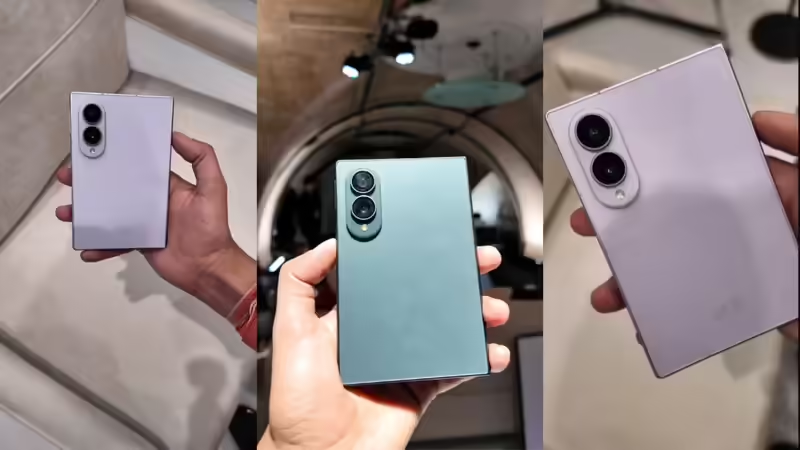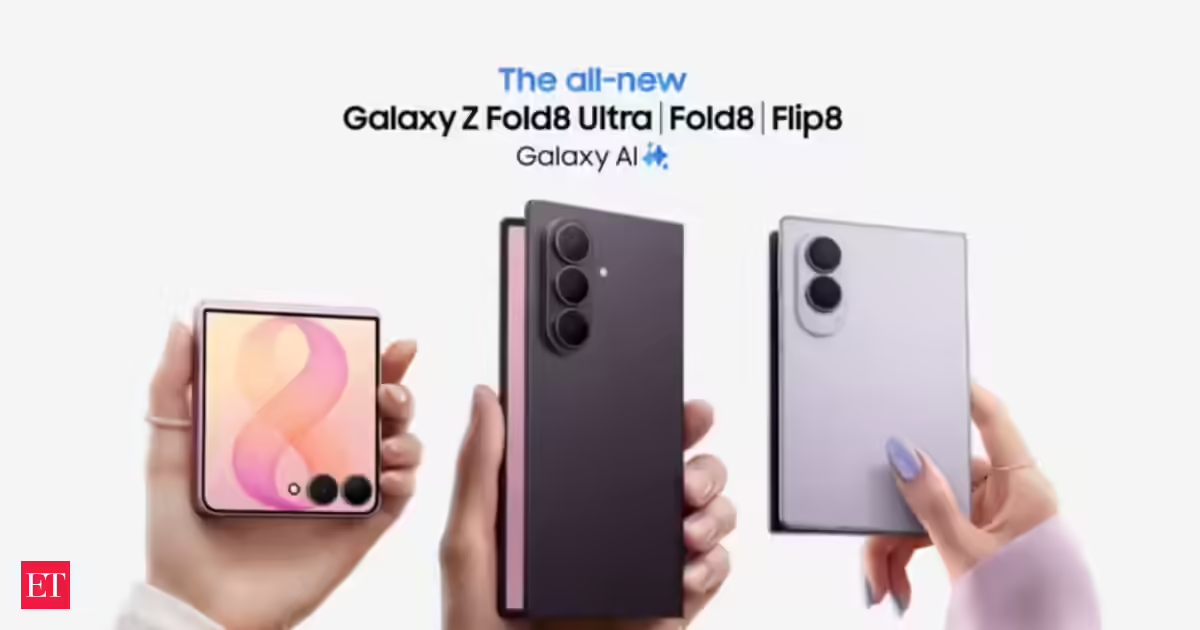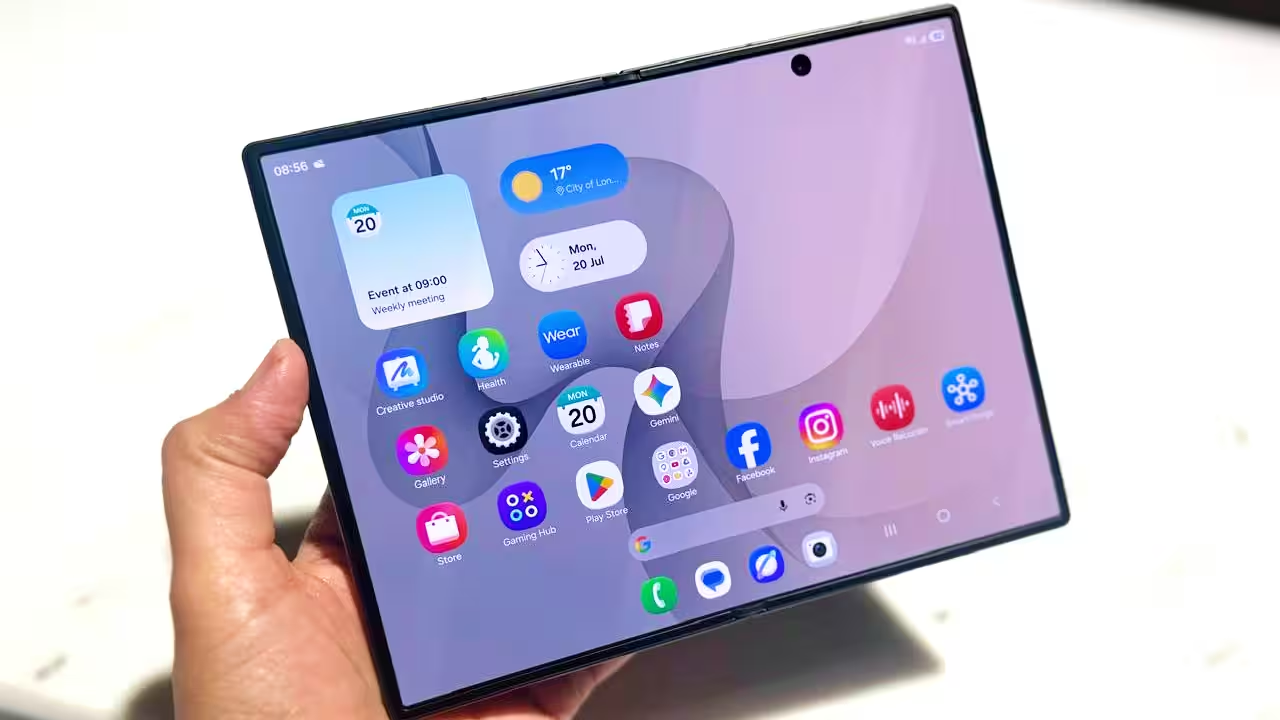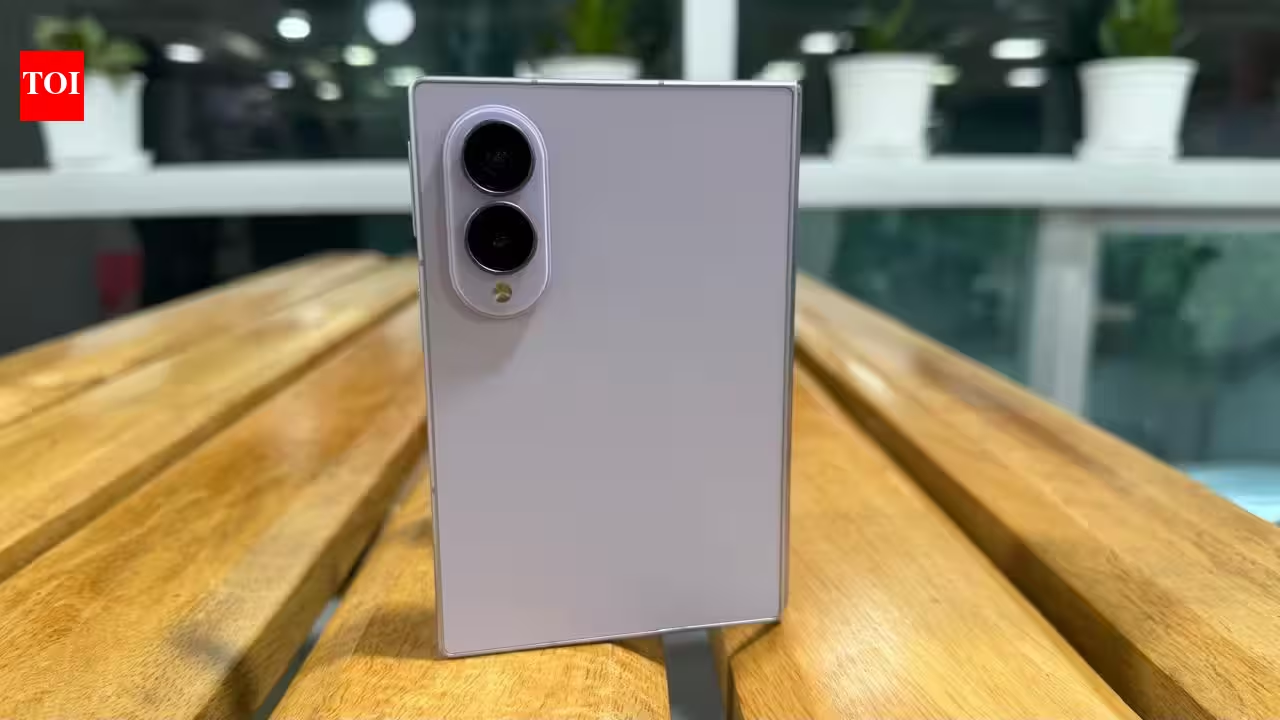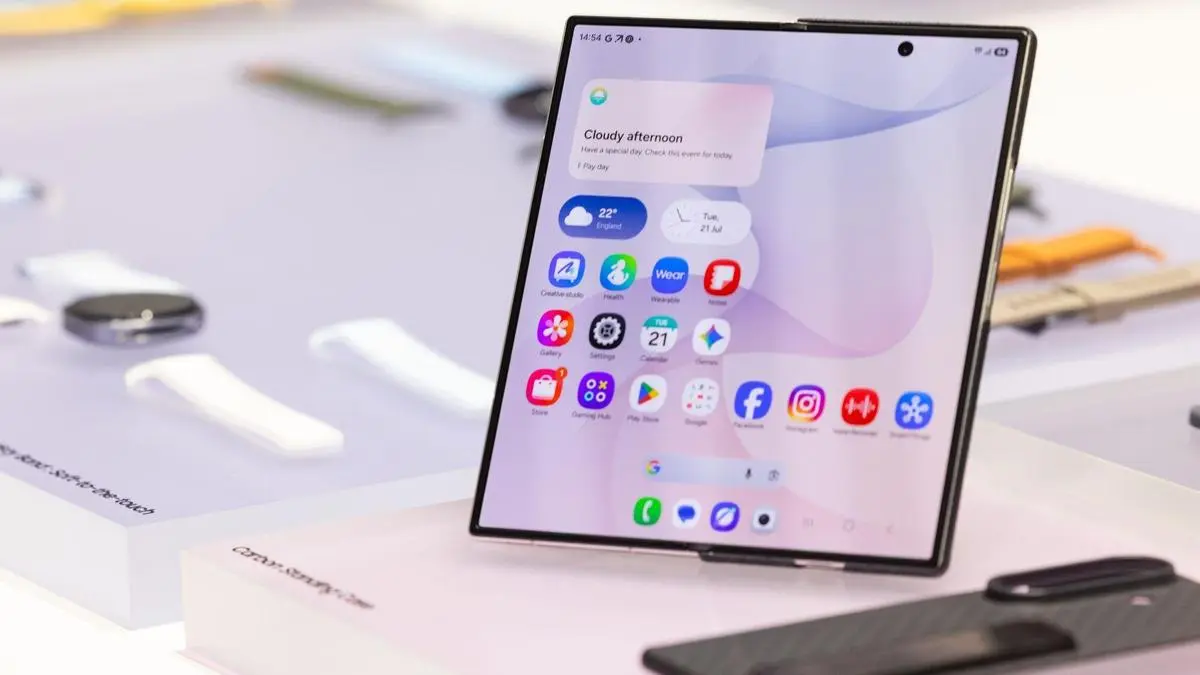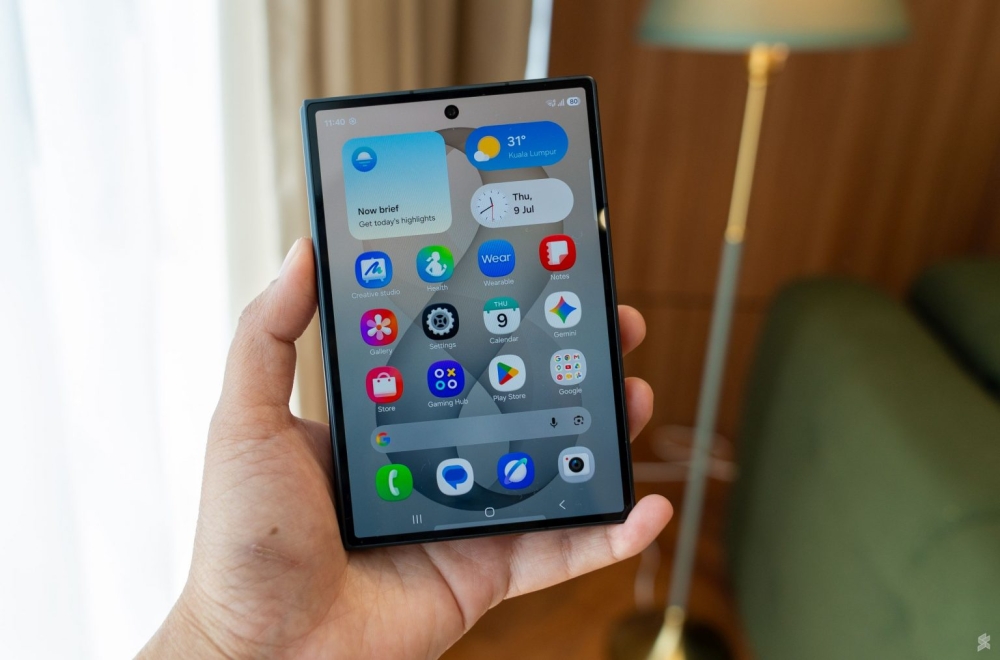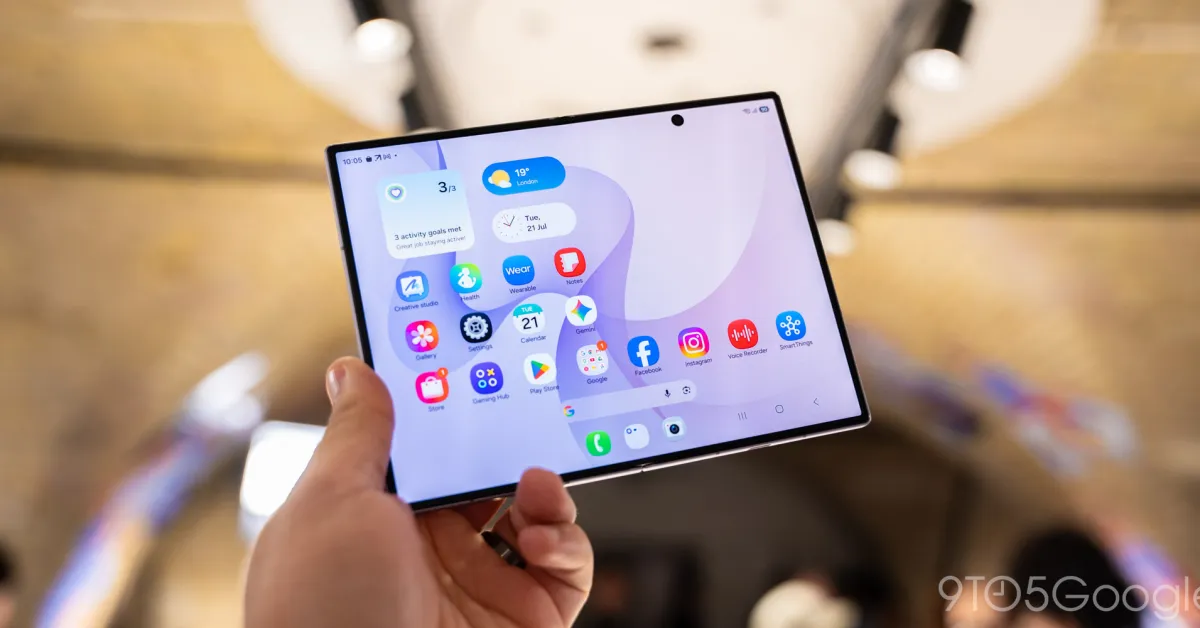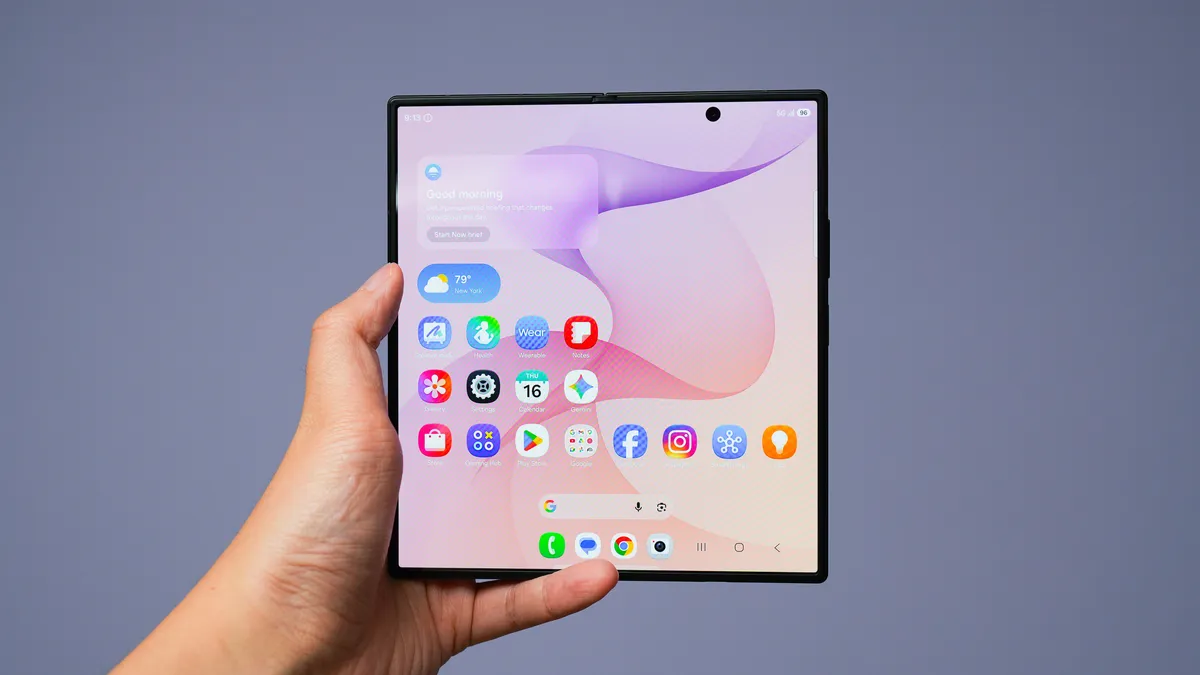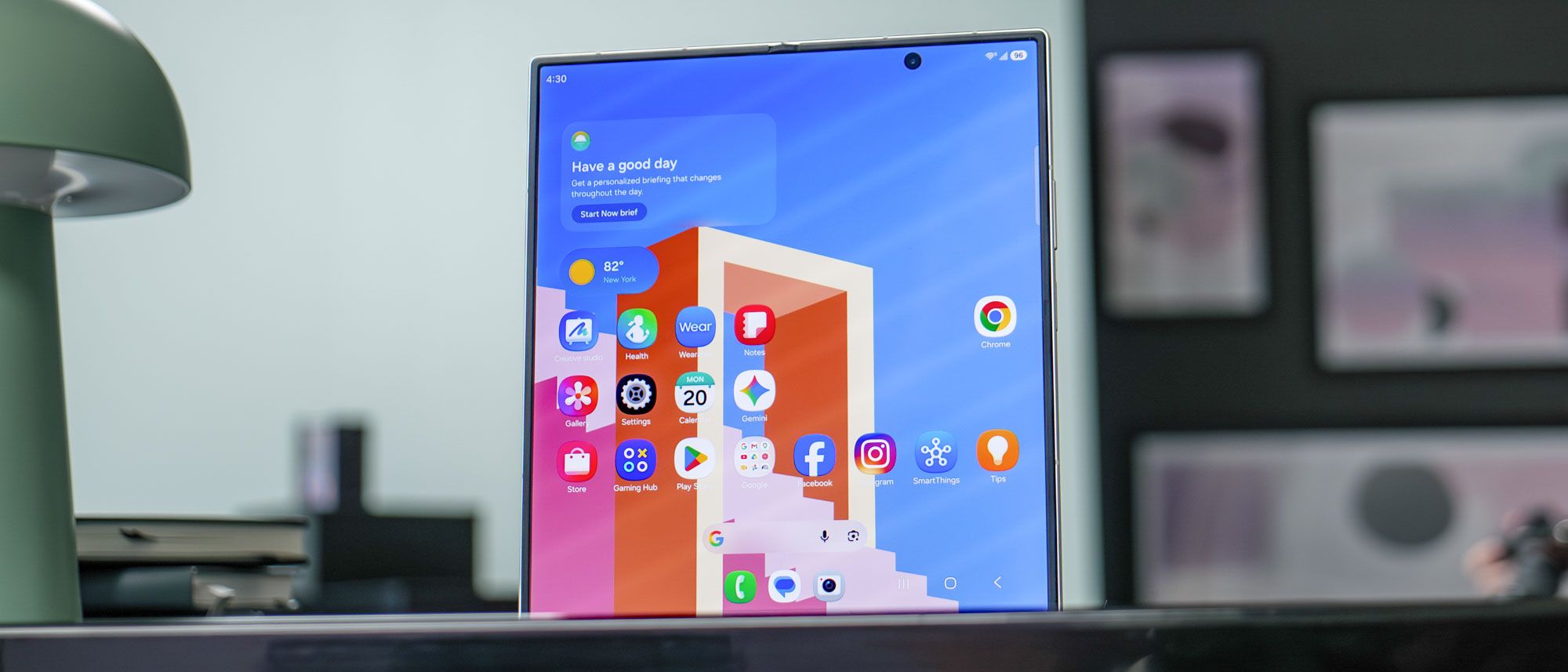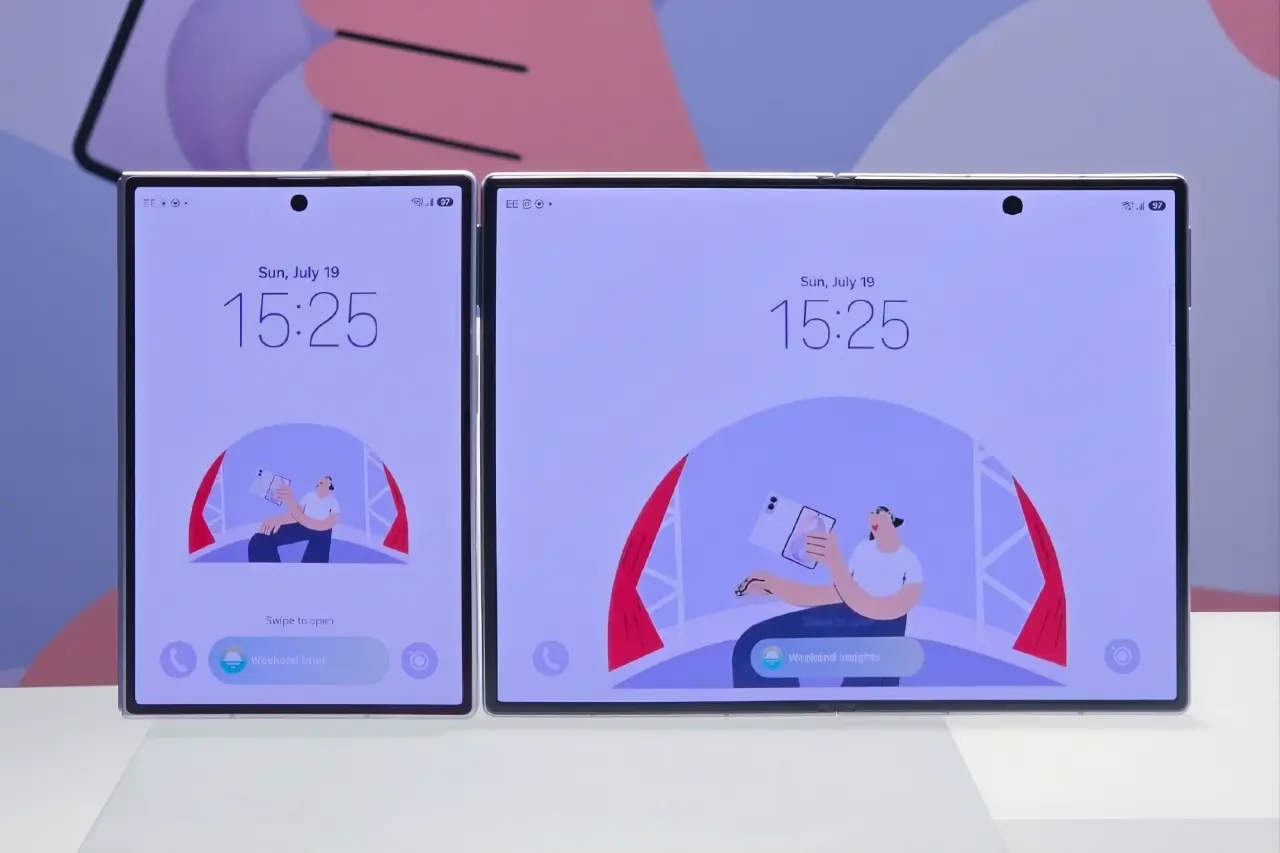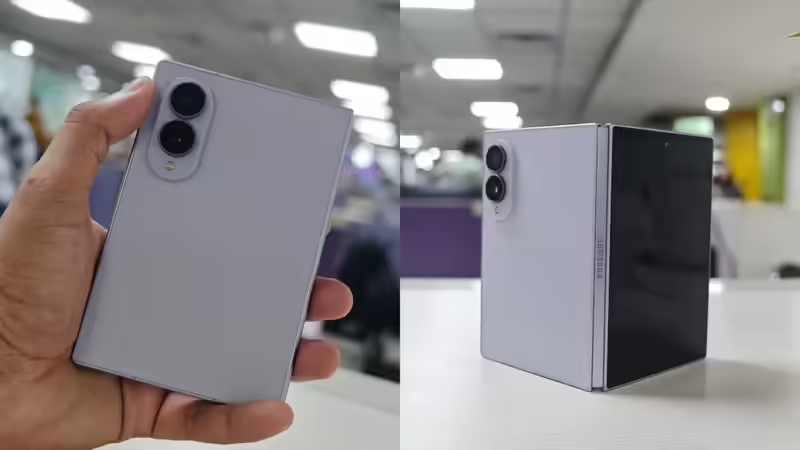
Critic Rating 4.5/5 98design94performance96display92battery82camera80value for moneyCloseSamsung Galaxy Z Fold 8 512 GB 12 GB1 19Samsung handed me the Galaxy Z Fold 8 on 23 July, on the sidelines of its Galaxy Unpacked event in London, and within minutes the phone had achieved something remarkable for a device costing Rs 1,79,999. It made me forget the bill long enough to enjoy the object. This feeling normally requires a gifted bottle of very good Scotch, a light concussion, or a generous combination of the two.The price returns to consciousness soon enough, the way a hangover does. Samsung has fitted this Fold with two rear cameras while several cheaper rivals carry three. Stylus support stayed behind at the factory. The clever hinge prefers lying flat to holding a pose. Built-in magnetic charging is missing too. Anyone who buys phones by spreadsheet will reach the Oppo Find N6, Honor Magic V6 or Motorola Razr Fold rows and start circling bigger numbers with the quiet fury of a tax inspector who has found a second set of books.Then the Fold 8 goes into a pocket.At 201g it weighs less than several ordinary flagship phones. I have eaten heavier sandwiches. Open it and the 7.6-inch display forms a useful 4:3 rectangle rather than an electronic bathroom tile. Fold it and the short, broad body feels like a small leather notebook belonging to somebody organised. Samsung has spent eight generations shaving millimetres off its foldables, only to discover that geometry was doing half the mischief all along.The Fold 8 loses several specification contests, some of them badly. It may still be the foldable I would choose, and the rest of this review is me working out why with mounting alarm.What is different about the Galaxy Z Fold 8?Samsung now sells two book-style foldables. The Galaxy Z Fold 8 Ultra continues the tall-phone-to-square-tablet lineage of the Fold 7. The regular Fold 8 is shorter and wider, with a 5.5-inch 10:16 cover screen and a 7.6-inch 4:3 internal display. Calling one of them "regular" feels faintly deranged when it costs more than a good motorcycle, but smartphone naming departments abandoned restraint around the time "Ultra" stopped describing washing powder, and I suspect the decisions are now made with a dartboard.The distinction matters more than the labels. The Fold 8 Ultra is the work model: larger display, 200MP primary camera, 3x optical telephoto, 5,000mAh battery and enough room for spreadsheets to breed. The Fold 8 is the content and mobility model: 201g, a 4:3 canvas, dual 50MP cameras and a 4,800mAh battery.This regular Fold is also Rs 20,000 cheaper. Prices start at Rs 1,79,999 for 12GB RAM and 256GB storage, rise to Rs 1,99,999 for 512GB and reach Rs 2,39,999 for 16GB RAM with 1TB. Samsung's Galaxy Forever programme advertises accidental-damage cover and up to 55 per cent assured buyback for an extra Rs 1,084 a month over 24 months. Read its return conditions with the level of attention you would give a suspiciously cheerful man selling you a timeshare in Gurgaon.The new shape makes the greatest difference. Earlier Samsung Folds felt like tall remote controls when closed, the sort of thing you would point at a ceiling fan. Their internal screens advertised big diagonals while serving much of that area to films as black bars. The Fold 8 attacks both problems by changing proportions instead of chasing another millimetre.My hands adjusted quickly. Typing long messages on the cover display felt comfortable once I stopped expecting a conventional narrow keyboard, and the open screen, rotated, became a compact writing surface for full articles. The panel is short enough for the top row to stay within reach and broad enough to hold a document beside its research.One-handed outer-screen typing remains a personal question. People with smaller hands may find the width tiring on the move. I preferred two thumbs, which is also the grip most likely to keep a Rs 1,79,999 folding phone off a London pavement, where I am told it makes a very expensive noise.Why does the Fold 8 feel so different?Weight supplies part of the answer. The Fold 8 is 14g lighter than the Fold 8 Ultra, 42g lighter than the Motorola Razr Fold and roughly 57g lighter than Google's Pixel 10 Pro Fold. Those figures sound trivial in a paragraph. They stop sounding trivial forty minutes into a standing train journey, when the Pixel owner's forearm begins negotiating an exit.Distribution matters as much. The short body spreads its 201g across a broad footprint, while tall foldables concentrate the load along a narrow strip and produce a top-heavy pull, like carrying a ladder by one end. The Fold 8 sits evenly across the palm. Opened, each half is thin and light enough to escape the small-tray-with-hinge sensation that has stalked this category since its first generation.Samsung quotes an open thickness of 4.5mm and a folded figure around 9.7mm. A case will add bulk, especially around the camera mound, though the naked phone feels closer to a normal flagship than to an engineering experiment that escaped the lab. The lavender unit also has enough personality to avoid looking like office equipment rescued from a stationery cupboard.The edges give real purchase while staying kind to the hand. Buttons sit on one side and the fingerprint reader fires instantly. Samsung has bevelled the internal bezel and retuned the magnets so a fingertip can part the two halves on the first attempt. Earlier Folds demanded the technique of a safe-cracker and the fingernails of a classical guitarist, and on cold mornings, both at once.Hinge action is smooth, damped and desperately keen to reach flat. That final enthusiasm carries a cost: traditional Flex Mode, where the phone perched half-open like a tiny laptop, has left the building. The Fold 8 pauses briefly at some angles, then carries on towards flat with the serenity of a man ignoring instructions. Tabletop video calls, self-timed photographs and propped-up viewing now work better with a stand case.Somewhere in Suwon there was a meeting about this. Flex Mode sat at the table, pleaded its case, and was carried out like a sofa that had last been sat on in 2019. Thinness won the meeting.Has Samsung finally fixed the crease?The crease has graduated from geological feature to minor topographical note. Ordnance Survey would now mark it with a dotted line rather than contour shading.Samsung calls the new construction Flex Titanium. Beneath the folding OLED sit a titanium-alloy film and a titanium support plate. The film adds resilience across the fold, while the plate braces the display module and permits tighter bonding with fewer air gaps. Samsung also retuned display tension, hinge travel and the magnets pulling the halves together.In use the improvement is immediate. Head-on, the crease becomes genuinely difficult to find across bright images and video. Drift towards an oblique angle and reflected light betrays it. A finger crossing the centre still registers a shallow dip. Samsung has reduced the visual interruption far more than the physical one, which is the correct priority, since screens are for looking at.The Oppo Find N6 remains better here. Its central fold is more discreet and its surface feels flatter under a slow swipe. The gap has narrowed enough to stop dominating daily use, and Samsung's internal display counters with richer colour, an effective anti-reflective coating and up to 3,000 nits of claimed peak brightness. To my eyes it is the more vibrant panel of the two by a distance, with viewing angles that stay honest and an anti-glare layer that actually earns its name.Peak brightness figures describe a small patch of screen under laboratory conditions and deserve less worship than launch slides demand. The useful observation is simpler. The Fold 8 stayed legible under vicious indoor lighting and outdoors, reflections behaved, colours kept their punch off-axis and dark scenes held their detail. The display looks expensive, which is convenient, because it is.Samsung Display says it bends test panels 500,000 times at room temperature. That number describes panel validation rather than five years of trouser lint, winter air, Delhi dust and a toddler attempting to close the phone around a biscuit. The IP48 rating covers water immersion under specified conditions and solid objects larger than 1mm. Fine dust remains the villain of this category, twirling a tiny moustache.The phone wears Gorilla Glass Ceramic 3 up front, Victus 2 at the rear and Armor Aluminium around the frame, with two titanium layers under the flexible display. That is far more armour than early Folds carried. A folding OLED remains a softer, more complicated organ than ordinary glass, and ownership protection deserves a line in the purchase budget rather than a hopeful shrug.Is the 4:3 display genuinely better for films and reading?Yes, with a cinema-sized asterisk.The internal screen measures 7.6 inches at 1848×2448 pixels and 403ppi. Its 4:3 proportions suit photographs, web pages, comics, books and old television brilliantly. Rotate it and a 16:9 programme fills more of the panel than it would on a nearly square foldable. The black bars shrink. The image reads as a small tablet rather than a stretched telephone.Now the maths gets delightfully silly. Based on published panel proportions, a 16:9 image on the 7.6-inch Fold 8 reaches an approximate 6.98-inch diagonal covering around 20.79 square inches. The larger 8-inch Fold 8 Ultra manages roughly a 6.82-inch 16:9 picture across 19.87 square inches. The smaller phone shows about 4.6 per cent more actual film. Somewhere, a Fold 8 Ultra owner is reading this and quietly putting down his coffee.Inner screenTotal panel area, approximateMaximum 16:9 image areaApproximate 16:9 diagonalGalaxy Z Fold 8, 7.6-inch 4:327.72 sq in20.79 sq in6.98 inchesGalaxy Z Fold 8 Ultra, 8-inch31.83 sq in19.87 sq in6.82 inchesThat advantage applies to 16:9. Oppenheimer and Interstellar complicate the party because their theatrical IMAX presentations use shifting, towering aspect ratios, while home releases vary by version. A faithful IMAX experience would require Samsung to bundle a building extension, several tonnes of projection equipment and planning permission from a hostile local council.It does make those films look terrific for a phone. The broad panel flatters Christopher Nolan's large-format compositions in a way a narrow handset simply refuses to. The speakers serve clear dialogue and convincing width, though their placement on one half of the chassis can make horizontal playback lean slightly to one side, like a band whose drummer has wandered off stage left. The effect is modest at arm's length and more obvious up close.For reading, rotate the phone to 3:4 and it becomes a Kindle-sized colour tablet with two upgrades and one disease: far quicker scrolling, proper photographs, and a vastly greater talent for interrupting Tolstoy with a WhatsApp forward. Columns sit naturally, line lengths turn comfortable and this quickly became my favourite orientation for articles and ebooks.Typing is excellent once the keyboard is tamed. A split layout suits two thumbs, while Samsung's full-width default swallows too much vertical room with a document and browser stacked above it. A slim Bluetooth keyboard turns the Fold 8 into a startlingly capable travel writing machine, though carrying a second keyboard for your one-device future does rather suggest the plan has a hole in it.How good are the Galaxy Z Fold 8 cameras?Better than the hardware snob in me expected. Less complete than the price demands.Samsung uses a 50MP main camera with optical stabilisation and a 50MP autofocus ultrawide. Optical telephoto duties have been delegated to digital cropping, which is a polite way of saying they have been delegated to hope. The Fold 8 Ultra gets a 200MP primary and a 10MP 3x zoom, while Oppo's Find N6 carries a 200MP main, 50MP ultrawide and 50MP 3x periscope. Samsung's cheaper Fold turns up to this duel in beautiful shoes, carrying two golf clubs, smiling.And here is the twist: it plays a surprisingly good round. The main camera produced sharp photographs with confident exposure throughout my testing. Samsung's colour science stays lively, sometimes dressing blues and greens in their Sunday best, though skin tones held believable. Fine detail survived daylight easily and indoor shots kept useful texture.Portrait mode was the genuine surprise of my week with this phone. Edge separation around hair and spectacles looked convincing, subject exposure stayed balanced against bright backgrounds and the simulated fall-off dodged the cardboard-cut-out effect that still haunts computational portraits. Years of Samsung tuning are doing the work here, even with the sensor sitting a full caste below the company's Ultra hardware.Motion is the harder test. Samsung phones have historically fumbled fast children, pets and dim rooms because shutter timing favoured brightness over frozen action. The Fold 8 improved my hit rate in ordinary indoor scenes, though a proper shoot-off against the Oppo and the S26 Ultra is needed before that ancient complaint gets a funeral.Video is strong. Stabilisation kept walking footage level, exposure shifted smoothly and the microphones caught clean speech, and the big inner panel doubles as the best viewfinder and editing desk in the business. Samsung's My FanCam can lock onto one person and reframe footage around them, which is clever when it picks the right human and pure slapstick when several cross paths, whereupon it behaves like a junior camera operator receiving contradictory instructions through a headset from two different directors.The 50MP ultrawide earns its place. Autofocus permits close-up work, the resolution supports cropping and its colours match the main camera reasonably well, with edge softness and evening noise still betraying the smaller sensor.Zoom is where the charm runs out and the golf-club shortage becomes visible. A high-resolution main sensor can crop to 2x in good light with dignity intact. Beyond that, digital zoom sheds texture and produces the processed look of a photograph reconstructed from a witness statement. Oppo's optical 3x delivers cleaner detail, stronger portraits and more range after sunset. Google's Pixel 10 Pro Fold stretches to 5x. Motorola's Razr Fold includes a 3x telephoto at the same $1,899 US starting price, just to rub it in.Samsung's decision makes engineering sense, since two cameras occupy less volume in a small, thin body. It makes consumer sense the way a first-class ticket with one armrest makes sense. Rs 1,79,999 belongs to a class where compromises should require binoculars to locate, and this one is visible from the road.Does the smaller 4,800mAh battery last?The battery is the Fold 8's most pleasant ambush.Capacity invites open mockery. Oppo fits 6,000mAh into the Find N6. Honor reaches 6,660mAh in the Magic V6. Motorola's Razr Fold carries 6,000mAh. Samsung strolls up with 4,800mAh, apparently having brought a teacup to a reservoir competition, and everyone settles in to watch the drowning.The drowning got cancelled. Across my testing the Fold 8 finished demanding days surprisingly close to the Oppo Find N6, and both sailed through messaging, photography, navigation, social apps, web reading and stretches of open-screen video. Oppo kept the edge under heavier loads, particularly with its larger inner display lit for hours. The difference felt far smaller than 1,200mAh should permit.Several mechanisms explain the trick. Capacity measures stored charge rather than whole-device efficiency. The Fold 8 powers a smaller 7.6-inch panel, runs Qualcomm's Snapdragon 8 Elite Gen 5 for Galaxy and leans on Samsung's display controller, adaptive refresh and background-process discipline. The ratio of cover-screen to inner-screen use swings endurance dramatically too: a day spent mostly folded sips power, while six hours of open-screen navigation drinks it.Silicon-carbon chemistry lets Samsung squeeze 4,800mAh into a 201g chassis. Silicon stores more lithium than graphite, raising energy density, though it swells and shrinks more during charging. Samsung says it redesigned the cathode, separator and anode system and retuned voltage management around that behaviour, then declined to disclose the actual silicon proportion, guarding the recipe like a grandmother.The benchmark numbers back the street impression. In a controlled web-browsing test, the Fold 8 lasted 12 hours 20 minutes. The Fold 7 managed 10 hours 44 minutes and Google's Pixel 10 Pro Fold reached 12 hours 16 minutes, while Motorola's 6,000mAh Razr Fold topped the table at 14 hours 44 minutes.DeviceBatteryControlled web-test resultGalaxy Z Fold 84,800mAh12h 20mGalaxy Z Fold 8 Ultra5,000mAh14h 09mGalaxy Z Fold 74,400mAh10h 44mMotorola Razr Fold6,000mAh14h 44mPixel 10 Pro Fold5,015mAh12h 16mOppo's Find N6 was measured under active-use procedure, which scored it at 15 hours 45 minutes on the inner display and 18 hours 36 minutes folded. Mixing workloads from different labs would manufacture false precision, so the honest conclusion stays broad: Oppo lasts longer outright, and Samsung performs indecently well per milliamp-hour.Charging has finally escaped Samsung's 25W waiting room, where customers had been reading the same magazine since 2019. The Fold 8 supports 45W wired and 20W wireless charging, and the same test measured 43 per cent at 15 minutes and 70 per cent at 30. Motorola reached 73 per cent at the half-hour under identical conditions. Oppo's proprietary 80W brick goes faster still and pairs with 50W wireless charging.Built-in Qi2 magnets failed to make the boat, so magnetic stands and chargers require a compatible case. Samsung sells those cases, because occasionally the solution to an omitted magnet is a second transaction.How fast is the Snapdragon 8 Elite Gen 5?Fast enough that the shape, rather than the speed, becomes the daily conversation.The Snapdragon 8 Elite Gen 5 for Galaxy sits inside every 2026 Samsung foldable. The Fold 8 pairs it with 12GB RAM at 256GB and 512GB, rising to 16GB on the 1TB model. Apps snap open, split-screen pairs launch instantly and photo edits render while the finger is still leaving the screen. Gaming on the 4:3 panel looks magnificent when a title adapts properly and comically stretched when it insists on a phone layout, like watching football through a letterbox.Heat gathers across one half of the chassis during long camera sessions and gaming. The phone ran warm in testing while staying comfortable to hold, since its thin build offers less thermal mass than a conventional slab flagship. Peak scores skip sustained behaviour entirely, which is why twenty-minute stability runs matter more than launch-day fireworks.A controlled benchmark run recorded a Geekbench 6 single-core score of 3,659 and a multi-core score of 11,020. The Fold 8 Ultra managed 3,733 and 11,457. Motorola's Razr Fold posted 2,711 and 9,134. The Pixel 10 Pro Fold reached 2,344 and 6,332, having apparently travelled to the test by canal barge.In 3DMark Wild Life Unlimited, the Fold 8 scored 26,608 at 165.3fps. The Ultra hit 30,980 at 185.51fps, Motorola 21,580 at 129.23fps and Google 13,306 at 79.68fps.BenchmarkGalaxy Z Fold 8Fold 8 UltraMotorola Razr FoldPixel 10 Pro FoldGeekbench 6 single-core3,6593,7332,7112,344Geekbench 6 multi-core11,02011,4579,1346,3323DMark Wild Life Unlimited26,60830,98021,58013,306Average reported frame rate165.3fps185.51fps129.23fps79.68fpsThe Oppo Find N6 runs a seven-core cut of the same Qualcomm generation, tuned for its thin chassis. The Geekbench 6 run produced 3,470 single-core and 9,449 multi-core, which leaves Samsung ahead on peak CPU grunt, and Oppo's throttling under long loads has surfaced in laboratory testing before.Raw power therefore belongs to Samsung. A defensible thermal verdict on sustained gaming still requires identical devices in an identical room, ideally with a thermometer and a grudge. For photo editing, two live apps and ordinary games, the Fold 8 carries headroom to spare.Is One UI still Samsung's biggest foldable advantage?Yes, though the new shape has exposed some homework.One UI 9 treats the internal display as a computer surface rather than an enormous telephone. A persistent taskbar keeps recent apps in reach, dragging an icon builds split-screen pairs, floating windows hover above two full apps, and files move between them with the directness of a proper tablet.Samsung has spent years teaching Android apps table manners on folding screens, and that accumulated schooling matters more than any launch demonstration of an AI feature booking a restaurant under suspiciously perfect network conditions. Oppo's software has improved enormously and multitasks beautifully, yet Samsung still behaves more predictably across obscure apps, accessories, wearables, DeX and the long tail of updates.Seven generations of OS and security updates give the Fold 8 a credible life far beyond the fashionable part of its ownership. That matters at Rs 1.8 lakh and it matters at resale. A foldable ageing gracefully beats one that wins a launch-day beauty contest and spends year four begging for patches outside the Play Store.The 4:3 panel does create comic moments. Some apps park vertical video between broad side bars. Others move their controls into those bars, which occasionally improves things by shifting icons clear of the picture. Rotation sometimes reshuffles windows like a croupier. The default keyboard eats vertical space, and a four-icon-wide home grid looks timid on this much width, like four people spread across a banquet table.These are details rather than verdict-changers, and they reveal something flattering: the Fold 8 feels like a third-generation product that skipped its own infancy. Samsung has dropped a brand-new body onto a mature software base. The proportions are fresh; the operating behaviour arrives with seven generations of scar tissue already healed.Galaxy AI brings the familiar editing tools, transcription, summaries and Gemini integration. Now Nudge watches for moments when a second app might help and proposes a Multi Window pairing, which is useful when the guess lands and becomes another notification to swat when it misses. Artificial intelligence works best here as an occasional valet rather than an enthusiastic intern stationed between the owner and every icon.Galaxy Z Fold 8 or Fold 8 Ultra: which should you buy?The Fold 8 Ultra is easier to justify by components. The regular Fold is easier to love.An additional Rs 20,000 buys the Ultra's 8-inch screen, 200MP main camera, 3x telephoto, 5,000mAh battery and taller, work-shaped proportions at a still-commendable 215g. Buyers who live in spreadsheets, keep three apps visible or photograph distant subjects should sign there.The regular Fold serves films a slightly larger usable 16:9 picture, weighs 14g less, sits lower in the pocket and feels more natural for books and photographs. Its cover screen changes the entire personality of the device. This is the Fold for people who open a phone to read, watch and write rather than to recreate an office cubicle.Samsung's naming implies the Ultra is the correct answer, and the geometry disagrees. I preferred the Fold 8 because its physical advantages surfaced dozens of times a day, while the Ultra's telephoto advantage surfaced whenever something interesting stood far away. Camera-led buyers will run that sum the other way, and both of us will be right.Galaxy Z Fold 8 or Oppo Find N6?Here comes the difficult one. Oppo wins more rows of the table, and it takes a moment of silence to admit that.The Find N6 fields a 6.62-inch cover display, an 8.12-inch internal panel, a 6,000mAh battery, 80W wired and 50W wireless charging, plus three serious rear cameras led by a 200MP main sensor, with a little 2MP monochrome lens riding along as garnish. Its crease is shallower. It supports a pen. Its camera system is markedly more flexible, especially at 3x and in portraits.Samsung answers with 24g less mass, compact proportions that flatter one-handed reading and long video sessions, an inner display that looks more vivid to my eyes, superb reflection handling, more mature multitasking software and the safety blanket of official Indian sales, service and buyback. Seven update generations reduce ownership anxiety to a manageable hum.FeatureGalaxy Z Fold 8Oppo Find N6Weight201gAbout 225gInner display7.6-inch, 4:38.12-inchBattery4,800mAh6,000mAhCharging45W wired, 20W wireless80W wired, 50W wirelessRear cameras50MP main + 50MP ultrawide200MP main + 50MP ultrawide + 50MP 3xCreaseShallow, visible at anglesMore discreetSoftware supportSeven OS/security generationsSeven years in supported regionsIndia ownershipOfficial sales, service and buybackAvailability and service depend on marketOppo is the better hardware purchase. Samsung is the better-shaped and safer Indian ownership purchase. My own loyalty drifted to Samsung because weight and proportion touch every single interaction, while a periscope touches the occasional Tuesday. Anyone who treats a phone chiefly as a camera should buy the Oppo or the Fold 8 Ultra and feel smug at 3x.That answer is messy. Good. Foldables have finally matured enough to offer different kinds of excellence instead of competing over which one feels least experimental.How does it compare with Motorola, Google and Honor?Motorola's Razr Fold attacks at the same $1,899 US starting price with a 6,000mAh battery, 80W wired charging, 50W wireless charging, three 50MP cameras including a 3x optical zoom, and stylus input, all while weighing 243g and measuring 10.1mm folded. Samsung wins performance, mass and software maturity. Motorola wins the components-per-dollar argument with almost embarrassing ease, the way a buffet beats a tasting menu on tonnage.Google's Pixel 10 Pro Fold costs $1,799 and brings a 5x telephoto, built-in Qi2 magnets and a stronger IP68 rating. Its 258g heft feels like a message from an older civilisation beside the Samsung, and Tensor trails Qualcomm badly in the published numbers above. Google still earns its place through camera processing and clean software; Samsung simply builds the better physical object.Honor's Magic V6 stuffs roughly 6,660mAh, rapid charging and a 64MP telephoto into a genuinely thin body. Its practicality in India turns on availability, software taste and service reach. Grey-import prices make the hardware look irresistible right up until a folding display needs surgery, at which point the owner discovers that "international warranty" is a phrase with a mischievous sense of humour and an answering machine.Samsung rarely owns the biggest number in any row. It owns the lightest body among these book-style rivals, near-top performance, broad Indian support and the most coherent marriage of hardware and large-screen Android software. Rows are for tables. Phones live in hands.Is the Galaxy Z Fold 8 worth Rs 1,79,999?Value depends entirely on what the second screen replaces.As a phone alone, the Fold 8 is extravagantly priced, and the Galaxy S26 Ultra supplies better cameras, tougher ingress protection, simpler durability and excellent battery life for less money. Add a compact tablet to that S26 Ultra and the combined bill may still land below the Fold, depending on configuration and the season's offers.The Fold 8 earns its premium by collapsing both devices into one object that is always present, always connected and changes size on request. That convenience sounds abstract until a train journey, a flight, a presentation, a long document or a badly lit hotel room makes the big panel worth every rupee. A tablet left at home offers superb theoretical value, right next to the gym membership.Samsung's Rs 10,000 upgrade offer, bank cashback and Galaxy Forever buyback can soften the transaction, and they also complicate it. Compare the final cash outlay, the insurance coverage, the trade-in value and the return conditions rather than accepting the monthly figure as though multiplication had been discontinued by government order.The missing telephoto remains the value problem that refuses to leave the room. So does the loss of Flex Mode for those who used it, and S Pen loyalists have just received another reason to shop elsewhere or wait a year. These omissions read as deliberate, engineered to keep the Fold 8 thin and to keep daylight between it and the Ultra. Engineering logic explains all of them. The invoice still says Rs 1,79,999.For somebody who wants the lightest, most enjoyable Samsung foldable and values media, reading and mobility, the Fold 8 makes a persuasive case. A camera enthusiast should pay Rs 20,000 more for the Ultra or defect to Oppo. A spec hunter will find happier hunting grounds nearly everywhere, and will miss the point on the way there.VerdictThe Galaxy Z Fold 8 is Samsung's clearest proof that foldable design has moved past the circus trick. It opens into a screen with a reason to exist and closes into a body that feels considered rather than tolerated. The 201g weight changes daily life more than a fourth camera ever would. The 4:3 panel gives films, photographs, books and documents the correct room. Flex Titanium demotes the crease from principal architectural feature to occasional reflection.Samsung has also conjured excellent endurance from a modest 4,800mAh cell, the Snapdragon 8 Elite Gen 5 delivers class-leading foldable performance, One UI remains the most dependable large-screen Android implementation, and the cameras beat my expectations, particularly in portraits and video.Rs 1,79,999 magnifies every deletion. The absent telephoto is the largest, Flex Mode and S Pen support would have widened the appeal, Oppo brings better cameras, more battery, faster charging and a flatter fold, and Motorola serves far more hardware at the same American price.I kept returning to the Samsung anyway.That is the Fold 8's victory. It wins through the qualities a specification table measures worst: weight distribution, proportion, hand comfort, pocket height and the amount of screen a film actually uses. Samsung built a smaller Fold by removing hardware, then made it feel like the more complete idea.The Ultra is the better Fold on paper. The Fold 8 is the one I would buy, and I say that as a man who has now spent four days trying to talk himself out of it. FAQsWhat is the Samsung Galaxy Z Fold 8 price in India?The Galaxy Z Fold 8 costs Rs 1,79,999 for 12GB RAM and 256GB storage. The 12GB/512GB model costs Rs 1,99,999, while the 16GB/1TB version costs Rs 2,39,999.How long does the Galaxy Z Fold 8 battery last?The 4,800mAh battery comfortably lasted a full demanding day during our use. A controlled web-browsing test recorded 12 hours 20 minutes, ahead of the Fold 7's 10 hours 44 minutes.Does the Galaxy Z Fold 8 have a telephoto camera?The Galaxy Z Fold 8 uses a 50MP main camera and 50MP ultrawide, with digital zoom up to 10x. Buyers seeking optical zoom should consider the Galaxy Z Fold 8 Ultra, Oppo Find N6, Motorola Razr Fold or Pixel 10 Pro Fold.Is the Galaxy Z Fold 8 crease-free?Flex Titanium makes the crease much shallower and less visible than earlier Samsung Folds. It remains visible under angled reflections and can still be felt while swiping. The Oppo Find N6 retains a small advantage.Does the Galaxy Z Fold 8 support the S Pen?S Pen input is absent from the Galaxy Z Fold 8. Samsung prioritised thinness and weight for this generation.Is the Galaxy Z Fold 8 better than the Oppo Find N6?The Fold 8 is lighter, more compact and backed by Samsung's mature software and Indian service network. The Oppo Find N6 offers stronger cameras, longer battery life, faster charging, pen input and a subtler crease.Which is better: Galaxy Z Fold 8 or Fold 8 Ultra?The Fold 8 suits reading, video and portability. The Fold 8 Ultra suits multitasking and photography because it adds a larger 8-inch panel, 200MP main camera, 3x telephoto and 5,000mAh battery.Does the Galaxy Z Fold 8 support fast charging?The phone supports 45W wired and 20W wireless charging. An external test measured 43 per cent charge after 15 minutes and 70 per cent after 30 minutes.How many software updates will the Galaxy Z Fold 8 receive?Samsung promises seven generations of operating-system and security updates. The policy gives the phone a long supported life, subject to the usual regional and feature variations.Is the Galaxy Z Fold 8 water resistant?The Galaxy Z Fold 8 carries an IP48 rating. It is rated for water immersion under controlled test conditions and for protection against solid objects larger than 1mm; fine dust and sand still require care.end of article
Galaxy Z Fold 8 Review: Samsung Beats Apple's Foldable To The Punch
The Samsung Galaxy Z Fold 8 pairs a 201g passport-shaped body with a 7.6-inch 4:3 internal display, the Snapdragon 8 Elite Gen 5 chip and a 4,800mAh silicon-carbon battery, starting at Rs 1,79,999 in India. Tested since 23 July, it delivered 12 hours 20 minutes in a controlled web test, beating the Fold 7 by 96 minutes despite a smaller battery than the Oppo Find N6, Honor Magic V6 and Motorola Razr Fold. Its dual 50MP cameras skip optical zoom, Flex Mode is gone and S Pen support stays exclusiv...
5,168 words~23 min read