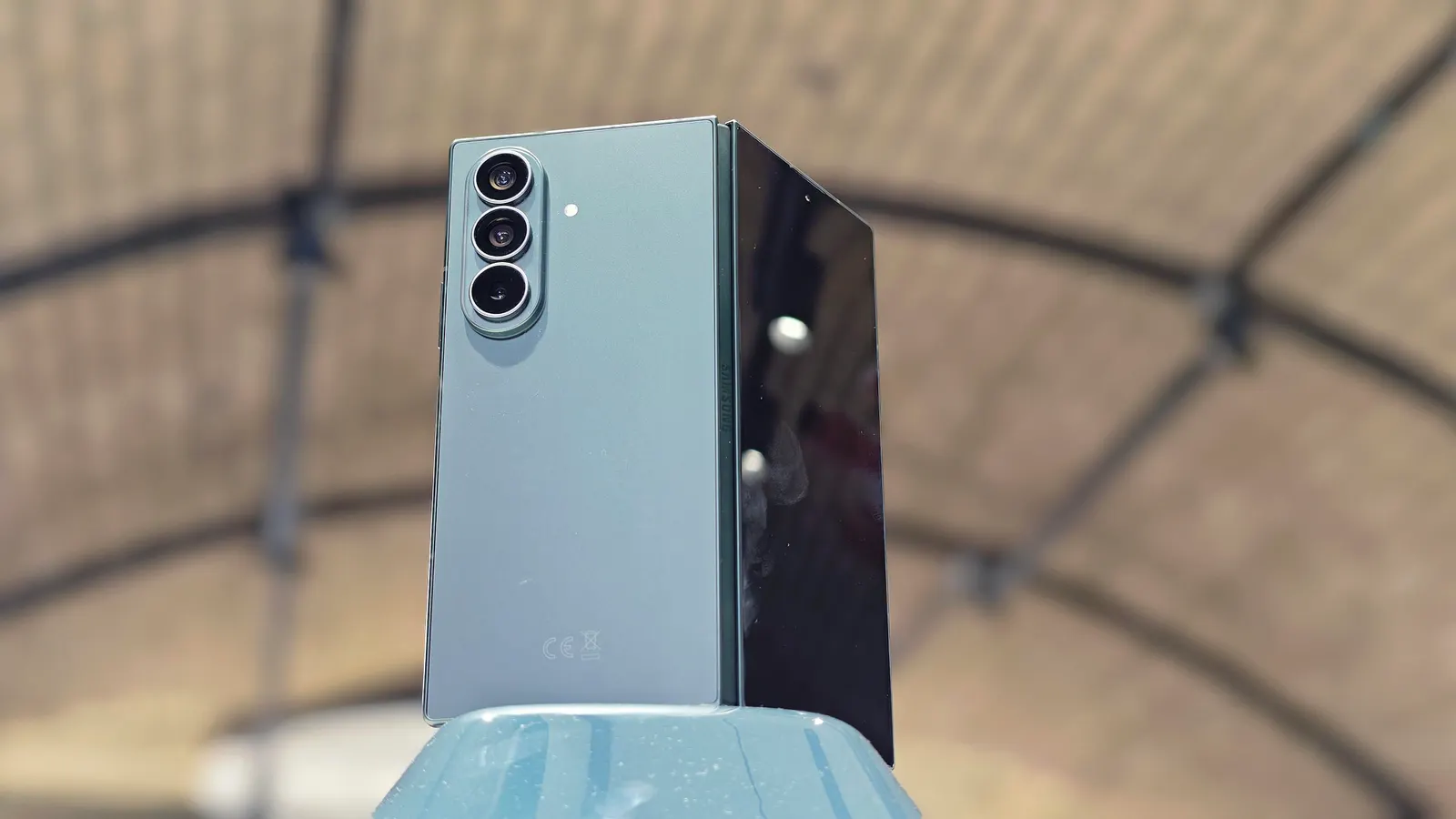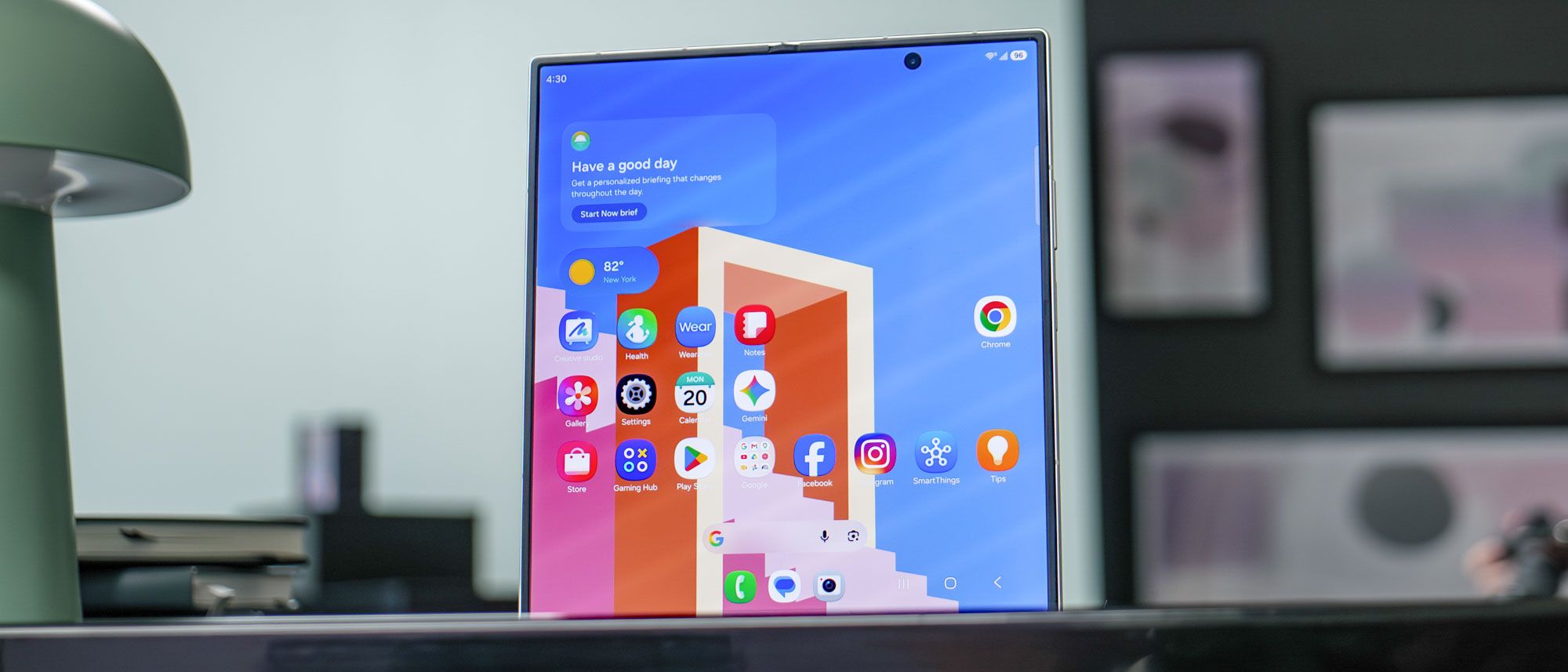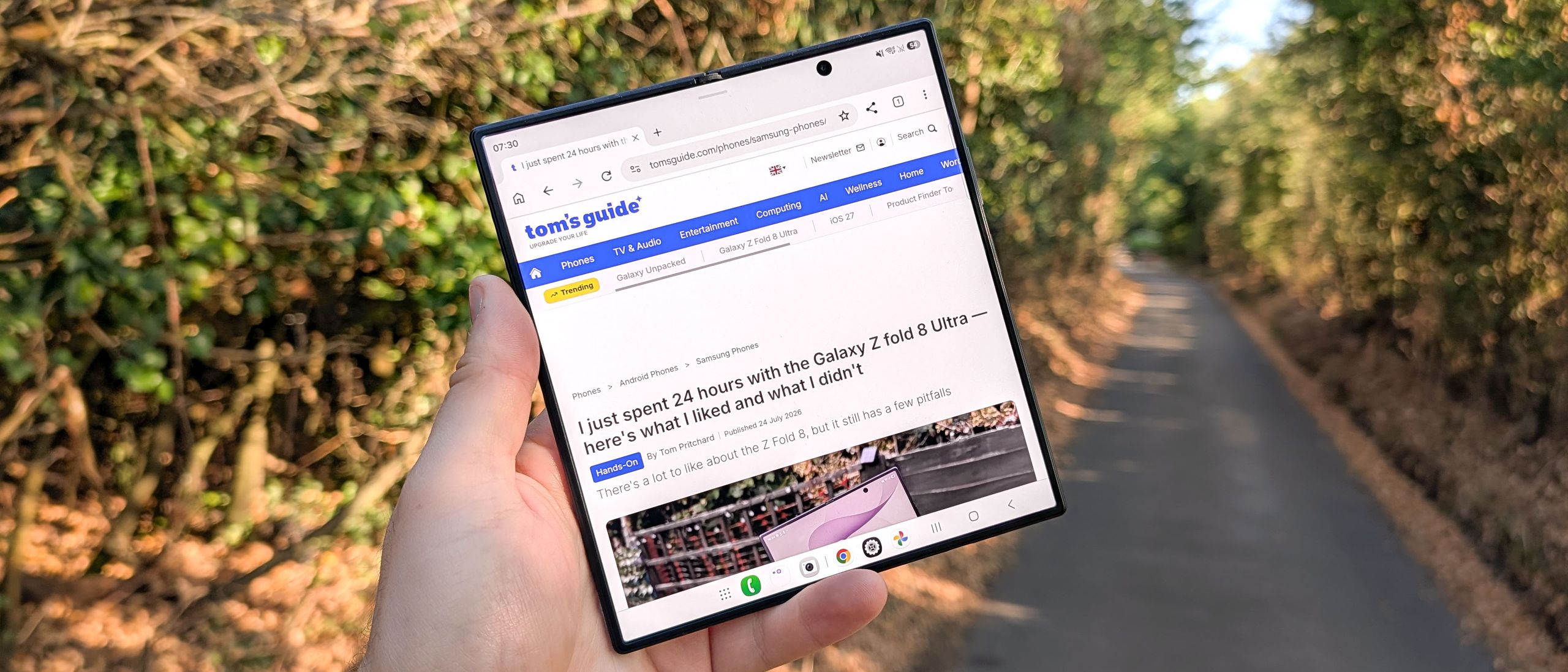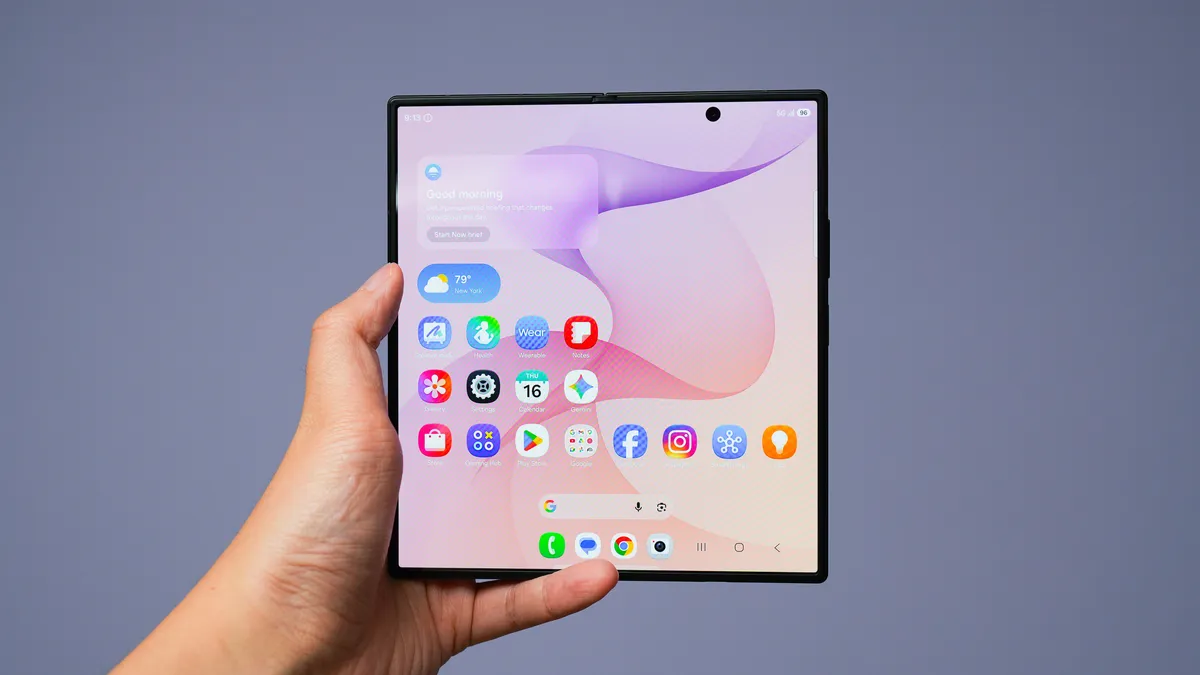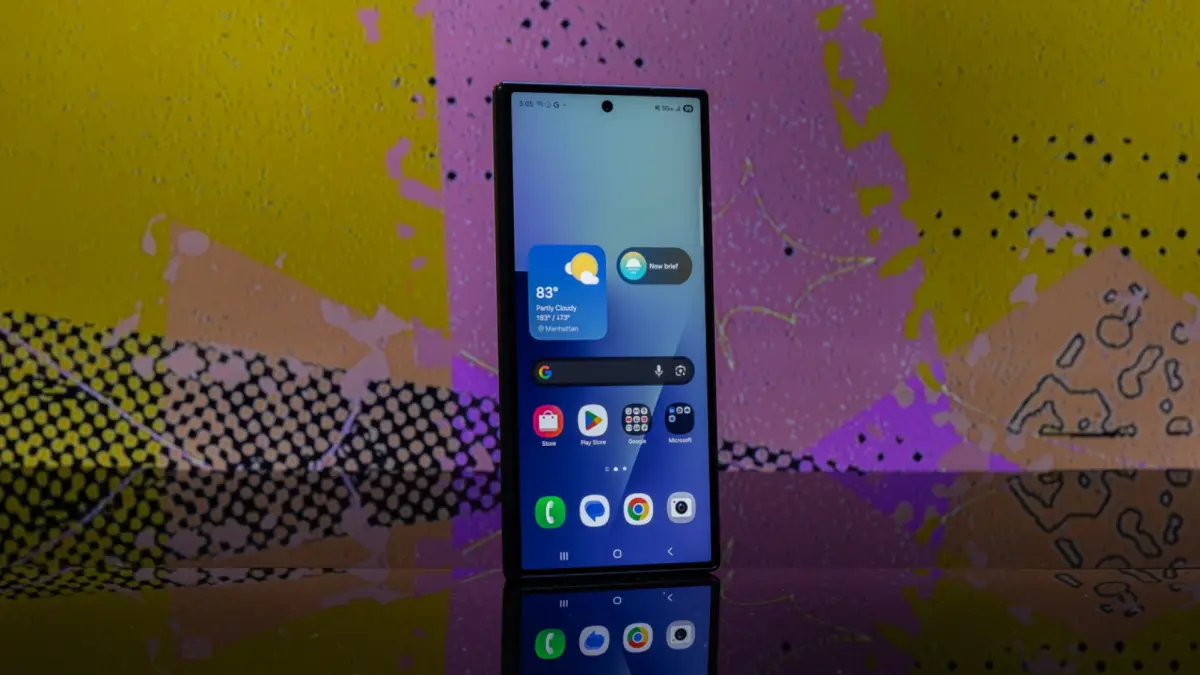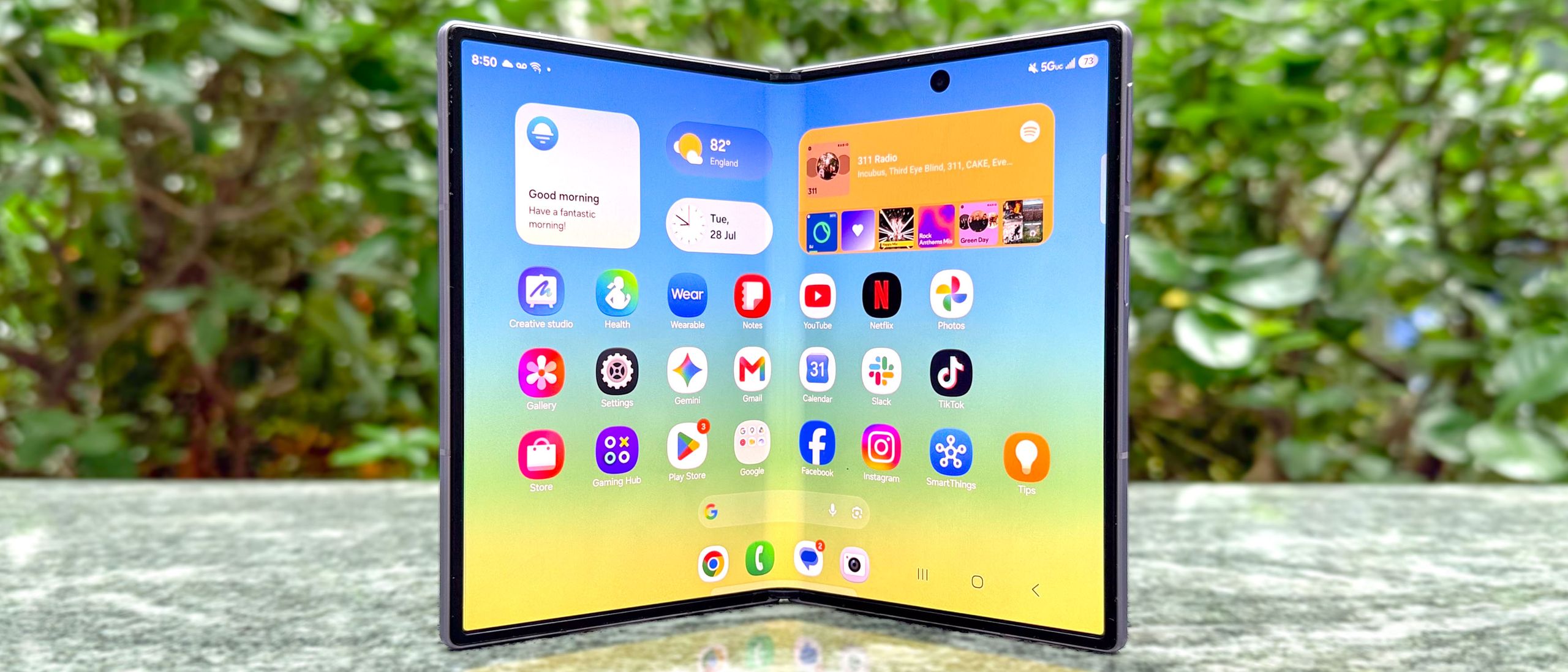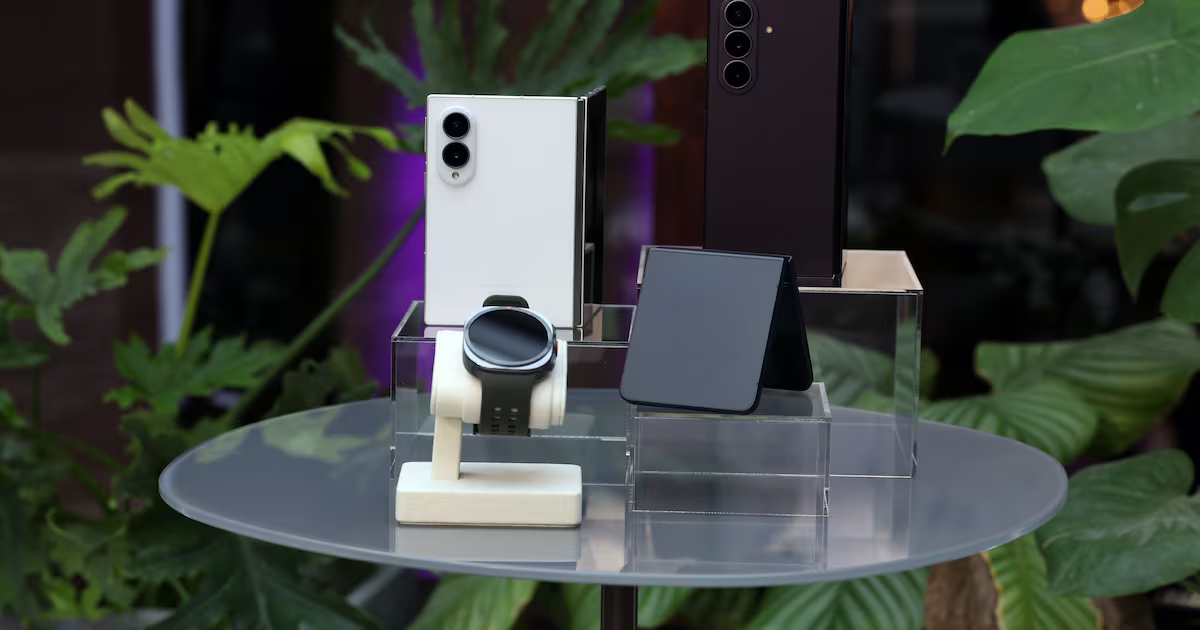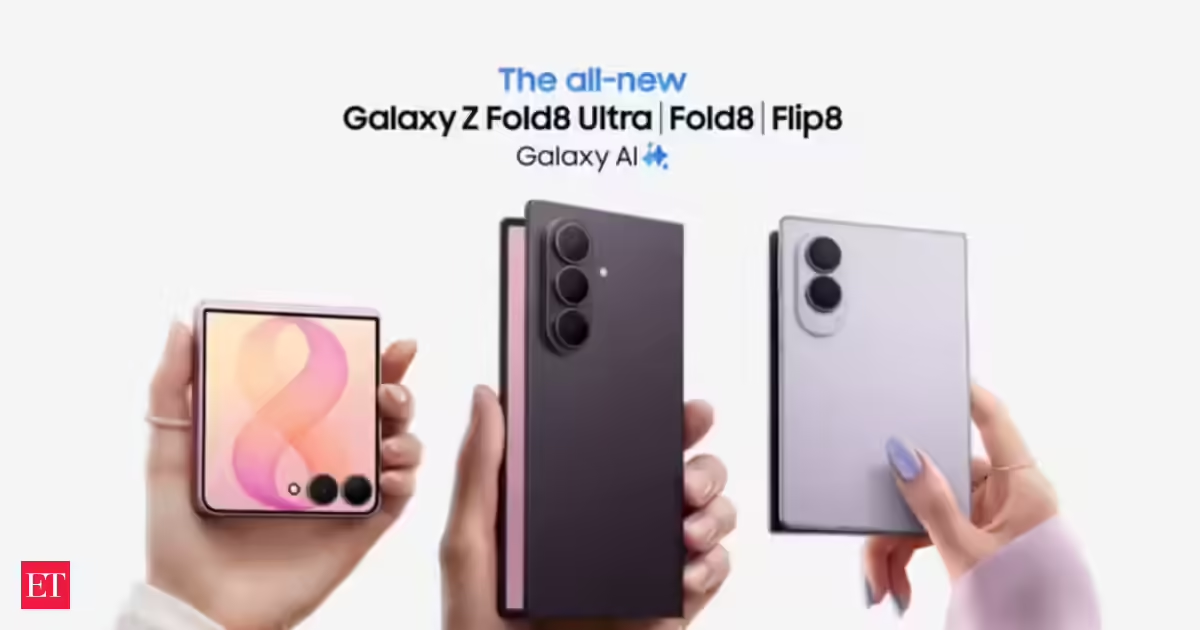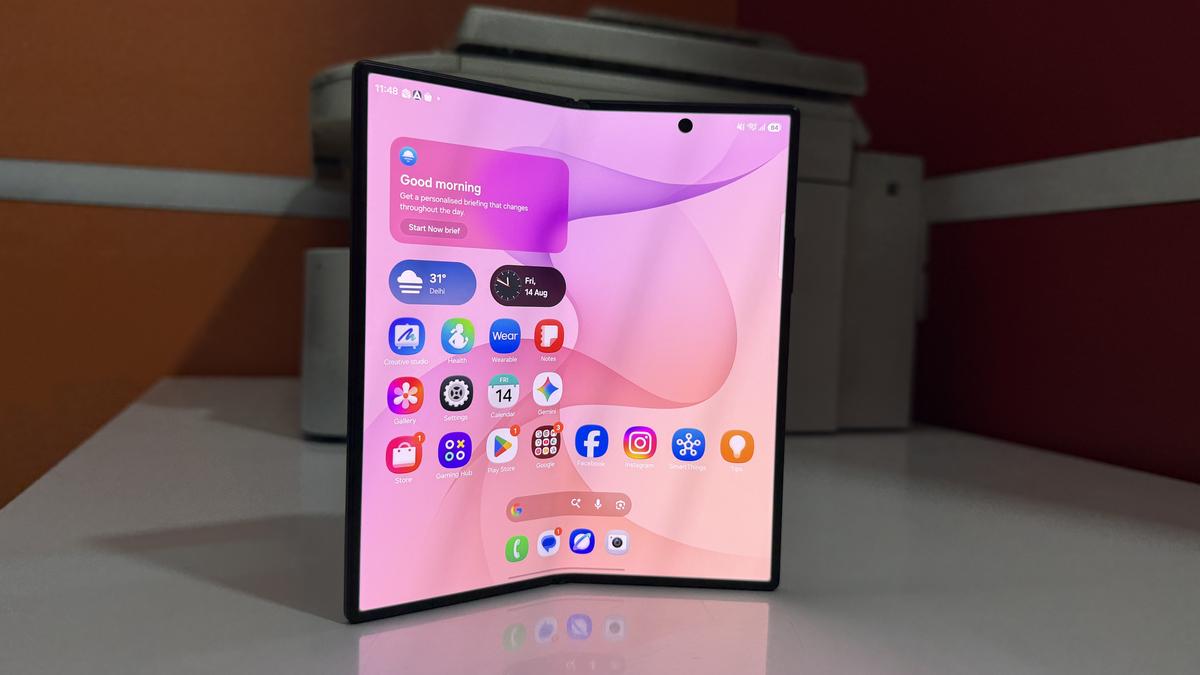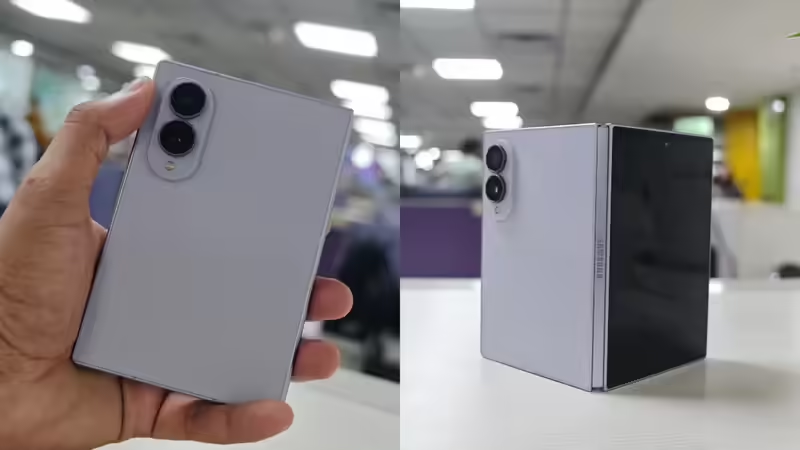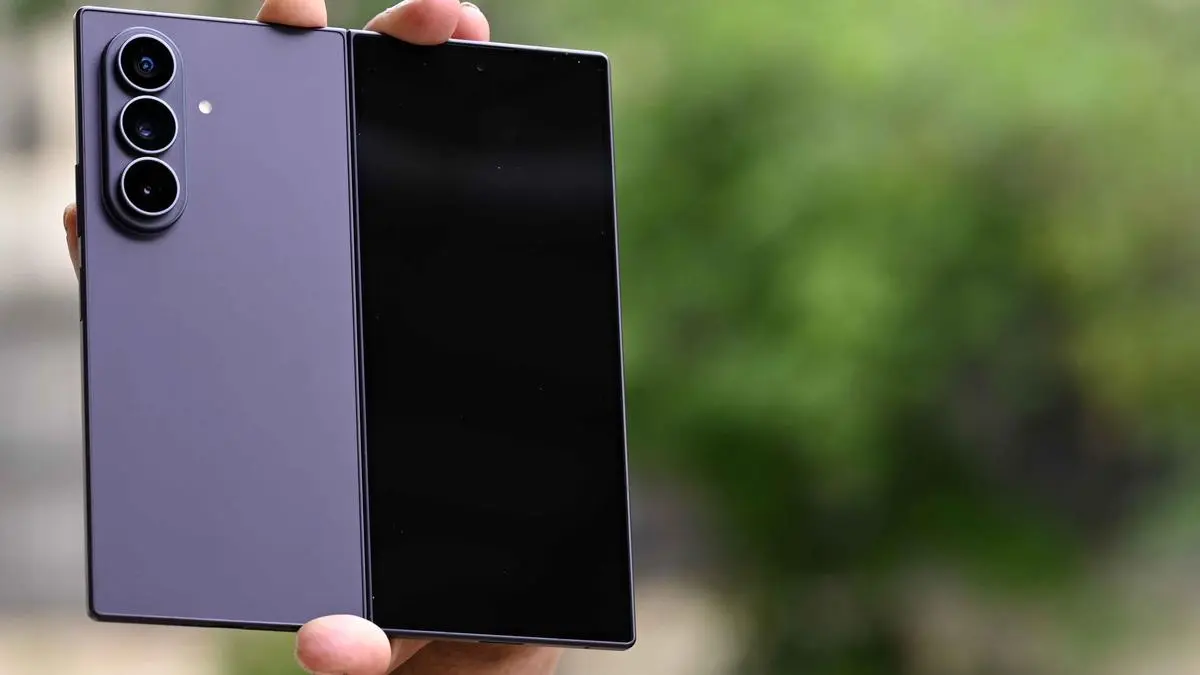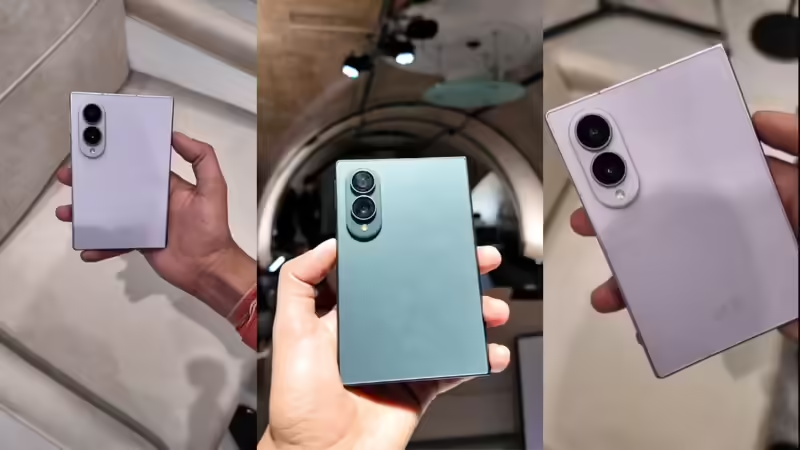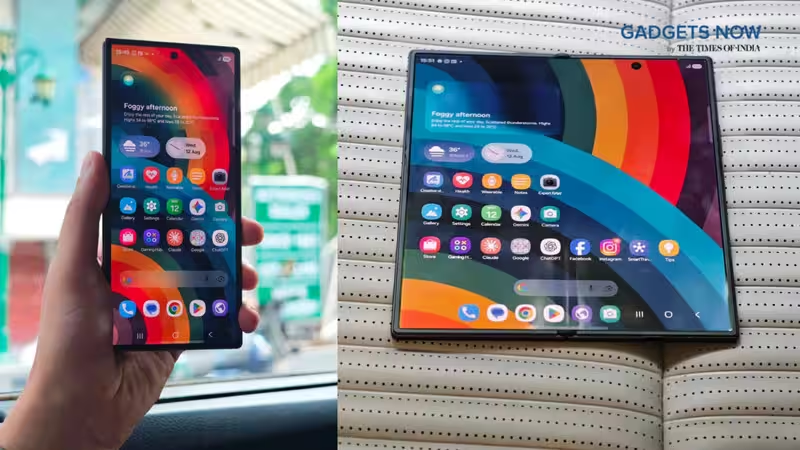
96design90performance96display90battery70camera50value for moneySamsung has built the finest foldable phone in the world and priced it like a Royal Enfield. The Galaxy Z Fold 8 Ultra starts at Rs 1,99,999 for 12GB of RAM with 256GB of storage, which buys an 8-inch inner display, a 200MP main camera, seven years of updates and a hinge that survived three weeks of my clumsiness. It earns 4.2 out of 5 here. Whether it earns the Rs 20,000 premium it charges over the cheaper Galaxy Z Fold 8 is the argument this review keeps circling.How the 4.1mm body survived two drops onto stoneAcross three weeks of steady use, the bevelled edges did more for this phone than anything printed on its spec sheet. Samsung has shaved the unfolded body to 4.1mm, a 0.1mm change that scans as a rounding error and feels like a different handset in the palm. The edges taper where they used to meet you square, so 215g sits in the hand rather than on it. Folded, it measures 8.9mm and pulls the trick Hermione managed with a beaded handbag, hiding an 8-inch tablet inside a jeans pocket.My contribution to durability testing arrived by accident, and then arrived again. The first drop happened on marble while I fumbled the phone open one-handed with a coffee in the other, the tapered edges giving my fingers little to catch, and it landed hinge-first with a crack that dropped my stomach faster than the phone. The second involved a Delhi pavement and misplaced confidence. Both times I retrieved it expecting a spiderweb and found it looking showroom-fresh. Call it method testing, the way Kirk Lazarus was always Australian.Why the Ultra drops S Pen supportFor the second year running, Samsung leaves the stylus out of the Fold line. The inner display skips the digitizer layer that reads pressure and handles palm rejection, and shedding that layer is a large part of how this phone reaches 4.1mm unfolded. The Fold 6 was the last Galaxy foldable to take an S Pen, and it measured 12.1mm closed. Selling a phone as the ultimate productivity machine while removing the one accessory that made it good for handwriting takes a certain confidence.What the IP48 rating protects againstWater resistance runs to IP48, which covers immersion at 1.5m for half an hour. The first digit is where the caution lives, because protection stops at solid particles larger than 1mm, leaving fine dust, powder and sand free to reach the hinge. Flagship slabs such as the Galaxy S26 Ultra carry IP68 and sit dust-tight. Anyone taking this phone to a beach or a building site should price that gap in, because the hinge is the component a repair bill will punish you for.The displays got brighter, the crease got flatterOn the inner panel above all, Samsung has crossed well into showing-off territory. The 8-inch Dynamic AMOLED 2X runs 2,504 x 2,256 pixels at 120Hz with a claimed 3,000-nit peak, while independent measurement recorded 2,687 nits. Everybody lies, spec sheets included, and this one lies by 313 nits. The panel still buries every handset I have used in Delhi glare, helped by an anti-reflective coating that quiets the mirror effect. Widescreen video letterboxes hard at the top and bottom, which follows from an inner panel sitting close to square.Flex Titanium is the change that justifies this upgrade more than any camera spec does. Samsung has layered titanium into the inner display stack and into the hinge, which is the closest a phone company gets to Rocky handing over a slab of xenonite. The crease has flattened by around 20 per cent against the Fold 7, a reduction independent testing has confirmed. Run a thumb across the fold and you feel a shallow valley where a trench used to sit.Open and shut the phone and the hinge answers with a damped, weighted action that shames every laptop lid in my house. Eight generations of sanding down the one flaw everybody points at, and this is the year the sanding shows.Snapdragon 8 Elite Gen 5 performance and heatFor the money, the phone has yet to blink at me even once. The Snapdragon 8 Elite Gen 5 with 12GB of RAM chewed through Asphalt 8, held pace on Indiana Jones over GeForce Now, and juggled three windowed apps like a bridge crew running the warp core and the holodeck at once. Storage runs UFS 4, with Wi-Fi 7 and Bluetooth 6.0 aboard. The 16GB configuration hides behind the Rs 2,59,999 1TB model.Thermal behaviour gave me a clean run across three weeks of testing. I gamed, shot video and streamed Star Trek: Strange New Worlds on JioHotstar through Delhi's monsoon, in air-conditioned rooms for the bulk of it, and it stayed cool in a pocket throughout. Samsung leans on an expanded graphite spreader here instead of a vapour chamber, which makes that run better than the parts list promises. Scotty would have had a quieter shift than the hardware deserves.Benchmark scores from independent testingTestResultGeekbench 6 single-core3,733 and 3,659 across two independent runsGeekbench 6 multi-core11,457 and 10,739 across two independent runs3DMark Solar Bay Unlimited12,950 at 49.24 fps, against the Fold 7's 10,812 at 41.21 fps3DMark Wild Life Extreme6,221 at 37.26 fps3DMark stress reliabilityClose to 70 per centGeekbench 7 single-coreAbout 17 per cent above the Fold 7 and 48 per cent above the Fold 6, level with the iPhone 17 Pro and Galaxy S26 UltraAnTuTu v112,931,192 to 3,453,998Peak brightness, measured2,687 nits against a 3,000-nit claimAbsolute Geekbench 7 figures for the Ultra stay unpublished, so that row carries the measured deltas on the shared chip. Geekbench 6 and Geekbench 7 sit on separate scales after a recalibration and resist direct comparison. Samsung blocked benchmark apps on early Fold 8 series preview units before lifting the restriction, which explains part of the spread above. Independent runs disagree on the Ultra's lead over the standard Fold 8: some show a clear gap on the shared chip, others put the cheaper phone ahead.The 200MP camera is capable, and one lens holds it backCarrying over almost wholesale from last year, the camera hardware has one meaningful exception. The 200MP ISOCELL HP2 main sensor is the same unit that shoots for the Galaxy S26 Ultra, and it delivers the detail, dynamic range and colour science this price demands. The 10MP 3x telephoto carries over untouched. Samsung spent its budget on the ultrawide, moving from 12MP to a 50MP sensor behind a wider f/1.9 aperture.Where that ultrawide upgrade shows up is macro work rather than sweeping landscapes. Autofocus on the ultrawide already existed on the Fold 7, so close focus is old news, and what has changed is that macro shots now carry the pixels to survive a crop. I shoot few vistas and plenty of close detail, so this is the lens that changed my week. Skin texture, fabric weave and the grain on a wooden table at arm's length all resolve with a bite the Fold 7 could only gesture at.Among the three rear lenses, the 10MP telephoto keeps this system honest about its limits. In daylight it produces clean 3x shots that hold up on the 8-inch panel. Push it towards dusk and it capitulates, smearing detail into watercolour and hunting for focus while the main sensor shoots at 2x crop with total composure. The differential diagnosis takes about four seconds, and the lesson is the usual one about lenses that oversell themselves on a spec sheet.Video is where this camera system earns the word on the box. The Ultra records 8K in Samsung's APV codec, adds horizon lock, supports custom LUTs and improves stabilisation. Dual Capture splits the screen between rear and selfie feeds rather than dropping one into a picture-in-picture window. Anyone who understands grading will pull professional footage out of this phone, and the LUT support turns it into a viable B-camera. Anyone shooting in auto will notice a steadier image and stop there. Expertise gets rewarded here more than it does elsewhere.5,000mAh, silicon-carbon, and the first charging upgrade in yearsWith a 5,000mAh silicon-carbon cell aboard, battery life is where the generational leap landed hardest. Capacity climbs from 4,400mAh on the Fold 7, and the chemistry buys density inside a body that got thinner, which is the sort of trade Ryland Grace would have burned forty pages solving. Across three weeks I finished every day with charge to spare, including days mixing heavy camera use with an hour of cloud gaming. Independent screen-time testing puts the Ultra above 16 hours, and video-playback testing takes it past 22 hours.Charging speeds moved too, after four generations of Folds parked at 25W. Wired charging runs 45W, with Samsung claiming 67 per cent in half an hour and a full top-up inside 72 minutes, while wireless runs 20W alongside reverse wireless charging. The catch sits inside the box, which holds a phone and a cable and leaves the adapter to you. Samsung has also left the magnets out of the chassis in pursuit of thinness, so Qi2 accessories need a compatible case.One UI 9, Knox and seven years of updatesFor foldables, Android belongs to Samsung, and One UI 9 on Android 17 widens the lead. Multi-window handling, app continuity across the two panels and the Flex Mode split all work with a polish that rivals reach for and miss. Knox keeps this the most defensible platform in Android. Samsung commits to seven years of operating system and security updates, which prices out at about Rs 28,571 per year of support if that is how your brain works.How the AI features work offline and across appsThese three foldables are the first Galaxy phones shipping with Gemini Nano 4, Google's on-device model built on Gemma 4. Running on the phone itself means the AI keeps working with aeroplane mode switched on, which matters more in a Delhi basement than any benchmark chart. Google claims support past 140 languages, four times the speed of the previous model, 60 per cent lower battery draw and a wider context window. Chart reading and text recognition inside images both improve, which pays off on a canvas this size.Sitting on top is Gemini Intelligence, the agentic layer, and task automation now reaches past 40 apps. It handles dinner reservations, event tickets, travel bookings, rideshares and coffee orders, having left beta in February with a far shorter list. Gemini reads whatever sits on screen as a prompt, so showing it a photograph of a landmark and asking for a hotel nearby sets the agent working while you carry on elsewhere. Now Nudge watches for the moment multitasking would help and opens Multi Window itself.Among the additions, Gemini Notebook ships preinstalled and justifies the 8-inch panel better than any other feature here. Drag PDFs, photographs and recordings into a side-by-side workspace, and it turns meeting minutes into a summary, then into slides, a podcast, a quiz or a video. Six months of AI Pro comes bundled with any new Galaxy Z device, which lands as a trial rather than a reason to buy. My FanCam, Now Brief cards, Photo Assist and Ask AI in the browser all survive.Call quality in a Friends Colony basementRadio performance gets a paragraph here because this phone earned one. I tested it from a basement in Friends Colony on a Jio SIM, which is the sort of environment that turns premium phones into expensive paperweights, and call quality stayed clear and stable throughout. Held against an iPhone in the same room on the same network, the difference was wide enough that I stopped switching. Whatever Samsung has done with the antenna layout inside a 4.1mm body deserves more credit than a spec sheet will give it.Why Samsung split the Fold line into two modelsBehind the two-model split sits a commercial calculation that is easy to follow. Samsung built the standard Fold 8 around media consumption with a wider 4:3 panel, and kept the Ultra on the tall shape it has used since the first Fold. Splitting the line lifts the Ultra above the Rs 1,74,999 the Fold 7 launched at, while still showing a cheaper foldable on the shelf. The 200MP sensor and the telephoto became the fence between the two, because cameras are the easiest line for a buyer to read.Rs 1,99,999, and the Galaxy Z Fold 8 sitting Rs 20,000 belowSet against the Ultra, the standard Galaxy Z Fold 8 runs the same Snapdragon 8 Elite Gen 5, the same 45W and 20W charging, and the same seven-year update promise, for Rs 1,79,999. It weighs 14g less at 201g. Its 4,800mAh battery lands within an hour of the Ultra's in video-playback testing. It gives up the telephoto lens, drops to a 50MP main sensor, and opens into a 7.6-inch 4:3 panel built for video and reading.I prefer the Fold 8's form factor, and I still recommend this one. The reason is app scaling: Android developers have spent six years targeting the tall Fold aspect ratio, and the 4:3 panel on the standard model exposes apps that stretch, letterbox or give up midway. This site's three-way Fold 8 comparison covers that trade in full. The Ultra inherits a mature layout where software behaves, and for anyone who works on the phone rather than watching on it, that is worth real money.Then there is the elephant standing in the corner of every 2026 phone launch, which is memory pricing. RAM contract prices have climbed hard this year, and Samsung has responded by parking 16GB behind the Rs 2,59,999 1TB variant, leaving 12GB as the entry point on a Rs 2 lakh phone. Executives at the London roundtable this site covered were candid that component costs are reshaping flagship pricing across the industry. This Fold will look like the cheap one in eighteen months, and that sentence should worry everybody.Core specificationsFieldGalaxy Z Fold 8 UltraInner display8.0-inch Dynamic AMOLED 2X, 2,504 x 2,256, 120Hz, 3,000 nits claimedCover display6.5-inch AMOLED, 1080p, 120HzProcessorSnapdragon 8 Elite Gen 5 for GalaxyRAM and storage12GB with 256GB or 512GB; 16GB with 1TBRear cameras200MP main f/1.7 OIS, 50MP ultrawide f/1.9, 10MP 3x telephoto f/2.4 OISFront cameras10MP inner, 10MP coverBattery5,000mAh silicon-carbonCharging45W wired, 20W wireless, reverse wirelessSoftwareAndroid 17 with One UI 9, seven years of updatesAIGemini Nano 4 on-device, Gemini Intelligence agentic layer, Gemini NotebookConnectivity5G, Wi-Fi 7, Bluetooth 6.0Build4.1mm unfolded, 8.9mm folded, 215g, IP48India priceRs 1,99,999 / Rs 2,19,999 / Rs 2,59,999Specifications as provided by the manufacturer and verified against the official product page.How it comparesSpecificationGalaxy Z Fold 8 Ultra (reviewed)Galaxy Z Fold 8Galaxy Z Fold 7Inner display8.0-inch, tall ratio [advantage]7.6-inch, 4:3 ratio8.0-inch, tall ratio [advantage]Main camera200MP [advantage]50MP200MP [advantage]Telephoto10MP 3x [advantage]Absent10MP 3x [advantage]Ultrawide50MP [advantage]50MP [advantage]12MPBattery5,000mAh [advantage]4,800mAh4,400mAhWired charging45W45W25WWeight215g201g [advantage]215gIndia starting priceRs 1,99,999Rs 1,79,999 [advantage]Rs 1,74,999 at launchPros and consProsConsBest-built foldable made; survived two drops onto stoneRs 20,000 above a Fold 8 that shares the chip and chargingFlattest crease and brightest panels on any foldableThe 10MP telephoto capitulates once light dropsTall 8-inch panel where Android apps scale as intendedStylus support stays absent for a second year5,000mAh cell clears a full day, and 45W charging at lastIP48 leaves the hinge open to fine dust and sandSeven years of updates, Knox, Gemini Nano 4 on-device16GB of RAM sits behind the Rs 2,59,999 variant200MP main sensor and a transformed 50MP ultrawideWidescreen video letterboxes on the near-square panelCall quality held up in a basement on JioThe adapter and the chassis magnets both stay outThe ratingsParameterRatingVerdictDesign and build4.75/5Survived two drops onto Delhi stone and looks factory-newDisplay4.75/5The flattest crease and the brightest panels on any foldablePerformance4.5/5Three weeks of Delhi testing and it stayed cool in a pocketCamera3.5/5Superb main sensor, transformed ultrawide, one lens dragging the averageVideo4.25/5APV, LUTs and horizon lock reward anyone who gradesBattery and charging4.5/5A full day with room to spare, and 45W at lastSoftware and updates4.75/5Seven years, Knox, and the most polished foldable UI madeValue for money2.5/5The Fold 8 does most of this for Rs 20,000 lessOverall4.2/5The most complete foldable in the world, at a price that stingsBuy this phone for the tall panel where every Android app behaves, for a hinge that laughs at Delhi pavements, and for the best displays on sale. Buy the standard Galaxy Z Fold 8 instead for Rs 20,000 less, 14g lighter, with the same chip and much the same endurance. Accept that some apps will stretch across its 4:3 canvas in ways their developers had yet to plan for. The strangest part of 2026 is that Samsung's own cheaper phone is the most persuasive argument against its best one. FAQsHow much does the Samsung Galaxy Z Fold 8 Ultra cost in India?The Galaxy Z Fold 8 Ultra starts at Rs 1,99,999 for 12GB of RAM with 256GB of storage. The 12GB and 512GB variant costs Rs 2,19,999, and the 16GB with 1TB variant costs Rs 2,59,999. Launch offers included an upgrade bonus of up to Rs 10,000 or bank cashback of Rs 9,000.Is the Galaxy Z Fold 8 Ultra worth Rs 20,000 more than the Galaxy Z Fold 8?It depends on how you use the phone. The Ultra adds a 200MP main camera, a 10MP 3x telephoto, a larger 8-inch panel and a taller aspect ratio where Android apps scale as their developers intended. The standard Fold 8 matches its chip, charging and update promise, weighs 14g less and costs Rs 1,79,999.How long does the Galaxy Z Fold 8 Ultra battery last?The 5,000mAh silicon-carbon battery lasts a full day of mixed use, including camera work and cloud gaming. Independent screen-time testing recorded above 16 hours, and video-playback testing exceeded 22 hours. Wired charging runs 45W, reaching around 67 per cent in 30 minutes by Samsung's figures.How good is the Galaxy Z Fold 8 Ultra camera?The 200MP main sensor matches the Galaxy S26 Ultra and produces excellent stills, while the new 50MP ultrawide transforms macro shooting. The 10MP 3x telephoto struggles in low light and remains the weakest lens. Video improved with 8K APV recording, horizon lock, LUT support and better stabilisation.Is the Galaxy Z Fold 8 Ultra waterproof?The phone carries an IP48 rating, covering immersion up to 1.5 metres for 30 minutes. Dust protection stops at particles larger than 1mm, so fine dust and sand can still reach the hinge. Flagship slab phones such as the Galaxy S26 Ultra carry IP68 and are rated dust-tight.What AI features does the Galaxy Z Fold 8 Ultra have?It runs Gemini Nano 4 on-device, so AI features work with aeroplane mode on. Gemini Intelligence automates tasks across more than 40 apps, Now Nudge opens Multi Window on its own, and Gemini Notebook turns documents and recordings into summaries, slides or podcasts. Samsung promises seven years of updates, running to 2033.end of article
Samsung Galaxy Z Fold 8 Ultra Review: The Most Complete Foldable
The Samsung Galaxy Z Fold 8 Ultra scores 4.2 out of 5 in this review, priced from Rs 1,99,999 in India. Three weeks of testing show the best-built foldable made so far, with a 5,000mAh battery, 45W charging and a 200MP camera. The 10MP telephoto remains its weakest hardware.
3,090 words~14 min read