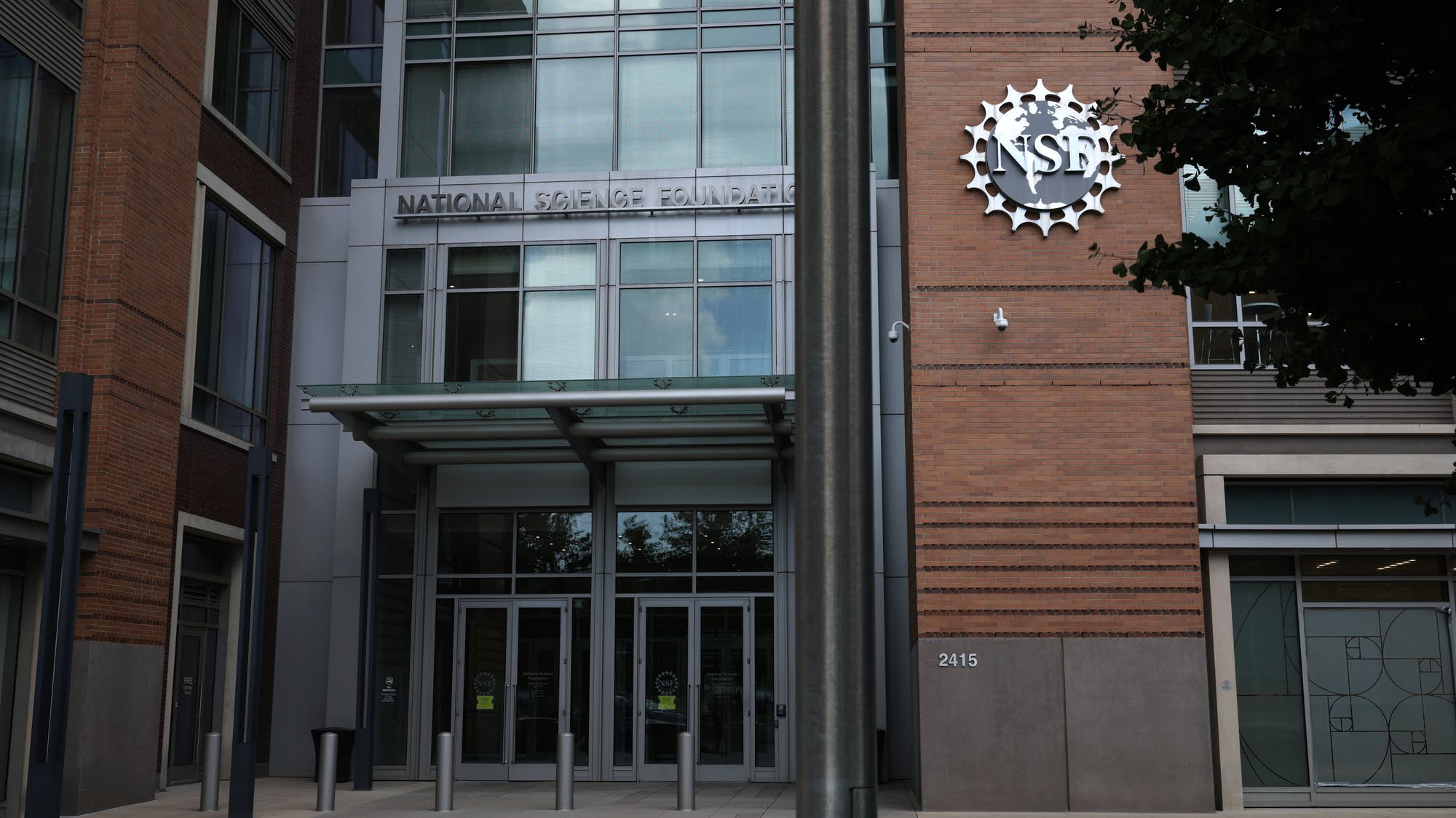
The number of students admitted to Ph.D. programs this coming fall has dropped by 15% from last year, according to data from the Association of American Universities Data Exchange (AAUDE). That decrease is at least partially driven by the uncertainty of federal funding. The Trump administration terminated thousands of research grants last year and has proposed massive cuts to federal research agencies. Because of all those cuts, universities aren’t sure what their budgets will look like in the coming years, which makes it more difficult to take on doctoral students.For more, “Marketplace Morning Report” host Kimberly Adams spoke with Toby Smith. He’s the senior vice president for government relations and public policy at the Association of American Universities. The following is an edited transcript of their conversation. Kimberly Adams: What does the federal funding landscape look like right now?Toby Smith: It's very uncertain. It's characterized by significant proposed cuts coming from the administration last year and this year for major research agencies such as the National Science Foundation, the National Institutes of Health and other research agencies, like even NASA. On top of that, we saw grants that had been provided — multi-year grants — terminated midstream for reasons driven by a change in political priorities. And they cut programs that had a focus on any kind of diversity, equity, inclusion, climate — certain things that this administration just felt they did not want to fund, plus reductions in staff at some of those agencies. So, it's a very uncertain climate for how much funding will be provided to support the research that our universities do.Adams: Which fields have been hit the hardest by this decline in the number of Ph.D. students?Smith: The data from AAUDE doesn't really differentiate in the fields. We are certainly worried that all fields are getting hit. I would say the STEM fields because they are tremendously reliant on federal research funding. Since World War II, the model we've used, which has been emanated by other countries, is a model where the government funds research at our universities to help the American taxpayer and help the government address national challenges, whether that's economic growth, national security, energy self-sufficiency. And at the same time, those research grants have supported the graduate students who work on projects with their advisors. They're trained, and they become the next generation of scientists and engineers. And that connection — that fact that research in the United States and the research funding does double-duty — has made the U.S. the leader in the world in science and technology development since World War II. Adams: I'm wondering about healthcare. We already have a shortage in healthcare providers and doctors in the country. Will people start to see this show up in terms of the care that they might receive?Smith: Well, I mentioned the grants that were terminated. There have been clinical trials that were midway, where you have real patients depending on these clinical trials that have been disrupted, terminated, stopped. So, in that sense, you already see it. I think you also will see it in terms of advancements in new drugs, new diagnostics. Remember that the science that is done not only has developed the new drugs that people rely on and new cures, but it's developed things like MRI and PET scans and those diagnostics that doctors rely on. All those will be impacted.Adams: Are there alternative funding pipelines being developed to try to make up some of this loss in federal funding?Smith: I would hope, and our universities are certainly looking at how they can capture increased industry dollars. One of the challenges with industry dollars is when they fund research, they often want to fund research that they know they will directly gain the benefits from, and therefore they don't always want to publish or make that research open. As opposed to a lot of what we do, which is develop the new knowledge that then underpins the development of whole new industries at a time when the industry wouldn't have invested — whether that's AI or a lot of the things we've seen in biotech — were things that industry had no interest in investing in.Adams: There's also been that drop in applications from international students. What explains that shift?Smith: What has happened, historically, is we've attracted the best and brightest students from around the world not only to come here, but they often come here, they want to stay, and they manage to stay. But the immigration policies that are being put in place are going to make that harder. The rhetoric and policies also are making it seem less welcoming for foreign students to come here. The concern we have with that is, if you look, and I'm just going to use artificial intelligence — one of the areas that's very important. There are some studies that show that over 50% of the top AI companies in the country were started by foreign-born founders who came here. Likely, many of them studied at their universities, stayed, and they started companies that are now employing and driving critical areas for national defense. And we also know that other countries are instituting new programs to take advantage and attract talent their way in light of the fact that less is coming to the U.S.Adams: Where are most of these doctoral students that maybe previously would have come to the U.S. going instead?Smith: Well, certainly China is a big rival. So, they've had programs in place to try and attract that talent, but certainly other countries. We know that the UK, Canada, Australia — they're all trying to attract that talent their direction.Adams: So, we know we are getting fewer international students for doctoral programs, but what's happening domestically?Smith: So there, there was good news in terms of what the AAUDE data showed. There's actually a 3% increase in applications from domestic students, U.S. citizens. A concern, though, is that with the reduction in the capability to support those students, they are not necessarily getting admitted to programs, which worries us greatly. And one of the other things is a stacking effect — graduate students in the system had to be switched. They'll be in the system longer because they were working on research that was on a grant for an advisor who had that grant terminated. They had to be moved, so they're working on their research for another year or two. That takes the slot of somebody coming in — makes it harder and has been one of those things that has driven declines in admittance rates.Adams: Let's say federal funding gets more stable or is even restored in either this administration or the next. How quickly would you say universities could bounce back from these cuts? Smith: The problem is there are real programs that are being reduced, degree programs that are being eliminated. So, it's going to be a while, I think, for us to rebound. On the topic of international students, I think regaining that attraction and being the place where everyone wants to come and study, it's going to take several years for there to be trust regained that that this is the place where everybody wants to come and work because of the change policies. And how quickly the policies change is also unclear — and much of that will depend on future elections and where the country goes.
Ph.D. admissions have dropped 15% for the new school year
That could weaken the doctoral pipeline — and spell trouble for the future of science and innovation in the U.S.
1,239 words~6 min read