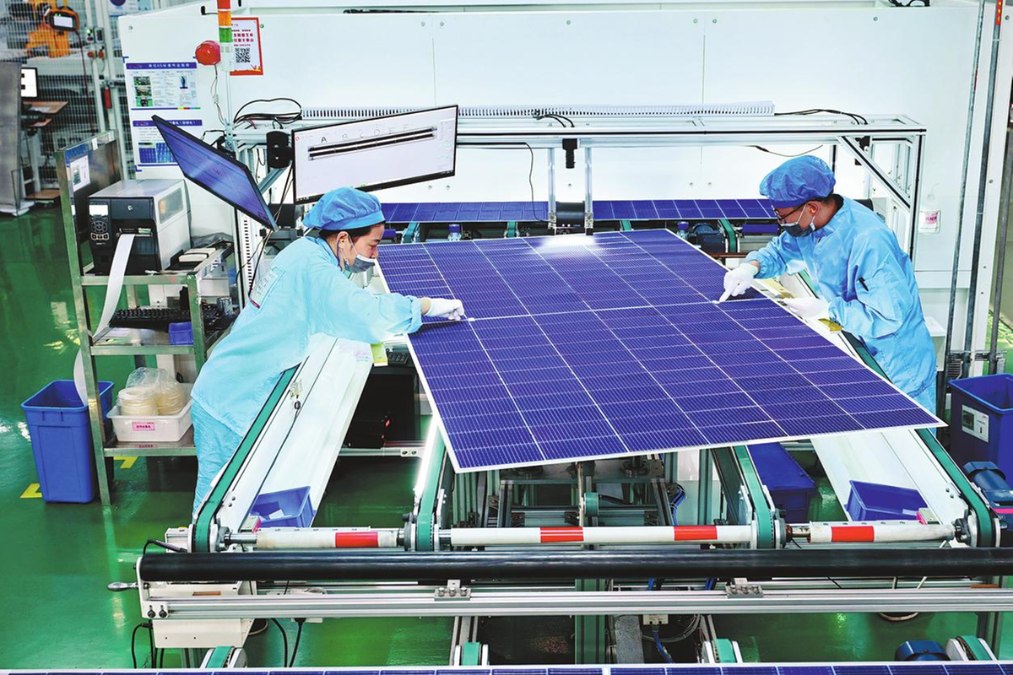
Workers produce high-efficiency PV modules for overseas orders at a solar factory in Haian, Jiangsu province, on April 29. GU HUAXIA/FOR CHINA DAILY
As summer approaches, the world is once again bracing for extreme heat. With a powerful El Nino event taking shape and climate models indicating further intensification, unprecedented temperatures are no longer a distant projection — they are an immediate reality.
Scientific records show that the 10 warmest years since modern measurements began in 1850 have all occurred within the past decade. Remarkably, 2023, 2024 and 2025 were consecutively the hottest years ever recorded.
This trend reflects a broader shift: climate risk is no longer merely an environmental issue discussed in scientific journals. It has become a pressing operational, financial, and asset-related risk for businesses and governments alike.
Prolonged heatwaves can halt industrial production, disrupt supply chains and dramatically increase the cost of maintaining comfortable indoor environments. Against this backdrop, a fundamental question emerges: is our energy system resilient enough to withstand increasingly frequent and prolonged climate extremes?