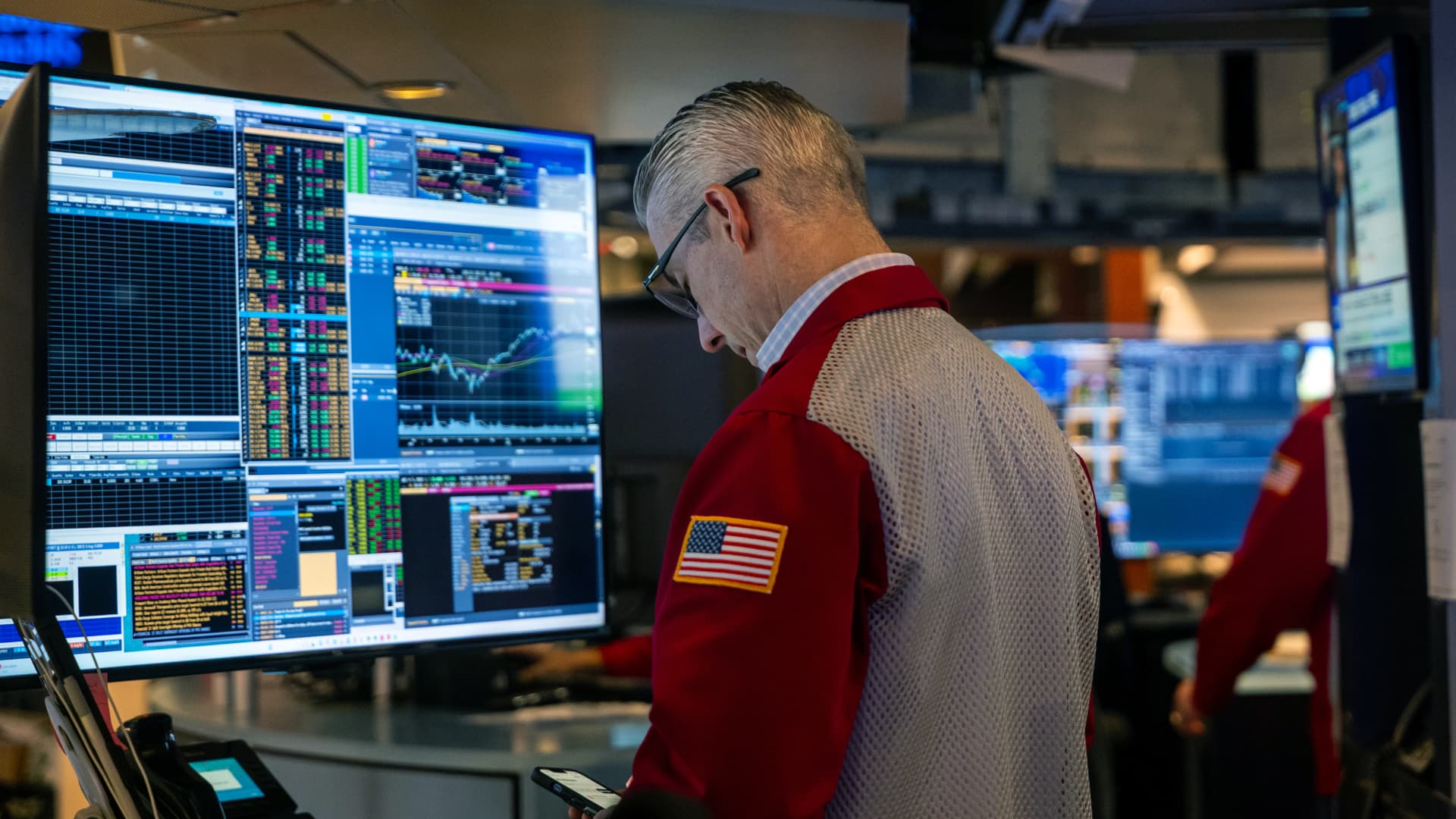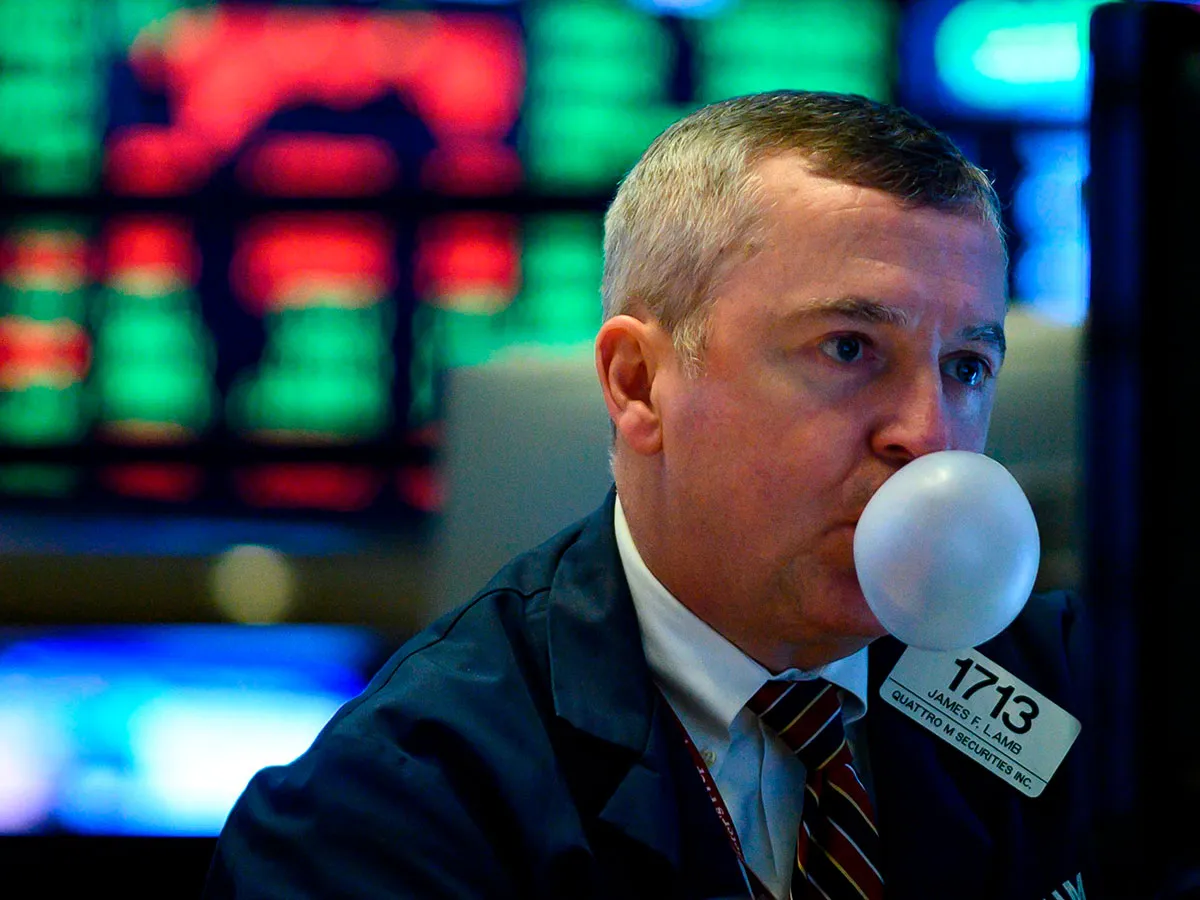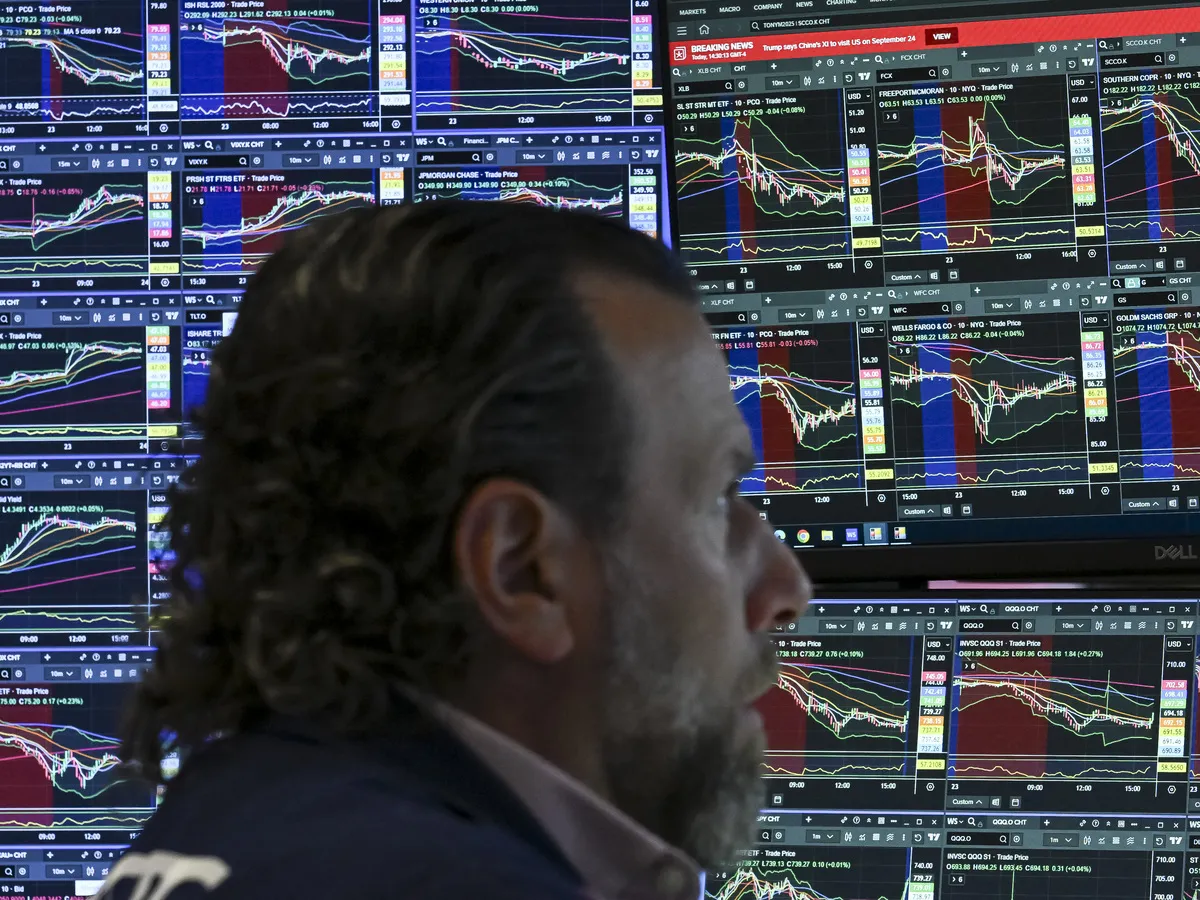
Skip to Content News Archives Economy Energy Oil & Gas Renewables Electric Vehicles Mining Commodities Agriculture Real Estate Mortgages Mortgage Rates Finance Banking Insurance Fintech Cryptocurrency Work Wealth Smart Money Wealth Management Investor Personal Finance Family Finance Retirement Taxes High Net Worth FP Comment Executive Women Puzzmo Newsletters Financial Times Business Essentials More Innovation Information Technology FP500 Podcasts Small Business Lives Told Tails Told Shopping Financial Post Store Obituaries Place a Notice Advertising Advertising With Us Advertising Solutions Postmedia Ad Manager Sponsorship Requests Classifieds Place a Classifieds ad Working Profile Settings My Subscriptions Saved Articles My Offers Newsletters Customer Service FAQ News Economy Energy Mining Real Estate Finance Work Wealth Investor FP Comment Executive Women Puzzmo Newsletters Financial Times Business Essentials HomeInvestorThe market's biggest risk isn't AI or tariffs. It’s something stock investors may overlookMartin Pelletier: Have markets have become too complacent about mounting debt risks?Last updated 55 minutes ago You can save this article by registering for free here. Or sign-in if you have an account.A trader works on the floor of the New York Stock Exchange on July 23, 2026 in New York. Photo by ANGELA WEISS/AFP via Getty Images filesI must admit, I am feeling a bit uneasy about this market. Perhaps it is the re-escalation in tariffs, the uncertainty surrounding artificial intelligence capital spending, the upcoming wave of earnings releases or simply the latest political headlines. But beyond that, increasingly my attention is being drawn to something that few investors seem to be discussing: the simultaneous rise in the U.S. dollar and U.S. real interest rates.Subscribe now to read the latest news in your city and across Canada.Exclusive articles from Barbara Shecter, Joe O'Connor, Gabriel Friedman, and others.Daily content from Financial Times, the world's leading global business publication.Unlimited online access to read articles from Financial Post, National Post and 15 news sites across Canada with one account.National Post ePaper, an electronic replica of the print edition to view on any device, share and comment on.Daily puzzles, including the New York Times Crossword.Subscribe now to read the latest news in your city and across Canada.Exclusive articles from Barbara Shecter, Joe O'Connor, Gabriel Friedman and others.Daily content from Financial Times, the world's leading global business publication.Unlimited online access to read articles from Financial Post, National Post and 15 news sites across Canada with one account.National Post ePaper, an electronic replica of the print edition to view on any device, share and comment on.Daily puzzles, including the New York Times Crossword.Create an account or sign in to continue with your reading experience.Access articles from across Canada with one account.Share your thoughts and join the conversation in the comments.Enjoy additional articles per month.Get email updates from your favourite authors.Create an account or sign in to continue with your reading experience.Access articles from across Canada with one accountShare your thoughts and join the conversation in the commentsEnjoy additional articles per monthGet email updates from your favourite authorsSign In or Create an AccountorSince the lows reached earlier this year, the move has been significant. The yield on 10-year Treasury Inflation-Protected Securities (TIPS), a widely followed measure of real interest rates, has climbed to roughly 2.35 per cent, one of the highest levels in the post-financial-crisis era. Meanwhile, the U.S. dollar has staged a notable recovery from its February weakness. Real yields and the U.S. dollar moving higher together represent a powerful tightening force on global financial and economic conditions.Canada's best source for investing news, analysis and insight.By signing up you consent to receive the above newsletter from Postmedia Network Inc.A welcome email is on its way. If you don't see it, please check your junk folder.The next issue of Investor will soon be in your inbox.We encountered an issue signing you up. Please try againIn most market cycles, these developments would be considered relatively routine. Today, however, they are occurring against the backdrop of a world drowning in debt and an increasingly fragile global financial system. That is why I believe investors need to pay much closer attention.The conventional narrative is that policymakers are simply maintaining anti-inflation credibility. I am not convinced that is the entire story though. It is difficult to ignore that real yields and the U.S. dollar have moved sharply higher in recent months, coinciding with the arrival of U.S. Federal Reserve governor Kevin Warsh and a Treasury Department increasingly vocal about the importance of a strong dollar.Both Warsh and U.S. Treasury Secretary Scott Bessent appear to view dollar strength as a cornerstone of American financial leadership and geopolitical influence. The question investors should be asking is not whether a strong dollar is desirable, but why policymakers seem comfortable encouraging further appreciation despite the obvious side effects.A stronger dollar effectively tightens financial conditions around the world. Commodities become more expensive in local currency terms, countries with U.S. dollar-denominated debt face larger repayment burdens, and global liquidity contracts as dollars become harder and more expensive to obtain. Emerging markets often experience capital flight, weaker growth and heightened financial stress. Tariffs only magnify these pressures, particularly for export-driven economies such as China that are already navigating slower growth and rising geopolitical tensions. In Canada, the pain would likely be concentrated outside the resource sector, especially in manufacturing-intensive regions such as Ontario, where a stronger U.S. dollar, softer global demand and rising trade frictions could further pressure economic activity.In effect, a rising dollar acts as a form of global monetary tightening. At what point does defending the dollar begin to look less like conventional economic policy and more like a strategic geopolitical tool?The problem is that this strategy cuts both ways and comes with a risk, a huge risk in my opinion.Higher real yields may support the dollar and pressure America’s competitors, but they also raise financing costs for the United States itself. With federal debt approaching US$40 trillion and debt-to-GDP hovering near 123 per cent, even modest increases in borrowing costs have significant fiscal consequences. Interest expense is already one of the fastest-growing components of federal spending and is increasingly crowding out other priorities.The effects are also beginning to show up across financial markets. Since February, for example, McDonald’s shares have declined almost in lockstep with rising Treasury yields. That should not be surprising. McDonald’s is not just a restaurant company; it is also one of the world’s largest owners and operators of commercial real estate. As real yields rise, the value of long-duration real estate cash flows falls, putting pressure on valuations. Even the hyperscalers, such as Alphabet, are becoming increasingly vulnerable. For years, their enormous free cash flow generation helped offset the duration risk typically associated with high-growth companies. However, the explosion in AI-related capital expenditures has materially altered that profile. As cash is redirected toward massive infrastructure investments, duration exposure increases and equity valuations become more sensitive to higher real interest rates. This helps explain why Alphabet’s shares fell more than 6.5 per cent following its earnings release last Tuesday evening.The same dynamic is being felt on Main Street. Mortgage rates have risen alongside Treasury yields, increasing borrowing costs for households and making homeownership less affordable. It is fair to ask how a policy mix built around a stronger dollar and higher real yields ultimately benefits the average American family.For now, markets appear quite comfortable. Equity indices remain resilient, credit spreads are contained and investors continue to assume policymakers can thread the needle between supporting the dollar and maintaining confidence in the Treasury market.Perhaps they can.But if the dollar continues to appreciate while real yields remain elevated, the risk of a policy mistake grows. The very tools being used to reinforce American financial strength could ultimately expose the vulnerabilities created by decades of debt accumulation. For investors, including Canadians with significant exposure to equities, the implications are substantial. Higher real interest rates tend to compress valuation multiples, increase financing costs and reward financial strength over leverage. Consider that the S&P 500 currently trades at roughly 21 times forward earnings, implying an earnings yield of about 4.8 per cent, nearly identical to the yield available on a 10-year U.S. Treasury. In other words, investors are receiving virtually no equity risk premium, a condition that is more commonly associated with some of the most expensively valued periods in market history, including the late-stage 2000 technology bubble.In short, investors should pay as much attention to the path of the dollar and real yields as they do to earnings reports, because these macroeconomic forces may increasingly determine which sectors and companies lead the market and which fall behind.The real question is not whether policymakers understand these risks but whether they can continue strengthening the dollar without undermining the debt market that sits at the foundation of America’s financial dominance. I believe that path appears far narrower than most investors appreciate.Martin Pelletier, CFA, is the author of Investing Through the Storm and a senior portfolio manager at TriVest Wealth, a team that is part of Wellington-Altus Private Counsel Inc. TriVest provides discretionary risk-managed portfolios, investment audit/oversight and advanced tax, estate and wealth planning. The opinions expressed are not necessarily those of Wellington-Altus._____________________________________________________________If you like this story, sign up for the FP Investor Newsletter. Join the Conversation This website uses cookies to personalize your content (including ads), and allows us to analyze our traffic. Read more about cookies here. By continuing to use our site, you agree to our Terms of Use and Privacy Policy.
The market's biggest risk isn't AI or tariffs. It’s something stock investors may overlook
Martin Pelletier: Have markets have become too complacent about mounting debt risks? Read on to find out.
1,561 words~7 min read