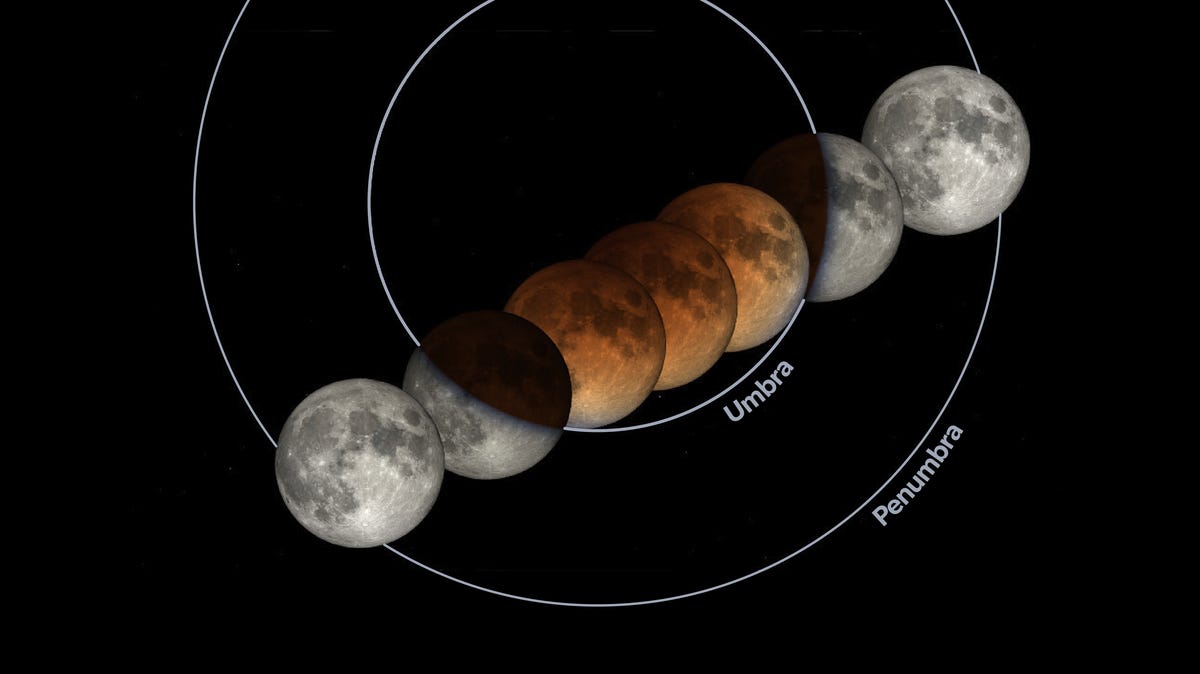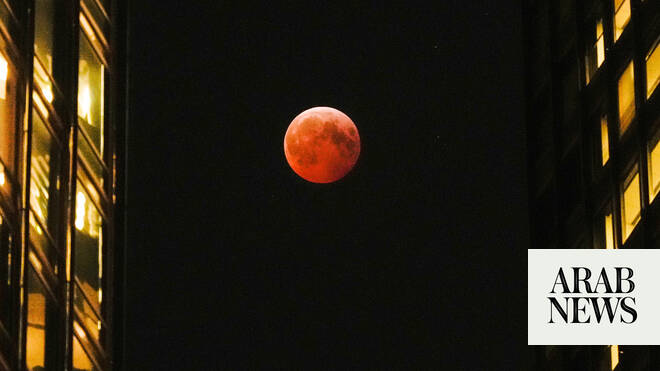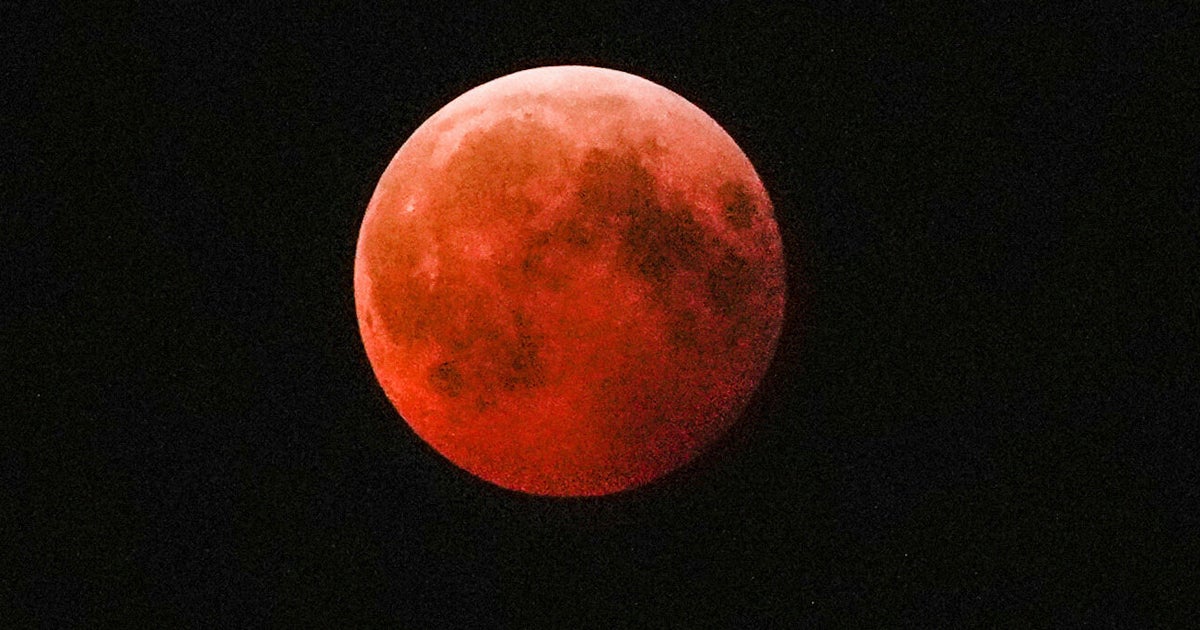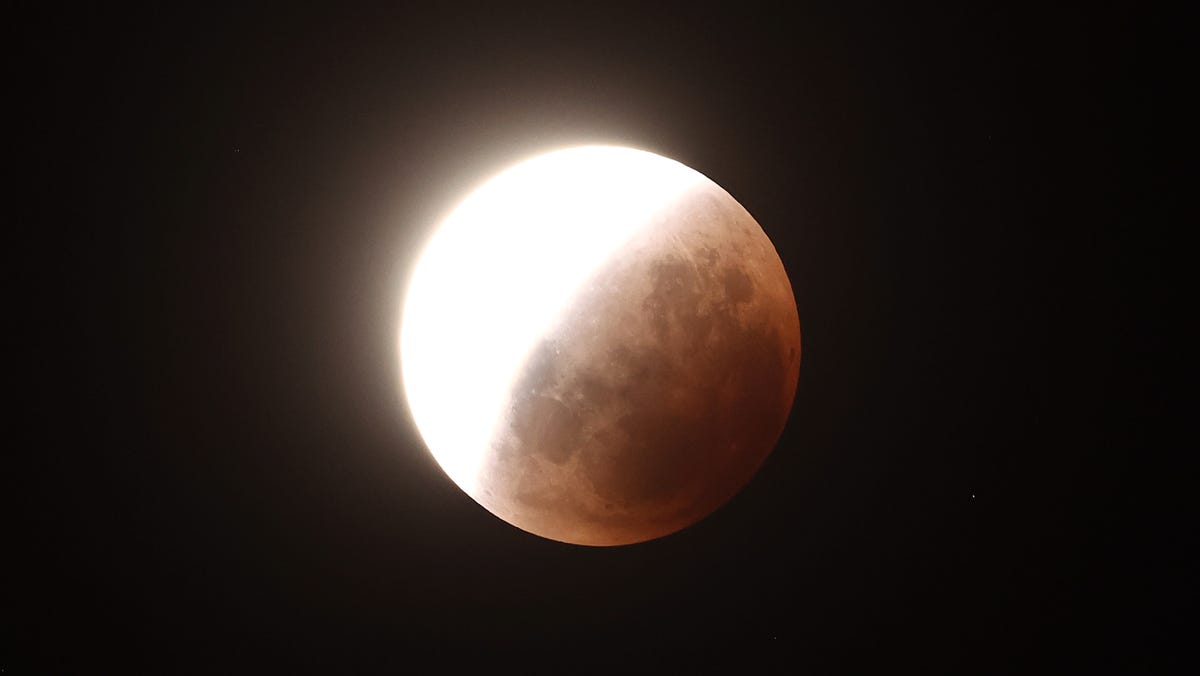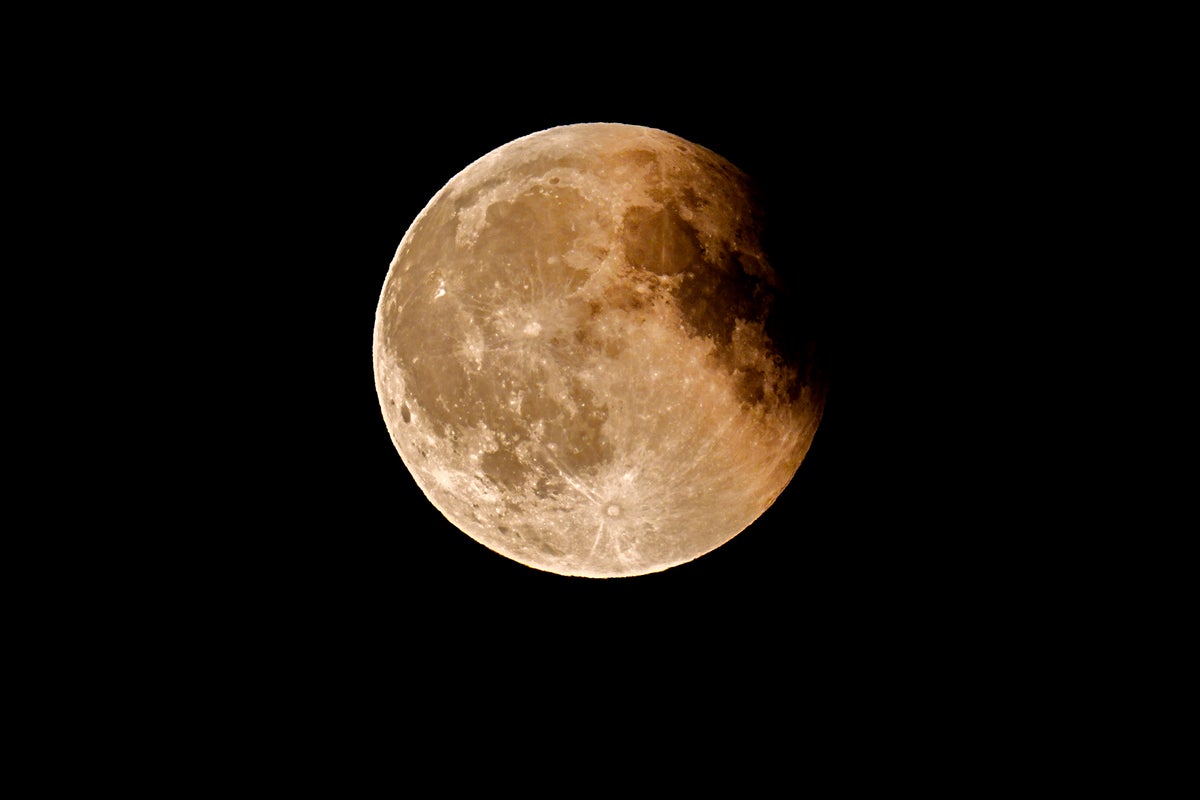
One month from today, skywatchers across the Americas, Europe and Africa will have the chance to witness the best lunar eclipse until New Year's Eve 2028.On Aug. 28, Earth's shadow will cover up to 96% of the moon's disk in an exceptionally deep partial lunar eclipse. At maximum eclipse, only a thin sliver of the moon will remain outside Earth's darkest shadow, creating an "almost blood moon" with nearly the entire lunar surface glowing a deep reddish-orange.Unlike a solar eclipse, a lunar eclipse is completely safe to observe with the naked eye and requires no special equipment. All you need is clear skies and a view of the moon.Where can I see the lunar eclipse?
A map of the lunar eclipse on Aug. 27-28, 2026. Click the arrows in the bottom left corner to expand to full screen. (Image credit: F. Espenak, NASA's GSFC)The eclipse will be visible across Europe, Africa, the Americas and parts of western Asia, though exactly what you'll see depends on your location.The Americas are particularly well-placed to catch the eclipse's most dramatic stages, as many locations will see the moon rise already deep within Earth's shadow. Across eastern North America, observers will see the "almost blood moon" climb above the horizon shortly before or during maximum eclipse.Across Europe and Africa, the eclipse occurs before dawn on Aug. 28. Observers in the U.K. and western Europe will see the moon low in the western sky during the final stages of the eclipse, before it sets shortly after maximum. Farther east, progressively less of the eclipse will be visible before moonset.North & South America: Best overall viewsEurope & Africa: Excellent predawn moonset eclipseWestern Asia: Limited views before moonsetEastern Asia: Little or no visibility.What will it look like?