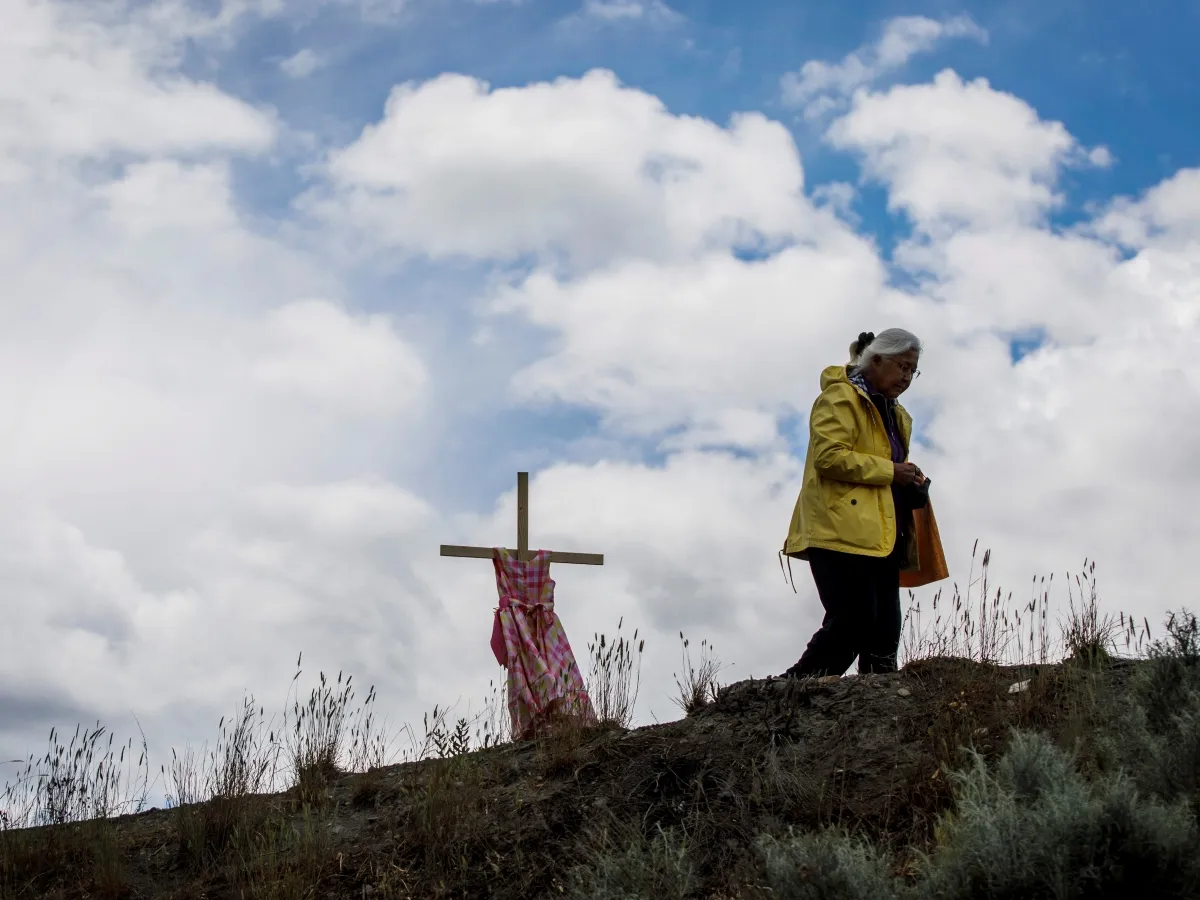
Skip to Content Subscribe Our Offers My Account Manage My Subscriptions FAQ Newsletters Canada Canadian True Crime Canadian Politics Health World Israel & Middle East Financial Post NP Comment Longreads Puzzmo Diversions Comics NP News Quiz New York Times Crossword Horoscopes Life Eating & Drinking Style Sponsored Play for Ontario Travel Travel Canada Travel USA Travel International Cruises Travel Essentials Culture Books Celebrity Movies Music Theatre Television Business Essentials Advice Lives Told Tails Told Shopping Buy Canadian Home Living Outdoor Living Kitchen & Dining Tech Style & Beauty Personal Care Entertainment & Hobbies Gift Guide Travel Guide Amazon Prime Day Deals Savings National Post Store More Sports Hockey Baseball Basketball Football Soccer Golf Tennis Driving Vehicle Research Reviews News Gear Guide Obituaries Place an Obituary Place an In Memoriam Classifieds Place an Ad Celebrations Working Business Ads Archives Healthing Epaper Manage Print Subscription Profile Settings My Subscriptions Saved Articles My Offers Newsletters Customer Service FAQ Newsletters Canada World Financial Post NP Comment Longreads Puzzmo Diversions Life Shopping Epaper Manage Print Subscription HomeNP CommentJamie Sarkonak: Why the B.C. Law Society walked back claims of buried childrenTwo years of litigation with a truth-seeking B.C. lawyer has ended in a settlement and more careful language about Kamloops residential schoolLast updated 28 minutes ago You can save this article by registering for free here. Or sign-in if you have an account.A woman walks by a staked child's dress on Highway 5 near the former Kamloops Indian Residential School on June 5, 2021. Photo by COLE BURSTON/AFP via Getty ImagesIn 2024, a mandatory course for B.C. lawyers referred to the “discovery of an unmarked burial site containing the bodies of 215 children on the former Kamloops Indian Residential School grounds” which “(confirmed) what survivors have been saying all along.” When one lawyer proposed a correction, as no graves were ever found, the B.C. Law Society publicly disparaged him. He sued for defamation — but now, the trial has been called off.Enjoy the latest local, national and international news.Exclusive articles by Conrad Black, Barbara Kay and others. Plus, special edition NP Platformed and First Reading newsletters and virtual events.Unlimited online access to National Post.National Post ePaper, an electronic replica of the print edition to view on any device, share and comment on.Daily puzzles including the New York Times Crossword.Support local journalism.Enjoy the latest local, national and international news.Exclusive articles by Conrad Black, Barbara Kay and others. Plus, special edition NP Platformed and First Reading newsletters and virtual events.Unlimited online access to National Post.National Post ePaper, an electronic replica of the print edition to view on any device, share and comment on.Daily puzzles including the New York Times Crossword.Support local journalism.Create an account or sign in to continue with your reading experience.Access articles from across Canada with one account.Share your thoughts and join the conversation in the comments.Enjoy additional articles per month.Get email updates from your favourite authors.Create an account or sign in to continue with your reading experience.Access articles from across Canada with one accountShare your thoughts and join the conversation in the commentsEnjoy additional articles per monthGet email updates from your favourite authorsSign In or Create an AccountorInstead, criminal defence lawyer Jim Heller settled his case with the law society, a development that was made public in a Glacier Media report on Monday. The terms are confidential. We won’t know what each side agreed to do to shelve the litigation, or who the court would have sided with in the end. Much like the supposed “graves” that the local First Nation refuses to excavate at the Kamloops residential school, the public won’t get any closure on this one.The National Post newsletter that doesn’t hold back, giving readers the unvarnished truth on media, politics and culture.By signing up, you consent to receive the above newsletter from Postmedia Network Inc.A welcome email is on its way. If you don't see it, please check your junk folder.The next issue of Right? will soon be in your inbox.We encountered an issue signing you up. Please try again“I feel like I’m escaping the looking glass,” Heller told me over the phone on Thursday. “I’m escaping Wonderland a little bit.”Heller’s saga began when he spoke up about the wording in the Indigenous competency course mandated for all lawyers by the B.C. Law Society. As things stood back then, all members of the profession had to read through materials endorsed by their professional overseers to maintain the ability to practice — only, the course materials were objectively false. The thousands of professionals gatekeeping everything from real estate deals to criminal sentencing — professionals from which the next generation of B.C.’s judges would be drawn — were being told to internalize the unproven claim that the bodies of children were found at the Kamloops residential school grounds.Attempts to contact those responsible for the course to spur a correction went ignored in the summer of 2024. Nevertheless, there was a democratic fix available. Heller and colleague Burnaby lawyer Mark Berry advanced a motion at the law society’s annual general meeting that fall, proposing the use of the words “potentially unmarked burial site” to more carefully reflect reality; they also moved to have the reference to 215 bodies of children removed, along with the assertion that the “discovery” confirmed what survivors had been saying.In response, a group called the B.C. First Nations Justice Council released a statement calling Heller’s proposal a “Racist Resolution” that contains “alarming Residential School denialism.”“It is unconscionable that efforts be made to revise this history and sanitize the genocidal atrocities committed against Indigenous people in B.C. and Canada,” it said.The very next day, the B.C. Law Society published a news release about the B.C. First Nations Justice Council statement, adding its own commentary to the mix: “The resolution submitted by Mr. Heller and Mr. Berry only highlights the need for the (Indigenous course) and confirms much work remains to be done to increase knowledge and understanding, continue our efforts of advancing meaningful reconciliation with Indigenous people, and eliminate racism in our profession.”The motion ultimately failed: while it had garnered support from 1,499 members of the law society, another 1,683 opposed it, with 590 abstentions.That October, Heller began asking the law society to remove the statement about his motion from the website. He took it to be an accusation of racism. The law society didn’t budge, however, so he embarked on his lawsuit in February 2025.Interestingly, Heller says that his Indigenous clients have been made aware of his efforts to correct the training materials, and the vast majority have been supportive: “We have good, good relationships and they understand the principles behind it.”There were some interesting twists in the litigation. During the summer of 2025, the B.C. Law Society began filing documents in court to support its defence. Heller referred to these documents in an affidavit afterward — only to have it taken out of public view entirely. A judge sealed that affidavit in August 2025 to protect the privacy of a former law society employee who had personal and family experience with “colonialism, colonial harm, and the effect of Residential Schools.”“I reject the notion that because a person chooses to share certain information about themselves or their families in a public context, that they have somehow waived their right to privacy over any related information, including information that may be shared in a personal, non-public context,” wrote the judge in his decision to seal the affidavit. “Here, it is apparent the information … was not intended for the public sphere.”Evidently, an Indigenous employee of the law society had said something relevant to the matter at hand, but it wasn’t up to the public to know.It was around this time that the B.C. Law Society began to retreat. In August 2025, it removed its disavowal of Heller from its website and changed the mandatory Indigenous course materials. The course currently speaks of “200 targets of interest at the Kamloops site that are probable burials.”This was followed by an odd non-apology by the law society in May 2026, stating that, “To the degree it was understood by some to have defamed Mr. Heller, the Law Society wishes to confirm that was not its intention.”Taken in context with the settlement, it’s a win for Heller. The B.C. Law Society, once staunch in standing by the falsities it had published, quietly retracted them right around the same time that litigation was heating up. There was smoke, but the fire of a public win was doused before it could ever shed light on the moral panic that gripped Canada in 2021.And who knows; perhaps the courts can’t be trusted to provide that anymore: it’s B.C. judges who keep allowing homeless people to claim property rights over public spaces like it’s the age of settlement; it’s B.C. judges who have begun blowing up the province’s land title system over historic grievances. Judges nationwide are provided training that predisposes them to siding with Indigenous causes. The cold reality is that the courts have political biases, and that testing them is a gamble.But in other ways, old professional principles still work. Heller, a defence lawyer, took particular issue with the graves panic that hit Canada in 2021 because of how starkly it contrasted with the workings of a criminal trial. To prove someone’s guilt requires extensive evidence — and, in mounting a proper defence, the “devil might be in the details.” When it came to the graves and the accusations of an ongoing genocide, the country never got that treatment.“My issue is just we’ve got to be truthful with our history with each other,” Heller said.“We all deserve the presumption of innocence.”National Post Join the Conversation This website uses cookies to personalize your content (including ads), and allows us to analyze our traffic. Read more about cookies here. By continuing to use our site, you agree to our Terms of Use and Privacy Policy.
Jamie Sarkonak: Why the B.C. Law Society walked back claims of buried children
Two years of litigation with a truth-seeking B.C. lawyer has ended in a settlement, more careful language about Kamloops residential school
1,645 words~7 min read