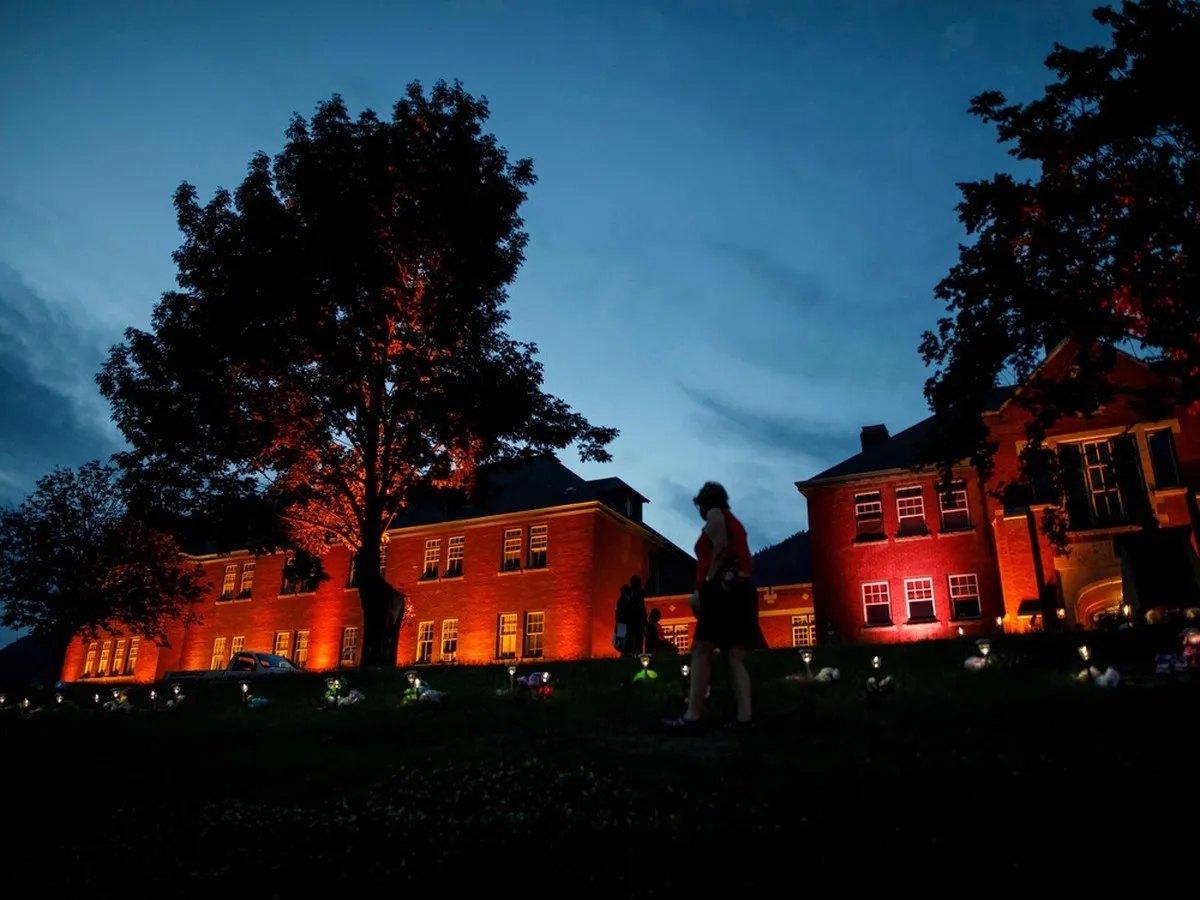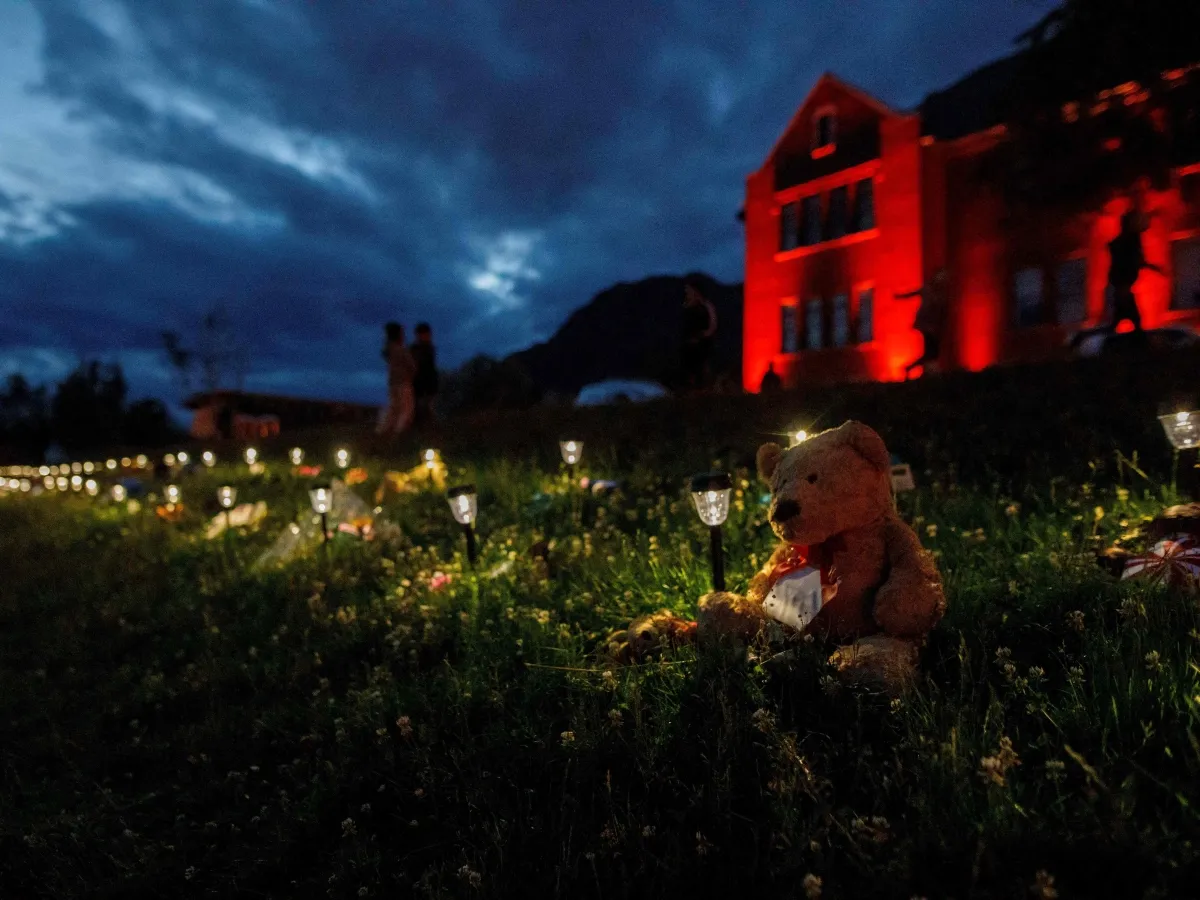
Skip to Content Subscribe Our Offers My Account Manage My Subscriptions FAQ Newsletters Canada Canadian True Crime Canadian Politics Health World Israel & Middle East Financial Post NP Comment Longreads Puzzmo Diversions Comics NP News Quiz New York Times Crossword Horoscopes Life Eating & Drinking Style Sponsored Play for Ontario Travel Travel Canada Travel USA Travel International Cruises Travel Essentials Culture Books Celebrity Movies Music Theatre Television Business Essentials Advice Lives Told Tails Told Shopping Buy Canadian Home Living Outdoor Living Kitchen & Dining Tech Style & Beauty Personal Care Entertainment & Hobbies Gift Guide Travel Guide Amazon Prime Day Deals Savings National Post Store More Sports Hockey Baseball Basketball Football Soccer Golf Tennis Driving Vehicle Research Reviews News Gear Guide Obituaries Place an Obituary Place an In Memoriam Classifieds Place an Ad Celebrations Working Business Ads Archives Healthing Epaper Manage Print Subscription Profile Settings My Subscriptions Saved Articles My Offers Newsletters Customer Service FAQ Newsletters Canada World Financial Post NP Comment Longreads Puzzmo Diversions Life Shopping Epaper Manage Print Subscription HomeNP CommentMichael Higgins: It's not reconciliation when law societies exaggerate anomalies as 'graves'B.C. lawyer Jim Heller has settled defamation case against the Law Society of British ColumbiaLast updated 5 hours ago You can save this article by registering for free here. Or sign-in if you have an account.In this file photo taken on June 5, 2021 a teddy bear sits beside a lantern and momentous outside the former Kamloops Indian Residential School. Photo by COLE BURSTON/AFP via Getty ImagesMaking criminals out of people who merely ask questions about the residential school system is not the path to reconciliation, says B.C. lawyer Jim Heller.Enjoy the latest local, national and international news.Exclusive articles by Conrad Black, Barbara Kay and others. Plus, special edition NP Platformed and First Reading newsletters and virtual events.Unlimited online access to National Post.National Post ePaper, an electronic replica of the print edition to view on any device, share and comment on.Daily puzzles including the New York Times Crossword.Support local journalism.Enjoy the latest local, national and international news.Exclusive articles by Conrad Black, Barbara Kay and others. Plus, special edition NP Platformed and First Reading newsletters and virtual events.Unlimited online access to National Post.National Post ePaper, an electronic replica of the print edition to view on any device, share and comment on.Daily puzzles including the New York Times Crossword.Support local journalism.Create an account or sign in to continue with your reading experience.Access articles from across Canada with one account.Share your thoughts and join the conversation in the comments.Enjoy additional articles per month.Get email updates from your favourite authors.Create an account or sign in to continue with your reading experience.Access articles from across Canada with one accountShare your thoughts and join the conversation in the commentsEnjoy additional articles per monthGet email updates from your favourite authorsSign In or Create an AccountorGoodwill and open dialogue are needed far more than trying to imprison people under a “denialism” law, according to Heller, whose defamation suit against his own law society over potential graves at the former Kamloops Indian Residential School was recently settled.Heller sees the Kamloops controversy as a societal sickness where facts and truth are sidelined in favour of ideology.The National Post newsletter that doesn’t hold back, giving readers the unvarnished truth on media, politics and culture.By signing up, you consent to receive the above newsletter from Postmedia Network Inc.A welcome email is on its way. If you don't see it, please check your junk folder.The next issue of Right? will soon be in your inbox.We encountered an issue signing you up. Please try again“As a lawyer, it is all about promoting, developing, respecting and fine-tuning a process, all in order to ask a question. That’s what it’s all about, this kind of rigorous, analytical, open, rational thinking. And that is the foundation of everything. It’s so fundamental,” he said in an interview Tuesday.But rigour and analysis are now absent in so many parts of our institutions, leaving them open to attack from outside forces, he said.“There’s a weakening and a sickness in our society, and it’s just kind of permeated the institutions,” Heller said. “It’s got to be cured. But maybe that won’t happen. Maybe we’re just softening so that we’ll have so little resistance for whatever’s next, whether it’s the Islamification of Canada or the CCP (Chinese Communist Party) or some sort of controls we can’t even anticipate.”Heller found himself in a battle with the Law Society of British Columbia (LSBC) over anomalies discovered by ground-penetrating radar at the former Kamloops Residential School. He objected to mandatory law society educational materials that contained the phrase, “On May 27, 2021, the Tk’emlúps te Secwépemc Nation reported the discovery of an unmarked burial site containing the bodies of 215 children on the former Kamloops Indian Residential School grounds.”When Heller submitted a resolution to the law society’s annual general meeting stating that no graves had been discovered and asking the LSBC to insert the word “potential” when discussing the anomalies, he suddenly found himself under attack. One critic was the BC First Nations Justice Council, which issued a statement referencing a “growing disillusioned sect” that was using “denialism” to downplay the horrors of residential schools.Heller claimed the LSBC posted a link to the press release in an online statement knowing it was defamatory. His lawsuit alleged the LSBC refused to take down the press release and issue an apology and a retraction.The law society denied defaming Heller as his suit moved through the courts. The case has now been settled, although the terms are confidential.In May this year, the law society issued a clarification stating that “to the degree it was understood by some to have defamed Mr. Heller, the Law Society wishes to confirm that was not its intention.”What is so utterly bizarre about the case is that Heller was only trying to insert the word “potential” in relation to the graves, which would have been truthful and factual. No graves and no bodies have been found at the site despite a press release in 2021 from the Tk’emlúps te Secwépemc that talked of “the remains of 215 children” at Kamloops.As Heller pointed out, even the Tk’emlúps te Secwépemc has changed the way it discusses the matter, now opting for terms like “potential graves” and “anomalies” at Kamloops.The danger for people like Heller is that they would almost certainly find themselves in the crosshairs of the law should “denialism” of residential schools get into the criminal code.Last week, First Nations held a press conference to call for a ban on residential school denialism, echoing a recent failed attempt by a senator to make it illegal for anyone to engage in the “condoning, denying or downplaying” of residential schools, with a proposed maximum penalty of two years’ imprisonment.During the press conference, Manitoba Keewatinowi Okimakanak Grand Chief Garrison Settee said Canada was perpetuating hate by not passing a denialism law.He said he recently visited the Kamloops site and that First Nations did not have to prove there were bodies by exhuming them.“They are there and they send us messages telling us they’re there,” he said. “You can tell they’re there, right? Feel the power and the energy. For somebody that’s not from our communities, that doesn’t understand our culture, you cannot understand what that means.”Such a stance does not sit well with Heller.“He’s saying, ‘We know this is true. The dead kids are there; they’re talking to us.’ That’s one thing for them to have that kind of outrageous belief and to make a point of doing a press conference,” said Heller, “but you combine that with, ‘And we’re going to court to make it illegal for you to even raise an eyebrow about that.’ Well that’s pretty incredible.”Heller added that First Nations “speak in terms of potential and anomalies, but they still won’t have a discussion. That’s ridiculous. The very fact that you’re using tentative language is like an invitation to talk.“This is the opposite of the spirit of reconciliation. It’s just crazy. We need goodwill, the presumption of goodwill so we can have some real dialogue.”Unfortunately, constructive dialogue, discussion and discourse are sadly lacking in today’s Canada.National Post Join the Conversation This website uses cookies to personalize your content (including ads), and allows us to analyze our traffic. Read more about cookies here. By continuing to use our site, you agree to our Terms of Use and Privacy Policy.
Michael Higgins: It's not reconciliation when law societies exaggerate anomalies as 'graves'
B.C. lawyer Jim Heller has settled defamation case against the Law Society of British Columbia
1,398 words~6 min read