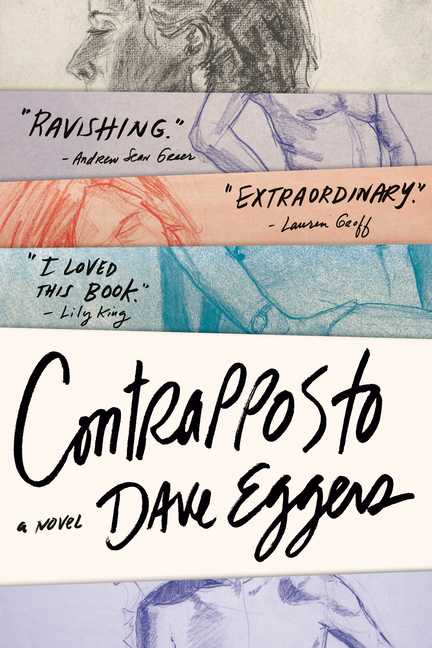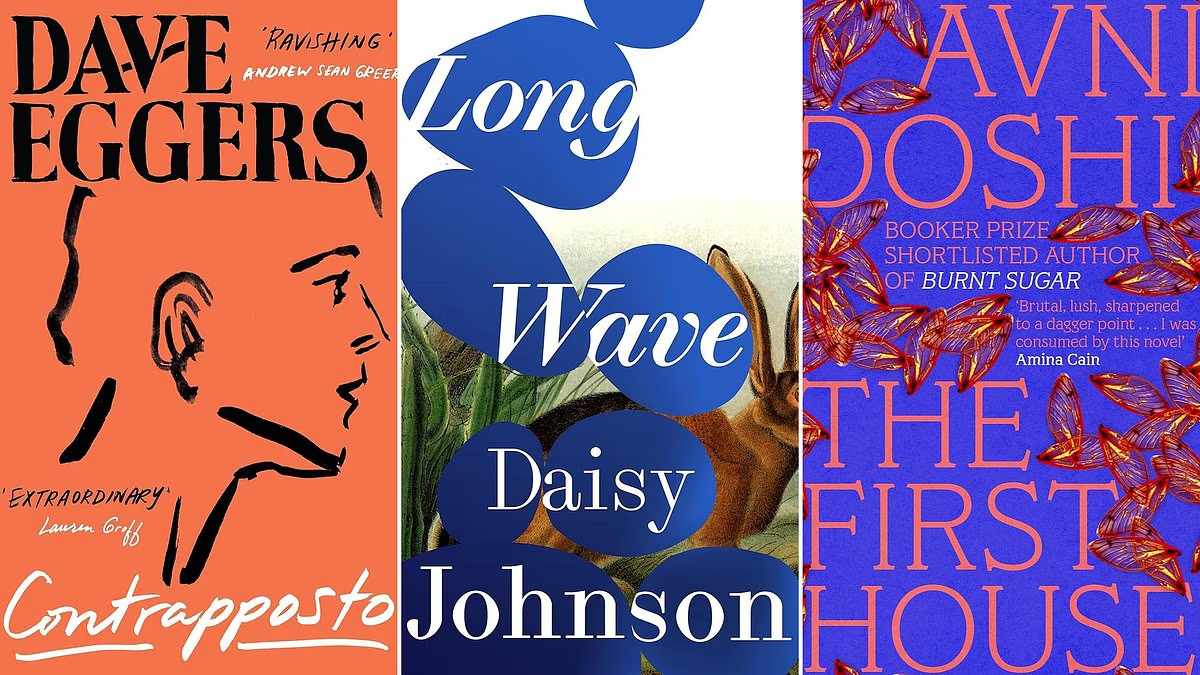
Contrapposto Author: Dave Eggers ISBN-13: 978 1 83726 680 7 Publisher: CanongateGuideline Price: £20; 423ppContrapposto, Dave Eggers’ latest offering, is a story about a poor boy, Cricket, who wants to be an artist. As it follows Cricket over six decades – through cancer and war, from Philadelphia to Phuket and Paris, the novel ponders art: what it means, the price we should put on it and the role it plays in our humaneness. It’s a profoundly earnest, funny, and sexy read, one that wears its considerably-sized heart on its sleeve. It’s the kind of book where a character gallops into a gallery roaring, “Beauty needs no explanation!” Cricket’s mother is diffident, his grandfather is dead, and he’s from a “flat little town” in Indiana. Indeed, the very ordinariness of his plight seems aligned against him: “He was a rat, a raccoon – a common thing.” But Cricket is dazzlingly accomplished, blessed with an “innocent eye” – vulnerable, imaginative – that lets him “see the world … anew.” However, much like Contrapposto, he’s old-fashioned. His adherence to figures, technique and colour may prove problematic to current, pretentious artistic tastes. Characters are more vivid than life, their heroic qualities and flaws ablaze. À la Dickens, Cricket’s quasi-orphan is shepherded by father figures: a prophetic, chain-smoking professor; an after-school boss. Tender gestures make our throats catch, like his boss noticing when Cricket gets his braces off, or later, giving him a car for college. Olympia, Cricket’s lifelong love and best friend, is precocious and privileged (her stepfather gives her a gallery), and with her name and “thunderclap” laugh, she’s practically divine, bursting into Cricket’s life at intervals like a visitation. But she’s no mere manic-pixie muse, for Olympia is a genius at recognising talent and supplying the spin. The first painting she urges 12-year-old Cricket to paint is a dead weasel; its face “eerily human” because it’s Cricket’s awful stepdad. Cricket may paint (and adore) her, but Olympia, just as ardently, wants him as her masterpiece. She wants to curate him.Eggers, a classically trained artist (most of the drawings in the book are his), evokes the excitement that making – and seeing – art engenders. What’s more, he imagines a number of artworks and conveys them through his words alone. His fictional art is so cleverly, comprehensively described – a “Bedrooms of the Dead” installation on a canal barge, a painting of a “great, caterwauling sky” – that even while we long to see it, we feel as if we have. Visual art is notoriously difficult to articulate, but Eggers has not only done it, he’s also coupled it with the other impossible-to-express thing that is pure, unabashed feeling. The result fills us with wonder. Mei Chin is a writer from New York City living in Dublin
Contrapposto by Dave Eggers: A profoundly earnest, funny and sexy read
Author expresses an unusual and emotive quality in this novel – pure, unabashed feeling
464 words~2 min read