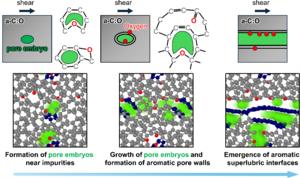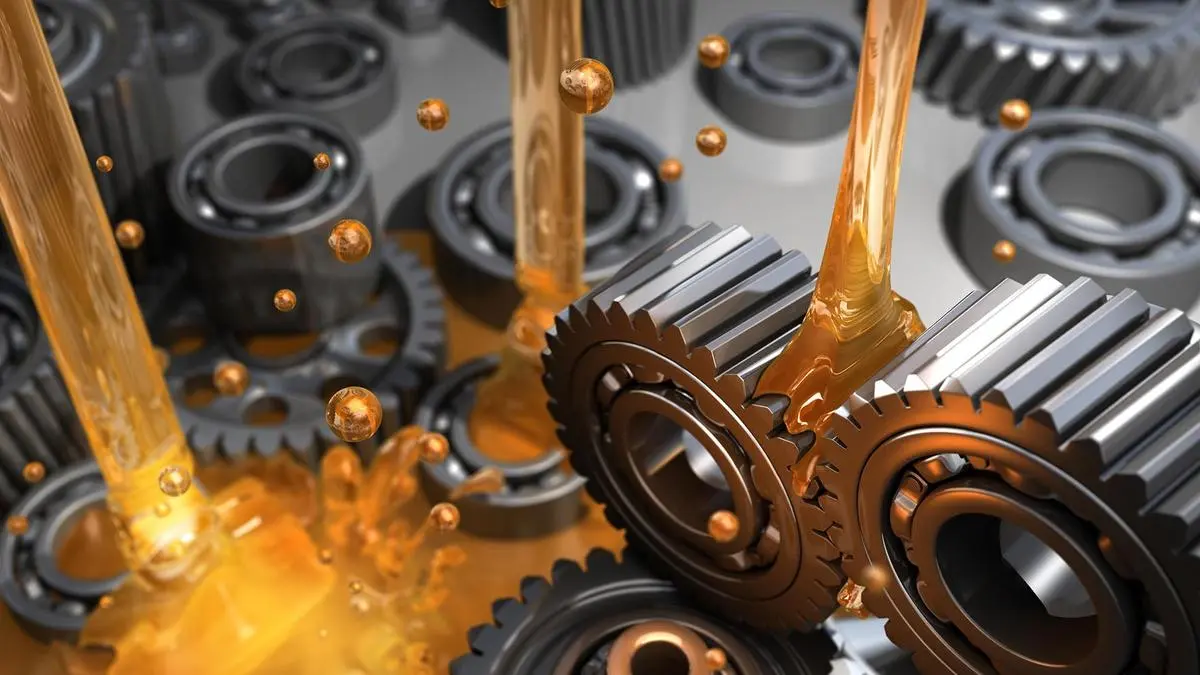
Scientists have shown, for the first time, that borophene — an ultra-thin, two-dimensional nanomaterial — can be used as an effective additive to improve the performance of castor oil as a lubricant. The discovery could help develop greener lubricants for industries such as renewable energy, marine transport and sustainable manufacturing.Researchers at the Institute of Advanced Study in Science and Technology (IASST), Guwahati, found that adding a tiny amount of borophene — 0.1 per cent by weight — to castor oil can significantly improve its performance. The modified oil reduced friction by about 42 per cent, compared with ordinary castor oil.The research was carried out under the guidance of Prof Devasish Chowdhury, with INSPIRE senior research fellow Ujjibit Boruah as the first author. The findings could lead to the development of environment friendly lubricants that make machines run more efficiently, reduce damage and lower energy consumption.“Two-dimensional materials have attracted huge interest because of their unique properties. Borophene, in particular, has shown promise in areas such as batteries, supercapacitors and fuel cells. However, its use as a lubricant additive had not been explored until now,” said Prof Chowdhury.The researchers found that borophene mixes evenly with castor oil without needing any chemical treatment. When the lubricant is used inside machines, the borophene particles help form a thin protective layer, called tribofilm, on metal surfaces. This layer contains iron oxides, carbon-based compounds and boron compounds. It reduces friction between moving surfaces, allows machines to handle higher loads and protects against wear.Next-gen battery electrodeResearchers in India have developed a new organic electrode material that could help accelerate the development of sodium-ion batteries, a promising alternative to lithium-ion batteries for largescale energy storage.As demand for batteries grows for electric vehicles, renewable energy storage and electronic devices, researchers worldwide are looking for alternatives to lithium, which faces challenges related to cost, supply chains and resource availability. Sodium, in contrast, is widely available, making sodium-ion batteries an attractive option.A joint team from the Indian Association for the Cultivation of Science (IACS) and SN Bose National Centre for Basic Sciences (SNBNCBS), Kolkata, has developed a new covalent organic framework (COF) material that can store sodium ions efficiently.The team, led by Dr Urmimala Maitra of IACS and Dr Pradip Pachfule of SNBNCBS, designed the porous organic material to allow charged ions to move easily while maintaining structural stability during repeated charging and discharging.When tested in battery cells, the material demonstrated good energy storage performance and its ability to work as an electrode for sodium-ion batteries. The material also performs well in lithium-ion batteries, enabling rapid charging, with the laboratory cell reaching 80 per cent charge in just over one minute.The material’s porous structure provides pathways through which ions can travel quickly, while its stable chemical framework helps prevent degradation during cycling. This combination of rapid ion transport and durability is a key challenge in designing next-generation battery electrodes.The study highlights how molecular-level design of organic materials can help overcome some of the limitations of sodium-ion batteries, which currently lag lithium-ion batteries in energy density and commercial maturity.Published on July 27, 2026
Additive steps up lubrication
Discover how borophene enhances castor oil's lubricating properties, paving the way for greener, more efficient lubricants.
511 words~2 min read