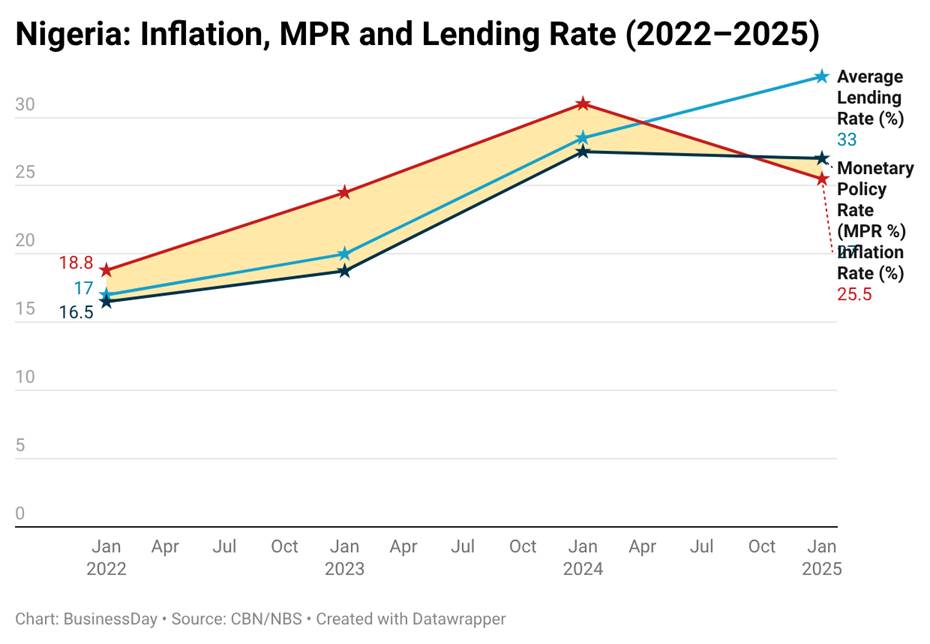
Two contentious economic policy factors dominated discussion in the past week. The Monetary Policy Committee of the Central Bank retained the benchmark interest rate at 26.5 per cent and other monetary policy variables like the cash reserve ratio, liquidity ratio, and the Asymmetric corridor, which was retained at +50/-40 basis points around the monetary policy rate. The second policy factor has to do with some irregularities with the annual budget of the federal government. Let us discuss each of these issues in sequence,
The benchmark interest rate of 26.5 per cent remains a contentious issue because of its implications for borrowing or the cost of credit to customers, particularly private sector investors. The high interest rate is expected to prevent borrowers from obtaining credit from the banks and, by implication, reduce the money supply in the economy. A reduction in money supply would prevent inflation. According to the central bank, there is too much money in the economy, and there is a need to reduce it or keep it from growing. The Bank believes that earlier retention of the high rate has prevented the inflation rate from rising. But there is more to the inflation rate in Nigeria than monetary factors.