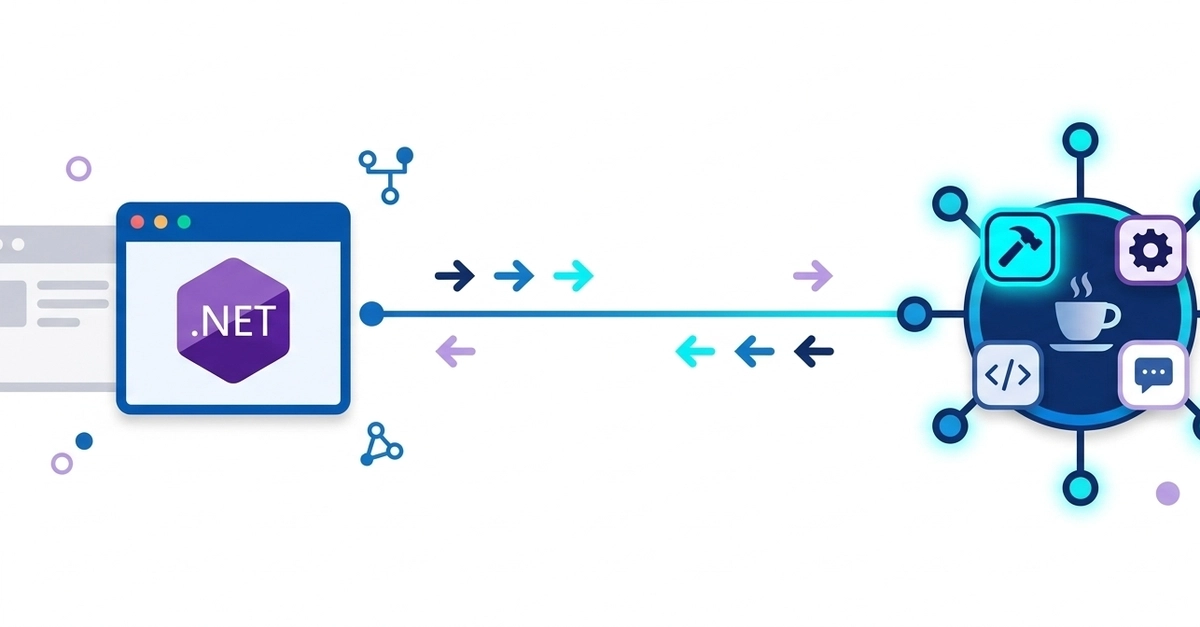
We've built servers, clients, tools, auth, and governance across this series — all in C#, without ever slowing down to look at how the .NET tooling makes it pleasant. This part does. If your backend is already .NET, an MCP server turns out to be one of the highest-leverage things you can build: a thin, attributed, DI-native surface over the domain services you already own.
This is Part 12 of a 15-part deep dive on Model Context Protocol (MCP). Part 3 built a production server treating C# as the vehicle; this part is about the vehicle itself — the MCP C# SDK, the attribute-to-schema model, dependency injection, the two hosting models, testing, and Native AOT.
TL;DR
Concern
Hand-rolled (before)