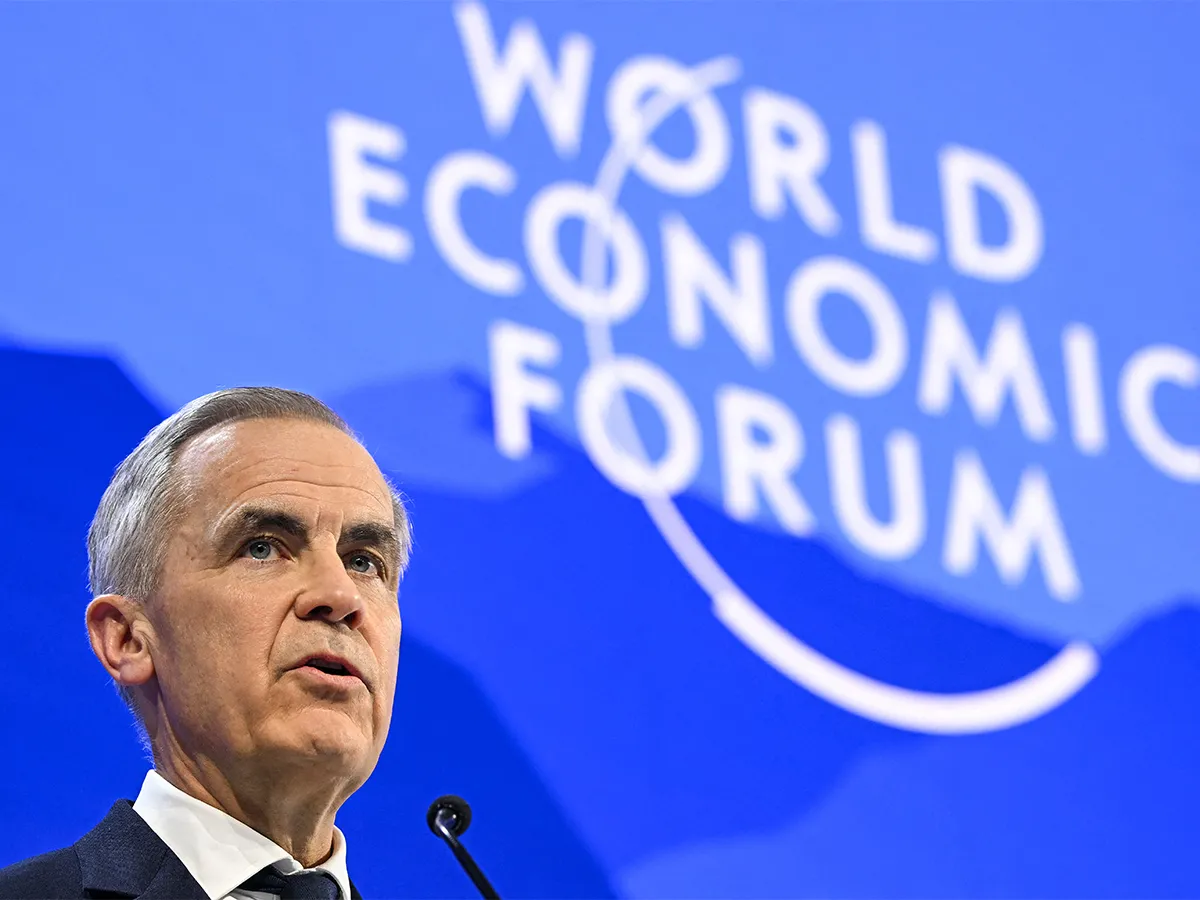
Skip to Content Subscribe Our Offers My Account Manage My Subscriptions FAQ Newsletters Canada Canadian True Crime Canadian Politics Health World Israel & Middle East Financial Post NP Comment Longreads Puzzmo Diversions Comics NP News Quiz New York Times Crossword Horoscopes Life Eating & Drinking Style Sponsored Play for Ontario Travel Travel Canada Travel USA Travel International Cruises Travel Essentials Culture Books Celebrity Movies Music Theatre Television Business Essentials Advice Lives Told Tails Told Shopping Buy Canadian Home Living Outdoor Living Kitchen & Dining Tech Style & Beauty Personal Care Entertainment & Hobbies Gift Guide Travel Guide Amazon Prime Day Deals Savings National Post Store More Sports Hockey Baseball Basketball Football Soccer Golf Tennis Driving Vehicle Research Reviews News Gear Guide Obituaries Place an Obituary Place an In Memoriam Classifieds Place an Ad Celebrations Working Business Ads Archives Healthing Epaper Manage Print Subscription Profile Settings My Subscriptions Saved Articles My Offers Newsletters Customer Service FAQ Newsletters Canada World Financial Post NP Comment Longreads Puzzmo Diversions Life Shopping Epaper Manage Print Subscription HomeNP CommentIrwin Cotler: What happened to Carney's Davos call for principled, pragmatic foreign policy?In some respects, the government has followed through on the PM's speech. In other respects however, it has been neither principled or pragmaticLast updated 13 minutes ago You can save this article by registering for free here. Or sign-in if you have an account.Prime Minister Mark Carney speaks at the World Economic Forum (WEF) annual meeting in Davos on Jan. 20, 2026. Irwin Cotler writes that while the Canadian government has followed through in some respects on Carney's call for principled, pragmatic foreign policy, it has failed in other respects, particularly with regards to China, Sudan and the Middle East. Photo by Fabrice COFFRINI / AFP via Getty ImagesOn Jan. 20, 2026, Mark Carney delivered a speech at Davos that was deservedly lauded around the world. The prime minister’s address struck a chord both domestically and globally, for two primary reasons.Enjoy the latest local, national and international news.Exclusive articles by Conrad Black, Barbara Kay and others. Plus, special edition NP Platformed and First Reading newsletters and virtual events.Unlimited online access to National Post.National Post ePaper, an electronic replica of the print edition to view on any device, share and comment on.Daily puzzles including the New York Times Crossword.Support local journalism.Enjoy the latest local, national and international news.Exclusive articles by Conrad Black, Barbara Kay and others. Plus, special edition NP Platformed and First Reading newsletters and virtual events.Unlimited online access to National Post.National Post ePaper, an electronic replica of the print edition to view on any device, share and comment on.Daily puzzles including the New York Times Crossword.Support local journalism.Create an account or sign in to continue with your reading experience.Access articles from across Canada with one account.Share your thoughts and join the conversation in the comments.Enjoy additional articles per month.Get email updates from your favourite authors.Create an account or sign in to continue with your reading experience.Access articles from across Canada with one accountShare your thoughts and join the conversation in the commentsEnjoy additional articles per monthGet email updates from your favourite authorsSign In or Create an AccountorFirst, he was clear-eyed and candid about the evolving global landscape, in which international institutions are being corroded and even our greatest allies can become unreliable and coercive.Second, he put forth a vision for how intermediate powers such as Canada should proceed in this new scenario that was, in his own words, both “principled and pragmatic.”The National Post newsletter that doesn’t hold back, giving readers the unvarnished truth on media, politics and culture.By signing up, you consent to receive the above newsletter from Postmedia Network Inc.A welcome email is on its way. If you don't see it, please check your junk folder.The next issue of Right? will soon be in your inbox.We encountered an issue signing you up. Please try againWe now mark six months since the Davos speech.In some respects, the Carney government has followed through on the principled and pragmatic foreign policy vision that he set forth.Canada has deepened its ties with the European Union, becoming the first non-European nation to join the EU’s Security Action for Europe (SAFE) initiative, and Prime Minister Carney was the first non-European leader to attend the European Political Community Summit.Canada hit its two per cent NATO defence spending target for the first time in several decades, signalling our willingness to contribute to the alliance and to the defence of democracy worldwide.The Carney government has also successfully enhanced relations with three key democratic allies in the Indo-Pacific: India, Japan and Australia.These represent meaningful strides towards diversifying Canada’s economic, trade and security relationships while also positioning Canada as a key member of the community of democracies — a pragmatic foreign policy that does not sacrifice our nation’s principles.In other ways, however, the Carney government has strayed from either the principled, the pragmatic, or in some cases, both.First, the prime minister has embarked on a détente with China. While engaging with one of the world’s biggest economies certainly satisfies the pragmatic side of the equation, China is also one of the world’s foremost violators of the principles Carney listed at Davos, namely human rights — including the ongoing Uyghur genocide; domestic and transnational repression; arbitrary detention of political prisoners; and the violation of territorial integrity — and the occupation of Tibet, menacing of Taiwan, expansionism in the South China Sea, and repression of Hong Kong.Carney should be wary not to replace the lesser evil of Donald Trump’s America, a democracy (albeit with growing authoritarian tendencies), with the greater evil of Xi Jinping’s China, one of the world’s most repressive autocracies.At a bare minimum, Canada’s re-engagement with China should be conditional on Beijing ceasing its transnational repression in Canada and releasing all Canadian political prisoners it continues to hold, including Canadian citizen Huseyin Celil. Canada should also affirm its position on the sovereign inviolability of Taiwan, and advocate against China’s repressive policies in Tibet, Hong Kong, and in China writ large.Second, in his speech at Davos and since, Prime Minister Carney emphasized the importance of human rights as underpinning a “values-based” foreign policy for Canada, yet his government has, regrettably, not meaningfully addressed many of the major human rights crises unfolding in the world today, and has thereby failed to maintain a principled foreign policy.Accordingly, while weighing in on the war between the Islamic Republic of Iran and the United States and Israel, the Canadian government has effectively ignored the continued plight of the Iranian people, whose brutal repression (including the massacre of an estimated 40,000 civilians in two days on Jan. 7 and 8, 2026) helped ignite the war. Canada’s priority should be supporting the Iranian people in their efforts to build a free Iran.Canada has also been absent in responding to the largest humanitarian catastrophe unfolding in the world today — the horrific genocidal campaign by the Rapid Support Forces (RSF) in Sudan. If the Carney government is truly committed to human rights, it should impose targeted sanctions against the perpetrators and enablers of the atrocities in Sudan, and support efforts to seek accountability before international courts.Third and finally, the Carney government’s most significant foreign policy failure — where it has been neither principled nor pragmatic — is in the Middle East. This is best demonstrated by examining the government’s embrace of Qatar (as well as, most recently, Turkey and Saudi Arabia) while it shuns Israel.Qatar is one of the world’s most egregious human rights violators. It is a dictatorship with a population of approximately three million people, 91 per cent of whom are foreign migrant workers who are denied citizenship and any basic rights through the apartheid-like Kafala system. It ranks fifth globally for modern-day slavery, systematically discriminates against women, LGBTQ+ and religious minorities, and imposes stringent restrictions on freedom of expression and religion. Its economy is primarily based on oil and gas.Israel is a democracy of approximately 10 million people. It has an independent judiciary, a fiercely independent press, rule of law, and engaged civil society. It is a global leader in technology, innovation science and medicine — including having the most unicorns per capita (private startups that reach a valuation of over US$1B) and the highest research and development expenditure as a percentage of GDP.Like any democracy (including Canada), Israel is imperfect, but it is a natural choice for Canada to partner with in the region — both from a principled perspective (liberal democracy) and from a pragmatic perspective (economic, technological and scientific powerhouse).And yet, due to a deeply entrenched and growing global institutional antisemitic bias against Israel, the Carney government has chosen to partner with a theocratic dictatorship that leads the world in slavery over a democracy that leads the world in high-tech startups. This choice is neither principled nor pragmatic.Prime Minister Carney still has a lot of time to make the vision he set out at Davos a reality. In order to do so, he and his government must avoid embracing repressive autocracies as a replacement for flawed democracies, must be principled and consistent in their approach to human rights, and must eschew global biases that result in a foreign policy that is neither principled nor pragmatic.National PostIrwin Cotler is the International Chair of the Raoul Wallenberg Centre for Human Rights and former Minister of Justice and Attorney General of Canada. Join the Conversation This website uses cookies to personalize your content (including ads), and allows us to analyze our traffic. Read more about cookies here. By continuing to use our site, you agree to our Terms of Use and Privacy Policy.
Irwin Cotler: What happened to Carney's Davos call for principled, pragmatic foreign policy?
In some respects, the government has followed through on PM's speech. In other areas however, it has been neither principled nor pragmatic
1,594 words~7 min read