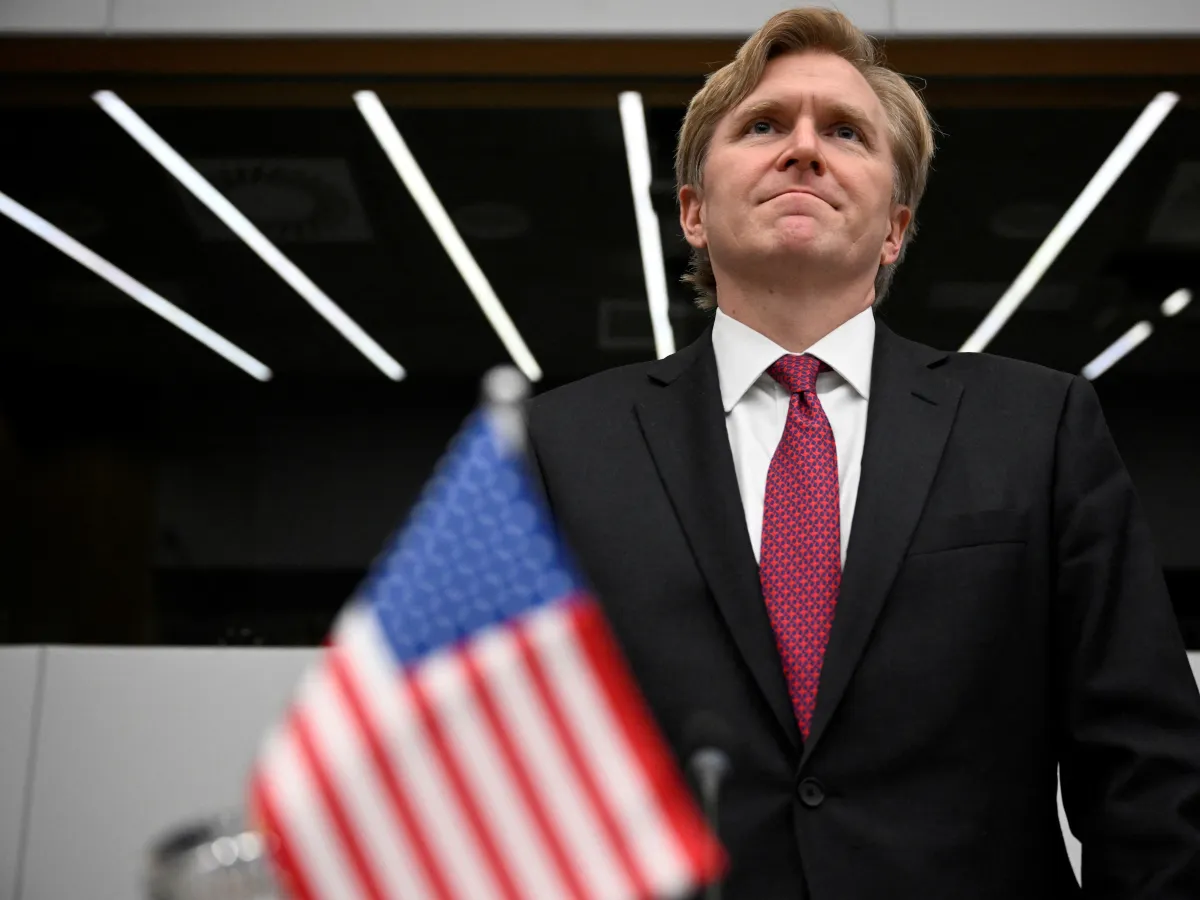
Skip to Content Subscribe Our Offers My Account Manage My Subscriptions FAQ Newsletters Canada Canadian True Crime Canadian Politics Health World Israel & Middle East Financial Post NP Comment Longreads Puzzmo Diversions Comics NP News Quiz New York Times Crossword Horoscopes Life Eating & Drinking Style Sponsored Play for Ontario Travel Travel Canada Travel USA Travel International Cruises Travel Essentials Culture Books Celebrity Movies Music Theatre Television Business Essentials Advice Lives Told Tails Told Shopping Buy Canadian Home Living Outdoor Living Kitchen & Dining Tech Style & Beauty Personal Care Entertainment & Hobbies Gift Guide Travel Guide Amazon Prime Day Deals Savings National Post Store More Sports Hockey Baseball Basketball Football Soccer Golf Tennis Driving Vehicle Research Reviews News Gear Guide Obituaries Place an Obituary Place an In Memoriam Classifieds Place an Ad Celebrations Working Business Ads Archives Healthing Epaper Manage Print Subscription Profile Settings My Subscriptions Saved Articles My Offers Newsletters Customer Service FAQ Newsletters Canada World Financial Post NP Comment Longreads Puzzmo Diversions Life Shopping Epaper Manage Print Subscription HomeNP CommentColby Cosh: America told 'middle powers' to step it up and is now angry they didThe under-secretary of war launched a direct attack against Carney’s talk of pragmatic detachment from an increasingly unreliable U.S.Last updated 6 days ago You can save this article by registering for free here. Or sign-in if you have an account.U.S. Under Secretary of War for Policy Elbridge Colby Photo by JOHN THYS/AFPDo you suppose it’s a sign of Twitter/X’s continued indispensability that the American government is communicating foreign-policy doctrine on the bird site? Or is the U.S. under-secretary of war using lowly Twitter to criticize Canada’s prime minister as a gesture of snide contempt? On Tuesday, Elbridge Colby, President Donald Trump’s top policy architect in the re-branded Department of Defence, tweeted out a multi-tweet retort to what he describes as “current hubbub about a collective ‘middle powers’ strategy.” There can’t be any possible confusion about who he’s addressing here: this is a direct, if belated, reaction to Prime Minister Mark Carney’s talk of pragmatic, co-ordinated international detachment from an increasingly unreliable United States.Enjoy the latest local, national and international news.Exclusive articles by Conrad Black, Barbara Kay and others. Plus, special edition NP Platformed and First Reading newsletters and virtual events.Unlimited online access to National Post.National Post ePaper, an electronic replica of the print edition to view on any device, share and comment on.Daily puzzles including the New York Times Crossword.Support local journalism.Enjoy the latest local, national and international news.Exclusive articles by Conrad Black, Barbara Kay and others. Plus, special edition NP Platformed and First Reading newsletters and virtual events.Unlimited online access to National Post.National Post ePaper, an electronic replica of the print edition to view on any device, share and comment on.Daily puzzles including the New York Times Crossword.Support local journalism.Create an account or sign in to continue with your reading experience.Access articles from across Canada with one account.Share your thoughts and join the conversation in the comments.Enjoy additional articles per month.Get email updates from your favourite authors.Create an account or sign in to continue with your reading experience.Access articles from across Canada with one accountShare your thoughts and join the conversation in the commentsEnjoy additional articles per monthGet email updates from your favourite authorsSign In or Create an AccountorColby’s message is: this won’t work. He highlights the inherent productivity and technological supremacy of the American military-industrial complex, and suggests that “no alternative country or countries can compete with the U.S. defence industrial base, either in quantity or quality.” Colby, who wears the label of foreign-policy “realism” like a sheriff’s badge, advises the other countries in the free world that they must not squander “time, money and political capital” on greater military independence from the U.S. — while emphasizing, in this and other settings, that America is now being governed on gol-durned America-first principles and is finished being the chief guarantor against threats to the sovereignty of distant democracies.The National Post newsletter that doesn’t hold back, giving readers the unvarnished truth on media, politics and culture.By signing up, you consent to receive the above newsletter from Postmedia Network Inc.A welcome email is on its way. If you don't see it, please check your junk folder.The next issue of Right? will soon be in your inbox.We encountered an issue signing you up. Please try againHonestly, nothing could be better designed to make one see the merits in Carney’s otherwise non-specific and perhaps questionably practical grand strategy. Tapping the “realism” sign, Colby attests that “middle powers don’t have a coherent basis for alignment.” This might be mistaken for an appeal to political values, or shared ideals, but it immediately follows a claim of hard-nosed and unromantic selfishness: “we view the international scene through the prism of interest, geography, economics, military power, etc.”Colby writes that “Under President Trump’s leadership, countries not only see the value of American engagement, they can no longer take it for granted.” But isn’t that sort of the same claim that underpins Carney’s strategic philosophy, such as it is? Yeah, pal, we know we can no longer take the U.S.’s Atlanticist foreign-policy orientation for granted: it’s been beaten to hell and back by, among other intellectuals, Elbridge Colby. That’s why liberal-democratic “middle powers” in Europe and Asia probably do need to co-operate more, invest more in their own defence bases and behave as if we may need to deter collectively against Russia, China and other possible threats, without presumptive leadership or even participation from the United States.Colby catcalls the “middle powers” for thinking they can compete with the United States, but this seems a little like missing the point — if the real goal of the Carney Doctrine is for the middle powers to be able to act in concert without the United States. No, we do get it, Mr. Colby: you’re the spokesman for the acknowledged global hegemon, and our own sovereignty probably does depend on whatever is left of anti-imperialist, properly republican sentiment in the American electorate. In short, on American goodwill.It is not so much that we think we can build a global alliance capable of fettering the United States, but that we should be able to defend some shreds of international order and political liberalism on our own — to help protect eastern (and western) Europe from Russia, or Japan and Korea from China, without American help or extreme dependence on American arms or any presumption of American friendship.After all, how the hell else are we to react to what Colby dismisses as “alleged frustrations with the United States”? Just the other day I must have spent a couple of hours reading about the U.S.’s corrupt revision of the deal over the Gordie Howe bridge, and about the bizarre possibility that Canadians driving Chinese electric cars might be turned aside at the U.S. border. The frustrations are pouring down on our heads like the monsoon: ordinary neighbourliness is already something we have learned not to take for granted, though we would welcome its eventual return.Get more Colby Cosh, subscribe to the NP Platformed newsletter. Join the Conversation This website uses cookies to personalize your content (including ads), and allows us to analyze our traffic. Read more about cookies here. By continuing to use our site, you agree to our Terms of Use and Privacy Policy.
Colby Cosh: America told 'middle powers' to step it up and is now angry they did
The under-secretary of war launched a direct attack against Carney’s talk of pragmatic detachment from an increasingly unreliable U.S.
1,217 words~6 min read