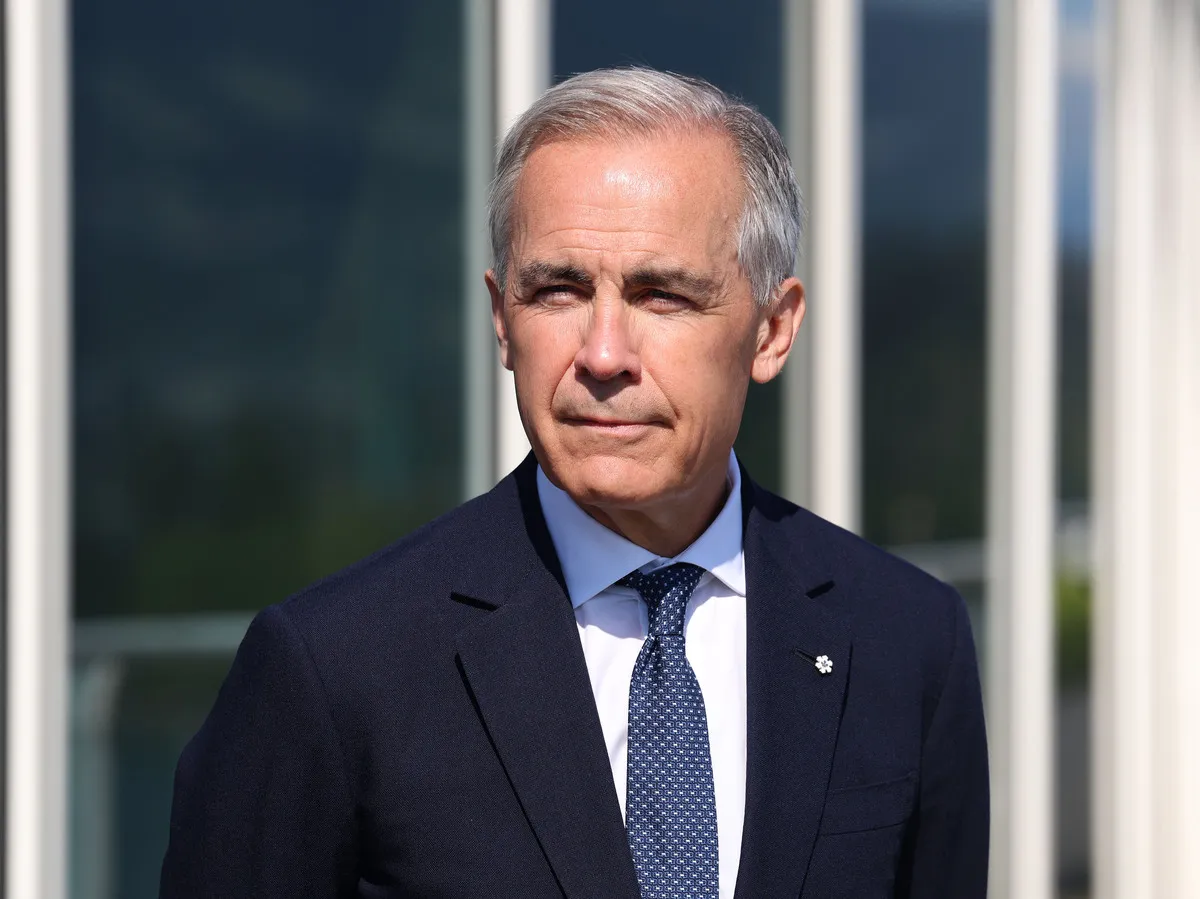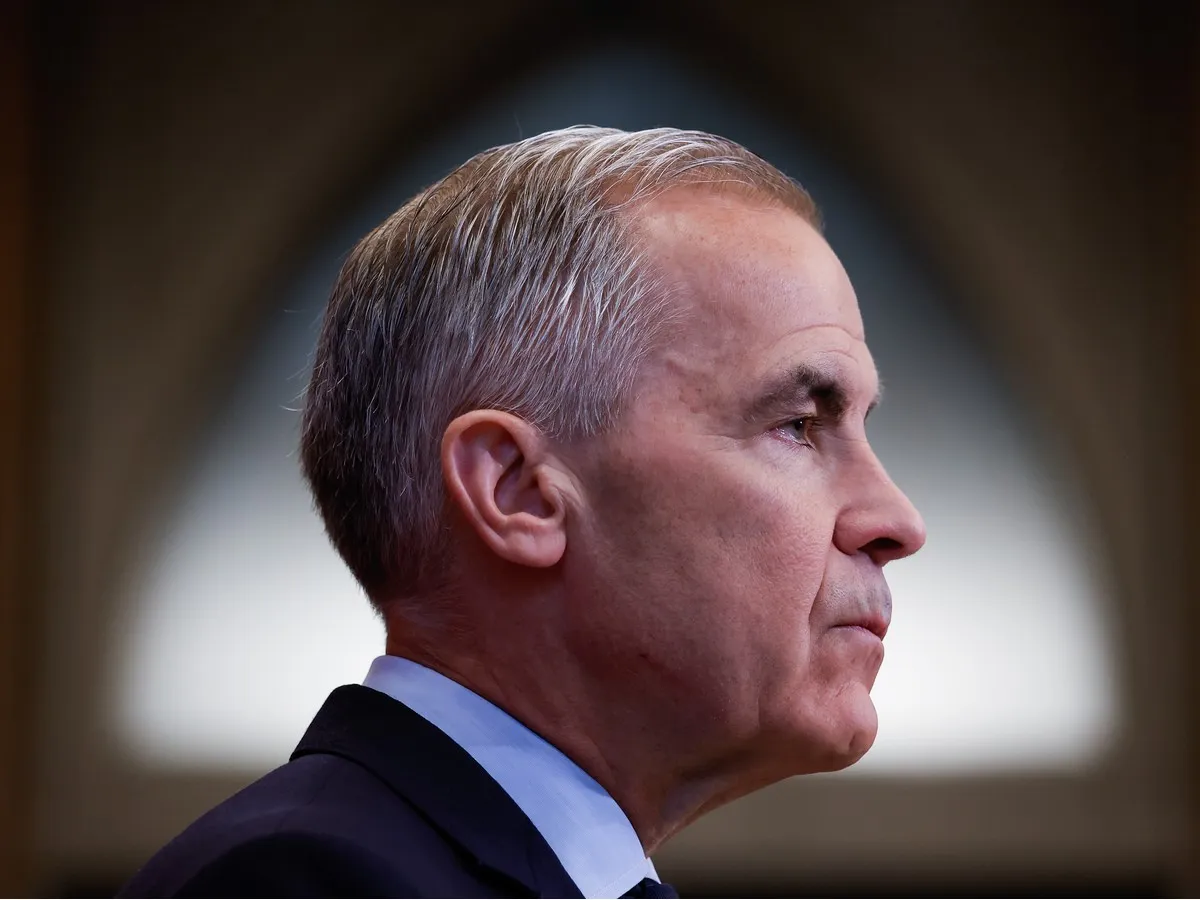
Skip to Content Subscribe Our Offers My Account Manage My Subscriptions FAQ Newsletters Canada Canadian True Crime Canadian Politics Health World Israel & Middle East Financial Post NP Comment Longreads Puzzmo Diversions Comics NP News Quiz New York Times Crossword Horoscopes Life Eating & Drinking Style Sponsored Play for Ontario Travel Travel Canada Travel USA Travel International Cruises Travel Essentials Culture Books Celebrity Movies Music Theatre Television Business Essentials Advice Lives Told Tails Told Shopping Buy Canadian Home Living Outdoor Living Tech Style & Beauty Kitchen & Dining Personal Care Entertainment & Hobbies Gift Guide Travel Guide Deals Savings National Post Store More Sports Hockey Baseball Basketball Football Soccer Golf Tennis Driving Vehicle Research Reviews News Gear Guide Obituaries Place an Obituary Place an In Memoriam Classifieds Place an Ad Celebrations Working Business Ads Archives Healthing Epaper Manage Print Subscription Profile Settings My Subscriptions Saved Articles My Offers Newsletters Customer Service FAQ Newsletters Canada World Financial Post NP Comment Longreads Puzzmo Diversions Life Shopping Epaper Manage Print Subscription HomeNP CommentAvi Benlolo: Carney has no moral clarity on Israel-PalestineJust look at how he speaks to Mahmoud Abbas compared to Isaac HerzogLast updated 8 hours ago You can save this article by registering for free here. Or sign-in if you have an account.Prime Minister Mark Carney participates in a press conference announcing the proposed National Electricity Strategy at the West Block on Parliament Hill in Ottawa on Thursday, May 14, 2026. Photo by HYUNGCHEOL PARK /PostmediaSome of us are genuinely working toward peace and bridge-building between faith groups, including Jews and Muslims. Case in point, this week, we discussed the expansion of The Abraham Accords at our annual fundraiser with UAE-based Loay Alshareef and Israel-based Fleur Hassan-Nahoum. Two weeks ago, I spoke on a panel discussion about improving Muslim-Jewish relations alongside my friend Raheel Raza, a Muslim leader.Enjoy the latest local, national and international news.Exclusive articles by Conrad Black, Barbara Kay and others. Plus, special edition NP Platformed and First Reading newsletters and virtual events.Unlimited online access to National Post.National Post ePaper, an electronic replica of the print edition to view on any device, share and comment on.Daily puzzles including the New York Times Crossword.Support local journalism.Enjoy the latest local, national and international news.Exclusive articles by Conrad Black, Barbara Kay and others. Plus, special edition NP Platformed and First Reading newsletters and virtual events.Unlimited online access to National Post.National Post ePaper, an electronic replica of the print edition to view on any device, share and comment on.Daily puzzles including the New York Times Crossword.Support local journalism.Create an account or sign in to continue with your reading experience.Access articles from across Canada with one account.Share your thoughts and join the conversation in the comments.Enjoy additional articles per month.Get email updates from your favourite authors.Create an account or sign in to continue with your reading experience.Access articles from across Canada with one accountShare your thoughts and join the conversation in the commentsEnjoy additional articles per monthGet email updates from your favourite authorsSign In or Create an AccountorThat sentiment — an effort to help make peace — is strikingly different from the readouts following Prime Minister Mark Carney’s calls with Palestinian Authority President Mahmoud and Israeli President Isaac Herzog. Contrasted side by side, the readouts reveal more than traditional diplomatic speak. They demonstrate a troubling imbalance of tone, respect, and a lack of moral clarity.This newsletter from NP Comment tackles the topics you care about. (Subscriber-exclusive edition on Fridays)By signing up you consent to receive the above newsletter from Postmedia Network Inc.We encountered an issue signing you up. Please try againGiven the fact Abbas is in his 21st year as president of a four-year elected term, it’s difficult to comprehend how the readout of Canada’s conversation says, “The prime minister welcomed the measures taken by the Palestinian Authority to strengthen accountability, governance, and democratic institutions.” Our government continues to prop up and reinforce a non-democratic, tyrannical regime — although it insisted “Hamas can play no part.” Phew!Israel itself is a staunch and like others, messy, democracy. Democracies should hold allies to high standards. But these days, one wonders who Canada considers more of an ally — the Israelis or the Palestinians? The differences between these two statements are difficult to ignore for its choice of words such as “appalling” and “unacceptable” for Israel and “deep concern” and “opposition to Israeli settlement” for the Palestinians.The readout about Israel was not an attempt to help build peace in the region. It was not one of an allied partnership. It was an admonishment, as if Canada was entitled on some higher moral plane to do so despite our treatment of our First Nations and rabid antisemitism. Yes, Canada’s readout reaffirmed “Canada’s support for Israel’s security and its right to self-defence.” But this was washed away in the readout with severe rhetoric about the flotilla incident, settlement expansion and humanitarian issues in Gaza and Lebanon.How about Canada offering to help constructively? A readout that articulated a bridge-building conversation between leaders would be refreshing: Our prime minister could have offered Israel’s president help to bring the Palestinian Authority closer to peace. In other words, a conversation that demonstrated initiative rather than demonization and a call for “an independent investigation” (over the flotilla incident in which Canadians were shamefully involved) would be refreshing.Where there is a will there is a way. Canada can serve as a neutral mediator between the Israelis and Palestinians, bringing the two parties together at a meeting in Ottawa. It could demand the Palestinians stop incentivizing its population to commit terrorism. In keeping with our social model of pluralism, Canada can help the Palestinian Authority reform its curriculum to promote co-existence and an acceptance of Israel — the first step to a lasting peace.An abundance of demands, criticisms and moral expectations will not advance Canada’s foreign policy or its position in the Middle East. It will not help the Palestinian cause. This is especially true as Canada’s readout with Abbas is as if he is a passive observer to the conflict. He has failed to rein in Hamas, to curtail terrorism and to implement social and political reforms necessary to achieve statehood. Canada cannot “promote peace and stability in the region” or even a “two-state solution” so long as it aligns with the Palestinian victimhood narrative.To his credit, Carney did reaffirm Canada’s support for its Jewish community and the fight against antisemitism: “The leaders discussed the devastating resurgence of antisemitism around the world. The Prime Minister outlined Canada’s work through legislation and community safety funding to counter hate, to confront antisemitism with the full force of the law, and to protect Jewish communities.”Unfortunately, the rising tide of antisemitism in this country is intimately tied to our government’s harsh position on Israel. The more Israel is condemned and ridiculed, such as was the case in this readout, the more legitimacy the antisemites gain. It is a fact that since October 7, antisemitism has surged beyond measure — accounting for more than 70 per cent of hate crimes in Toronto — demonstrating the correlation between antisemitism and the Middle East conflict.It’s time for Canada to exercise restraint in language, meaning and tone when confronting Israel. Our nation can lead the path to peace and bridge-building if we begin thinking about constructive engagement. Demeaning an ally may gain votes at home but will not realize our national policies. As someone with a long career in interfaith work, there is no greater path to peace than breaking bread together. Canada must try this softer approach if it’s serious about progress.Avi Abraham Benlolo is the Chairman and CEO of The Abraham Global Peace Initiative, a Canadian think-tank. Join the Conversation This website uses cookies to personalize your content (including ads), and allows us to analyze our traffic. Read more about cookies here. By continuing to use our site, you agree to our Terms of Use and Privacy Policy.
Avi Benlolo: Carney has no moral clarity on Israel-Palestine
Just look at how he speaks to Mahmoud Abbas compared to Isaac Herzog
1,316 words~6 min read