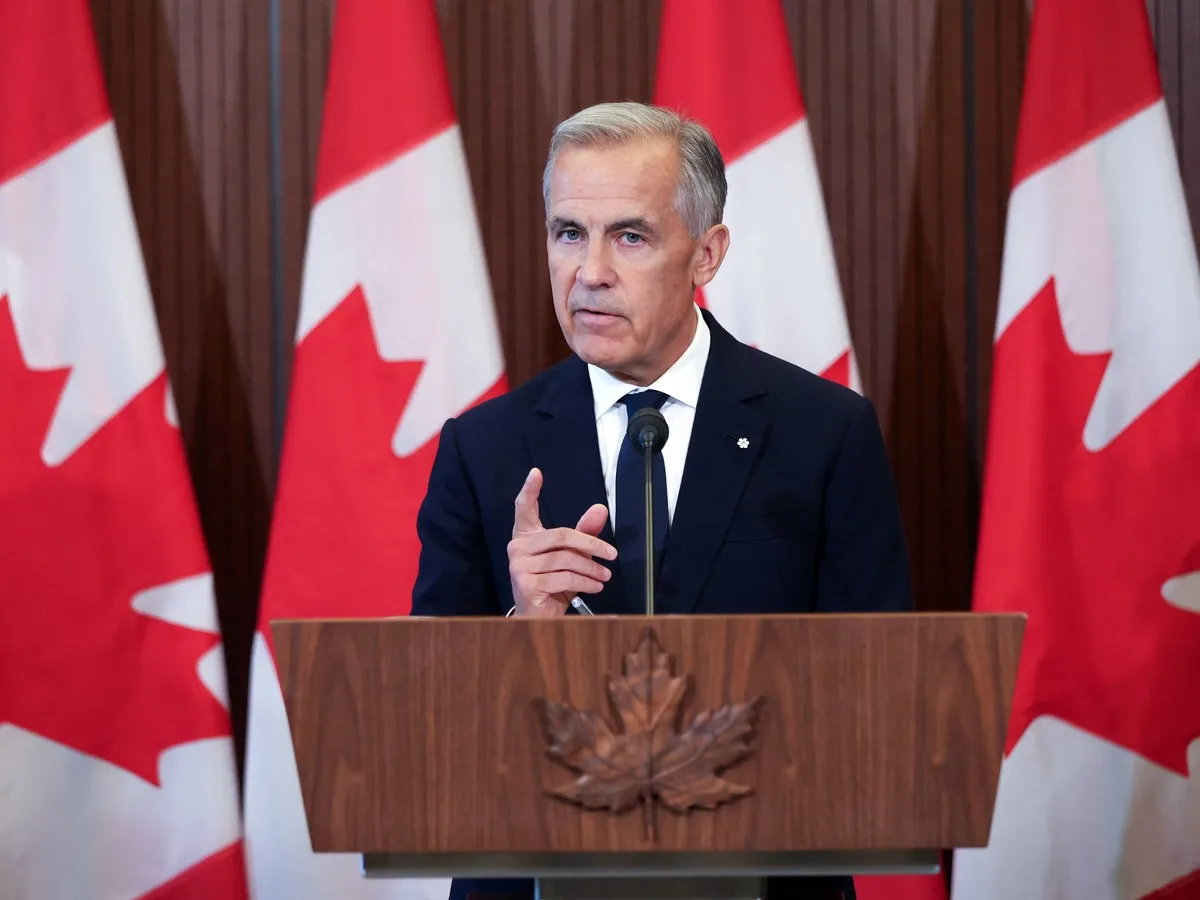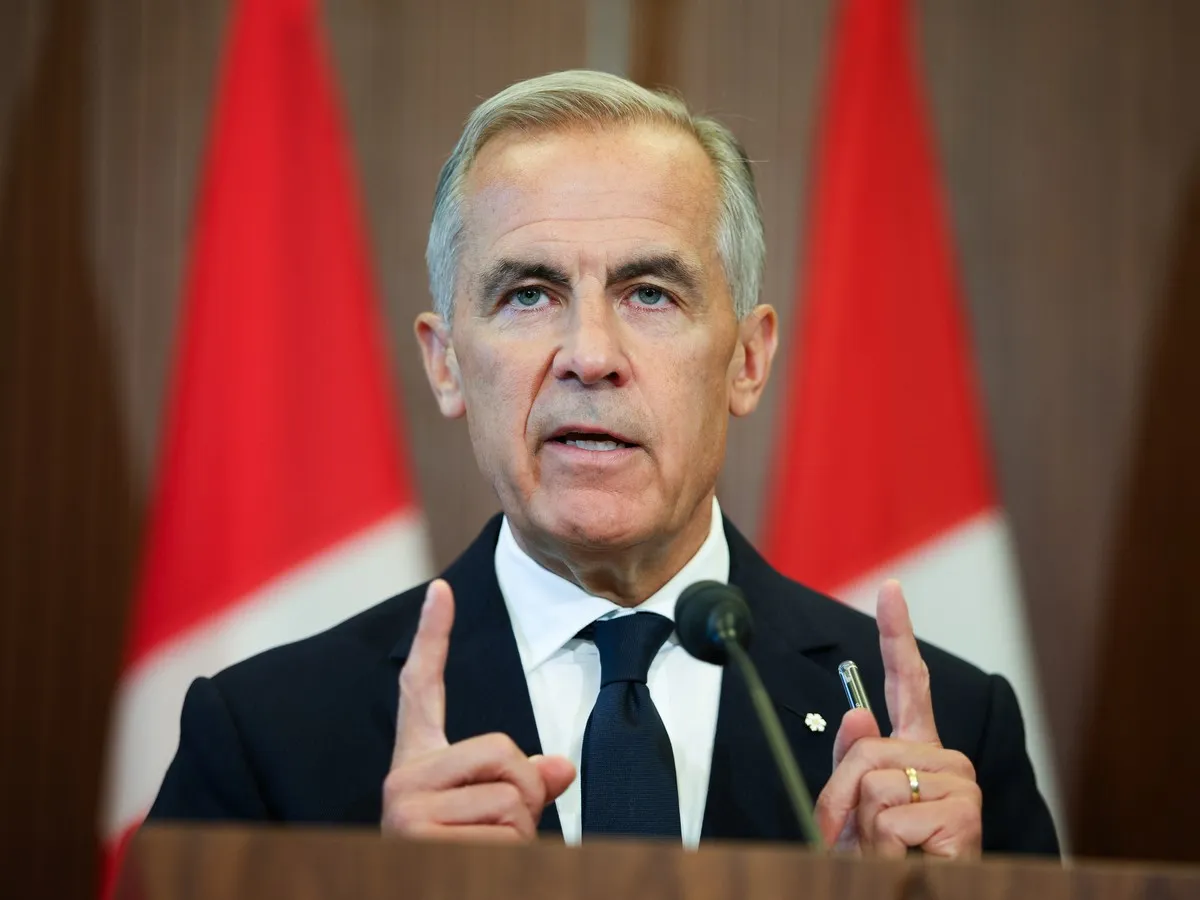
Skip to Content Subscribe Our Offers My Account Manage My Subscriptions FAQ Newsletters Canada Canadian True Crime Canadian Politics Health World Israel & Middle East Financial Post NP Comment Longreads Puzzmo Diversions Comics NP News Quiz New York Times Crossword Horoscopes Life Eating & Drinking Style Sponsored Play for Ontario Travel Travel Canada Travel USA Travel International Cruises Travel Essentials Culture Books Celebrity Movies Music Theatre Television Business Essentials Advice Lives Told Tails Told Shopping Buy Canadian Home Living Outdoor Living Kitchen & Dining Tech Style & Beauty Personal Care Entertainment & Hobbies Gift Guide Travel Guide Amazon Prime Day Deals Savings National Post Store More Sports Hockey Baseball Basketball Football Soccer Golf Tennis Driving Vehicle Research Reviews News Gear Guide Obituaries Place an Obituary Place an In Memoriam Classifieds Place an Ad Celebrations Working Business Ads Archives Healthing Epaper Manage Print Subscription Profile Settings My Subscriptions Saved Articles My Offers Newsletters Customer Service FAQ Newsletters Canada World Financial Post NP Comment Longreads Puzzmo Diversions Life Shopping Epaper Manage Print Subscription HomeNP CommentPeter Copeland: Conservatives could learn from Carney's prudent approach to policiesCarney seems content to read the room, build political capital and realize his agenda over time You can save this article by registering for free here. Or sign-in if you have an account.On Wednesday evening, Prime Minister Mark Carney will leave the NATO summit in Turkey and head to Saudi Arabia, the first visit by a Canadian prime minister in 26 years. Photo by Blair Gable /Photo by Blair Gable / PostmediaCanadian conservatives have been eager to cast Prime Minister Mark Carney as ideologically akin to his predecessor, Justin Trudeau, except with a bankers’ résumé and economic acumen. But two years on, this line of attack just doesn’t withstand scrutiny.Enjoy the latest local, national and international news.Exclusive articles by Conrad Black, Barbara Kay and others. Plus, special edition NP Platformed and First Reading newsletters and virtual events.Unlimited online access to National Post.National Post ePaper, an electronic replica of the print edition to view on any device, share and comment on.Daily puzzles including the New York Times Crossword.Support local journalism.Enjoy the latest local, national and international news.Exclusive articles by Conrad Black, Barbara Kay and others. Plus, special edition NP Platformed and First Reading newsletters and virtual events.Unlimited online access to National Post.National Post ePaper, an electronic replica of the print edition to view on any device, share and comment on.Daily puzzles including the New York Times Crossword.Support local journalism.Create an account or sign in to continue with your reading experience.Access articles from across Canada with one account.Share your thoughts and join the conversation in the comments.Enjoy additional articles per month.Get email updates from your favourite authors.Create an account or sign in to continue with your reading experience.Access articles from across Canada with one accountShare your thoughts and join the conversation in the commentsEnjoy additional articles per monthGet email updates from your favourite authorsSign In or Create an AccountorCarney’s government has moved away from Trudeau-style performative and woke politics toward a more disciplined focus on sound management and social order, with outcomes that are often quite conservative. Conservatives could learn from his prudential approach and willingness to regulate where needed to protect Canada’s social fabric.Across several policy domains, Carney has been remarkably effective. Bill C-16 reinstates hundreds of currently inoperative minimum sentences in one fell swoop, kneecapping the Conservative critique. He has addressed bail and sentencing, advanced plans for a financial crime agency, strengthened border security, and reduced immigration, though not as much or as quickly as needed.The National Post newsletter that doesn’t hold back, giving readers the unvarnished truth on media, politics and culture.By signing up, you consent to receive the above newsletter from Postmedia Network Inc.A welcome email is on its way. If you don't see it, please check your junk folder.The next issue of Right? will soon be in your inbox.We encountered an issue signing you up. Please try againOn economic policy, Carney has been too willing to spend and subsidize, without making the necessary tax reforms or targeted deregulations to improve the business environment. Even so, the Major Projects Office is set to deliver an imperfect, but long-stymied pipeline deal and the One Canadian Economy Act should advance previously stalled project approvals and regulatory harmonization.Carney has also pledged to reduce the size of government over time, and his appointment of Glenn Joyal to the Supreme Court also seems prudent, given Joyal’s public criticism of judicial activism and overreach.Carney has also dealt deftly with his party’s more unreasonable elements. By allowing them to expose themselves and exit often of their own accord, he presents himself as a patient, disciplined and sound manager who won’t suffer the many fools his predecessor bequeathed him. There is still much in the Liberal party he has not shaken off, including its identity politics obsession, environmental maximalism and its awkward stances on Israel. But his philosophy is not to be found in every inherited position he has yet to reverse.The Conservatives seem stuck in an outdated ideological framing that equates unrestrained freedom of people and markets with conservatism. On lawful access — a project Stephen Harper once pursued — the party has decried it and related digital legislation as the start of a “surveillance state,” though these powers would likely prove the most effective tools for being genuinely “tough on crime.”Digital legislation, including social media regulation, has also prompted predictable cries of socialism and censorship. But age verification and digital credentials are not inherently authoritarian; governments already verify identity through passports, licences and health cards. Nor are digital platforms neutral spaces. Todays are deliberately designed to maximize and commodify attention, harming health, well-being, and even relationships and fertility. Given this, prudent regulation of social media is justified.Indeed, Carney’s track record on controversial bills is quite clever. He introduces broad versions at first, leaving much to regulation. When the bills receive pushback, they undergo amendment and often emerge in more defensible form. This is true of Bill C-9, which walked back significant expansions of the concept of hatred, blocked the “residential school denialism” addition by a rogue senate, and included greater certainty defences for good faith religious speech. Lawful access has been amended in line with proposals that balance new powers with concerns of overbreadth, and the social media bill will likely follow the same pattern.On social policy, he may yet take more substantial positions on assisted suicide and euthanasia, gender identity and family formation. These files, along with trade with the United States, Quebec secularism and separatism sentiment in Alberta, energy projects and Indigenous land and consent challenges, will reveal his true colours.So far, Carney seems content to read the room, build political capital and realize his agenda over time.Conservatives would do well to learn from Carney’s willingness to regulate in domains that threaten the social fabric but require reasonable limits on unrestrained freedom. However, they appear to be stuck in the 1980s, decrying every use of state power as socialism, every attempt to regulate digital infrastructure as censorship and every concern for social cohesion as a pretext for authoritarianism. Their latest makeover is an 80s redux: affordability on repeat, jail-not-bail public safety slogans and cheap energy — as though these remedies are sufficient for what ails us.The problems Canada, and so many other Western countries face are much deeper — organized crime, digital degeneracy and addiction, low social trust, family decline, weak common culture, collapsing state capacity, and national fragmentation and, most importantly, a God-shaped hole. They will not be solved by tax cuts and deregulation alone. They require judgment about when power should be restrained, when it must be used, and along with it, a positive cultural vision markedly distinct from what the Liberals offer.Much remains to be seen, but Carney should at least serve as a wake-up call for Conservatives, who sorely need to be roused from their dogmatic slumbers.National PostPeter Copeland is director of Domestic Policy (Acting) at the Macdonald-Laurier Institute. Join the Conversation This website uses cookies to personalize your content (including ads), and allows us to analyze our traffic. Read more about cookies here. By continuing to use our site, you agree to our Terms of Use and Privacy Policy.
Peter Copeland: Conservatives could learn from Carney's prudent approach to policies
Carney seems content to read the room, build political capital and realize his agenda over time
1,364 words~6 min read