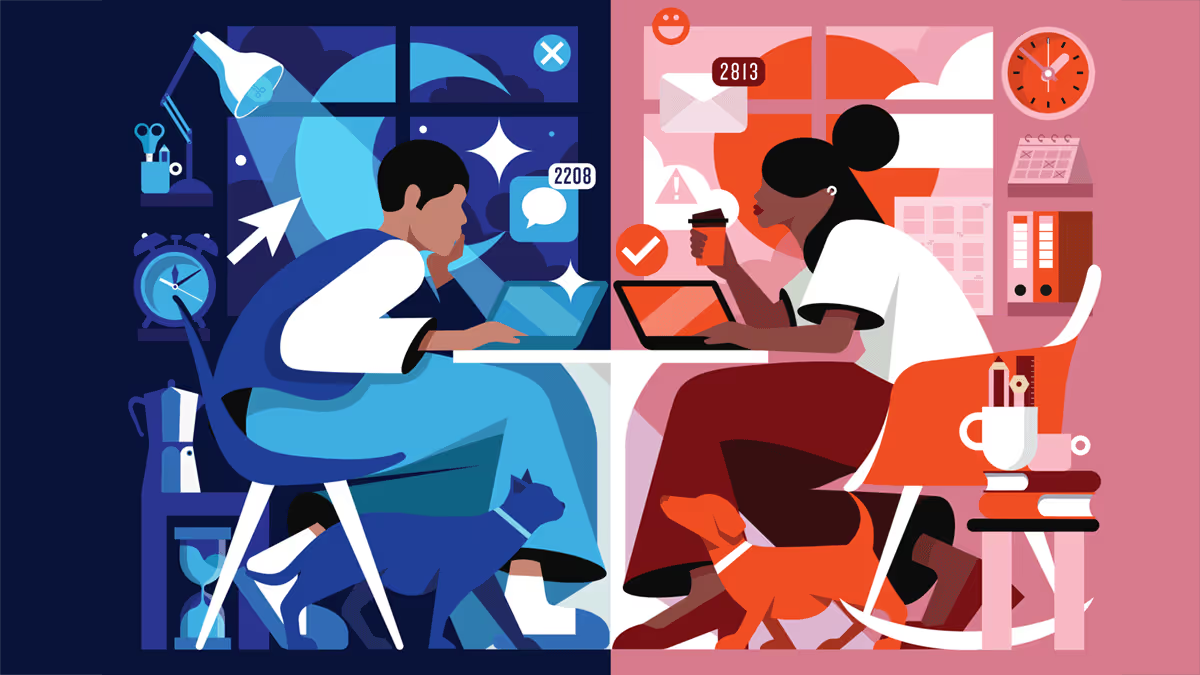
Companies have spent years asking how to make people more productive. gettyMost people have worked alongside two very different colleagues. One arrives before everyone else, clears their inbox by 8 a.m. and is ready to leave by late afternoon. Another says little before lunch but becomes noticeably sharper as the day progresses, asking better questions and producing stronger ideas when others are beginning to tire.Neither employee is necessarily more capable. They simply operate on different internal clocks.Scientists describe these differences as chronotypes, our natural preference for sleeping and being alert at particular times of day. Genetics, age and environmental factors all play a role, making some people naturally inclined towards earlier mornings while others reach their cognitive peak much later.The problem is that modern workplaces continue to reward one chronotype over another.Research found that employees who started work earlier were consistently rated more favourably by managers, even after accounting for actual performance and total hours worked. Supervisors simply perceived early starters as more conscientious, creating an “early bird bias” that influenced performance evaluations.That finding should give organisations pause. Work With Your Energy Instead Of Fighting ItFew employees can choose when the working day begins, but many have more control over how they use it.The temptation is to tackle the hardest task first because productivity advice insists successful people “eat the frog” before breakfast. For someone whose concentration naturally develops later, that approach often leads to slower thinking, unnecessary mistakes and avoidable frustration.A better strategy is to match demanding work to periods of peak alertness.Writing, strategic thinking and complex decisions require sustained attention. Administrative tasks, email and scheduling generally demand less cognitive effort and can provide a useful transition into the day.Emerging evidence supports this approach. A study of more than 8,000 office workers in Japan found that productivity suffered when people’s work schedules conflicted with their natural sleep patterns. The researchers concluded that aligning working hours more closely with an individual's chronotype could improve both sleep quality and workplace performance.The lesson is straightforward. Make Your Working Style VisibleMany employees quietly adapt to early starts without ever explaining the impact.Managers, meanwhile, assume everyone performs similarly because nobody says otherwise.That silence can create unnecessary misunderstandings. Someone who contributes less during an 8 a.m. meeting may appear disengaged despite producing exceptional work every afternoon.The solution is not asking for special treatment. It is having an honest conversation about how you work most effectively.An employee might explain that while they are fully available during standard office hours, they consistently produce their strongest analytical work later in the day and would benefit from protecting that time for focused projects.Leaders should welcome those conversations. As hybrid working becomes commonplace, measuring commitment by who logs on first each morning is becoming increasingly outdated.Redefining Productivity Beyond The Early StartFor decades, business culture has celebrated early risers. Stories about executives beginning their day at 5 a.m. have reinforced the idea that professional success starts before sunrise.The evidence is less convincing.Recent research found that employees with evening chronotypes often reported lower work ability and greater productivity loss, not because they were inherently less capable, but because standard working hours conflicted with their biological rhythms. The researchers argue that workplaces should consider chronotype when designing healthier and more productive ways of working.That distinction matters.Being a night owl is not a competitive advantage. Neither is being an early bird. The advantage comes when people can consistently perform important work at the time their minds are most capable of doing it.Companies have spent years asking how to make people more productive. A better question may be whether they are expecting everyone to be productive at exactly the same time. As work becomes increasingly flexible, the organisations willing to rethink when work happens may outperform those still focused solely on where it happens.
The Workplace Productivity Myth That’s Costing Companies Their Best Talent
Research shows chronotypes influence productivity more than work hours. Here's why leaders should stop rewarding early starts and start measuring real performance.
629 words~3 min read