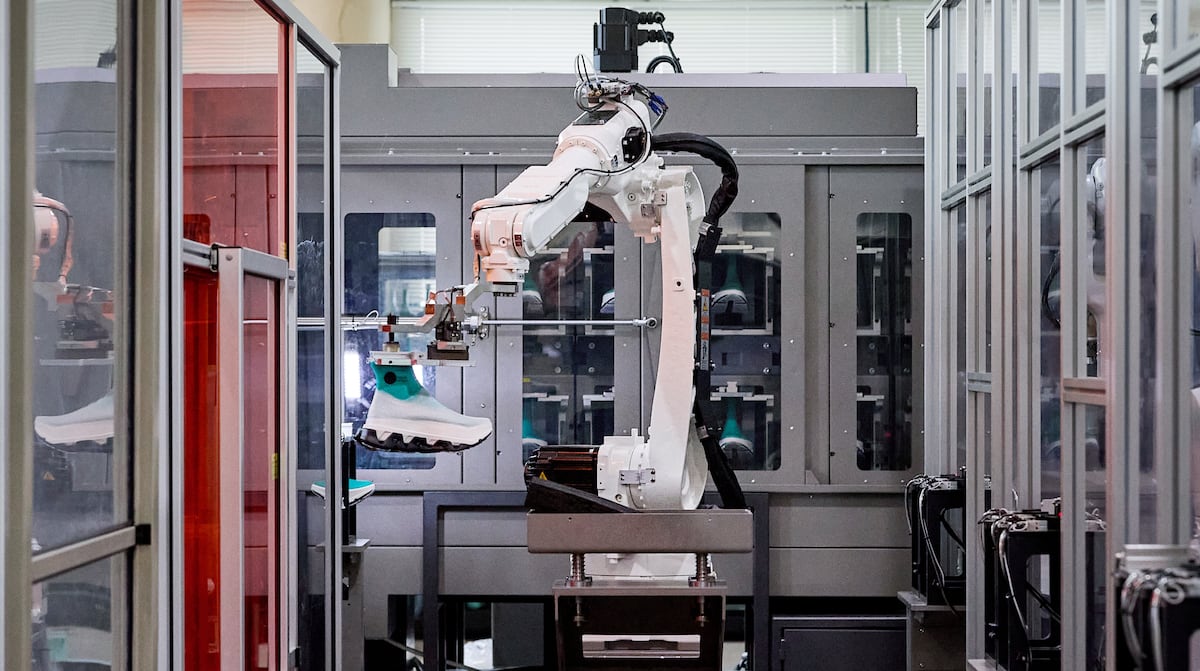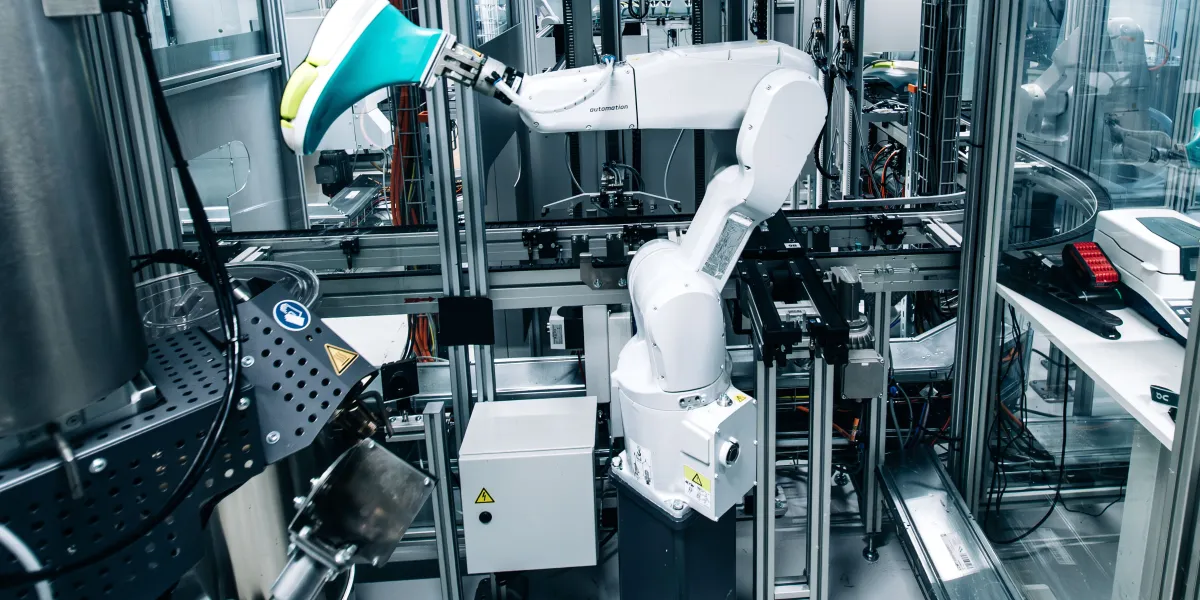
At first glance, the machine looks almost underwhelming. Inside a brightly lit laboratory at On’s Zurich headquarters, a robotic arm rotates a plastic model of a human foot. At the same time, a nozzle continuously sprays 1.5 km (0.93 miles) of thin molten plastic with almost hypnotic precision.
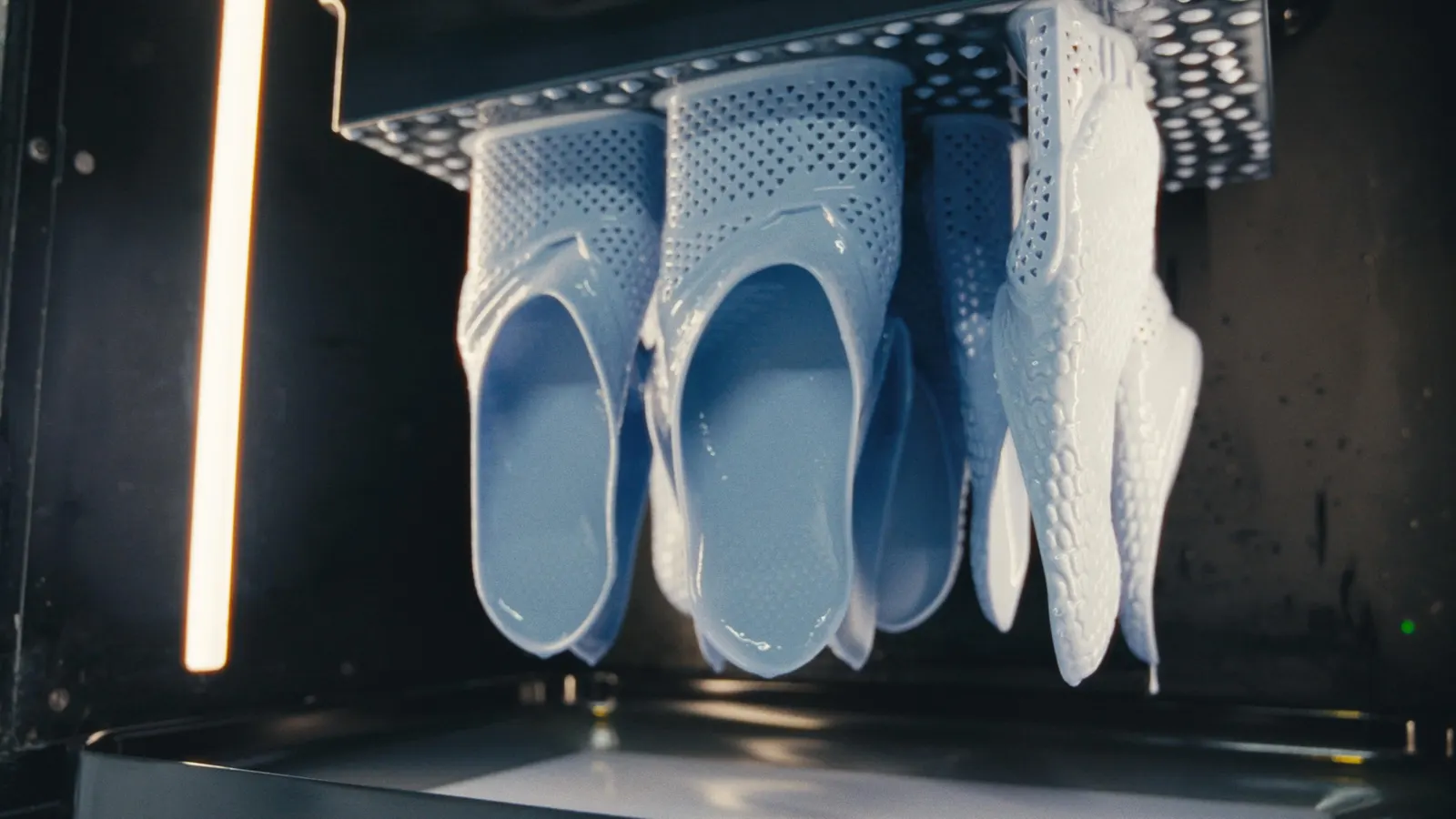
Layer by layer, the filament wraps itself around the foot mold, gradually forming the upper of a running shoe. The entire process takes about three minutes.
In the sportswear industry, shoes have long been assembled through labor-intensive processes involving cutting, stitching, gluing, and sewing together as many as 200 individual components. On says its LightSpray manufacturing technology reduces a shoe’s construction to seven parts while eliminating an estimated 200 to 300 hours of human work across the traditional development and production cycle.
Many manufacturers have introduced automation into existing production lines. On says it’s taken a different approach, designing a manufacturing process around robotics from the outset.
“We’re not trying to rebuild an existing style with robots,” cofounder and co-CEO Caspar Coppetti told Fortune during a tour of the company’s manufacturing lab. “We designed a technology that can only be done by robots.”