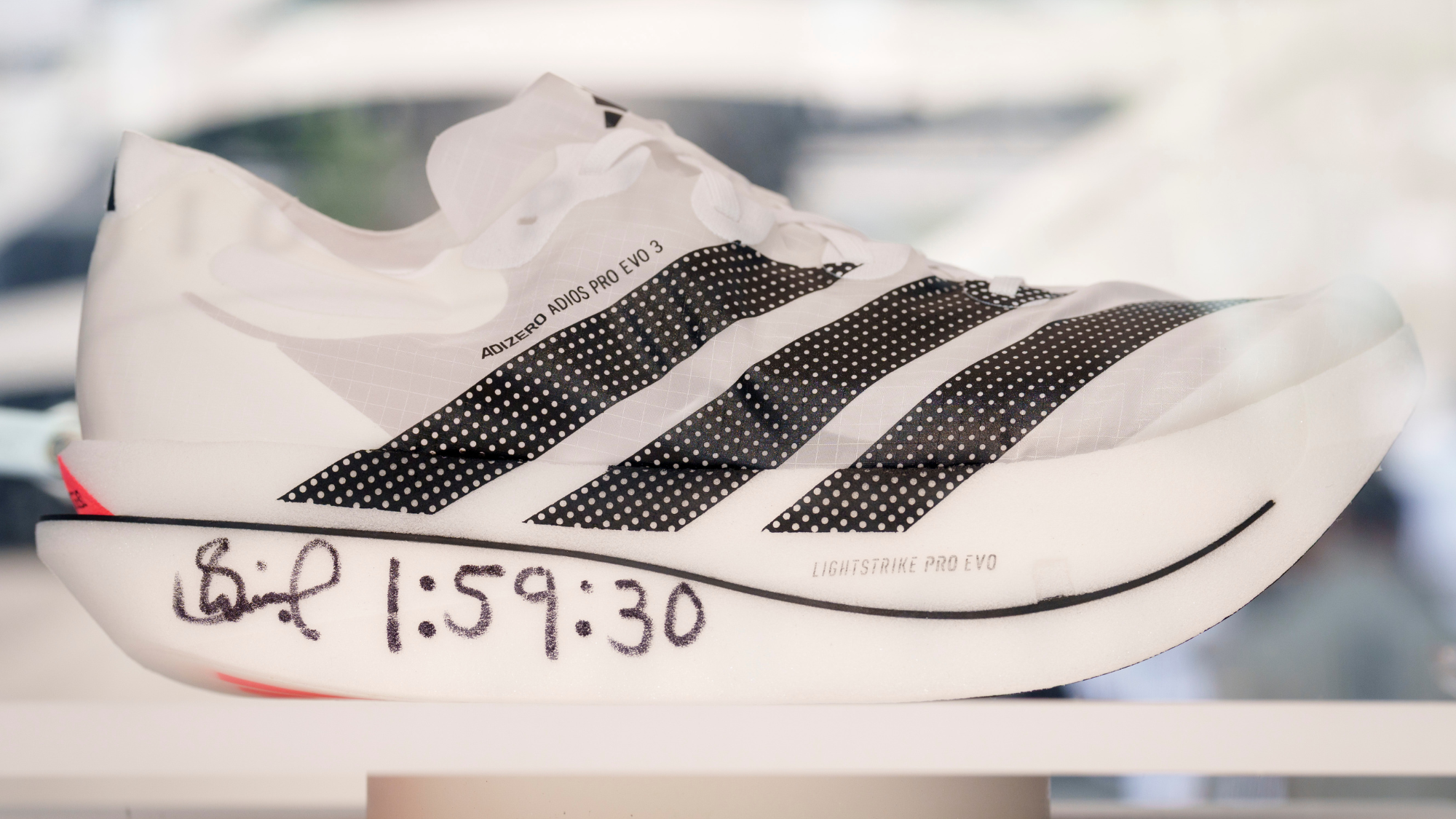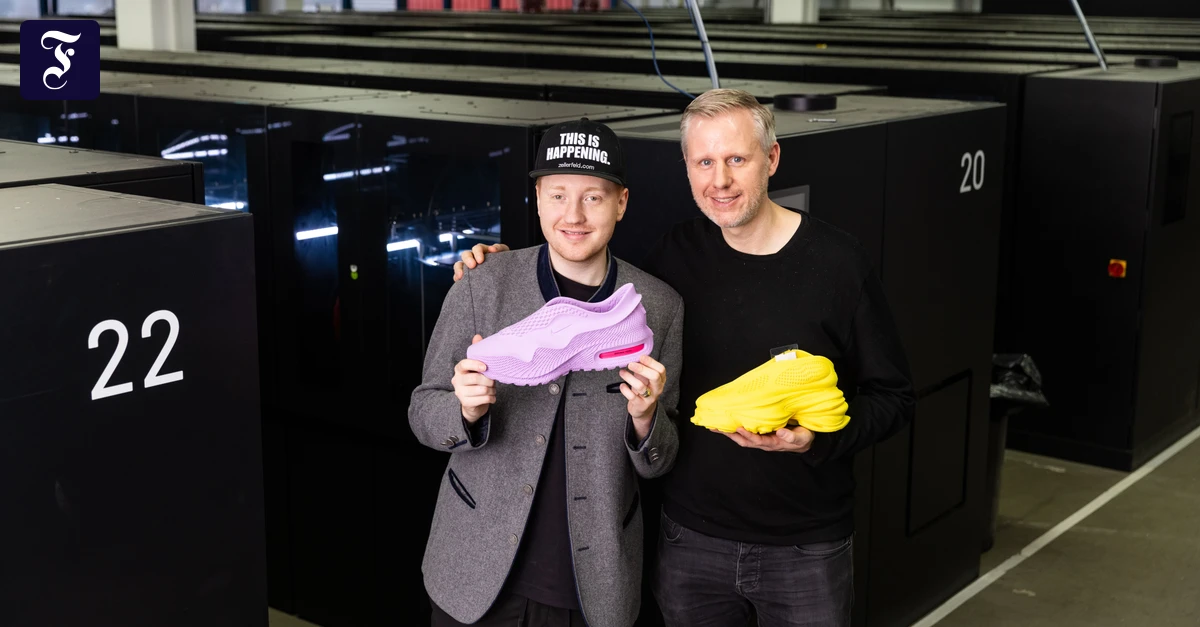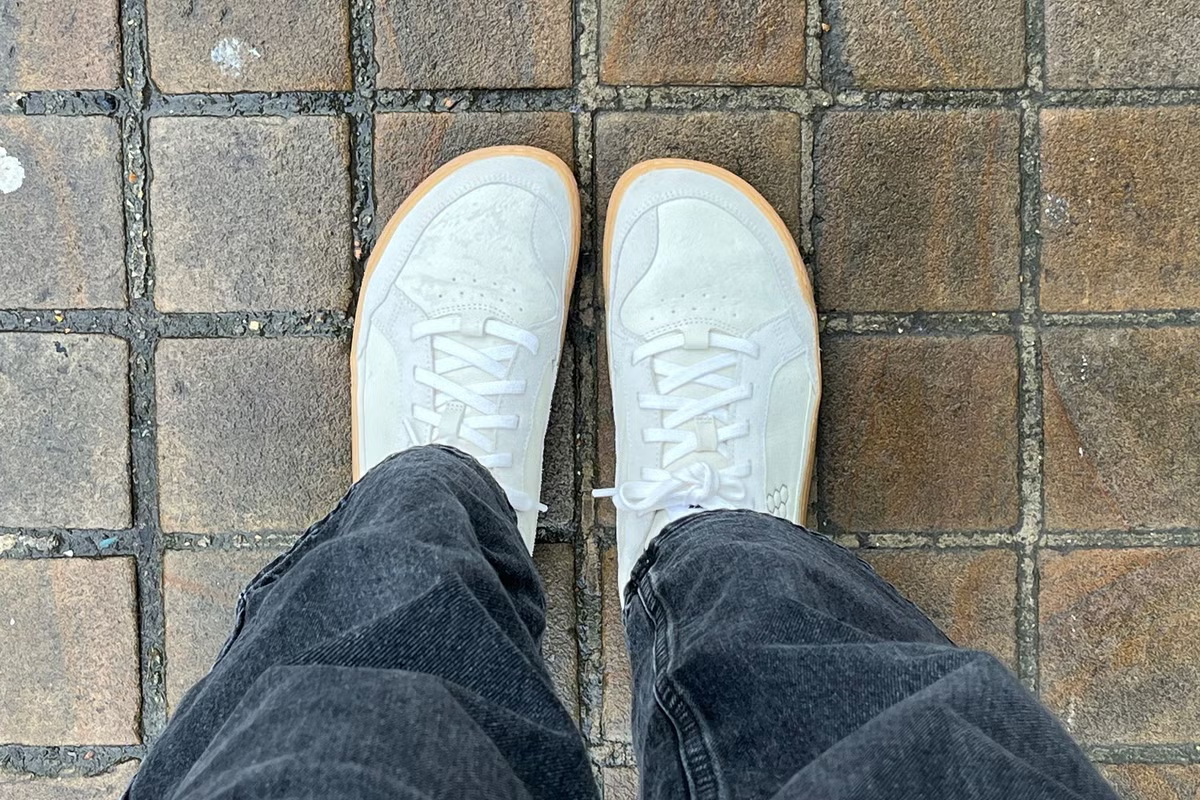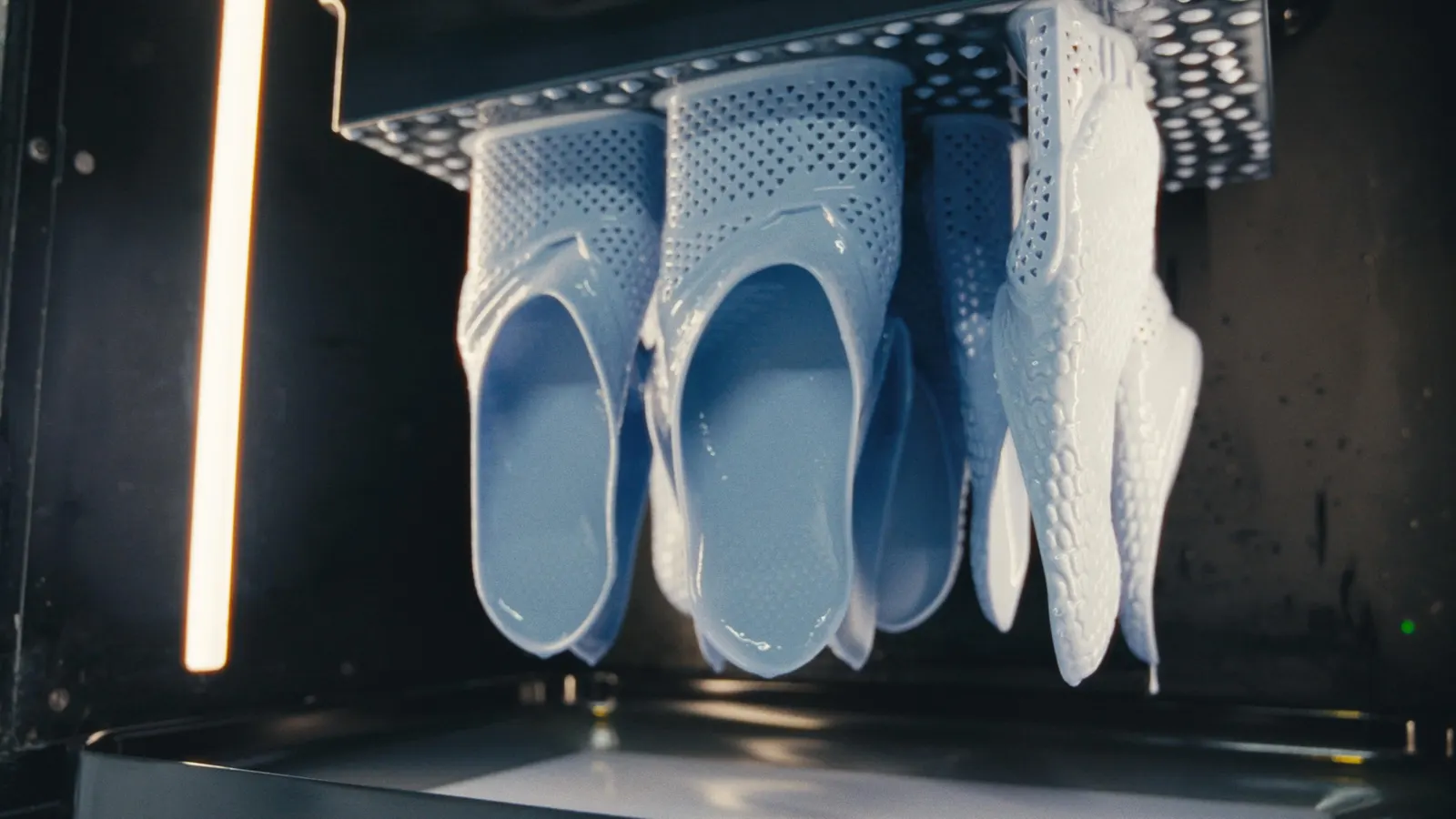
Carbon DLS printing of Vivobarefoot Tabi Gen 02Hunter GriffithAsher Clark, of the famous Clarks shoe dynasty, is a footwear designer who is pledging allegiance to the health of people and the planet. Today’s shoes, he says, undermine thousands of years of pedal evolution, encasing our feet in cushioning they never needed, progressively weakening them and restricting our kinetic abilities.Adding further (planetary) injury, footwear manufacturing follows ‘subtractive’ material-cutting methods with inherent waste levels of around 20-45 percent, and the industry operates on a forecast-led mass-production model that over-orders and undersells, according to Clark. Mass shoe manufacturing produces around 24 billion pairs each year; an estimated similar number ends up in landfill.Leaving behind traditional footwear methods, Clark co-founded Vivobarefoot with his cousin Galahad Clark in 2010. The brand produces minimal silhouettes without cushioning, aiming to support foot function as nature intended. Of his rejection of cobbler traditions, Clark says: “As a shoe designer/maker, you realize when you are making shoes that have no regard for feet, you can either get after this [problem], or not, and we decided to get after it. The shoe industry is trashing your feet and the planet, and that’s a truth I get out of bed for in the morning.”Clark reports that a significant portion of barefoot growth they have seen is coming from the elite sports movement. “Big athletes, like Mack Hollins, are wearing our product. Strong healthy capable feet are the foundation of strong healthy capable movement." Surfers John John Florence and Laura Crane, and climber Daisuke Ichimiya are also advocates.Vivobarefoot’s co-founder explains the shoes aren’t there to augment movement. "This barefoot wear is an amazing pre and post-strength and conditioning tool. It’s not really about the footwear, it’s about letting your feet do what they evolved to do”.MORE FOR YOUIn aiming to tackle footwear’s environmental and bomechanical shortcomings, the Clarks heir believes additive manufacturing–3D printing–is the answer to both design and production woes, better serving our feet and Earth. But is local 3D printing of shoes feasible and viable, or is it a moonshot too far from our Earthly realities?From subtractive to additive manufacturingThe breakthrough 3D printing technology Carbon DLS is a vat photopolymerization process that uses digital light projection (DLP), oxygen-permeable optics, and programmable liquid resins to produce durable polymer products. So far, it has been used to produce midsoles for adidas shoes, 3D printed pads for American football’s NFL helmets, and high-performance car parts for Ford. Now, Vivobarefoot is using it to print entire shoes from ‘CARBON BL6’ polyurethane foam.Unlike the other product examples, Vivobarefoot has created a custom ‘scan to production’ digital platform, VivoBiome, in collaboration with Volumental and Carbon DLS. “Being able to make things that are fully bespoke has never been done, and that is a fully computational and digital process – we take that foot data and send a blueprint that goes into a batch manufacturing [3D printing] process,” explains Clark.Vivobarefoot VivoBiomeVivobarefootVivobarefoot’s recently launched Tabi Gen 02 relies on Carbon’s global network of production partners and contract manufacturers. “Brands can choose a partner in the region that works best for them–some optimize for localized production and reshoring, while others choose to optimize for streamlined assembly,” depending on overall brand goals, according to Chris Robertson, Head of Production Success at Carbon. “We have seen strong growth in European partners such as Oechsler motion gmbh in Germany [which is producing the first batches of Tabi 02s] and Prototek S.r.l. in Italy,” adds Robinson. In terms of production speed, 7 pairs are vertically printed in 2.5 hours, equating to 25 minutes per pair.Reducing waste and freeing the big toe“It is a single-part resin, [so] it can be reclaimed and reused. We are enabling production facilities to use as much of the material as possible, and when it comes to end-of-life management, [it] is recyclable through shredding and melt extrusion,” explains Robertson. “What’s great about the Tabi, though, is that because it is custom and unique to the wearer, we think the lifecycle for these shoes will be much longer than a typical pair of sandals or trainers.”Vivobarefoot's VivoBiome scan to production platformVivobarefootOn the choice of the split-toe Tabi style, Clark says it was no accident. “Bruce Lee’s one-inch punch comes from the freedom of his big toe being unleashed, something the Tabi does not impede, compared to other styles." Further explaining the design rationale, Clark explains: “Your big toe bone is 7 times as dense as any other bone in your foot; it is the pivot point on the ball of your foot where much of the biomechanics of your feet come from, flowing up the kinetic chain [in the body].” The designer believes the closer we get to our evolutionary health, the healthier we are. Regarding elaborate shoe designs, he urges: "Humans need to get out of the way of themselves.” 3D printing to eliminate overproductionThere’s no doubt that additive local manufacturing upends the wasteful ‘overproduction’ model. “In a conventional seasonal footwear model, brands typically need to overbuy inventory in order to achieve their target sales volume. At a unit level, the assumption is often that around 70–80% of pairs will sell at full price, with the balance sold at a significant discount.”“For example, if the target is to sell 100 pairs, a brand may need to buy 120–130 pairs upfront to account for markdowns, unsold stock, and end-of-season clearance.” Clark concludes that a shoe with a retail price of $100 may ultimately achieve an average selling price (ASP) closer to $78 once all discounts are factored in, reinforcing the notion of a broken model in which waste is built in and product value is inevitably eroded.“The VivoBiome model challenges this by shifting from speculative inventory buying to on-demand manufacturing," explains Clark. "Each pair is only produced o once a customer has completed a scan and placed an order which significantly reduces excess inventory, markdown dependency, and waste, while protecting full-price revenue per pair produced.”Business model and design limitationsBut how applicable is 3D printing to a wide variety of shoe types? Robinson weighs in: “Footwear is a great application [of] 3D printing. Carbon has proven scale with brands like Adidas, which has printed millions of pairs of midsoles and has now launched a fully printed shoe; as well as [Vivobarefoot’s] customization with the Tabi Gen 02.”Adidas Climacool 3DAdidasSo, what’s getting in the way of mass adoption of 3D printing? “[We need] brands that are willing to embrace this as another mode of manufacturing and learn to design for the process and embrace it at the same scale as traditional footwear designs,” says Robinson, who predicts that 3D printing will remain a parallel technology. “We don’t expect it to replace traditional manufacturing methods, but rather serve as complementary to more traditional designs.”Vivobarefoot has foot scanners at the point of sale in its London and Bristol stores. Within a month, scanners in the Austin, Tokyo, and Prague stores will be live. New York is due to ‘go live’ with the VivoBiome platform’s ‘scan to production’ next July (when the new Vivobarefoot store opens), taking the total to 6 scanners globally.“[We have a] 3 million person community at Vivobarefoot [and] VivoBiome would be the pinnacle product offering for [the brand], democratizing 3D printed footwear,” says Clark.Future-gazing, the brand co-founder imagines “slick POS [point of sale] pillars in health clubs, gyms and wellness hubs..connected to a distributed supply chain,” where people will scan their feet, place an order, and receive the product wherever they are. “We’ll plug and play into Carbon’s existing facilities,” for local production, Clark adds.Vivobarefoot Tabi Gen 02VivobarefootVivobarefoot’s expansion won’t be without challenges, though. “There are hundreds of new barefoot brands; Adidas just released a barefoot shoe, Balenciaga [has its] zero sandal, and Dior and Prada [are] releasing minimal silhouettes”. As a result, Clark says “barefoot is happening, but its [widening availability] is plateauing our growth. On the one hand we’re achieving our [original] goal; on the other we have a new challenge to go from the marketing around ‘why barefoot’ to ‘why vivobarefoot’”.Zellerfeld is also an emerging competitor, matching creators with shoppers and offering some customisable features on their 3D printed shoes, but stopping short of a detailed foot scanning with fit and pressure data, instead opting for photogrammetry.Clark summarises the market challenge as this: “Vivobarefoot needs to make the best off-road, best trail, best active and coolest lifestyle shoes in a wrapper of cultural relevance and take [them] to the next level of innovation and unlock the unlockable–the future of footwear”. As the creators of the first fully customized, 3D-printed, monomaterial, recyclable shoe, Asher and Galahad Clark are nothing if not ambitious and game for a moonshot.
Footwear production, and our feet, are broken. Can 3D print fix both?
Mass produced shoes are creating waste, ending up in landfill and damaging our feet. Custom 3D printed shoes are the answer, says the co-founder of Vivobarefoot.
1,438 words~7 min read