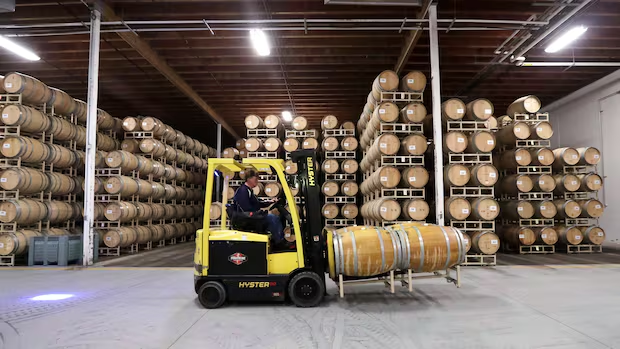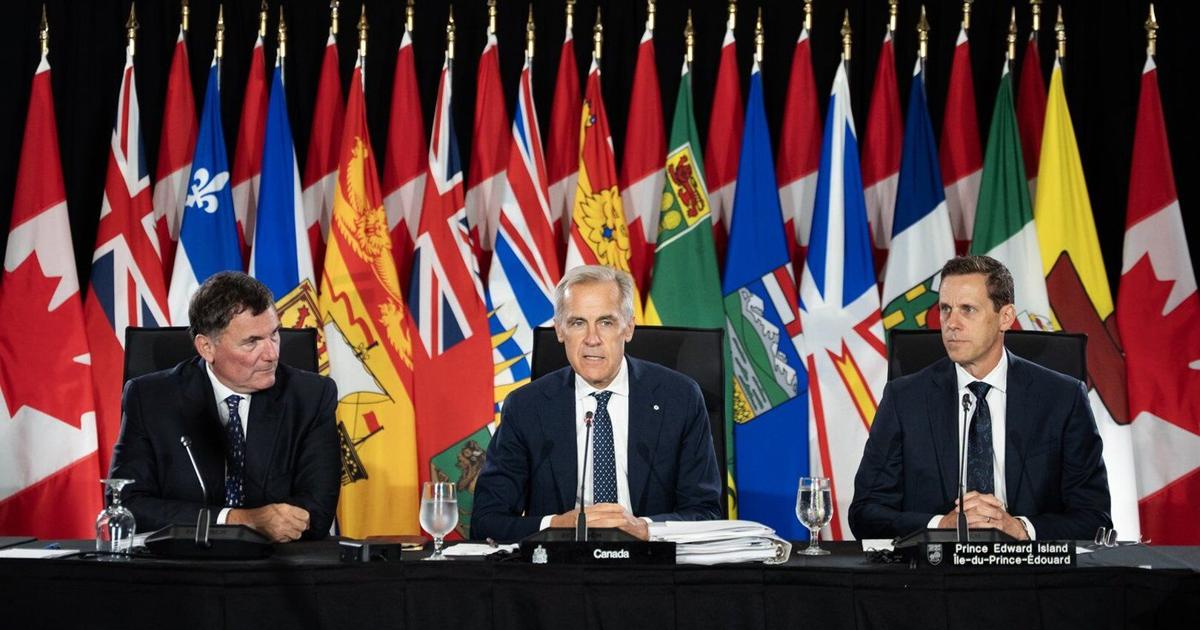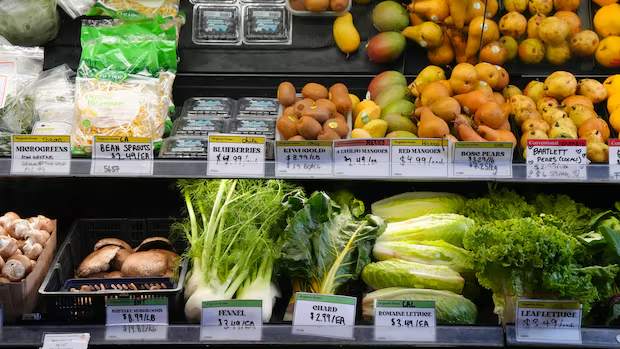
BusinessThough it will soon be easier for Canadians to buy alcohol from outside their home provinces, a litany of other barriers remain. Here's a look at some key issues that hinder the free flow of goods, services and labour between provinces.Provincial regulations continue to impact everything from food to labour to truckingSarah Petz · CBC News · Posted: Jul 25, 2026 4:00 AM EDT | Last Updated: 5 hours agoFresh produce is displayed at the Karma Co-op Food Store in Toronto on March 15, 2024. Fruits and veggies have to meet certain packaging and label standards in different provinces. (Chris Young/The Canadian Press)Interprovincial trade barriers were back in the spotlight this week as Canada's premiers mused about how to deal with new tariff threats from U.S. President Donald Trump at their annual summer meeting. On Tuesday, a new deal was announced that will see nine provinces across Canada introduce direct-to-consumer alcohol sales following an agreement signed by their premiers.It's the latest step in a larger push that started last year to address interprovincial trade barriers across Canada in an effort to boost the country's economy in the trade war with the United States. 9 premiers to allow wineries, distilleries, breweries to sell directly to consumers across provincesRetaliation being considered if no deal reached by Trump's tariff deadline, Carney saysThe 2026 edition of the Canadian Federation of Independent Business (CFIB) report card on interprovincial co-operation gave most of the provinces and territories an A, while giving the federal government an A+, in recognition of the progress made toward reducing these barriers through different mutual recognition legislation and/or policies. "Over the years, we've seen a little bit of progress here and there, but last year really kicked things off," said SeoRhin Yoo, senior policy analyst of interprovincial affairs at CFIB.But a litany of barriers remain. Here's a look at some key ones and how they hinder the free flow of goods, services and labour between provinces. Food production Navigating a combination of federal and provincial laws regulating food safety can make it difficult and costly for food producers to sell their products outside their home province or territory. Under federal regulation, food businesses must meet federal requirements under the Safe Food for Canadians Act and be licensed by the Canadian Food Inspection Agency (CFIA) if their products cross borders.And while the interprovincial trade of food in Canada is a federal responsibility, the regulation of food produced within a province is primarily a provincial one.WATCH | Why interprovincial trade barriers are tough to remove:Why are provincial trade barriers still a thing?February 12, 2025|Duration 7:10More interprovincial trade is being touted as one potential countermeasure to U.S. President Donald Trump's tariff threats, but complicated barriers stand in the way. CBC’s Ellen Mauro breaks down why free trade within Canada is so difficult and what needs to happen to get more goods flowing across the country.That means food producers or food product processors that are provincially inspected can't move product outside their home province unless they undergo federal inspection. That can be costly for small businesses, Yoo said.Lloydminster pilot project aims to solve cross-border regulatory quirk"It can range from tens of thousands of dollars just to get a licence, but it can be even more when we're thinking about all the upgrades that they have to make to their equipment just so they can fit federal standards, even though there's no problem with provincially inspected food," she said. "Small businesses just don't have the money to do that, so that's a big visible barrier."Labour movement Depending on the profession, different provincial certification standards can make it harder for workers to transfer skills and take advantage of new job opportunities in another part of the country. For example, in some jurisdictions, dental hygienists give injections for dental freezing, while in others that task is outside the scope of their role, meaning dental hygienists may require additional training if they move provinces. Psychologists and nurses may also require additional coursework in order to practise in another part of the country. Booze, language laws and maple syrup? Here's how interprovincial barriers impact your daily lifeCanada's premiers have wanted to scrap internal trade barriers for years. Why is it hard to do?While trade of goods may be more visible, barriers to job transfes have a much bigger impact on the economy because it can lead to labour supply issues if it's too expensive and cumbersome for people to take opportunities in provinces where their services are needed, said Charles De Land, vice-president of research at the Canada West Foundation, a Calgary-based think-tank focused on issues impacting the country's western provinces."You end up with mismatches of labour supply and demand and potentially … not having the labour available where you need it and also making costs higher for people to actually transfer and move," he said. "And if it takes a long time to get recertified in a particular province, that doesn't help them and that doesn't help the labour market that they're working in."Trucking rulesDifferent rules between provinces around highway standards, the size of vehicles and when trucks can be driven have been creating headaches for the trucking industry for years. In B.C., certain types of trucks can only be driven at night, but in Alberta, they can only be driven during the day. That leaves truckers only a small window of time when they can cross provincial borders.WATCH | Trucking companies face interprovincial issues in daily dealings :Prairie trucking companies face interprovincial issues in daily dealingsDecember 23, 2025|Duration 2:38The Manitoba Trucking Association says businesses in the industry continue to grapple with interprovincial issues every day, despite a national conversation on alleviating barriers in light of American tariffs. One company on the Manitoba-Saskatchewan border says navigating two sets of provincial rules adds administrative burdens to its daily operations.
Booze rules may be easing, but other interprovincial trade barriers still remain | CBC News
Though it will soon be easier for Canadians to buy alcohol from outside their home provinces, a litany of other barriers remain. Here's a look at some key issues that hinder the free flow of goods, services and labour between provinces.
1,070 words~5 min read