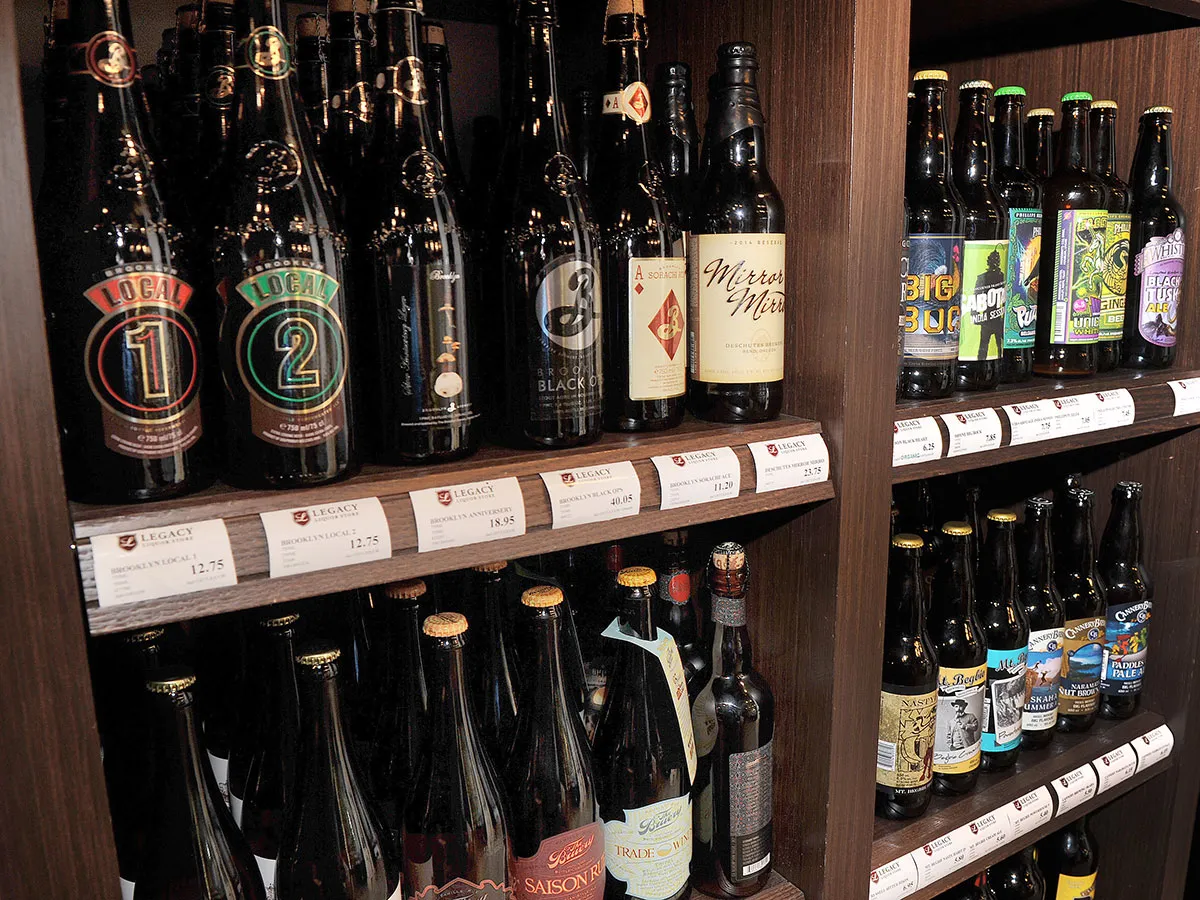
Skip to Content News Archives Economy Energy Oil & Gas Renewables Electric Vehicles Mining Commodities Agriculture Real Estate Mortgages Mortgage Rates Finance Banking Insurance Fintech Cryptocurrency Work Wealth Smart Money Wealth Management Investor Personal Finance Family Finance Retirement Taxes High Net Worth FP Comment Executive Women Puzzmo Newsletters Financial Times Business Essentials More Innovation Information Technology FP500 Podcasts Small Business Lives Told Tails Told Shopping Financial Post Store Obituaries Place a Notice Advertising Advertising With Us Advertising Solutions Postmedia Ad Manager Sponsorship Requests Classifieds Place a Classifieds ad Working Profile Settings My Subscriptions Saved Articles My Offers Newsletters Customer Service FAQ News Economy Energy Mining Real Estate Finance Work Wealth Investor FP Comment Executive Women Puzzmo Newsletters Financial Times Business Essentials HomeNewsProvinces miss deadline to tear down barriers to alcohol trade within countryWineries, distilleries and breweries says delay 'lost opportunity' for easy win on tradeLast updated 3 hours ago You can save this article by registering for free here. Or sign-in if you have an account.Local craft beer in a liquor store in Vancouver. Ten provinces and the Yukon signed an agreement aimed at implementing new rules to free up alcohol by the end of May 2026. Photo by Wayne Leidenfrost/PostmediaB.C.’s wineries, distilleries and craft breweries are still waiting for provinces and territories to tear down the barriers to direct consumer shipments of alcohol that they promised to do almost a year ago.Subscribe now to read the latest news in your city and across Canada.Exclusive articles from Barbara Shecter, Joe O'Connor, Gabriel Friedman, and others.Daily content from Financial Times, the world's leading global business publication.Unlimited online access to read articles from Financial Post, National Post and 15 news sites across Canada with one account.National Post ePaper, an electronic replica of the print edition to view on any device, share and comment on.Daily puzzles, including the New York Times Crossword.Subscribe now to read the latest news in your city and across Canada.Exclusive articles from Barbara Shecter, Joe O'Connor, Gabriel Friedman and others.Daily content from Financial Times, the world's leading global business publication.Unlimited online access to read articles from Financial Post, National Post and 15 news sites across Canada with one account.National Post ePaper, an electronic replica of the print edition to view on any device, share and comment on.Daily puzzles, including the New York Times Crossword.Create an account or sign in to continue with your reading experience.Access articles from across Canada with one account.Share your thoughts and join the conversation in the comments.Enjoy additional articles per month.Get email updates from your favourite authors.Create an account or sign in to continue with your reading experience.Access articles from across Canada with one accountShare your thoughts and join the conversation in the commentsEnjoy additional articles per monthGet email updates from your favourite authorsSign In or Create an AccountorCutting red tape for trade in alcohol across borders was seen as an easy win in the high-profile push for interprovincial free trade. Last July, 10 provinces and the Yukon signed an agreement aimed at implementing new rules by the end of May 2026.As of June 1, however, a patchwork of rules remain with B.C. allowing consumers to receive direct shipments of wine from other provinces without penalty, but only inking a reciprocal deal with Alberta so far. And spirits are another matter.Breaking business news, incisive views, must-reads and market signals. Weekdays by 9 a.m.By signing up you consent to receive the above newsletter from Postmedia Network Inc.A welcome email is on its way. If you don't see it, please check your junk folder.The next issue of Posthaste will soon be in your inbox.We encountered an issue signing you up. Please try again“I doubt if it’ll happen this summer, so it’s just lost opportunity,” said Mike Raffan, general manager of Township 7 Vineyard & Winery. “We’re in a country under attack. We need to capitalize on (and) take the easy stuff.”Raffan, whose winery has locations in Langley and Summerland, wanted to be optimistic about last July’s agreement, but was skeptical that it might just be “political showmanship.”“So far, a year later, my pessimism has been justified,” he added.Raffan said the simplest thing to do would be for all provinces to just collect sales tax on direct shipments from a winery or distillery, then exempt those shipments to another province without having to flow through the liquor distribution system of another.“Every province (is) protecting their monopoly, and frankly that’s a dumb idea,” Raffan added. Mike Raffan, general manager of Township 7 Vineyard & Winery, says his ‘pessimism has been justified.’ Photo by SubmittedDominic LeBlanc, federal minister for internal trade, in a statement issued just before the memorandum’s May 31 deadline, said Ottawa has done its part to take down federal limitations with an amendment to the Importation of Intoxicating Liquors Act.“The remaining work lies with provincial and territorial governments, as they look to complete negotiations towards a memorandum of understanding,” LeBlanc said. “It is time to fulfil these commitments and deliver the benefits Canadians and businesses have been promised.”In his statement, LeBlanc credited Manitoba and New Brunswick with taking leadership in fully opening up direct-to-consumer sales, and that Ontario and Nova Scotia have made progress with a bilateral agreement.B.C. has also made some progress with bilateral agreements on some products with both Alberta and Saskatchewan.The province’s Ministry of Agriculture and Food didn’t respond to Postmedia News questions on the matter by deadline.One problem with the agreement was that provinces signed on to it without consulting industry, said Tyler Dyck, president of the Canadian Craft Distillers Alliance.Dyck, who is also CEO of Okanagan Spirits Craft Distillery, which has operations in Kelowna and Vernon, said formulating a deal with provinces that all have different production agreements with producers and their own liquor-distribution monopolies is difficult.A lot of producers already ship to other provinces, trusting that sending small amounts to consumers for personal use won’t attract attention “because it would be impossible to stop,” Dyck said.He said provinces gain more from sales taxes, and the economic benefit derived from producers’ operations and tourism, than they might lose in revenue to their liquor distribution system.“The only fair way to do it, if you’re actually saying it’s free trade within Canada, is to say all Canadians have the ability to buy direct from any distillery, winery, brewery, cidery, whichever across Canada,” Dyck said. Township 7 winery in South Langley. Photo by SubmittedJeff Guignard, CEO of Wines of B.C. said the only good news out of last year’s agreement is still “that we are much closer now than we were a year ago.”“This should be the simplest agreement of our time,” Guignard said. “(But) every province wants to try to generate tax revenue out of this.”That comes from the difficulties of allowing each province to act “as though they are their own separate country” when it comes to liquor distribution, and revenues from liquor are a substantial line item in provincial budgets, Guignard said.Guignard argued that direct sales across borders might add up to only one per cent of all liquor sales, which would be insignificant as a total, but would be a substantial boost for individual small operators.Guignard said he had mixed feelings when Prime Minister Mark Carney campaigned on making free trade in booze happen, because the industry has been trying to make it happen for decades.“The prime minister, in his acceptance speech, said he wanted to do this, and all the provinces signed on to the deal,” Guignard said. But he called last year’s deal “an agreement to agree on the things you agree about, and we’ve been here before.” Join the Conversation This website uses cookies to personalize your content (including ads), and allows us to analyze our traffic. Read more about cookies here. By continuing to use our site, you agree to our Terms of Use and Privacy Policy.
Provinces miss deadline to tear down barriers to alcohol trade within country
B.C. has made some progress on freeing up direct cross-border shipments of booze, but nationally free trade is still a work in progress.
1,300 words~6 min read